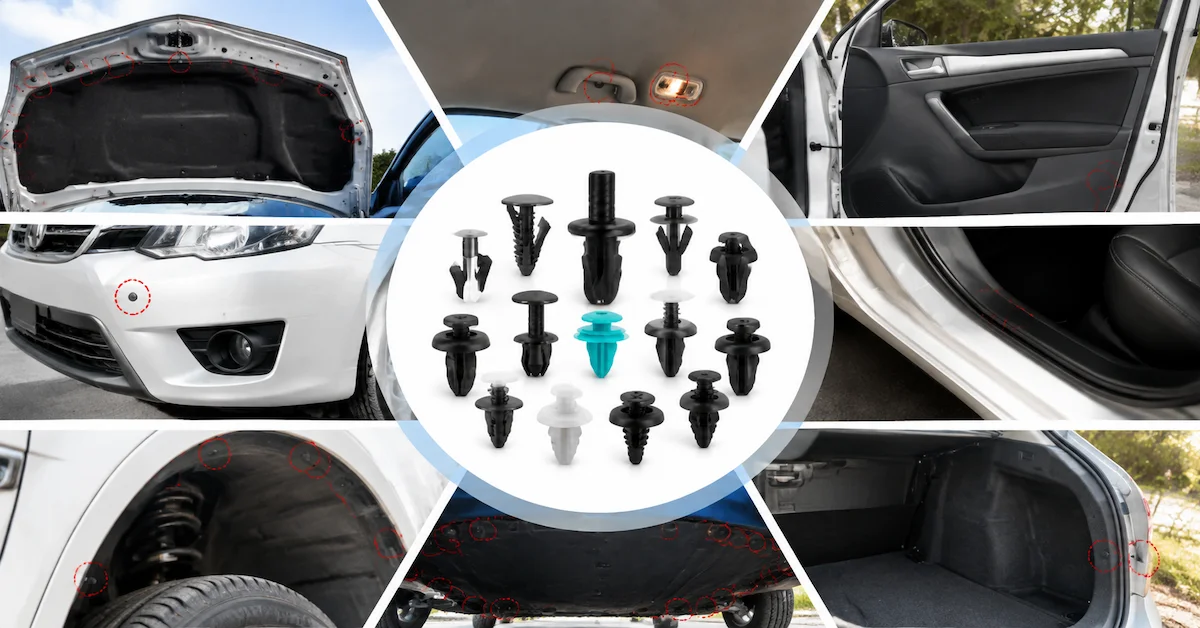

Automotive clips may be small components, but they play an important role in vehicle assembly, interior stability, vibration control, and body panel fastening.
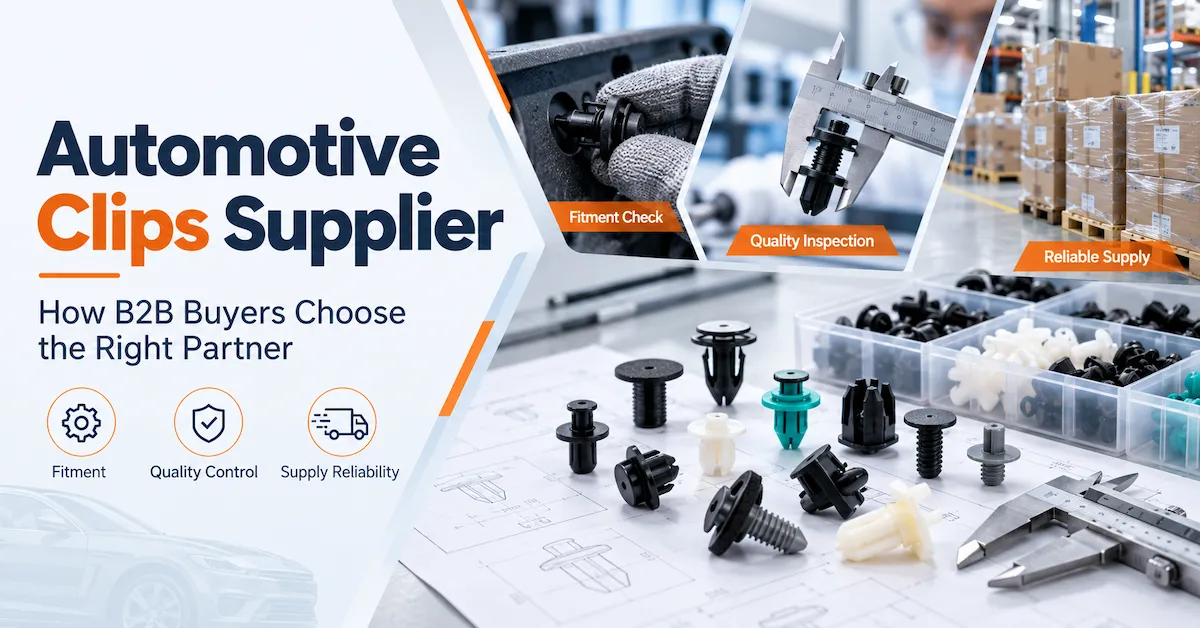
For automotive distributors, repair suppliers, aftermarket brands, and vehicle manufacturers, choosing the right automotive clips supplier is not only about finding available parts.
A reliable supplier should provide:
- consistent product quality;
- accurate vehicle fitment;
- suitable materials;
- stable production capability;
- customized solutions;
- technical support.
A poor-quality clip can create installation problems, loose panels, abnormal noise, customer complaints, and unnecessary replacement costs.
This guide explains the main types of automotive clips, commonly used materials, application areas, and how global buyers can evaluate an automotive clip supplier.
What Are Automotive Clips?
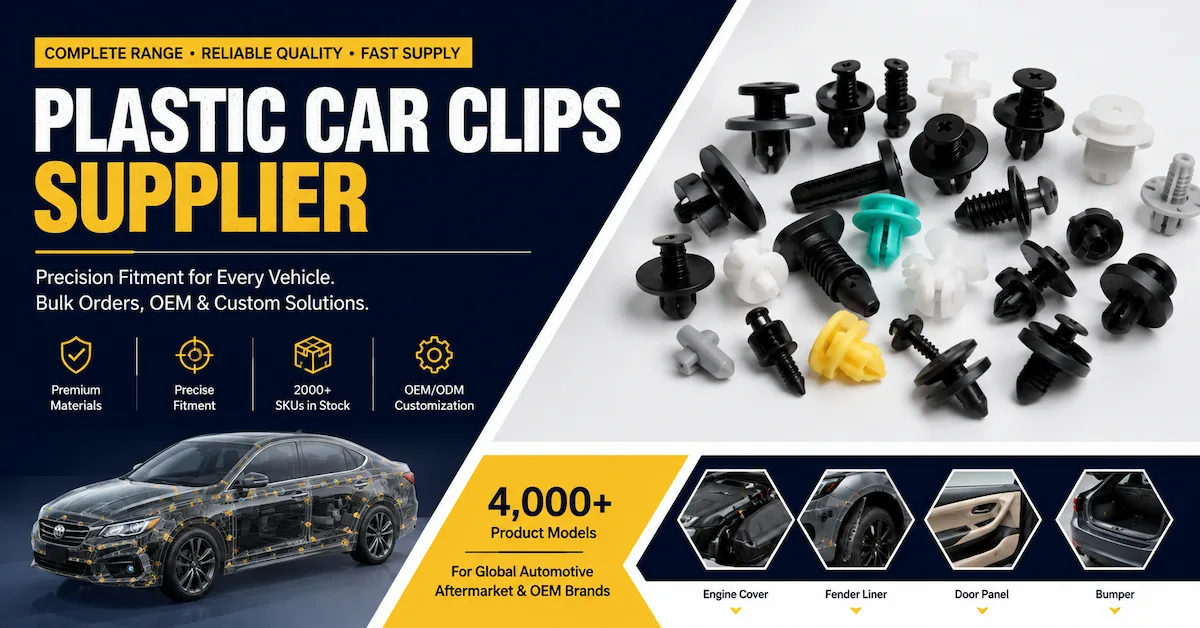
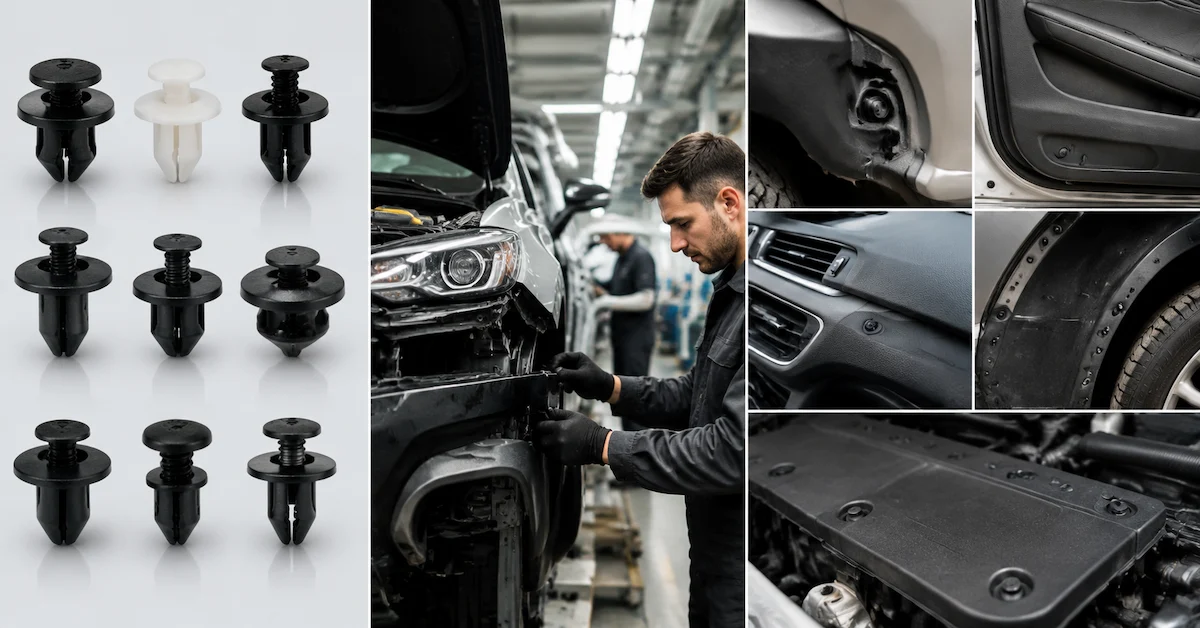
Automotive clips are plastic or composite fastening components designed to secure vehicle parts without traditional screws or metal fasteners.
They are widely used throughout vehicles for:
- interior trim panels;
- door panels;
- dashboards;
- bumpers;
- fender liners;
- engine covers;
- weather strips;
- underbody shields;
- wiring harnesses.
Unlike ordinary plastic parts, automotive clips must balance:
- flexibility;
- strength;
- retention force;
- vibration resistance;
- temperature resistance;
- dimensional accuracy.
The correct clip allows easy installation while maintaining reliable fastening throughout the vehicle's service life.
Why Choosing the Right Automotive Clips Supplier Matters
Many buyers focus mainly on unit price when sourcing automotive clips.
However, automotive fastening products involve several quality factors.
A professional supplier should understand:
Fitment Requirements
A clip must match:
- mounting hole diameter;
- panel thickness;
- clip height;
- stem size;
- locking structure.
A visually similar clip may still fail if the dimensions are incorrect.
Material Performance
Different vehicle positions require different material characteristics.
For example:
- interior clips may prioritize flexibility;
- bumper clips may require impact resistance;
- engine-area clips may need higher temperature capability.
Production Consistency
Automotive customers often require thousands or millions of pieces.
A qualified supplier needs:
- stable molds;
- controlled injection molding;
- inspection procedures;
- batch consistency.
QEEPEI provides automotive fastening solutions with product development, injection molding, quality inspection, and customized manufacturing support.
Learn more about QEEPEI capabilities:
https://www.cnclip.com/about-us
Common Types of Automotive Clips
Automotive clips come in many designs depending on their application.
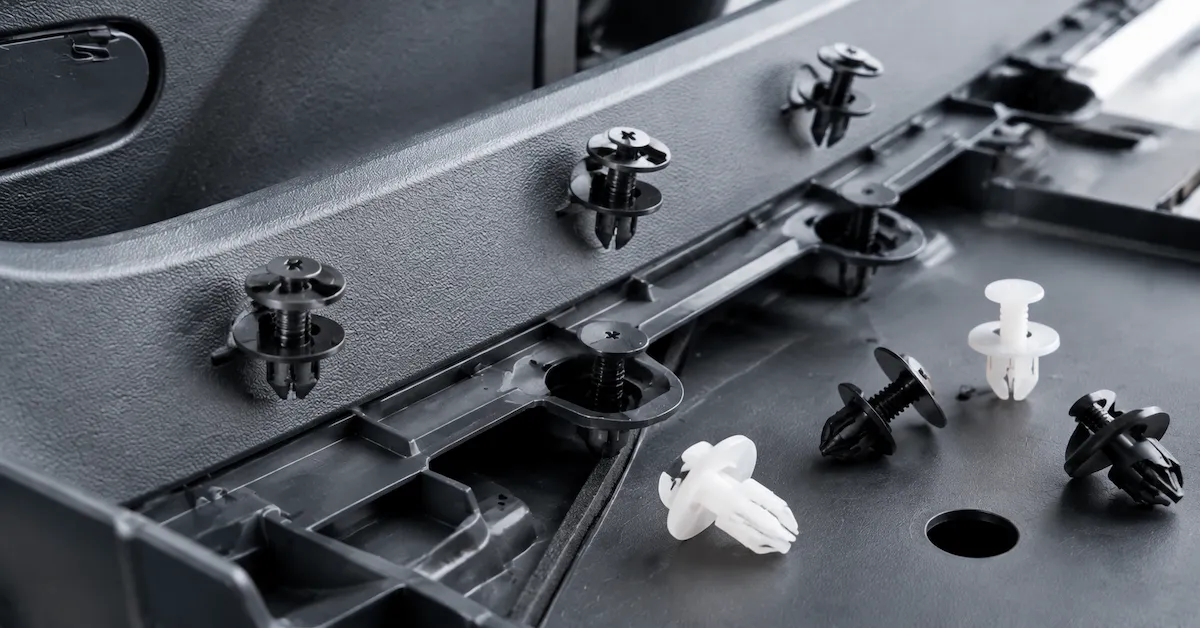
Push-Type Retainer Clips
Push retainers are among the most common automotive fasteners.
They usually include:
- head;
- stem;
- expansion legs;
- locking structure.
When pressed into a hole, the legs expand behind the panel and create retention.
Common applications:
- bumper covers;
- engine splash shields;
- interior panels;
- wheel liners.
Explore QEEPEI push-style solutions:
https://www.cnclip.com/products/car-body-clips
Screw Rivet Clips
Screw rivet clips combine a plastic rivet structure with a screw mechanism.
Advantages:
- stronger locking;
- easier removal;
- reusable designs.
Applications include:
- underbody panels;
- wheel arch liners;
- exterior trim.
Door Trim Clips
Door panel clips secure:
- door cards;
- decorative panels;
- insulation materials.
They require a balance between:
- holding strength;
- noise prevention;
- easy assembly.
See QEEPEI door clip solutions:
https://www.cnclip.com/products/car-door-interior-clips
Bumper Clips
Bumper clips are exposed to more demanding environments.
They must handle:
- vibration;
- impact;
- temperature changes;
- moisture;
- road conditions.
Typical applications:
- bumper covers;
- splash guards;
- fender liners.
QEEPEI provides bumper clip solutions for automotive repair and aftermarket applications:
https://www.cnclip.com/products/car-bumper-clips
Panel and Trim Fasteners
Interior and exterior trim fasteners help secure:
- decorative panels;
- moldings;
- protective covers.
They are commonly used by:
- vehicle manufacturers;
- repair shops;
- aftermarket distributors.
Automotive Clips Materials Explained
Material selection strongly affects automotive clip performance.
PA6 and PA66 Nylon Clips
Polyamide materials, commonly called nylon, are widely used for automotive fasteners.
Advantages:
- good strength;
- toughness;
- fatigue resistance;
- temperature capability.
Common applications:
- interior retainers;
- structural clips;
- demanding fastening locations.
However, PA performance depends on:
- specific grade;
- moisture condition;
- additives;
- application environment.
PP Automotive Clips
Polypropylene is widely used in automotive applications.
Advantages:
- lightweight;
- chemical resistance;
- good flexibility;
- cost efficiency.
Common applications:
- interior clips;
- lightweight panels;
- general fastening applications.
POM Automotive Fasteners
POM (polyoxymethylene/acetal) provides:
- dimensional stability;
- low friction;
- wear resistance;
- precision performance.
It can be suitable for:
- locking components;
- precision clips;
- applications requiring stable dimensions.
Comparison of Common Automotive Clip Materials
| Material | Advantages | Typical Applications |
|---|---|---|
| PA6 | Toughness and flexibility | Interior clips, trim fasteners |
| PA66 | Higher strength and thermal performance | More demanding applications |
| PP | Lightweight and economical | Interior and general fastening |
| POM | Precision and dimensional stability | Special locking applications |
The best material depends on:
- installation requirements;
- environment;
- temperature;
- load;
- vehicle location.
Automotive Clip Applications by Vehicle Area
Interior Applications
Used for:
- dashboards;
- door panels;
- pillar trims;
- ceiling panels.
Key requirements:
- low noise;
- reliable retention;
- easy assembly.
Exterior Applications
Used for:
- bumpers;
- grilles;
- moldings;
- wheel arches.
Key requirements:
- weather resistance;
- impact resistance;
- durability.
Engine Compartment Applications
Requirements include:
- temperature resistance;
- chemical resistance;
- long-term stability.
Underbody Applications
Need resistance against:
- water;
- dirt;
- vibration;
- road impact.
How to Select an Automotive Clips Supplier
Before placing bulk orders, buyers should evaluate several factors.
Product Range
A capable supplier should offer:
- push clips;
- trim clips;
- bumper clips;
- door clips;
- retainers;
- custom fasteners.
Material Capability
Ask whether the supplier supports:
- PA;
- PP;
- POM;
- customized materials.
Manufacturing Capability
Evaluate:
- injection molding equipment;
- mold development;
- production capacity;
- quality management.
Customization Support
OEM buyers may require:
- new designs;
- special dimensions;
- custom colors;
- private labeling;
- packaging solutions.
QEEPEI supports customized automotive clip development based on customer requirements.
Quality Control Requirements for Automotive Clips
Automotive clips require more than visual inspection.
Professional quality control may include:
Dimensional Inspection
Checking:
- diameter;
- length;
- thickness;
- critical fitment dimensions.
Material Verification
Confirming:
- resin type;
- material consistency;
- required specifications.
Performance Testing
Depending on application:
- insertion testing;
- pull-out testing;
- impact testing;
- temperature testing;
- aging testing.
QEEPEI integrates quality control throughout the manufacturing process to help maintain stable product performance.
OEM and Custom Automotive Clip Solutions
Many automotive buyers require customized products instead of standard parts.
A professional automotive clips supplier should support:
Custom Design
Based on:
- samples;
- drawings;
- vehicle requirements.
Mold Development
Including:
- product engineering;
- mold design;
- trial production.
Custom Production
Including:
- material selection;
- color customization;
- packaging.
For OEM projects, QEEPEI provides customized automotive fastening solutions.
Contact QEEPEI:
https://www.cnclip.com/contact-us
FAQ: Automotive Clips Supplier
What should I look for in an automotive clips supplier?
Look for manufacturing capability, material knowledge, quality control, customization ability, product range, and stable delivery performance.
What materials are commonly used for automotive clips?
Common materials include PA6, PA66, PP, and POM. Each material provides different advantages depending on application requirements.
Can automotive clips be customized?
Yes. Suppliers can customize size, shape, material, color, packaging, and branding according to customer requirements.
Are all plastic automotive clips the same?
No. Different clips have different designs, materials, dimensions, and performance requirements depending on their vehicle location.
How do I choose the right replacement automotive clip?
Check:
- vehicle model;
- OE number;
- mounting location;
- hole size;
- panel thickness;
- clip dimensions.
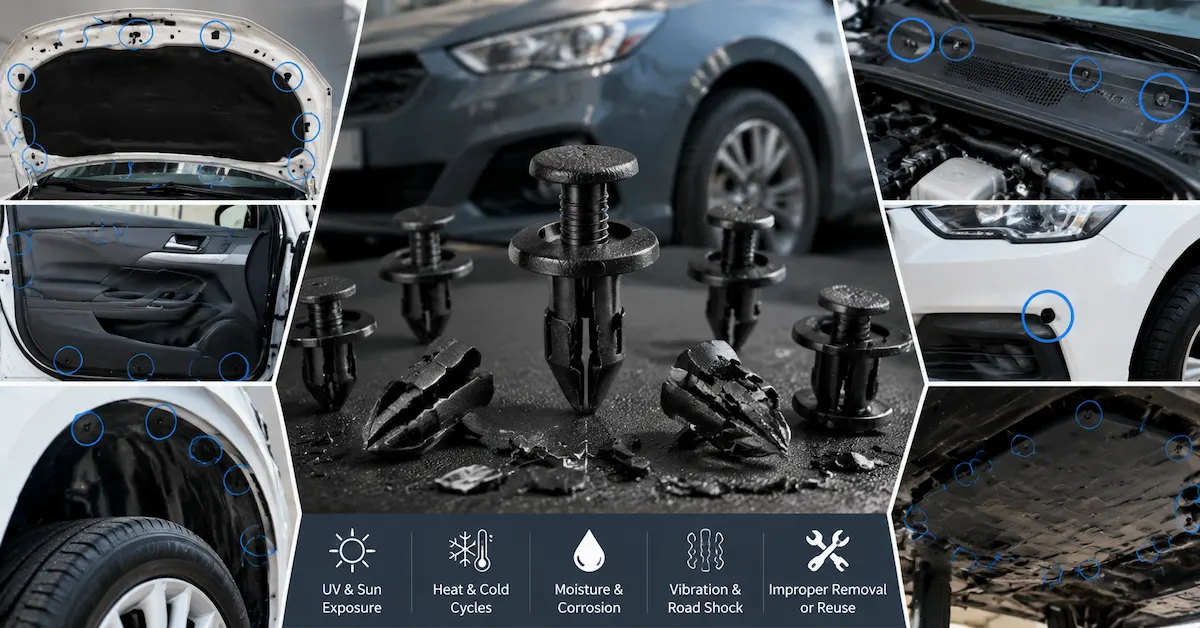
Why do automotive clips fail?
Common causes include:
- incorrect fitment;
- material aging;
- excessive force;
- poor molding quality;
- unsuitable material selection.
What information should I provide when requesting automotive clips?
Provide:
- vehicle information;
- product sample;
- drawing;
- dimensions;
- application;
- required quantity.
Can QEEPEI supply OEM automotive clips?
Yes. QEEPEI supports OEM and customized automotive clip solutions, including product development, mold creation, injection molding, and quality control.
Conclusion
Selecting the right automotive clips supplier requires more than comparing prices.
A reliable supplier should provide:
- suitable materials;
- accurate fitment;
- consistent production;
- quality control;
- customization support;
- long-term supply capability.
Automotive clips are small but critical components. The right supplier helps reduce installation problems, improve product reliability, and create a stronger automotive parts supply chain.
QEEPEI provides automotive clips, plastic fasteners, OEM solutions, and customized manufacturing services for distributors, repair suppliers, and automotive brands worldwide.
Explore QEEPEI automotive clip products:
https://www.cnclip.com/products
Contact QEEPEI for sourcing and customization: