
Finding the right bulk car clips supplier can help auto parts distributors, repair chains, e-commerce sellers, and wholesale buyers reduce purchasing cost. But bulk sourcing also creates two major risks: inventory risk and fitment risk.
Inventory risk happens when buyers stock too many slow-moving clips or fail to keep enough fast-moving clips available. Fitment risk happens when clips look similar but do not match the correct hole size, stem length, head diameter, locking structure, or vehicle application.
For B2B buyers, the goal is not simply to buy more clips. The goal is to build a practical sourcing system that keeps the right clips in stock, reduces wrong orders, supports customer needs, and improves repeat sales.
QEEPEI supplies a wide range of automotive clips and car fasteners, including car body clips, car clip kits, specific fit car clips, and clip tools for global B2B buyers.
Why Bulk Car Clip Purchasing Can Be Risky
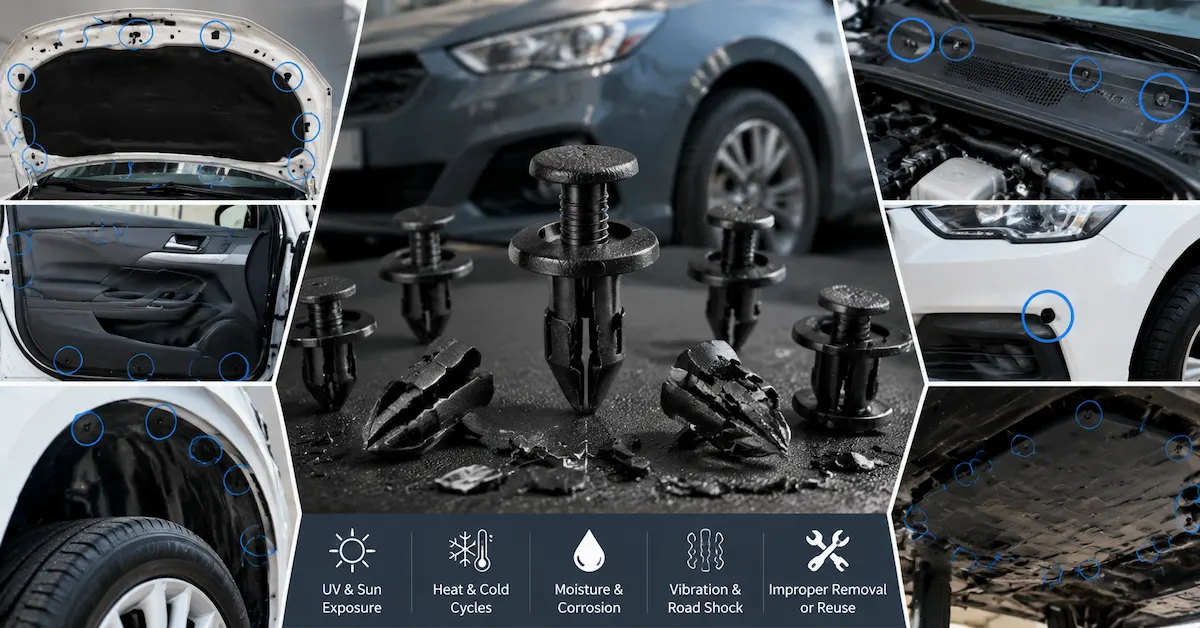
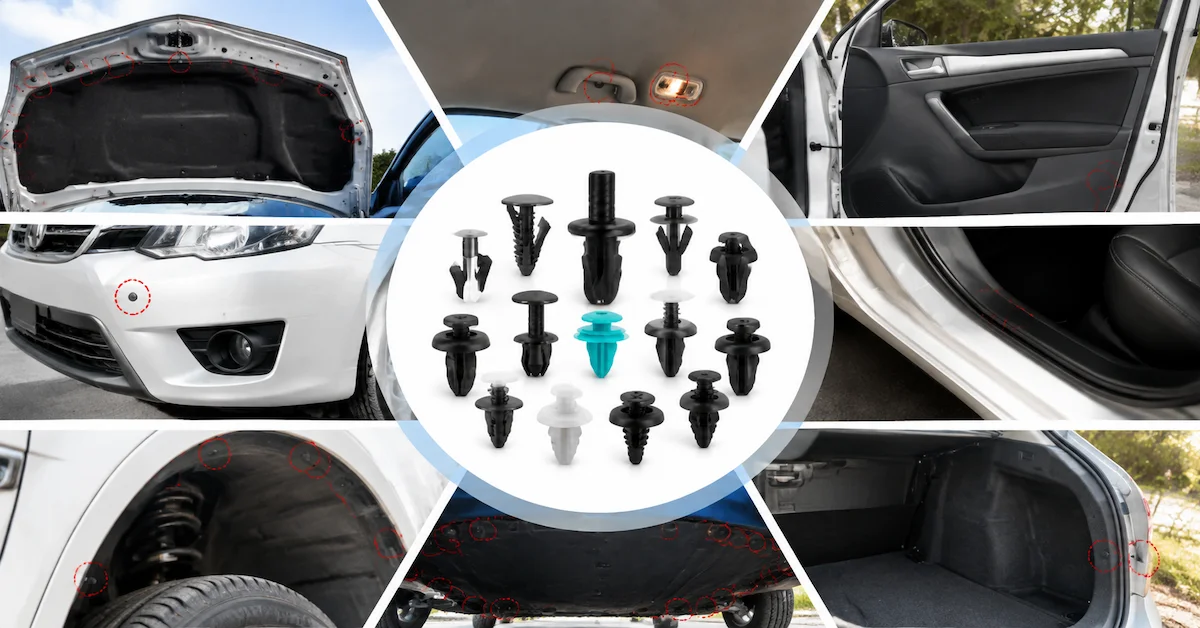
Car clips are small, low-cost parts, but they come in many shapes, sizes, materials, and applications. A distributor may need bumper clips, door panel clips, fender liner clips, wheel arch clips, push retainers, screw grommets, seal strip clips, dashboard clips, hood clips, and vehicle-specific clips.
The problem is that many clips look almost the same at first glance. Small differences can create big problems during installation.
Common bulk purchasing risks include:
- Buying too many low-demand clips
- Running out of fast-moving repair clips
- Mixing similar but incompatible clips
- Receiving unclear product specifications
- Poor packaging or missing labels
- High return rates from wrong fitment
- Slow replenishment from the supplier
- Unstable material quality across batches
A professional bulk car clips supplier should help buyers reduce these risks through structured product categories, clear specifications, inventory support, and reliable supply planning.
Inventory Risk: What Distributors Need to Control
Inventory risk is one of the biggest problems for auto parts distributors. If stock is too low, customers cannot get the clips they need. If stock is too high, money is locked in slow-moving products.
A better inventory strategy starts with understanding which clip types move faster in the aftermarket.
| Clip Type | Demand Level | Why Buyers Stock It |
|---|---|---|
| Bumper clips | High | Frequently replaced during bumper repair |
| Fender liner clips | High | Common in wheel arch and body repair |
| Door panel clips | High | Often removed during interior repair |
| Push retainers | High | Broad use across many vehicle areas |
| Screw grommets | Medium to high | Useful for panel and screw-base fixing |
| Seal strip clips | Medium | Needed for weatherstrip and sealing repair |
| Dashboard clips | Medium | Important for interior trim and navigation panels |
| Wheel arch clips | High | Exposed to mud, vibration, and road impact |
| Hood insulation clips | Medium | Need heat-resistant performance |
| Specific fit clips | Medium to high | Reduce wrong-fit orders for popular vehicle brands |
For distributors, the best approach is to build a core fast-moving stock list first, then expand into specific fit clips and private label kits.
Fitment Risk: Why Similar Clips Can Fail
Fitment risk is the main reason customers return car clips. A clip may look correct but still fail because one dimension is wrong.
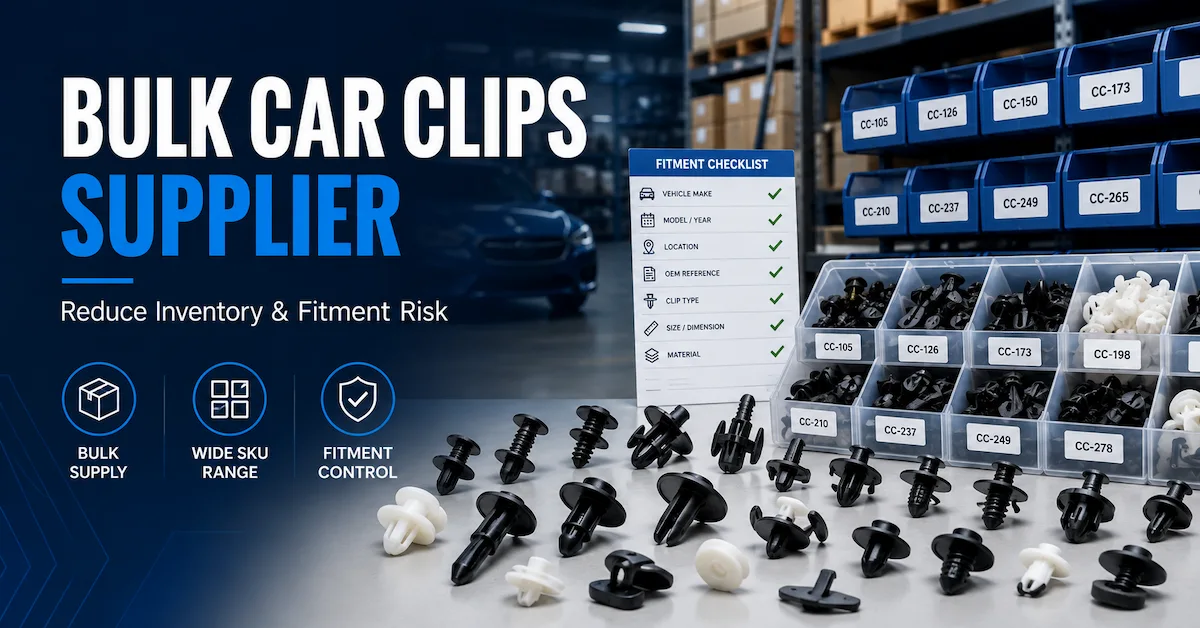
Before placing a bulk order, buyers should confirm:
- Head diameter
- Stem length
- Hole size
- Panel thickness range
- Locking leg structure
- Material flexibility
- Clip color
- Vehicle application
- OE reference if available
- Installation position
For example, a bumper clip and a fender liner clip may look similar, but they may not share the same locking force or panel fit. A door panel clip may need better elasticity to reduce interior noise, while a wheel arch clip may need stronger resistance to vibration and road debris.
This is why buyers should work with a supplier that can provide clear product guidance, not just product photos.
How to Build a Lower-Risk Bulk Car Clip Product Line
A smart bulk sourcing plan should organize clips by demand, application, and sales channel.
1. Start with fast-moving repair clips
For most distributors and repair suppliers, the first stock group should include:
- Bumper clips
- Fender liner clips
- Door panel clips
- Push retainers
- Screw grommets
- Trim clips
- Wheel arch clips
These products have frequent replacement demand and can serve repair shops, body shops, and general aftermarket buyers.
2. Add car clip kits
Car clip kits help reduce selection difficulty for repair shops and retail buyers. Instead of ordering many single SKUs, customers can buy an assortment kit that covers common repair needs.
Kits are especially suitable for:
- Repair shops
- Online sellers
- DIY markets
- Retail stores
- Supermarket channels
- Private label brands
QEEPEI offers car clip product categories that can support both individual fasteners and kit-based sourcing.
3. Add specific fit car clips
Universal clips can solve some repair problems, but they cannot cover every vehicle. Specific fit car clips help reduce compatibility guesswork for brands such as Toyota, Honda, Ford, VW/Audi, Nissan, BMW, Mazda, Renault, Opel, and Fiat.
For distributors, vehicle-specific clips can improve customer confidence and reduce wrong-fit complaints.
Material Quality and Batch Stability
A bulk car clips supplier must control material quality across batches. If one batch is flexible and another batch is brittle, buyers may face inconsistent customer feedback.
Common materials include:
| Material | Main Advantage | Suitable Applications |
| PA Nylon | Strong, flexible, wear-resistant | Bumper clips, trim clips, push retainers |
| PP | Lightweight and cost-effective | Interior and light-duty clips |
| POM | Good dimensional stability | Precision locking clips |
| Reinforced plastic | Better strength under stress | High-load fastening points |
For bulk buyers, material consistency is just as important as material type. A good supplier should help match the material to the application area and maintain stable quality for repeat orders.
Packaging and Labeling Reduce Inventory Mistakes
Inventory risk is not only about how many clips you buy. It is also about how clearly the products are packed and labeled.
Poor packaging can cause warehouse confusion, wrong shipments, and customer complaints. Clear packaging helps distributors manage SKUs more efficiently.
| Packaging Option | Best For | Benefit |
| Bulk bags | Distributors and repair shops | Lower packaging cost |
| Small packs | Retail stores and DIY users | Easy resale |
| Assortment kits | Workshops and online sellers | Convenient selection |
| Color boxes | Supermarkets and branded retail | Better shelf presentation |
| Private label packaging | Brand owners | Stronger brand value |
| Barcode labels | Warehouse and retail management | Easier SKU control |
For wholesale cooperation, packaging customization, and channel-specific supply options, buyers can visit the QEEPEI Wholesale page.
Supplier Checklist for Bulk Buyers
Before choosing a bulk car clips supplier, buyers should evaluate more than price.
| Evaluation Point | What to Check |
| Product range | Does the supplier cover major car clip categories? |
| SKU structure | Can products be organized by application and demand level? |
| Fitment support | Can the supplier provide size and vehicle application guidance? |
| Material quality | Are materials suitable for automotive use? |
| Batch consistency | Can repeat orders maintain the same quality? |
| Inventory capacity | Can the supplier support fast replenishment? |
| Packaging options | Can they provide bulk, retail, and private label packs? |
| OEM/ODM service | Can they customize clips or packaging? |
| QC process | Are dimensions, appearance, and locking function checked? |
| Export support | Can they handle international B2B orders smoothly? |
A supplier that only gives a price list may not be enough. A long-term partner should help you plan SKUs, avoid wrong products, and reduce supply chain risk.
Why QEEPEI Is Suitable for Bulk Car Clip Buyers
QEEPEI focuses on automotive clips, plastic fasteners, car clip kits, specific fit clips, and clip tools. For B2B buyers, QEEPEI can support product selection, bulk supply, packaging options, OEM/ODM projects, and application matching.
QEEPEI is suitable for:
- Auto parts distributors
- Repair shop suppliers
- E-commerce sellers
- Private label automotive brands
- Supermarket and retail buyers
- Vehicle-specific clip buyers
For buyers who want to understand the company background and service capability, visit the About Us page. For bulk orders, custom packaging, or sourcing support, contact QEEPEI through the Contact Us page.
FAQ
1. What is a bulk car clips supplier?
A bulk car clips supplier provides automotive clips and fasteners in large quantities for distributors, repair shops, online sellers, retail buyers, and private label brands.
2. Why is bulk car clip sourcing risky?
Bulk sourcing can create inventory risk and fitment risk. Buyers may stock the wrong clips, overbuy slow-moving SKUs, or receive products that do not match vehicle applications.
3. What car clips should distributors stock first?
Distributors should start with bumper clips, fender liner clips, door panel clips, push retainers, screw grommets, trim clips, and wheel arch clips.
4. How can buyers reduce fitment risk?
Buyers should confirm hole size, head diameter, stem length, panel thickness, locking structure, vehicle application, and OE reference before ordering.
5. Are car clip kits useful for bulk buyers?
Yes. Car clip kits help repair shops and retail buyers reduce selection difficulty and keep common fasteners available in one package.
6. What packaging is best for bulk car clips?
Bulk bags are good for distributors, while assortment kits, barcode packs, color boxes, and private label packaging are better for retail and e-commerce channels.
7. Why is material consistency important?
Material consistency affects clip flexibility, locking force, durability, and customer satisfaction across repeat orders.
8. Can bulk car clips be customized?
Yes. Many clips and kits can be customized by size, material, color, structure, packaging, barcode label, or private label branding.
9. How can distributors avoid slow-moving inventory?
They should start with fast-moving repair clips, analyze customer demand, add specific fit clips gradually, and use mixed kits for broader applications.
10. Where can I source bulk car clips?
You can browse QEEPEI’s automotive clips and fasteners or contact QEEPEI through the Contact Us page for bulk sourcing, OEM/ODM service, and packaging support.
Conclusion
Choosing a bulk car clips supplier is a strategic sourcing decision. The best supplier should help buyers reduce both inventory risk and fitment risk. That means offering the right SKU range, stable materials, accurate size guidance, reliable stock, flexible packaging, and professional B2B support.
For auto parts distributors, repair chains, online sellers, and private label brands, a better bulk sourcing system can reduce returns, improve customer satisfaction, and support repeat orders. QEEPEI provides automotive clips, plastic fasteners, car clip kits, specific fit solutions, and packaging support for global buyers.
Explore QEEPEI’s full automotive clips product range to build a lower-risk bulk sourcing plan.