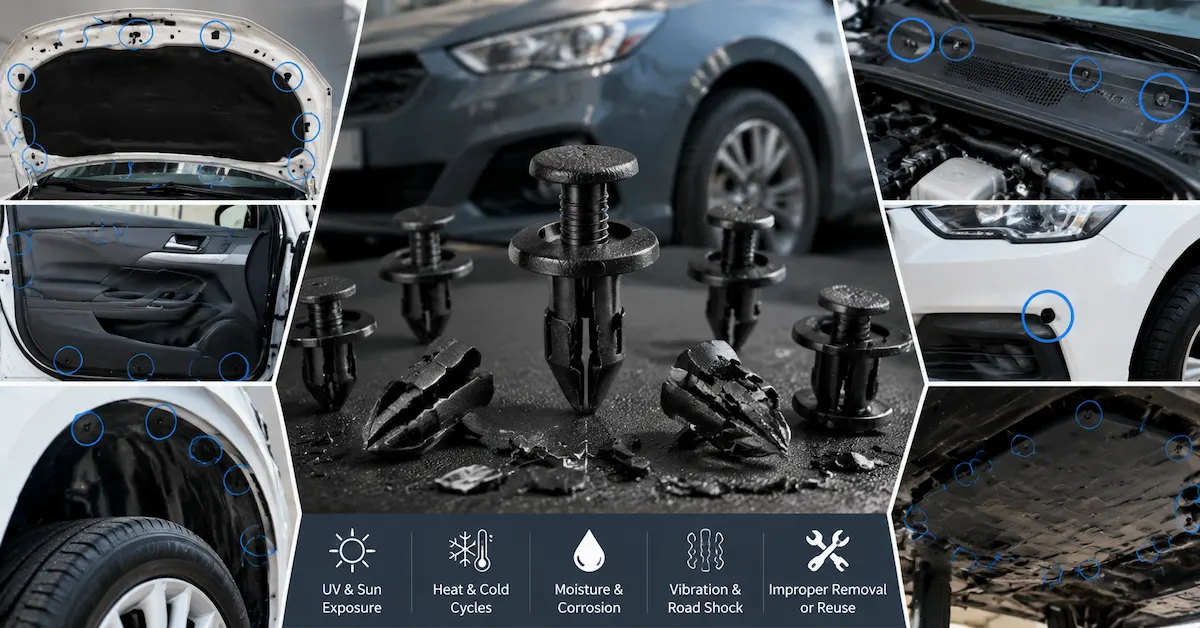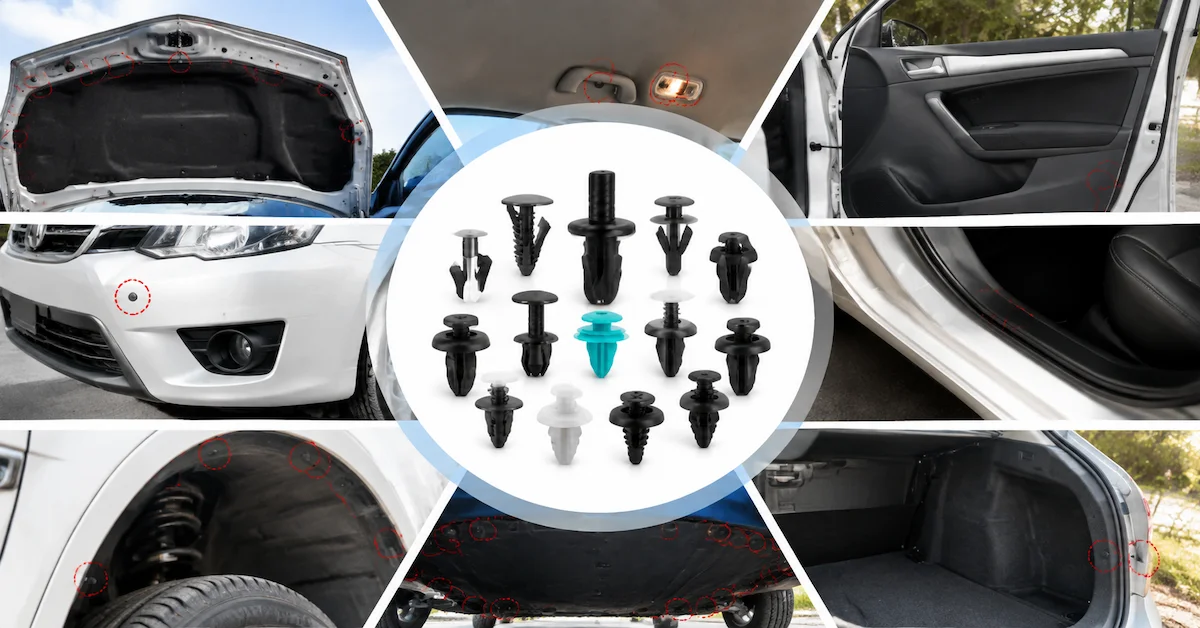

For professional repair shops, removing interior panels is a common but delicate task. Many vehicle components such as door panels, dashboards, trim covers, headliners, and decorative panels are secured with plastic clips and fasteners. Without the right car clip removal tools, technicians may damage panels, break clips, or create additional repair costs.
Automotive clips are designed to hold components securely while maintaining a clean appearance. However, improper removal methods using screwdrivers, knives, or unsuitable tools can easily scratch surfaces, deform clips, or damage mounting points.
For repair chains, body shops, and automotive distributors, using professional removal tools is not only about convenience. It helps improve repair quality, reduce labor time, and protect expensive interior components.
QEEPEI provides automotive fastening solutions including car clips, plastic fasteners, clip kits, and automotive tools for global automotive aftermarket buyers.
Why Repair Shops Need Professional Car Clip Removal Tools
Many technicians have experienced the same problem: the panel looks simple to remove, but the hidden clips are difficult to release without damage.
Using incorrect tools can cause:
- Scratched interior panels
- Broken plastic clips
- Damaged mounting holes
- Deformed trim pieces
- Increased repair costs
- Longer labor time
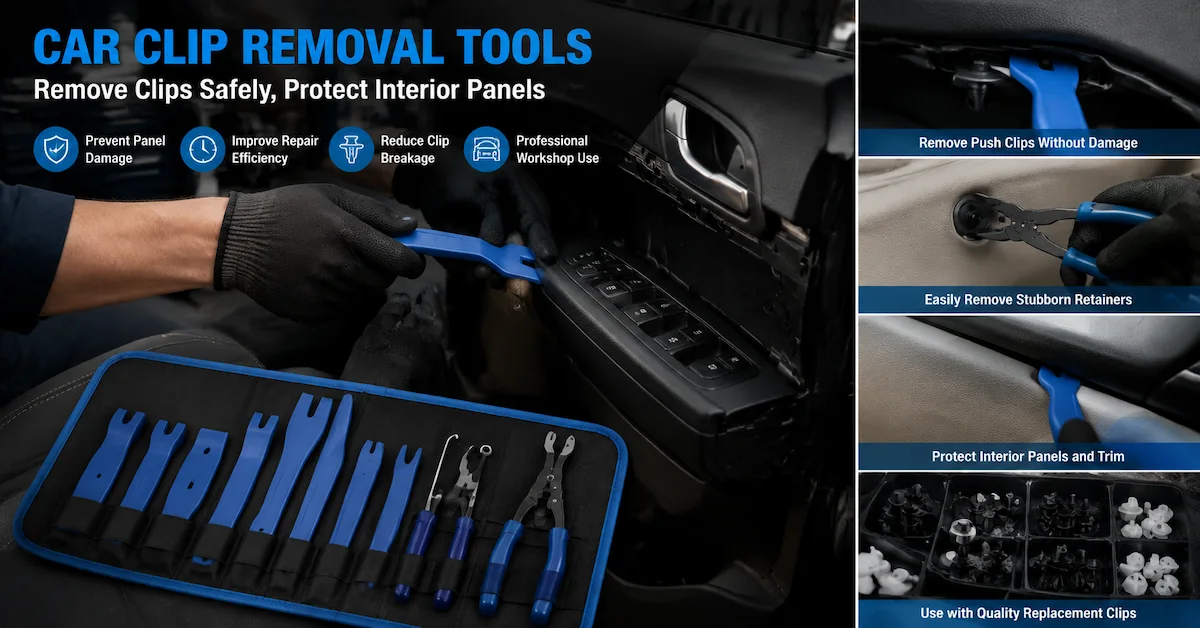
Professional car clip removal tools are designed to apply controlled force and release clips safely.
Compared with general tools, dedicated automotive removal tools provide:
| Advantage | Benefit |
|---|---|
| Proper leverage angle | Reduces panel damage |
| Special clip designs | Helps release fasteners correctly |
| Non-damaging materials | Protects interior surfaces |
| Better grip | Improves technician efficiency |
| Multiple tool shapes | Supports different clip types |
For repair businesses, investing in the right tools helps maintain consistent service quality.
Common Automotive Clip Removal Tool Types
Different automotive clips require different removal methods. A complete tool set helps technicians handle various repair situations.
| Tool Type | Main Application |
|---|---|
| Plastic trim removal tools | Interior panels and decorative trims |
| Clip pliers | Removing stubborn retainers |
| Panel pry tools | Door panels and dashboard trims |
| Fastener removal forks | Plastic rivets and push clips |
| Hook tools | Small clips and hidden fasteners |
| Automotive clip remover sets | Multi-purpose repair work |
A professional workshop usually needs multiple tool designs because vehicles use different clip structures.
How Car Clip Removal Tools Protect Interior Panels
Interior panels are often made from materials that can be easily scratched or deformed. This is especially true for luxury vehicles and modern vehicles with soft-touch surfaces.
Professional removal tools help by:
Reducing Surface Damage
Plastic pry tools create controlled separation between panels, reducing scratches and marks.
Protecting Mounting Points
Incorrect force can break mounting brackets. Proper tools distribute pressure more evenly.
Preventing Clip Breakage
Many automotive clips are reusable if removed correctly. Using the wrong tool can damage the clip before it is removed.
Improving Repair Appearance
A clean removal process helps technicians reinstall panels without visible damage or gaps.
For repair chains, this directly affects customer satisfaction and repeat business.
Common Applications for Car Clip Removal Tools
Car clip removal tools are used throughout vehicle repair and maintenance.
| Vehicle Area | Common Use |
|---|---|
| Door panels | Removing interior door clips |
| Dashboard | Accessing electronic components |
| Center consoles | Removing trim panels |
| Headliners | Repairing roof interior parts |
| Seat trims | Removing decorative covers |
| Bumper areas | Removing exterior fasteners |
| Fender liners | Replacing body clips |
| Wheel arches | Removing plastic retainers |
A reliable tool set allows technicians to handle both interior and exterior fastening systems.
Choosing the Right Car Clip Removal Tools for Repair Shops
Before purchasing automotive removal tools, repair businesses should evaluate several factors.
Material Quality
The tool material affects durability and safety.
Common materials include:
| Material | Advantages |
|---|---|
| Nylon plastic | Protects panels from scratches |
| Reinforced plastic | Provides stronger leverage |
| Stainless steel | Suitable for difficult fasteners |
| Alloy materials | Provides durability for professional use |
For interior applications, non-damaging plastic tools are usually preferred.
Tool Design
Good automotive tools should provide:
- Comfortable grip
- Proper leverage
- Different shapes and sizes
- Easy access to hidden clips
- Resistance to bending
Compatibility
Vehicles use many different clip designs. A good tool set should support:
- Push clips
- Retainer clips
- Plastic rivets
- Screw grommets
- Trim fasteners
This allows repair shops to handle more vehicle models.
Relationship Between Removal Tools and Automotive Clips
Removal tools and automotive clips work together as a complete repair solution.
A technician may need tools to remove damaged clips, but replacement clips are also required during many repairs.
Common replacement products include:
- Door panel clips
- Bumper clips
- Fender liner clips
- Push retainers
- Plastic rivets
- Screw grommets
For suppliers and distributors, offering both clips and removal tools creates a more complete aftermarket product solution.
QEEPEI supplies a wide range of automotive clips and fasteners, helping buyers source replacement parts for different repair applications.
How Distributors Can Build a Car Repair Product Line
For automotive distributors and online sellers, car clip removal tools can be combined with fastening products to create higher-value product packages.
Popular combinations include:
| Product Combination | Target Customer |
|---|---|
| Clip removal tools + clip kits | Repair shops |
| Trim tools + door clips | Body shops |
| Fastener assortment + tools | DIY users |
| Private label tool kits | Online sellers |
| Automotive clips + replacement tools | Distributors |
This approach helps businesses provide complete repair solutions instead of selling individual components.
Quality Considerations When Buying Automotive Tools in Bulk
For wholesale buyers, product consistency matters.
Before selecting a supplier, check:
| Evaluation Point | Why It Matters |
|---|---|
| Tool material | Determines durability |
| Product range | Supports different repair needs |
| Packaging | Improves resale value |
| Quality inspection | Reduces defective products |
| Supply capability | Supports repeat orders |
| Custom packaging | Helps private label businesses |
A reliable supplier should understand both automotive fastening products and repair workflows.
Why Choose QEEPEI for Automotive Fastening Solutions?
QEEPEI focuses on automotive clips, plastic fasteners, car clip kits, specific fit clips, and automotive fastening solutions.
For global B2B buyers, QEEPEI supports:
- Automotive distributors
- Repair shops
- Online sellers
- Aftermarket suppliers
- Private label brands
QEEPEI provides:
- Wide automotive clip categories
- Reliable product supply
- Application matching support
- OEM/ODM solutions
- Packaging customization
Learn more about QEEPEI’s company capabilities through the About Us page.
For bulk purchasing, product cooperation, or customized solutions, contact QEEPEI through the Contact Us page.
FAQ
What are car clip removal tools used for?
Car clip removal tools are used to safely remove automotive clips, trim fasteners, and interior panels without causing damage.
Why should repair shops avoid using screwdrivers for clip removal?
Regular screwdrivers may scratch panels, damage clips, and break mounting points because they are not designed for automotive fasteners.
Are plastic trim removal tools better for interior panels?
Yes. Plastic tools reduce the risk of scratches and are suitable for most interior trim applications.
What types of clips require removal tools?
Common examples include push clips, retainer clips, plastic rivets, door panel clips, and trim fasteners.
Can car clip removal tools be reused?
Yes. Professional-quality tools are designed for repeated repair use.
What tools should an auto repair shop stock?
A basic set should include pry tools, clip pliers, fastener removers, hook tools, and trim removal kits.
Can distributors sell removal tools together with car clips?
Yes. Combining tools with automotive clips creates a complete repair solution for workshops and aftermarket buyers.
What materials are used for automotive removal tools?
Common materials include nylon plastic, reinforced plastic, stainless steel, and alloy materials.
How can repair shops reduce broken clips during maintenance?
Using proper removal tools and replacing damaged clips with suitable replacements helps reduce repair problems.
Where can I source automotive clips and removal tools?
You can explore QEEPEI automotive fastening solutions through the Products page.
Conclusion
Professional car clip removal tools help repair shops improve efficiency, protect interior panels, and reduce unnecessary repair costs. Choosing the right tools allows technicians to remove automotive fasteners safely while maintaining vehicle appearance and quality.
For distributors and aftermarket businesses, combining removal tools with automotive clips creates a complete repair solution that supports customer needs.
QEEPEI provides automotive clips, plastic fasteners, clip kits, and fastening solutions for global automotive buyers.
Explore QEEPEI’s complete automotive fastening product range to build a stronger repair supply system.