
Why Choosing the Right Car Clips Supplier Matters
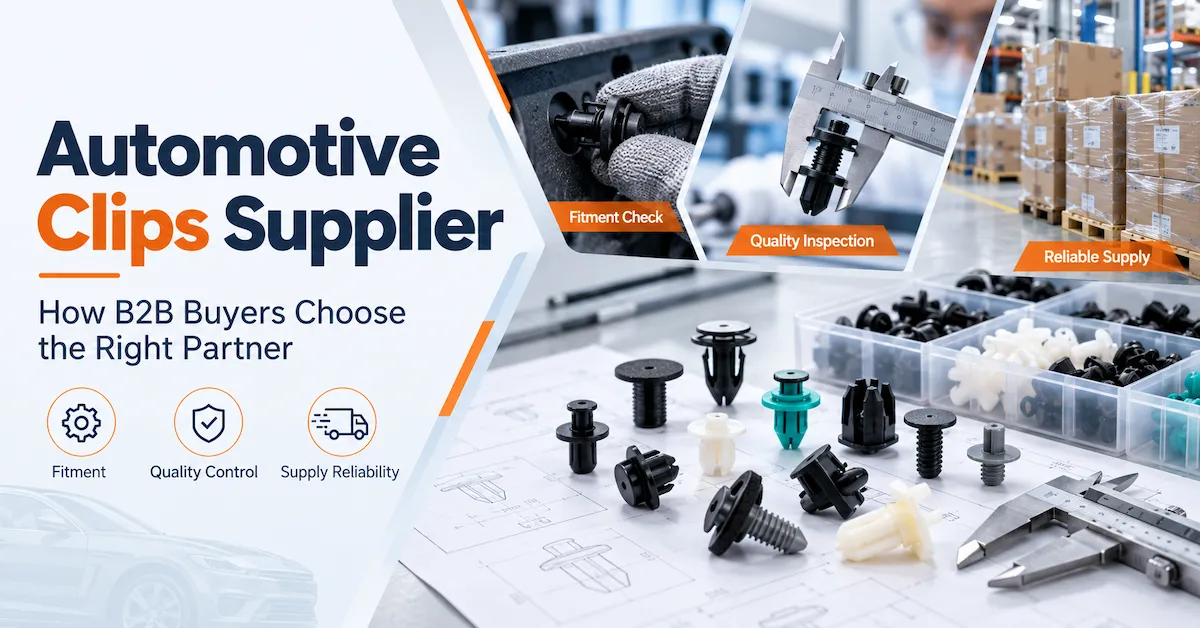
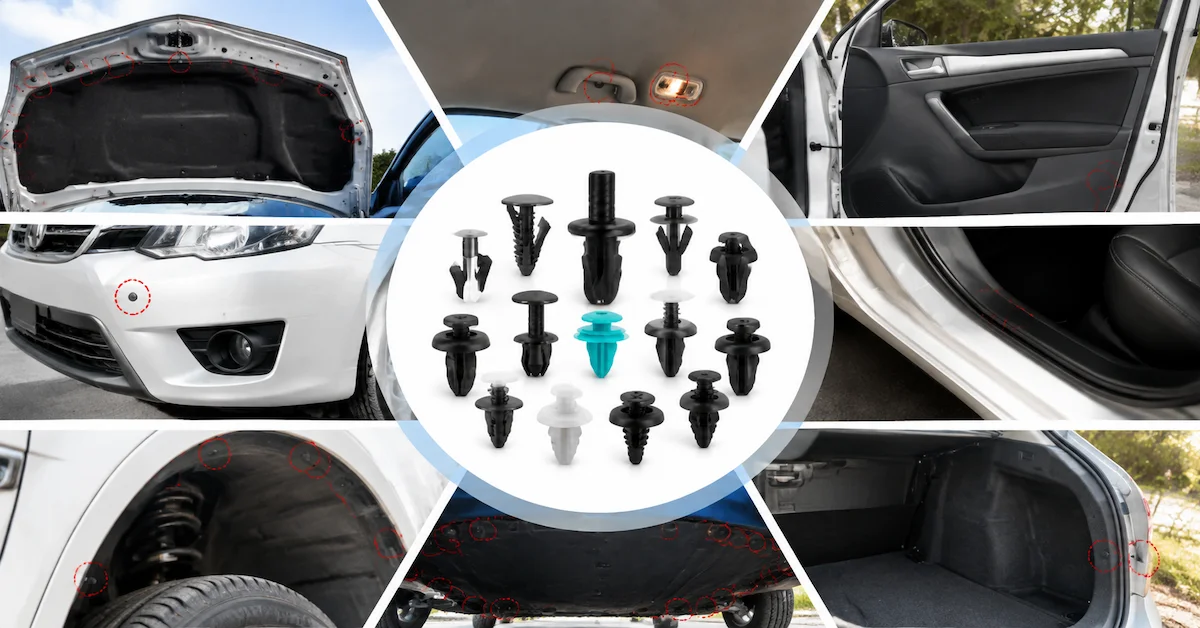
Car clips are small automotive fastening components, but they play an important role in vehicle assembly, repair, and aftermarket supply chains.
They are widely used to secure:
- interior panels;
- door trims;
- bumpers;
- wheel liners;
- engine covers;
- wiring harnesses;
- exterior moldings.
For automotive distributors, repair networks, wholesalers, and OEM buyers, selecting the right car clips supplier is not only about finding products at competitive prices.
A reliable supplier should provide:
- consistent product quality;
- accurate fitment information;
- stable production capacity;
- flexible customization;
- reliable delivery;
- technical support.
Poor-quality automotive clips may cause:
- loose vehicle panels;
- installation difficulties;
- customer complaints;
- repeated replacement costs;
- inventory problems.
Therefore, professional buyers need a supplier that understands automotive applications, material performance, and supply chain requirements.
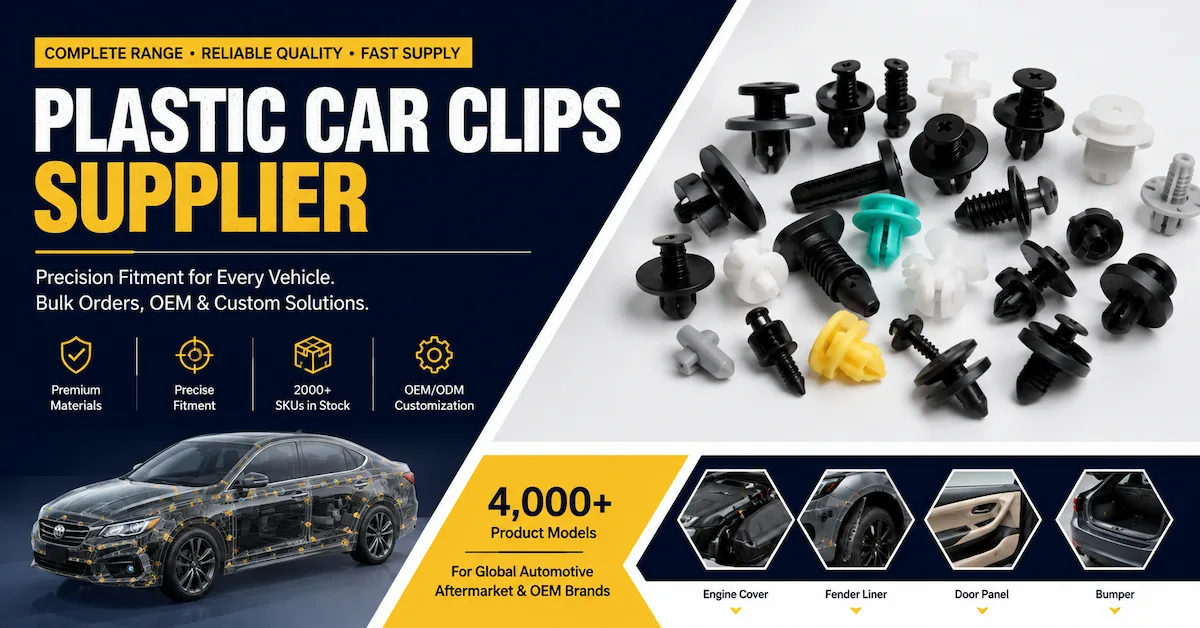
QEEPEI provides automotive clips and plastic fastener solutions for global distributors, repair suppliers, and automotive brands, supporting standard products and customized projects.
Learn more about QEEPEI:
https://www.cnclip.com/about-us
What Products Can a Car Clips Supplier Provide?
A professional car clips supplier should offer a wide product range to meet different vehicle applications.
Different vehicle areas require different clip designs because each location has different requirements for:
- retention force;
- flexibility;
- vibration resistance;
- environmental durability;
- installation method.
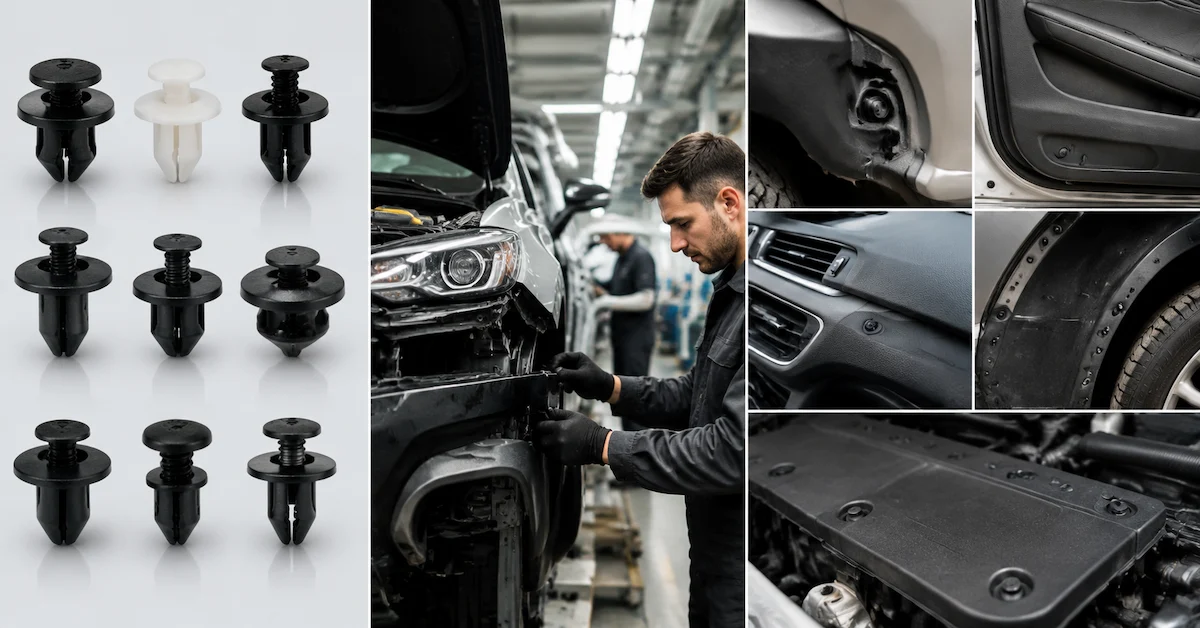
Push Type Retainer Clips
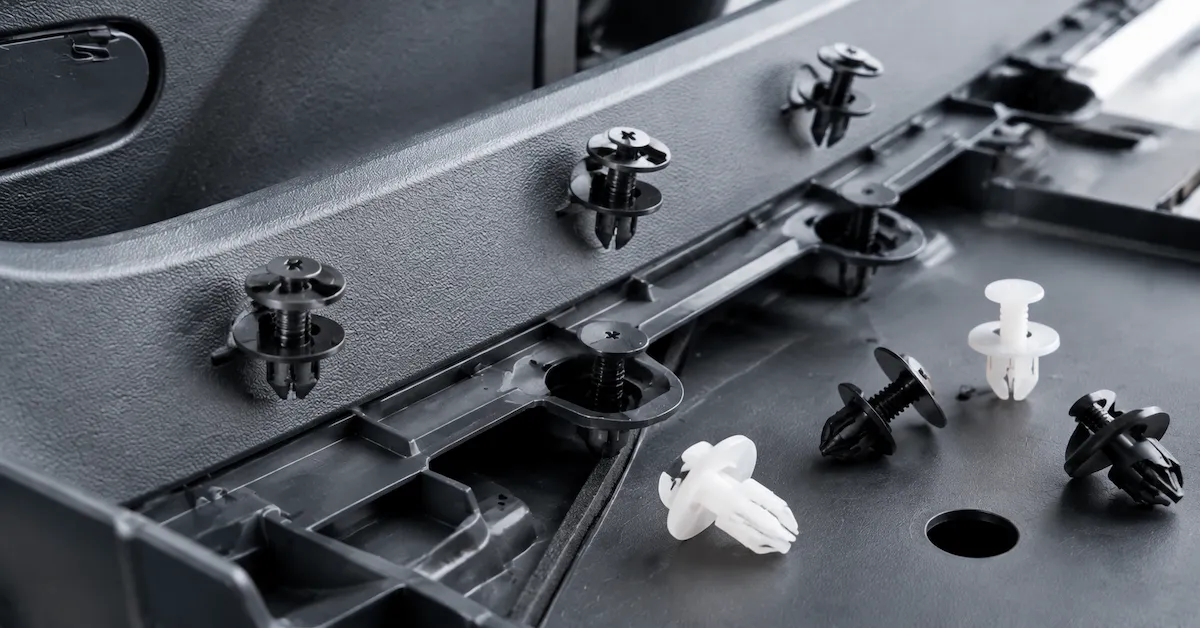
Push retainers are one of the most common automotive fastening solutions.
They usually include:
- head;
- stem;
- expansion legs;
- locking structure.
During installation, the clip expands behind the panel and creates a secure connection.
Common applications:
- bumper covers;
- splash shields;
- interior trims;
- engine covers.
A reliable supplier should provide accurate specifications such as:
- hole diameter;
- stem length;
- panel thickness range;
- material type.
Bumper Clips
Bumper clips are designed for exterior applications where durability is critical.
They need to withstand:
- vibration;
- temperature changes;
- moisture;
- road impact;
- repeated service conditions.
Applications include:
- front bumper covers;
- rear bumper panels;
- wheel arch liners;
- underbody shields.
For these applications, suppliers should consider both material performance and structural design.
Explore QEEPEI automotive body clips:
https://www.cnclip.com/products/car-body-clips
Door Panel Clips
Door trim clips are used to secure interior door components.
They require a balance between:
- holding strength;
- easy installation;
- low noise performance;
- removal capability.
Common applications:
- door panels;
- interior trims;
- decorative covers.
Incorrect clips may result in:
- loose panels;
- vibration noise;
- poor customer experience.
QEEPEI provides automotive interior clip solutions:
https://www.cnclip.com/products/car-door-interior-clips
Trim and Molding Clips
Trim clips are commonly used for:
- exterior moldings;
- interior decorative parts;
- protective covers;
- side panels.
These clips require accurate dimensions because small differences can affect installation performance.
Vehicle Specific Car Clips
Many aftermarket buyers require vehicle-specific solutions.
A professional supplier should support matching based on:
- vehicle model;
- OEM reference numbers;
- installation location;
- original sample;
- dimensions.
Vehicle-specific clips help distributors reduce incorrect fitment issues and improve customer satisfaction.
QEEPEI offers specific-fit automotive clips:
https://www.cnclip.com/products/specific-fit-car-clips
Materials Used by Professional Car Clips Suppliers
Material selection directly influences automotive clip performance.
Different applications require different material characteristics.
PA6 and PA66 Nylon Automotive Clips
Polyamide materials are widely used in automotive fastening applications.
Advantages include:
- high mechanical strength;
- good toughness;
- fatigue resistance;
- suitable temperature performance.
Common applications:
- structural clips;
- interior fasteners;
- demanding fastening locations.
However, buyers should consider:
- resin grade;
- moisture conditions;
- temperature environment;
- required flexibility.
PP Automotive Clips
Polypropylene is commonly selected for applications requiring lightweight and flexible performance.
Advantages:
- lightweight;
- chemical resistance;
- good flexibility;
- cost efficiency.
Typical applications:
- interior panels;
- general trim fastening;
- lightweight components.
POM Automotive Fasteners
POM provides:
- dimensional stability;
- low friction;
- wear resistance;
- precision performance.
It is suitable for applications requiring:
- accurate dimensions;
- smooth movement;
- stable locking performance.
A professional supplier should recommend materials based on application requirements rather than simply using the lowest-cost option.
How to Evaluate a Car Clips Supplier Before Purchasing
Selecting an automotive clip supplier requires evaluating several factors.
Product Range Capability
A capable supplier should provide various solutions, including:
- push clips;
- bumper clips;
- trim clips;
- door clips;
- retainers;
- vehicle-specific fasteners.
A broad product range helps buyers reduce the number of suppliers they manage.
Manufacturing Capability
Even when buyers search for a supplier, manufacturing capability remains important.
Evaluate:
- injection molding ability;
- mold development;
- production capacity;
- process control.
A supplier with manufacturing experience can provide better consistency and technical support.
Quality Control System
Automotive components require stable quality.
Important quality processes include:
Material Inspection
Checking:
- resin type;
- material consistency;
- supplier documentation.
Dimension Inspection
Checking:
- diameter;
- length;
- locking structure;
- critical specifications.
Performance Testing
Depending on application:
- installation testing;
- pull-out testing;
- impact testing;
- aging testing.
QEEPEI applies quality control throughout production to support reliable automotive clip supply.
Customization Ability
Many automotive buyers require customized products.
A professional car clips supplier should support:
- custom dimensions;
- special materials;
- color options;
- packaging solutions;
- private label projects.
This is especially important for:
- aftermarket brands;
- distributors;
- automotive repair chains.
Export and Supply Experience
For international buyers, supplier experience matters.
Important considerations include:
- export documentation;
- packaging standards;
- lead time management;
- communication efficiency;
- long-term supply capability.
Car Clips Supplier vs Manufacturer: Which Partner Is Better?
Many buyers compare working with a supplier or directly with a manufacturer.
| Factor | Car Clips Supplier | Manufacturer |
|---|---|---|
| Product selection | Wide range | Product-focused |
| Customization | Depends on resources | Strong capability |
| Production control | May rely on factories | Direct control |
| Mold development | Limited or outsourced | Available |
| OEM projects | Depends on capability | More suitable |
| Technical support | Varies | Usually stronger |
For standard replacement parts, suppliers can provide convenience.
For OEM, customization, and long-term projects, working with a manufacturer-supported supplier provides additional advantages.
OEM and Custom Car Clips Supply Solutions
Modern automotive buyers increasingly require customized fastening solutions.
A professional supplier should support OEM requirements.
Custom Size Development
Solutions may include:
- different stem lengths;
- different head designs;
- different locking structures.
Material Customization
Depending on requirements, suppliers can provide:
- PA;
- PP;
- POM;
- modified engineering plastics.
Color and Packaging Customization
For brands and distributors:
- custom colors;
- branded packaging;
- barcode labels;
- retail kits.
Private Label Automotive Clips
Private-label programs allow companies to build their own automotive clip product lines.
A capable supplier can support:
- product selection;
- packaging;
- quality management;
- repeat production.
How Global Buyers Source Car Clips from China
China is one of the major automotive plastic component manufacturing regions.
When sourcing from China, buyers should evaluate:
Supplier Qualification
Check:
- factory background;
- product experience;
- production capability;
- quality system.
Sample Approval
Before bulk purchasing, evaluate:
- product dimensions;
- installation performance;
- material quality;
- packaging.
MOQ and Lead Time
Confirm:
- minimum order quantity;
- production schedule;
- shipping requirements.
Long-Term Cooperation
A reliable supplier should provide:
- stable quality;
- consistent pricing;
- continuous support;
- new product development.
Why Choose QEEPEI as Your Car Clips Supplier
QEEPEI specializes in automotive clips and plastic fastening solutions for global customers.
The company supports:
- automotive clip supply;
- vehicle-specific solutions;
- OEM customization;
- mold development;
- injection molding;
- quality inspection.
For distributors, wholesalers, repair suppliers, and automotive brands, QEEPEI helps create a more reliable automotive fastening supply chain.
Key advantages include:
Wide Automotive Clip Range
Covering:
- body clips;
- interior clips;
- bumper fasteners;
- trim clips;
- specific-fit clips.
Custom Development Support
Including:
- sample analysis;
- product improvement;
- mold development;
- customized production.
Quality-Focused Manufacturing
Including:
- material control;
- production inspection;
- finished product checking.
Explore QEEPEI products:
https://www.cnclip.com/products
Contact QEEPEI:
https://www.cnclip.com/contact-us
FAQ: Car Clips Supplier
What should I look for in a car clips supplier?
A reliable supplier should provide product quality, accurate fitment, stable supply, customization capability, and technical support.
What types of automotive clips can suppliers provide?
Common products include push retainers, bumper clips, door panel clips, trim clips, engine cover clips, and vehicle-specific fasteners.
What materials are used for car clips?
Common materials include PA6, PA66, PP, and POM. The correct choice depends on application requirements.
Can a car clips supplier provide OEM solutions?
Yes. Professional suppliers can support custom designs, materials, packaging, and private-label projects.
How can buyers verify automotive clip quality?
Buyers should check:
- material information;
- dimensions;
- installation performance;
- inspection process;
- production capability.
What information is needed for custom car clips?
Provide:
- product samples;
- drawings;
- vehicle information;
- installation location;
- quantity requirements.
How do I choose between standard and customized clips?
Standard clips are suitable for common replacement needs. Customized clips are better for OEM projects or special applications.
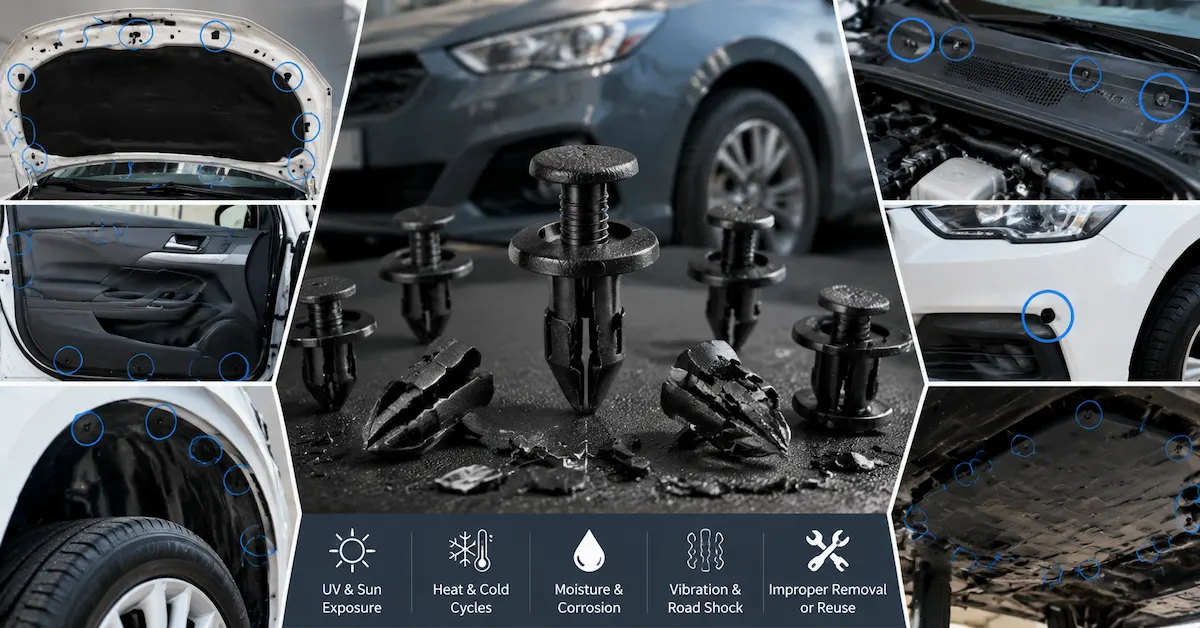
Why do automotive clips fail?
Common causes include:
- incorrect fitment;
- unsuitable material;
- poor molding quality;
- excessive installation force;
- environmental exposure.
Can QEEPEI supply bulk automotive clips?
Yes. QEEPEI supports bulk orders for distributors, wholesalers, repair suppliers, and automotive brands.
Conclusion
Choosing the right car clips supplier helps automotive businesses improve product reliability, reduce sourcing problems, and build stable supply chains.
The best supplier should provide:
- complete product solutions;
- suitable materials;
- reliable quality control;
- customization capability;
- professional support.
Automotive clips may be small components, but they have a significant impact on vehicle assembly and customer experience.
By working with an experienced supplier like QEEPEI, global buyers can access reliable automotive fastening solutions designed for aftermarket, OEM, and customized applications.