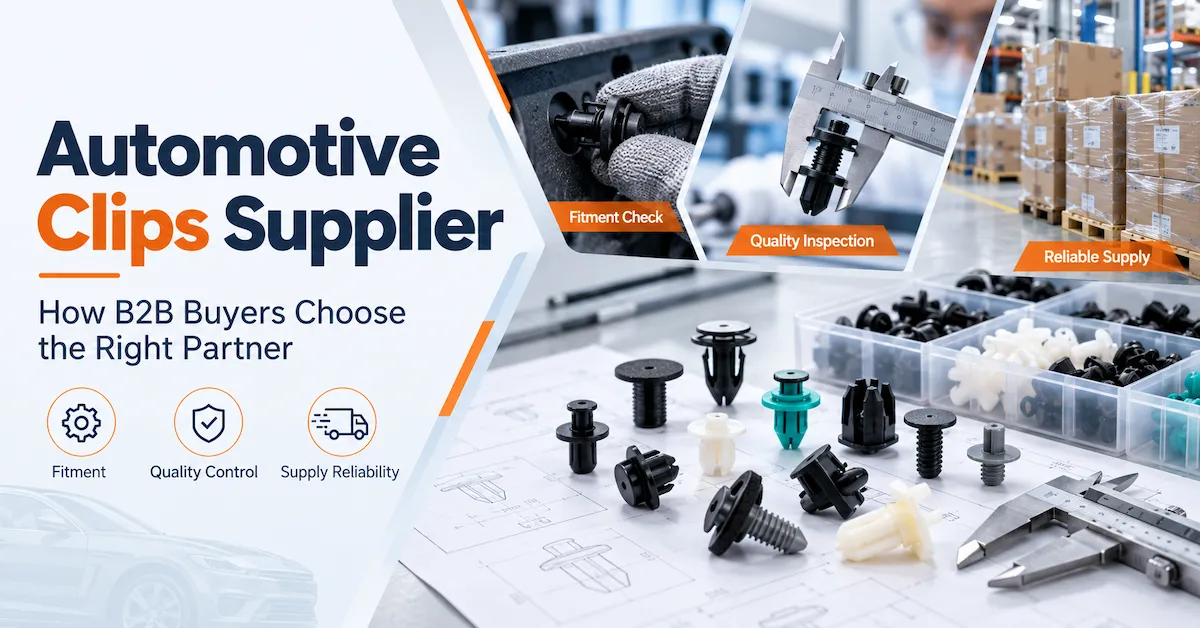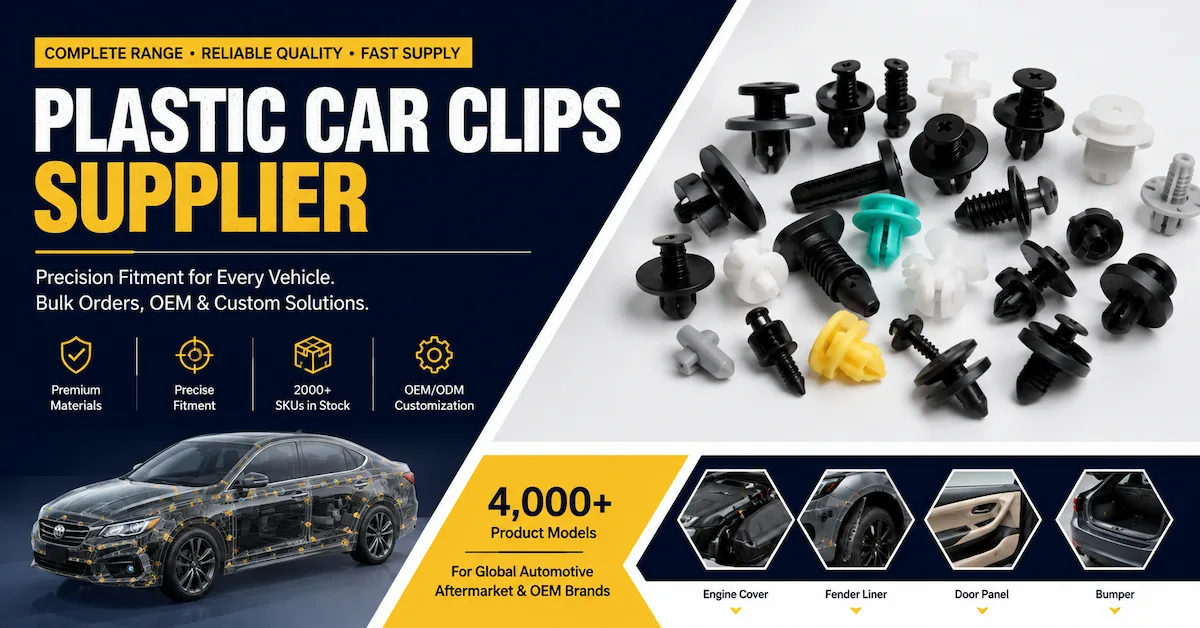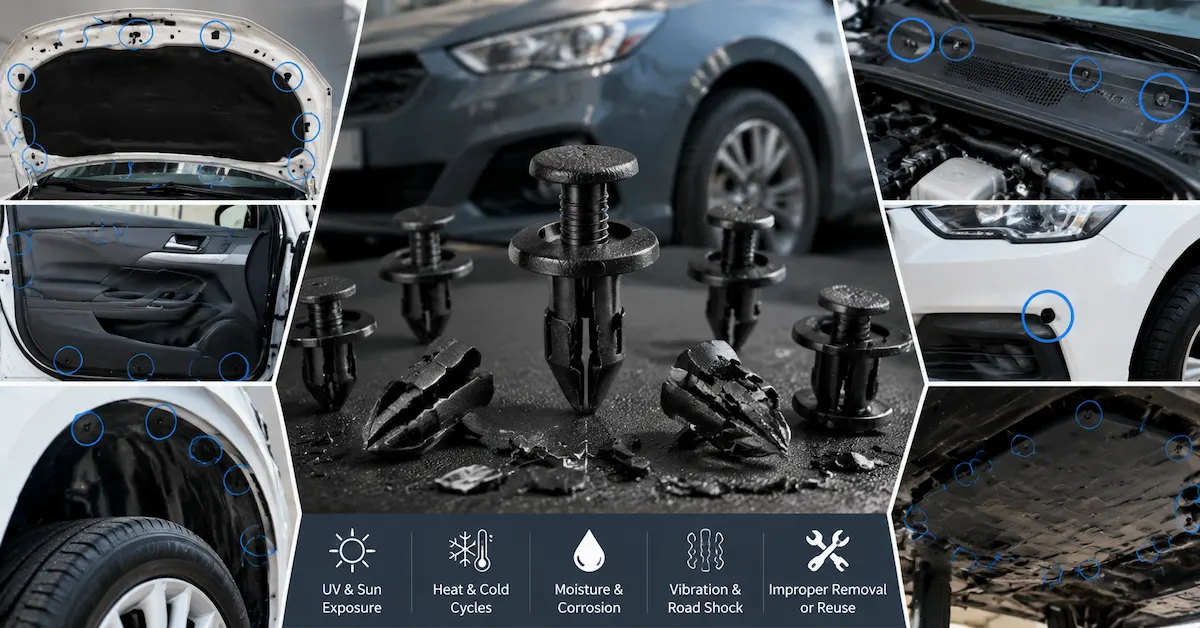

Choosing the right automotive clips supplier is not only about finding a lower unit price. For B2B buyers, the real decision involves product fitment, material stability, SKU coverage, packaging options, delivery speed, and after-sales support. A poor-quality clip may look acceptable at first, but it can cause loose panels, bumper gaps, trim vibration, broken retainers, customer complaints, and higher return rates.
For auto parts distributors, repair chains, online sellers, and private label brands, automotive clips are small parts with a large supply chain impact. The right supplier should help you source not just individual clips, but complete fastening solutions for different vehicle positions, models, and sales channels.
QEEPEI provides a wide range of automotive clips and fasteners, including car body clips, car clip kits, specific fit car clips, and car clip tools for global B2B buyers.
Why Automotive Clips Matter in B2B Sourcing
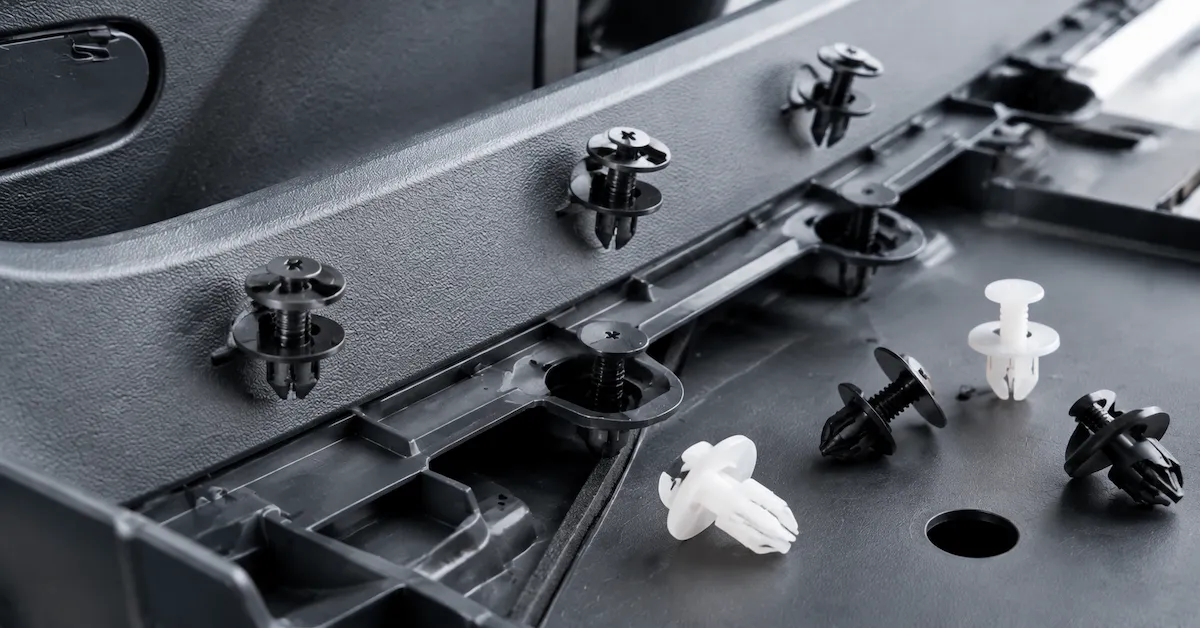
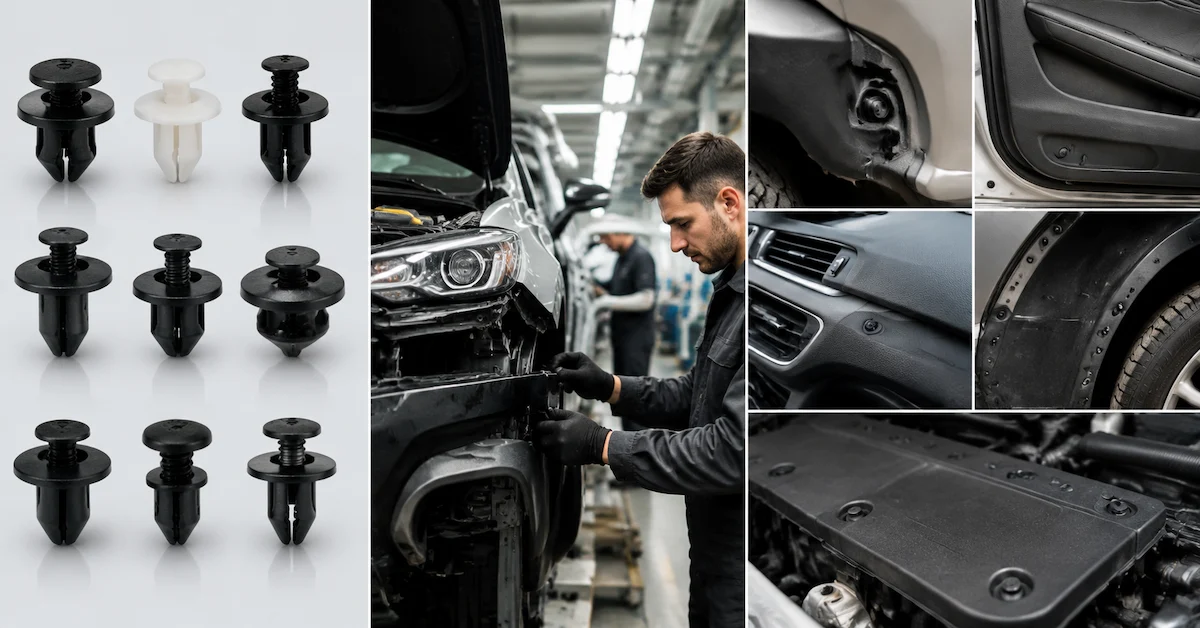
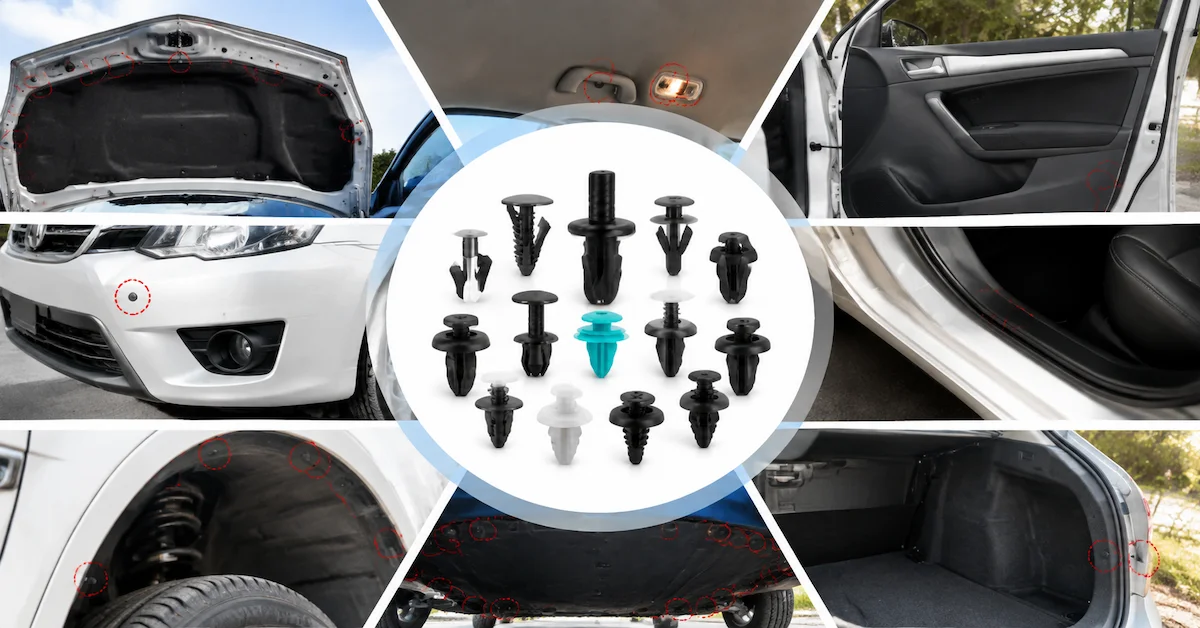
Automotive clips are used throughout the vehicle. They secure bumpers, fender liners, door panels, dashboards, seal strips, headliners, wheel arches, light fixtures, glass parts, and underbody panels. Because many of these parts are removed during repair or replacement, the demand for clips is continuous in the aftermarket.
For B2B buyers, the challenge is not only “Can I buy clips?” but “Can I buy the right clips consistently?”
Common sourcing problems include:
- Similar-looking clips with different hole sizes
- Poor material that becomes brittle after installation
- Incomplete SKU coverage for popular vehicle models
- No clear fitment data for online listings
- Slow replenishment for fast-moving items
- Packaging that does not fit retail or e-commerce sales
- High return rates due to wrong clip selection
A professional automotive clips supplier should help reduce these risks through product knowledge, inventory support, and quality control.
Key Buyer Types and Their Different Needs
Different buyers care about different things. Before choosing a supplier, you should understand which business model the supplier can support.
| Buyer Type | Main Need | Supplier Requirement |
|---|---|---|
| Auto parts distributors | Wide SKU range and stable replenishment | Large inventory and fast delivery |
| Repair shops | Common repair clips and tools | Practical kits and easy selection |
| Online sellers | Retail-ready packaging and clear fitment | Product images, labels, SKU data |
| Private label brands | Custom packaging and product line building | OEM/ODM and branding support |
| Supermarket buyers | Standard packs and barcode labels | Consistent quality and retail packaging |
| Vehicle-specific sellers | Accurate model matching | Specific fit clips and fitment guidance |
If your supplier only sells random universal clips, it may not support your long-term business growth. A strong partner should understand how clips are sold, installed, replaced, and restocked in different markets.
Product Range: More Than One Type of Car Clip
A reliable automotive clips supplier should offer a structured product range. This helps buyers build a complete catalog and avoid purchasing scattered items from multiple sources.
Important categories include:
- Car bumper clips
- Fender liner clips
- Door panel clips
- Interior trim clips
- Weatherstrip and seal strip clips
- Hood insulation clips
- Dashboard navigation clips
- Wheel arch molding clips
- Plastic rivet clips
- Screw grommet clips
- Car clip kits
- Vehicle-specific clips
- Clip removal tools
QEEPEI’s product categories cover multiple vehicle application areas, making it easier for buyers to source clips by repair position, vehicle model, or sales package type.
Material Quality: A Core Standard for Car Clips
Material quality directly affects clip durability. Low-grade plastic or recycled material may reduce cost, but it can also increase breakage, deformation, and customer complaints. For automotive applications, clips must withstand vibration, temperature changes, moisture, road dust, and repeated installation pressure.
Common material considerations include:
| Material | Advantage | Suitable Applications |
| PA Nylon | Strong, flexible, wear-resistant | Bumper clips, trim clips, push retainers |
| PP | Lightweight and cost-effective | Interior clips and light-duty retainers |
| POM | Dimensional stability and strength | Precision locking clips |
| Reinforced plastic | Better mechanical performance | High-stress fastening points |
When evaluating an automotive clips supplier, ask whether the clips are made from new materials, whether material consistency is controlled, and whether the supplier can recommend the right material for different vehicle areas.
Fitment Accuracy: The Difference Between Good and Bad Clips
Many automotive clips look similar, but small dimensional differences can cause major installation problems. A clip may fail because the stem is too short, the head diameter is too small, the locking legs are weak, or the hole size does not match the vehicle panel.
B2B buyers should check:
- Hole diameter
- Stem length
- Head diameter
- Panel thickness
- Locking structure
- OE reference or vehicle application
- Installation position
- Color and material requirements
For online sellers and distributors, fitment accuracy also affects product reviews and return rates. If customers receive the wrong clip, the problem may not be the clip itself—it may be poor selection data.
This is why specific fit car clips are important for buyers serving Toyota, Honda, Ford, VW/Audi, Nissan, BMW, Mazda, Renault, Opel, Fiat, and other vehicle groups.
Inventory and Delivery Capability
A supplier’s stock capacity is especially important for distributors and repair supply chains. Automotive clips are low-cost, high-frequency replacement parts. When a fast-moving SKU is out of stock, customers may quickly switch to another supplier.
A dependable automotive clips supplier should provide:
- Stable stock for popular models
- Fast replenishment
- Clear SKU management
- Flexible order quantity
- Bulk packaging options
- Support for mixed orders
- Export experience
For buyers who need regular stock rotation, QEEPEI supports automotive clip supply for distributors, online sellers, repair channels, and other business types. You can learn more about business cooperation options through the QEEPEI Wholesale page.
OEM/ODM and Packaging Support
Not every buyer wants plain bulk clips. Many B2B customers need product lines that are ready for retail, e-commerce, or private label distribution.
Useful packaging options include:
| Packaging Type | Best For |
| Bulk bags | Distributors and repair shops |
| 100 pcs / 500 pcs / 1000 pcs packs | Wholesale and warehouse supply |
| Assortment kits | Repair shops and online sellers |
| Color boxes | Retail and supermarket channels |
| Private label bags | Brand owners and e-commerce sellers |
| Barcode packaging | Retail and inventory management |
A strong supplier should support not only clip production, but also packaging design, label customization, SKU sheets, and market-ready sales materials. This is especially important for Amazon, eBay, Shopify, supermarket, and offline retail buyers.
Quality Control Before Shipment
Quality control is one of the biggest differences between a short-term supplier and a long-term partner. Automotive clips need consistent dimensions and stable locking performance. Even a small tolerance issue can cause poor fitment.
Before choosing a supplier, ask whether they check:
- Raw material quality
- Injection molding consistency
- Dimension accuracy
- Locking force
- Clip flexibility
- Appearance defects
- Packaging accuracy
- Batch traceability
A professional supplier should be able to explain how products are inspected before shipment. This gives buyers more confidence when placing bulk orders or developing private label clip kits.
How to Compare Automotive Clips Suppliers
Use this checklist when evaluating suppliers:
| Evaluation Point | What to Check |
| Product range | Does the supplier cover multiple clip categories? |
| SKU coverage | Can they support common and fast-moving models? |
| Material | Are the clips made from stable automotive-grade materials? |
| Fitment | Can they help match clips by vehicle or application? |
| Inventory | Do they have enough stock for repeat orders? |
| OEM/ODM | Can they support custom size, color, mold, or packaging? |
| QC | Do they inspect dimensions, strength, and appearance? |
| Packaging | Can they provide bulk, retail, or private label packs? |
| Export service | Can they handle global B2B orders smoothly? |
| Communication | Do they respond quickly and understand buyer needs? |
If a supplier cannot answer these questions clearly, they may not be the right long-term partner.
Why QEEPEI Is a Strong Automotive Clips Supplier
QEEPEI focuses on automotive clips, plastic fasteners, car clip kits, vehicle-specific clips, and clip tools. For B2B buyers, QEEPEI offers more than a product list. The company supports sourcing, product matching, packaging, OEM/ODM development, and bulk supply for different market channels.
QEEPEI is suitable for:
- Auto parts distributors
- Repair shop supply chains
- E-commerce sellers
- Private label automotive brands
- Supermarket and retail buyers
- Buyers needing specific fit car clips
To understand the company background and manufacturing capability, visit the About Us page. For quotation, bulk orders, or custom packaging requests, you can contact the team through Contact Us.
FAQ
1. What should I check first when choosing an automotive clips supplier?
Start with product range, material quality, SKU coverage, fitment support, inventory capacity, and quality control. These factors affect long-term purchasing stability.
2. Are universal car clips enough for distributors?
Universal clips are useful, but they are not enough for all markets. Distributors should also stock bumper clips, fender clips, door panel clips, and specific fit car clips.
3. Why is fitment data important for online sellers?
Fitment data helps customers choose the right clips and reduces returns caused by wrong size or wrong vehicle application.
4. Can automotive clips be customized?
Yes. Many clips can be customized by size, color, material, structure, packaging, or branding. OEM/ODM service is useful for brand owners and distributors.
5. What packaging is best for car clips wholesale?
Bulk bags are suitable for distributors, while assortment kits, color boxes, and barcode packaging are better for retail and e-commerce sales.
6. Why do low-quality car clips break easily?
They may use poor plastic, recycled material, weak structure, or inaccurate molding. Heat, vibration, and aging can make the problem worse.
7. Should repair shops buy car clip kits or single clips?
Car clip kits are usually more practical for repair shops because they include multiple common sizes and reduce repair delays.
8. How can buyers reduce return rates?
Choose suppliers with clear fitment guidance, accurate dimensions, stable material, and proper packaging labels.
9. What types of buyers does QEEPEI support?
QEEPEI supports auto parts distributors, repair chains, online sellers, brand owners, supermarket buyers, and vehicle-specific clip buyers.
10. Where can I source automotive clips in bulk?
You can browse QEEPEI’s automotive clips product range or contact QEEPEI through the Contact Us page for bulk sourcing, OEM/ODM projects, and packaging customization.
Conclusion
Choosing an automotive clips supplier is a long-term supply chain decision. Price matters, but it should not be the only factor. B2B buyers also need stable quality, accurate fitment, strong inventory, fast delivery, packaging support, and professional communication.
For distributors, repair shops, online sellers, and private label brands, the right supplier can reduce product returns, improve customer satisfaction, and support business growth. QEEPEI provides automotive clips, car clip kits, vehicle-specific clips, and custom packaging solutions to help buyers build a more reliable fastening product line.
Explore QEEPEI’s full automotive clips and fasteners range to start your next sourcing plan.