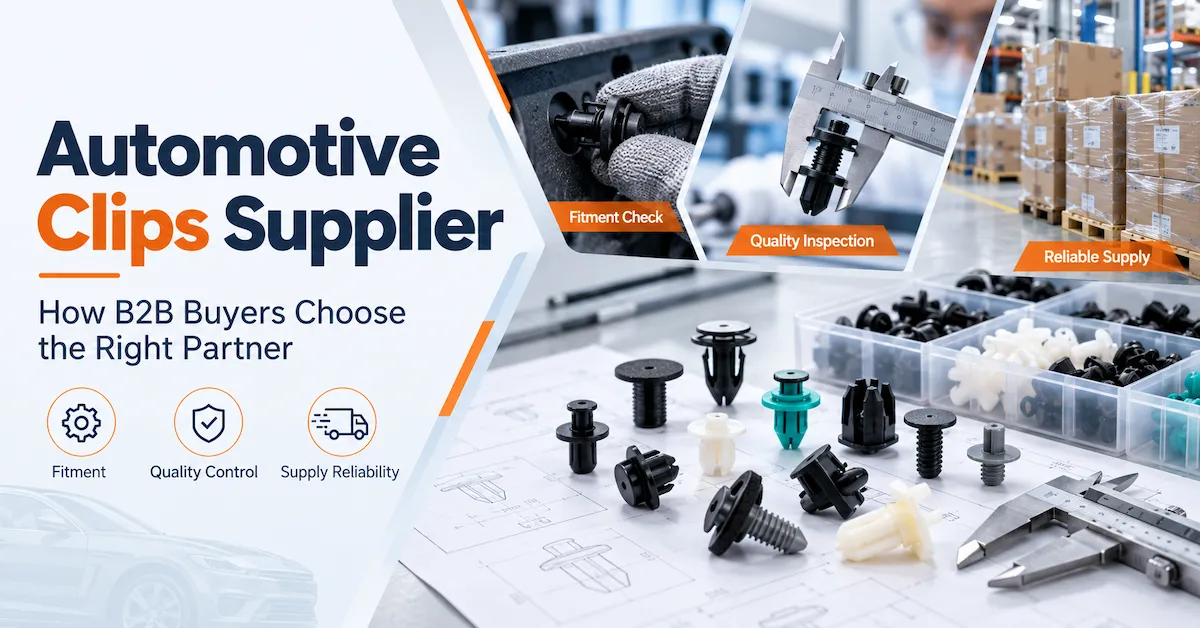

Choosing the right automotive clips supplier is an important decision for companies involved in automotive aftermarket supply, repair networks, distribution, and OEM projects.
Automotive clips may be small components, but they directly influence vehicle assembly quality, repair efficiency, and customer satisfaction. A supplier that provides unstable materials, inaccurate dimensions, or inconsistent production can create problems such as loose panels, wrong-fit products, and increased return rates.
For professional buyers, the ideal supplier should offer more than competitive prices. They need reliable production capability, accurate fitment support, flexible customization, quality control, and long-term supply stability.
QEEPEI provides automotive fastening solutions including car clips, automotive fasteners, car clip kits, and specific fit clips for global distributors, repair chains, and OEM buyers.
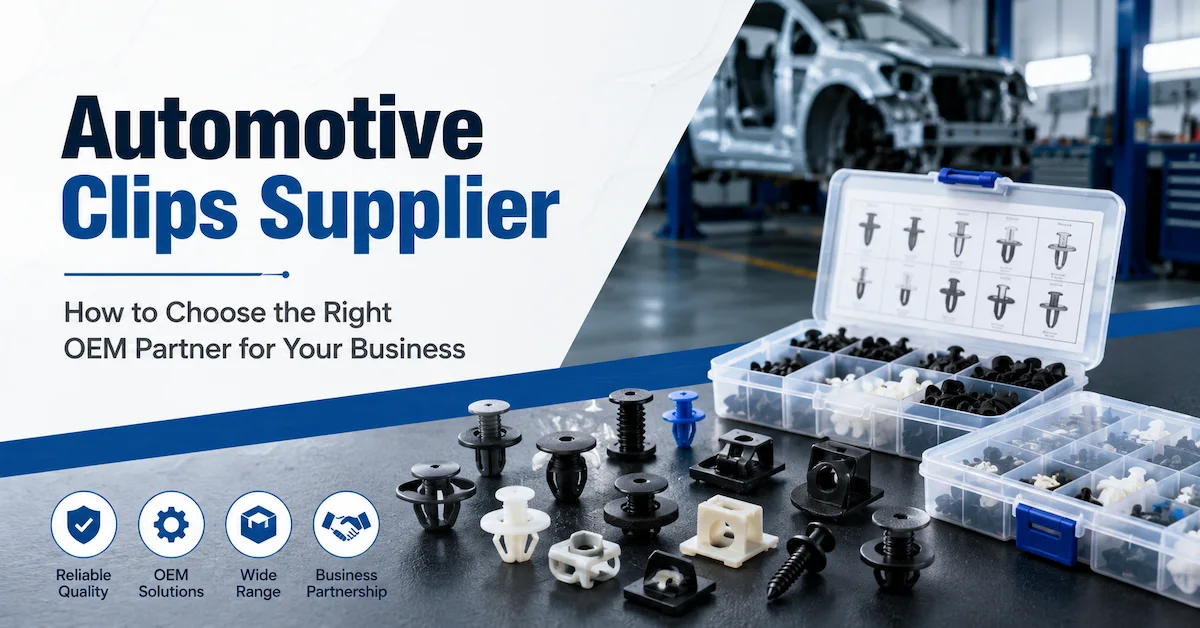
What Makes a Reliable Automotive Clips Supplier?
A professional automotive clips supplier should understand more than plastic molding. They should understand vehicle applications, repair requirements, aftermarket demand, and purchasing challenges.
The most important supplier capabilities include:
- Wide product coverage
- Stable manufacturing quality
- Automotive-grade materials
- Accurate dimensions
- OEM/ODM capability
- Flexible packaging solutions
- Reliable inventory support
- Global export experience
For B2B buyers, these capabilities determine whether the supplier can support long-term business growth.
Product Range: The Foundation of a Strong Supplier
One of the first things buyers should evaluate is product coverage.
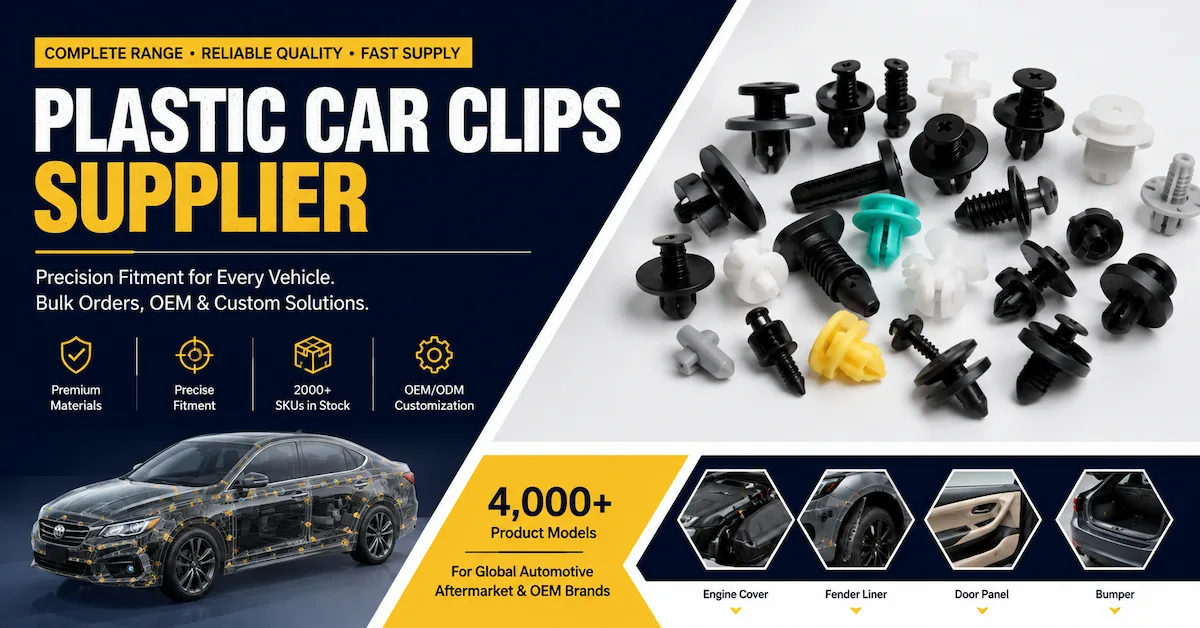
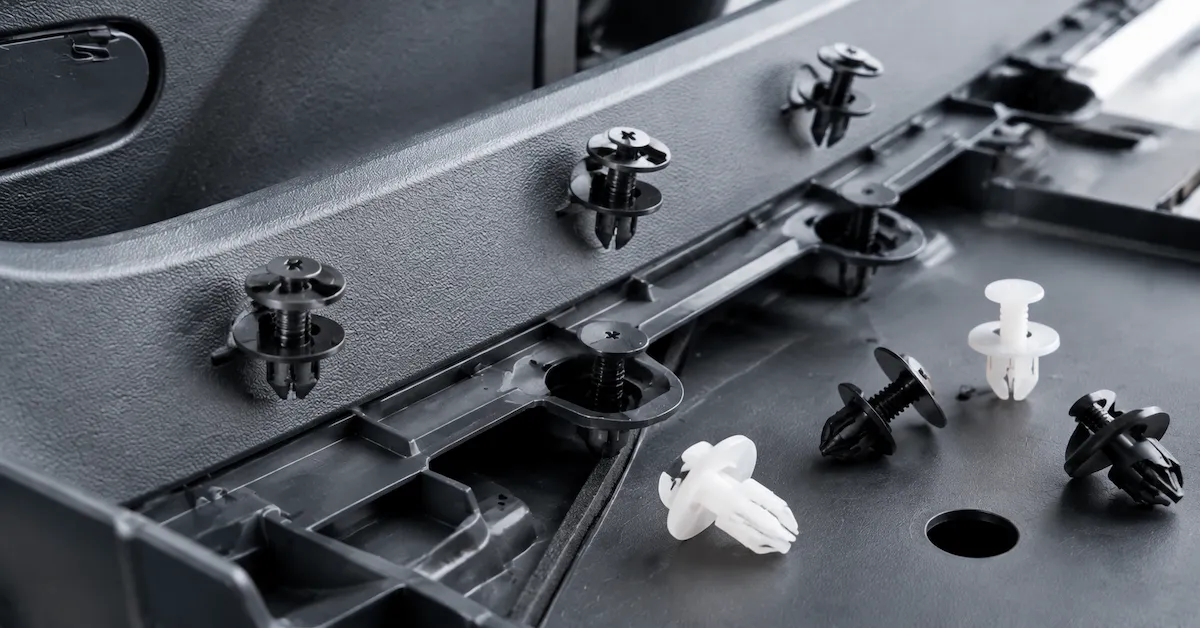
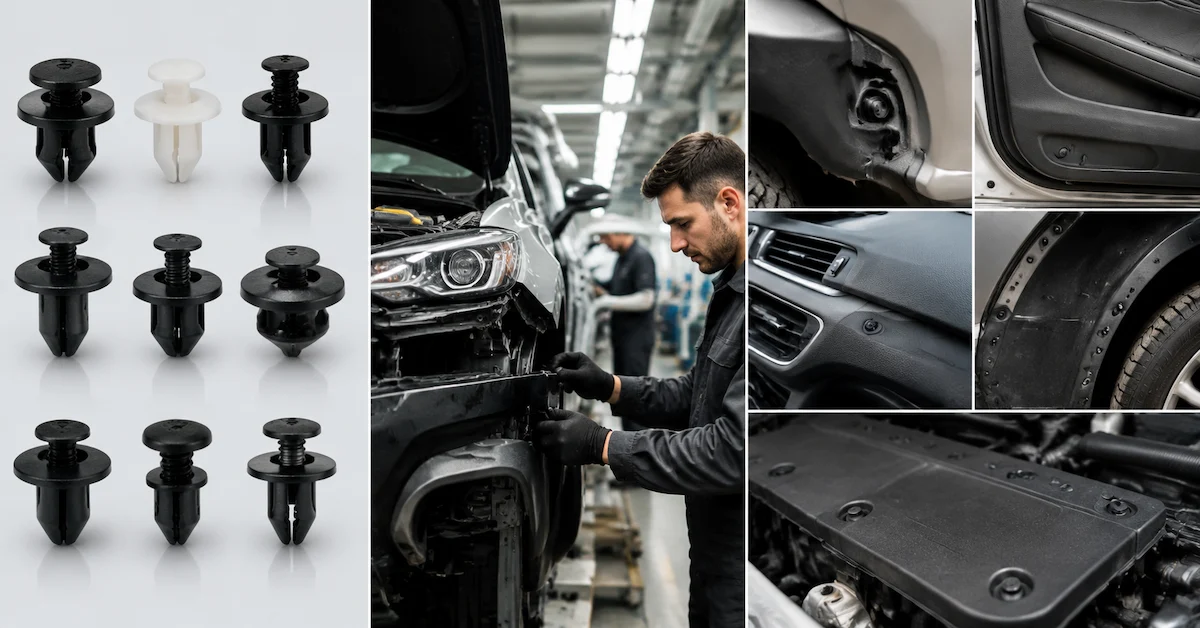
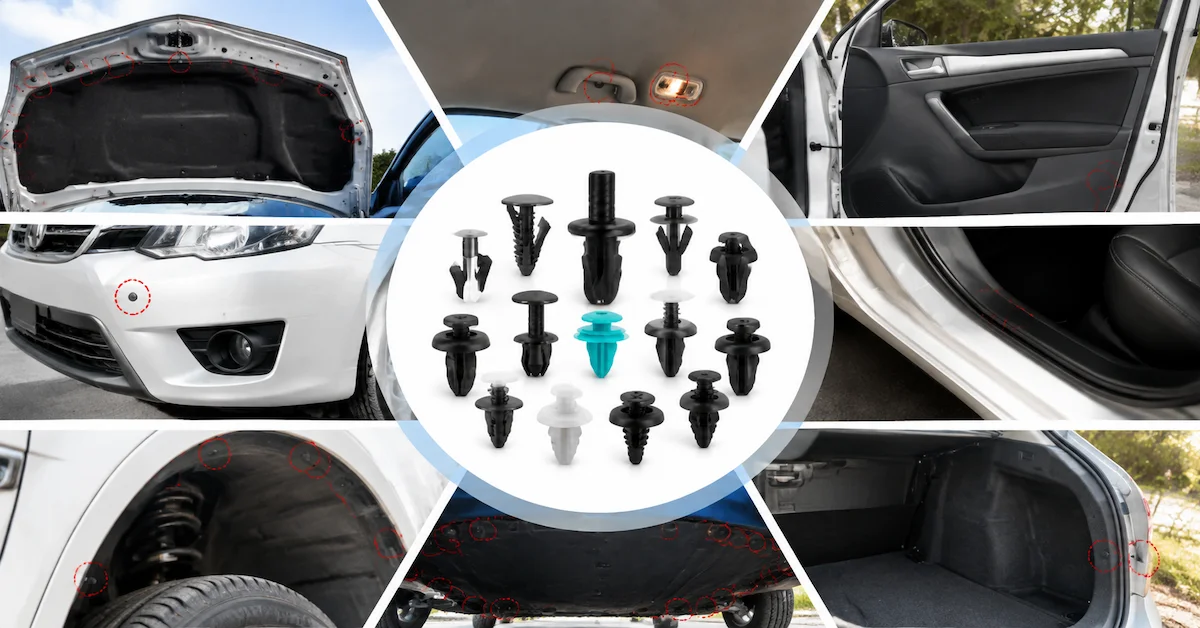
Automotive clips are used in many areas of vehicles, including:
| Product Category | Application |
|---|---|
| Bumper clips | Front and rear bumper installation |
| Fender liner clips | Wheel arch and inner panel fixing |
| Door panel clips | Interior trim installation |
| Push retainers | General automotive panel fastening |
| Plastic rivets | Body and underbody fixing |
| Screw grommets | Screw-based fastening applications |
| Seal strip clips | Weatherstrip and sealing systems |
| Hood clips | Engine bay insulation panels |
| Dashboard clips | Interior panel installation |
| Car clip kits | Repair shops and retail applications |
A supplier with a complete product range allows buyers to reduce sourcing complexity and manage fewer vendors.
QEEPEI supports different applications through its automotive clip product categories.
Manufacturing Capability and Production Control
When choosing an automotive clips supplier, buyers should understand whether the company has real manufacturing capability.
A reliable manufacturer should control:
Injection Molding
Automotive clips require precise molding because small dimensional differences can affect installation performance.
Mold Development
Custom projects often require mold adjustment or new mold development.
Production Consistency
Large orders require stable quality between different production batches.
Process Control
A professional factory should monitor:
- Material input
- Mold condition
- Production parameters
- Product dimensions
- Final inspection
For OEM buyers and distributors, manufacturing control reduces supply risks.
Material Quality Determines Product Performance
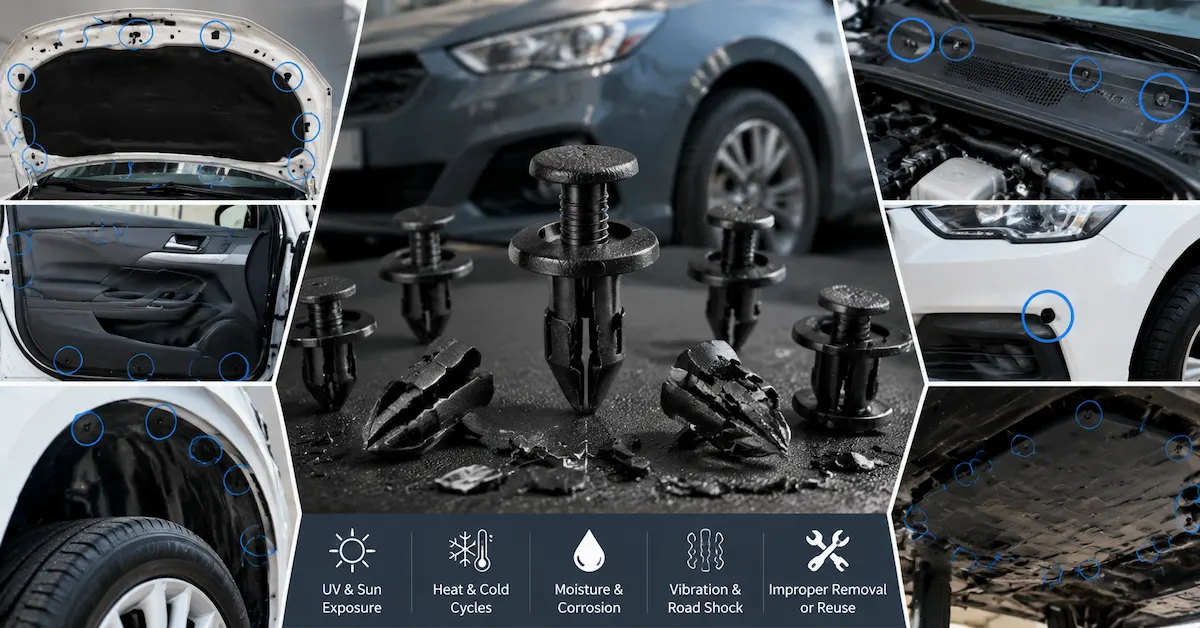
Automotive clips operate in demanding environments:
- Heat
- Cold temperatures
- Vibration
- Moisture
- Dust
- Repeated installation
Therefore, material selection is critical.
| Material | Advantages | Application |
|---|---|---|
| PA Nylon | Strong, flexible, wear-resistant | High-performance clips |
| PP | Lightweight and economical | Interior applications |
| POM | High dimensional stability | Precision fasteners |
| Reinforced plastic | Higher mechanical strength | Heavy-duty applications |
A reliable automotive clips supplier should provide material recommendations based on product application rather than using one material for every product.
Fitment Accuracy: A Key Buying Factor
One of the biggest challenges in automotive clip purchasing is incorrect fitment.
Many clips appear similar but have different specifications.
Buyers should confirm:
- Head diameter
- Stem length
- Hole size
- Panel thickness
- Locking design
- Vehicle application
- OE reference
Incorrect clips may result in:
- Loose panels
- Installation failures
- Customer complaints
- Increased returns
This is especially important for distributors and online sellers.
A strong supplier should provide clear product information and fitment guidance.
OEM and Custom Automotive Clips Solutions
Many businesses need more than standard clips.
OEM buyers and private label brands may require:
- Custom dimensions
- Different colors
- Special materials
- New structures
- Custom molds
- Branded packaging
- Retail-ready kits
A capable automotive clips supplier should support the entire process from sample confirmation to mass production.
QEEPEI supports OEM/ODM cooperation, helping customers develop customized automotive fastening solutions.
Inventory and Supply Stability
For distributors and repair networks, supply stability is as important as product quality.
A supplier should provide:
- Popular SKU inventory
- Fast replenishment
- Multiple packaging options
- Consistent repeat orders
- Flexible bulk purchasing
QEEPEI maintains a broad automotive clip inventory system with thousands of product options to support global buyers.
Packaging Solutions for Different Markets
Different customers require different packaging formats.
| Packaging Type | Suitable Buyers |
|---|---|
| Bulk bags | Distributors and repair shops |
| Assortment kits | Workshops and online sellers |
| Retail packs | Auto parts stores |
| Barcode packaging | Retail channels |
| Private label packaging | Brand owners |
Packaging support helps buyers improve warehouse management and market presentation.
How to Evaluate an Automotive Clips Supplier Before Cooperation
Before selecting a supplier, buyers should review:
| Evaluation Factor | Questions |
|---|---|
| Product range | Can they supply different clip categories? |
| Manufacturing | Do they control production? |
| Quality | Are materials and dimensions stable? |
| Customization | Can they support OEM projects? |
| Inventory | Can they support repeat orders? |
| Packaging | Can they provide different formats? |
| Communication | Do they provide professional support? |
The best supplier is not always the cheapest supplier. It is the supplier that reduces long-term purchasing risk.
Why QEEPEI Is a Reliable Automotive Clips Supplier
QEEPEI focuses on automotive clips, plastic fasteners, car clip kits, and vehicle-specific fastening solutions.
For global B2B buyers, QEEPEI provides:
- Wide automotive clip product coverage
- Stable production capability
- OEM/ODM support
- Packaging customization
- Fitment assistance
- Bulk supply solutions
To learn more about QEEPEI’s company capability, visit the About Us page.
For bulk purchasing, OEM projects, and customized automotive clips solutions, contact QEEPEI through the Contact Us page.
FAQ
What does an automotive clips supplier provide?
An automotive clips supplier provides vehicle fastening components including clips, retainers, plastic fasteners, rivets, and clip kits.
How do I choose a reliable automotive clips supplier?
Check product range, manufacturing capability, material quality, fitment support, QC process, packaging options, and supply stability.
Can automotive clips be customized?
Yes. Automotive clips can be customized in size, color, material, structure, and packaging.
What industries need automotive clips suppliers?
Distributors, repair chains, OEM brands, online sellers, and automotive aftermarket companies commonly need automotive clips.
Why is fitment accuracy important?
Correct fitment prevents installation problems, loose panels, and customer returns.
What materials are commonly used for automotive clips?
Common materials include PA Nylon, PP, POM, and reinforced plastics.
Can suppliers provide private label packaging?
Yes. Many professional suppliers support branded packaging and retail-ready kits.
What is the advantage of buying directly from a manufacturer?
Direct manufacturers usually provide better quality control, customization ability, and supply stability.
How can buyers reduce automotive clip sourcing risks?
Work with suppliers that provide samples, technical support, accurate specifications, and consistent production.
Where can I source automotive clips?
You can source QEEPEI automotive clips through the Products page.
Conclusion
Choosing the right automotive clips supplier is essential for companies that need reliable automotive fastening solutions. The right partner should provide consistent quality, accurate fitment, flexible customization, stable inventory, and professional support.
For distributors, repair chains, and OEM buyers, QEEPEI provides automotive clips, plastic fasteners, car clip kits, and customized fastening solutions designed for global automotive markets.
Explore QEEPEI’s complete automotive clips product range to build a stronger supply chain.