
Interior automotive clips rarely attract attention—until something rattles.
A loose door panel, a vibrating dashboard trim, or an uneven pillar cover often traces back to improper removal or reinstallation of clips. According to service data summaries referenced in SAE NVH research discussions, fastening integrity is responsible for up to 25–30% of cabin noise complaints in post-assembly inspection phases.
From the perspective of an experienced Automotive Clips manufacturer, removal and installation are not routine actions. They are structural operations affecting long-term retention stability.
Why Interior Clips Fail After Reinstallation
Many technicians assume clips can be reused indefinitely. That assumption is incorrect.
Common post-service failures include:
-
Reduced retention force due to plastic fatigue
-
Micro-cracking after over-extension
-
Hole deformation from improper prying tools
-
Clip head stress whitening indicating internal fracture
-
Panel misalignment caused by uneven insertion force
Nylon-based interior clips typically lose 10–18% retention strength after excessive deformation cycles. The degradation is not always visible.
Material Behavior Under Service Conditions
Interior clips are usually manufactured from PA66 or modified nylon blends. Their mechanical properties include:
-
Tensile strength: 70–85 MPa
-
Elastic modulus: 2.5–3.0 GPa
-
Thermal resistance: –30°C to 120°C
-
Recommended deformation angle: ≤18°
If a clip leg is forced beyond its elastic limit during removal, the polymer enters plastic deformation. At that point, original retention performance cannot be fully restored.
A professional Automotive Clips manufacturer evaluates elastic range limits during product design.
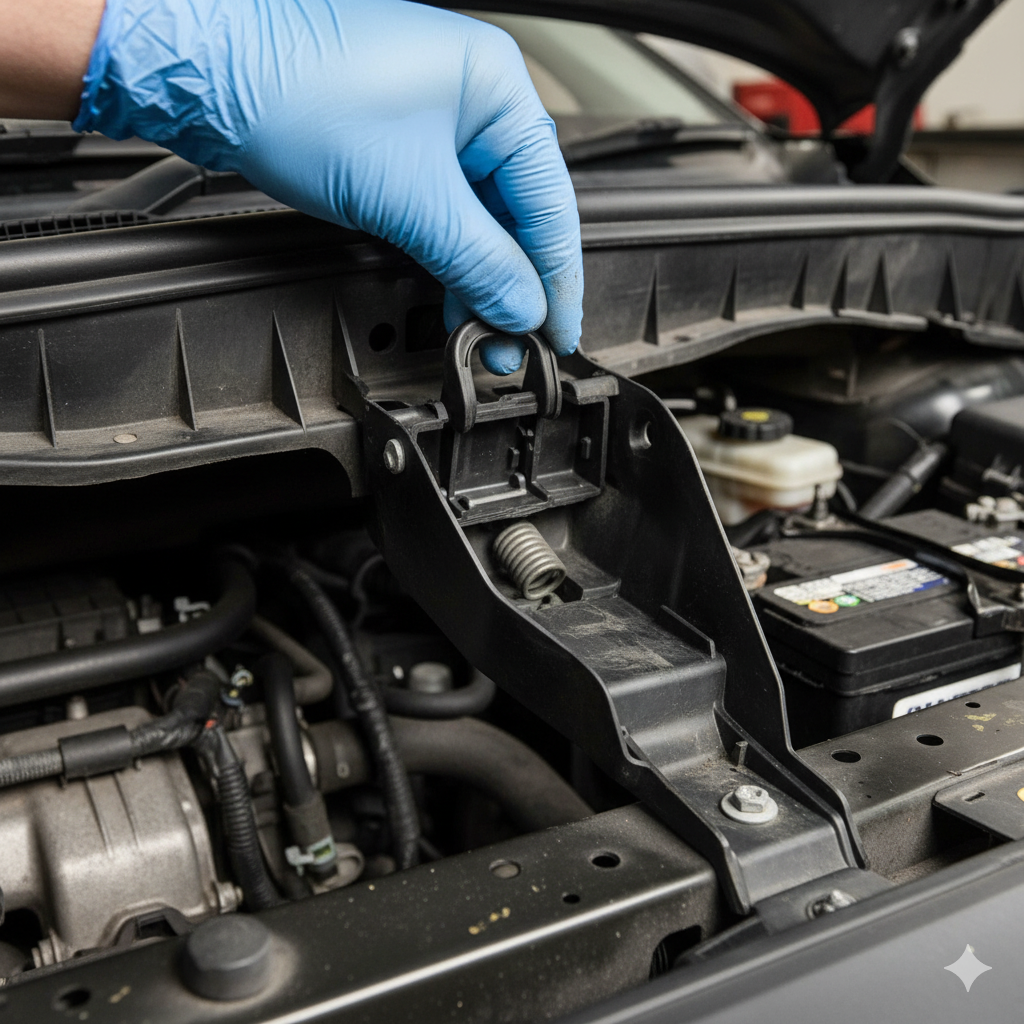
Proper Removal Technique: Tooling and Force Control
Improper tool use is the most common cause of panel damage.
| Practice | Incorrect Method | Correct Method |
|---|---|---|
| Tool Type | Flat screwdriver | Trim removal fork tool |
| Force Direction | Single-point leverage | Even bilateral pressure |
| Removal Speed | Sudden pulling | Controlled gradual lift |
| Inspection | Skipped | Visual + tactile check |
| Reuse Decision | Automatic reuse | Replace if fatigue signs appear |
Specialized trim tools distribute load evenly, reducing hole ovalization.
Installation Factors That Influence Long-Term Stability
Reinstallation requires attention to three technical variables:
-
Hole Diameter Tolerance
Interior clip holes typically range from 6–8 mm with ±0.1 mm tolerance. -
Panel Thickness Compatibility
Clip shaft length must match panel stack thickness within 0.2 mm. -
Insertion Force
Recommended insertion force for interior clips: 30–45 N.
Excessive force can crack ABS or PP interior panels.
Even minor mismatch can generate future vibration noise.
When Replacement Is Mandatory Instead of Optional
Reusing a clip is risky under these conditions:
-
Visible whitening near barb base
-
Deformed expansion legs
-
Retention force reduced below 150 N
-
Exposure to high cabin heat (>70°C sustained summer conditions)
Fleet maintenance data indicates that reusing fatigued clips increases repeat service rate by approximately 12–15% within six months.
Replacement cost is minimal. Repeat repair cost is not.
How QEEPEI Supports Service-Level Stability
QEEPEI produces interior-grade clips under:
-
IATF 16949 compliant processes
-
Moisture-controlled resin drying (<0.2%)
-
Multi-cavity mold precision ±0.03 mm
-
Batch tensile validation testing
-
UV and thermal stabilized material formulations
As an Automotive Clips manufacturer, QEEPEI designs interior clips to balance elasticity with fatigue resistance, ensuring reliable reinstallation performance.
Noise Prevention Considerations During Reassembly
Interior noise (NVH) is often a secondary effect of fastening inconsistency.
Preventive measures:
-
Ensure even seating across all clip points
-
Replace adjacent clips if one fails (avoid uneven load distribution)
-
Avoid over-tightening adjacent screws that distort panel alignment
-
Confirm full seating engagement by tactile confirmation click
Proper installation reduces vibration amplification at specific frequency ranges (200–500 Hz typical for trim rattle).
Environmental Influence on Interior Clips
Interior climate exposure varies significantly:
| Climate Zone | Risk Factor | Recommended Material |
|---|---|---|
| Tropical | High humidity | Moisture-stabilized PA66 |
| Desert | High temperature | Heat-stabilized nylon |
| Cold region | Sub-zero brittleness | Impact-modified PA66 |
| Coastal | UV + salt exposure | UV-resistant polymer |
An experienced Automotive Clips manufacturer tailors material blends to these environmental variables.
FAQ
Q: Can interior automotive clips be reused safely?
A: Reuse is not recommended if visible deformation or whitening appears. Fatigue reduces retention reliability.
Q: What is the correct insertion force for trim clips?
A: Typically 30–45 N depending on shaft diameter and panel thickness.
Q: How can panel hole damage be prevented?
A: Use trim removal tools and apply even bilateral lifting pressure.
Conclusion: Interior Clip Handling Requires Technical Discipline
Removing and installing interior automotive clips is not merely cosmetic repair. It influences retention force, noise suppression, and long-term panel stability.
A qualified Automotive Clips manufacturer designs clips within controlled elastic deformation limits and validates performance through tensile and fatigue testing.
With certified materials and consistent dimensional control, QEEPEI ensures interior fastening systems meet durability expectations across global markets.
For technical specifications or cooperation:
https://www.cnclip.com/
https://www.cnclip.com/contact-us