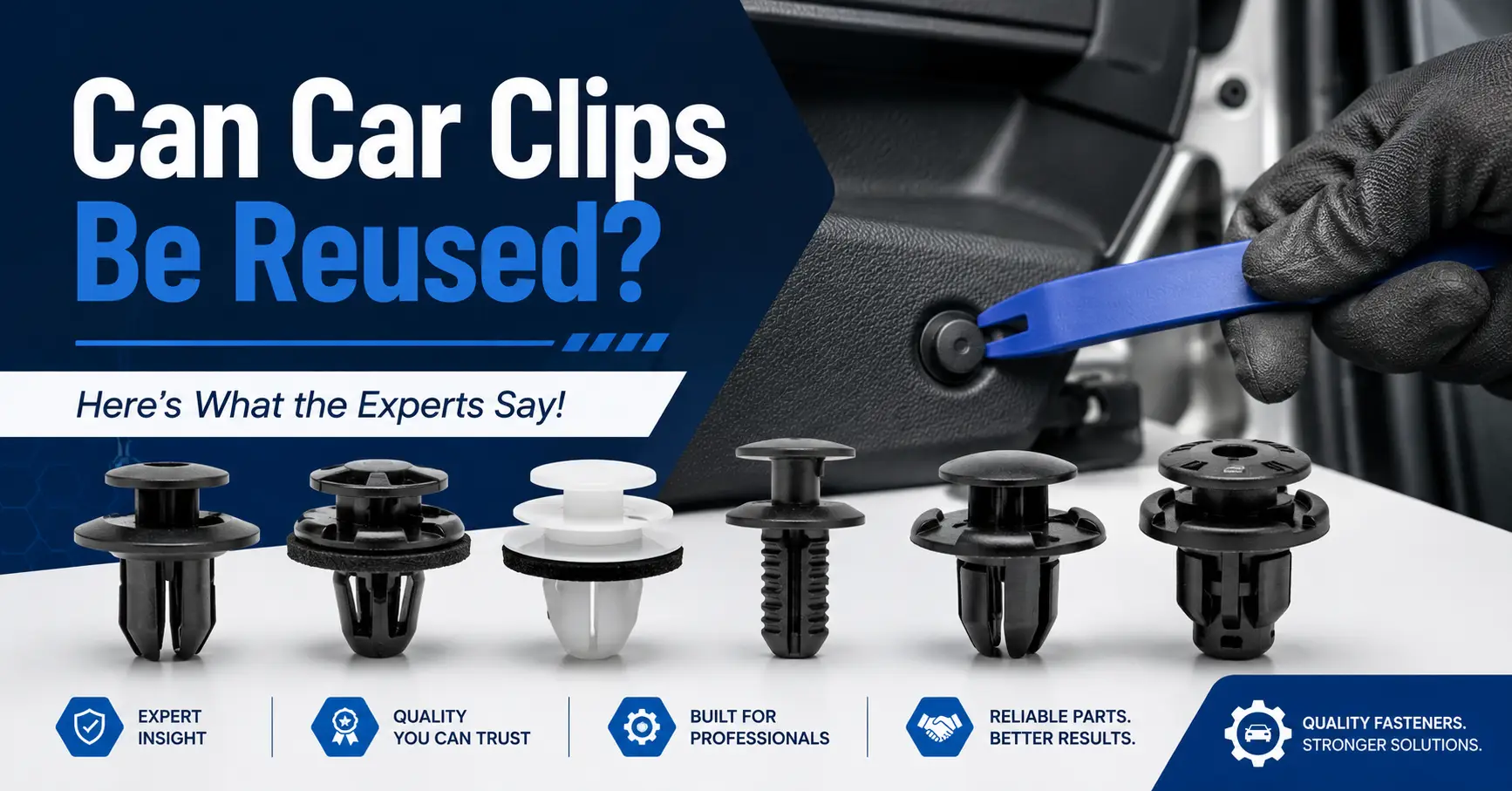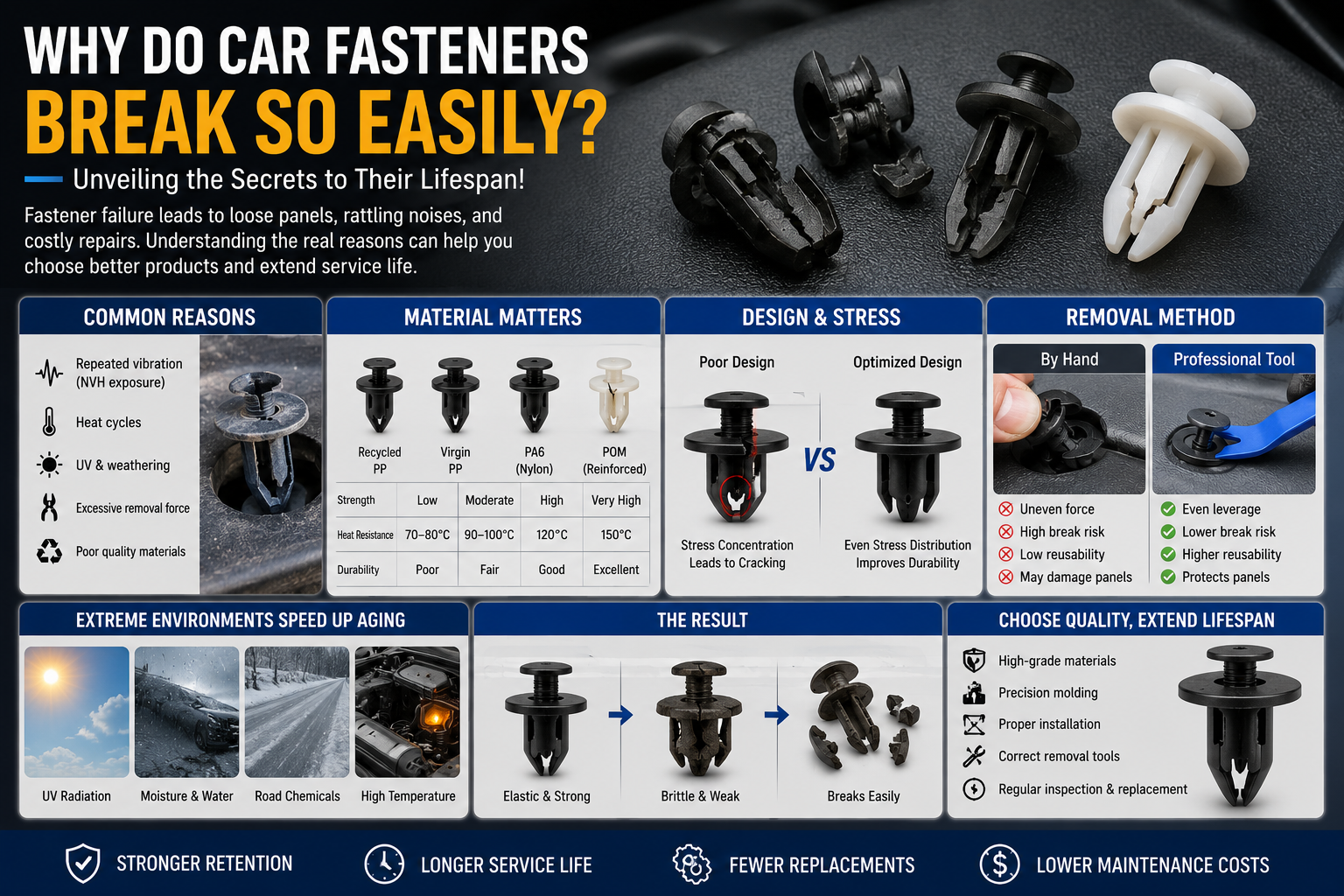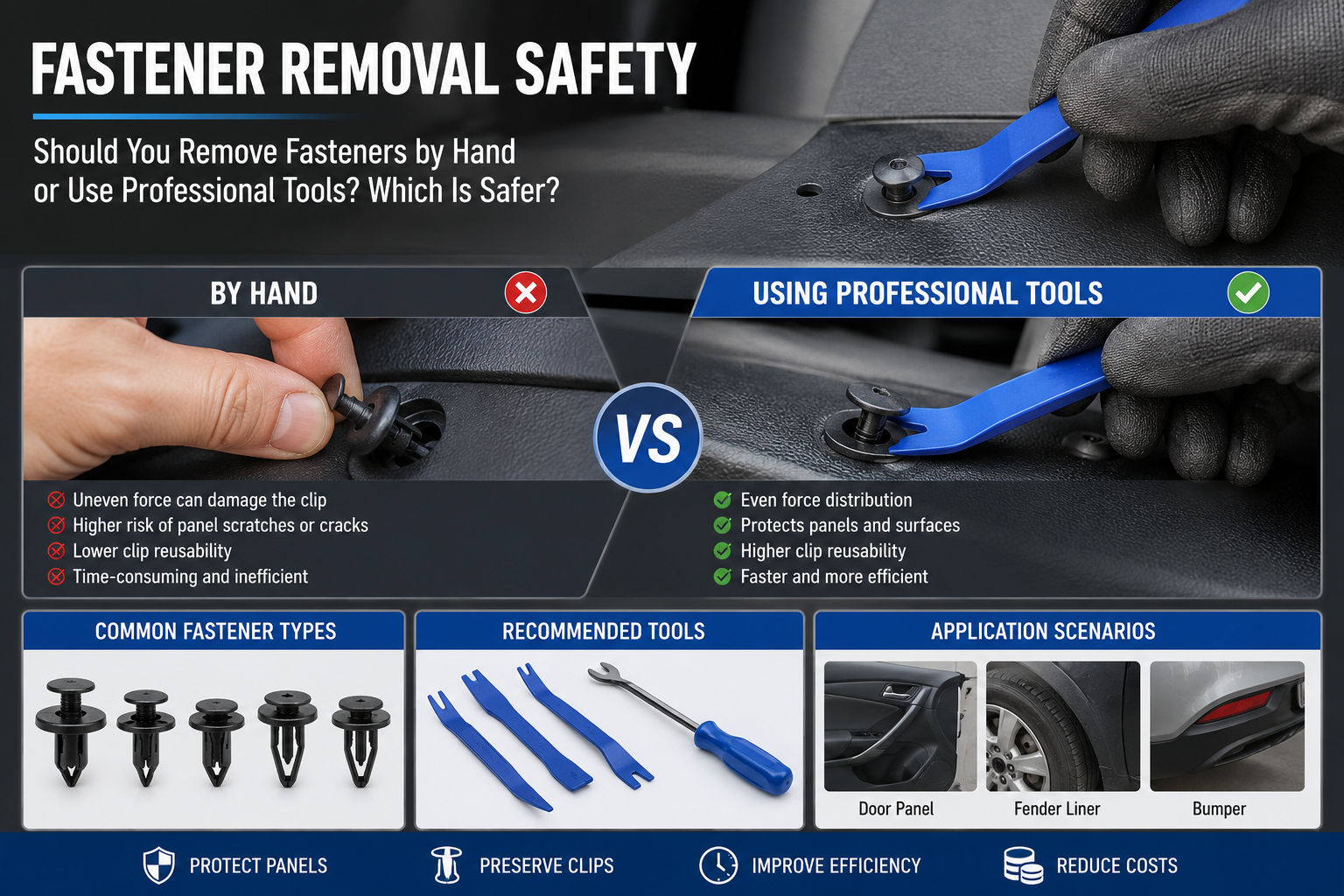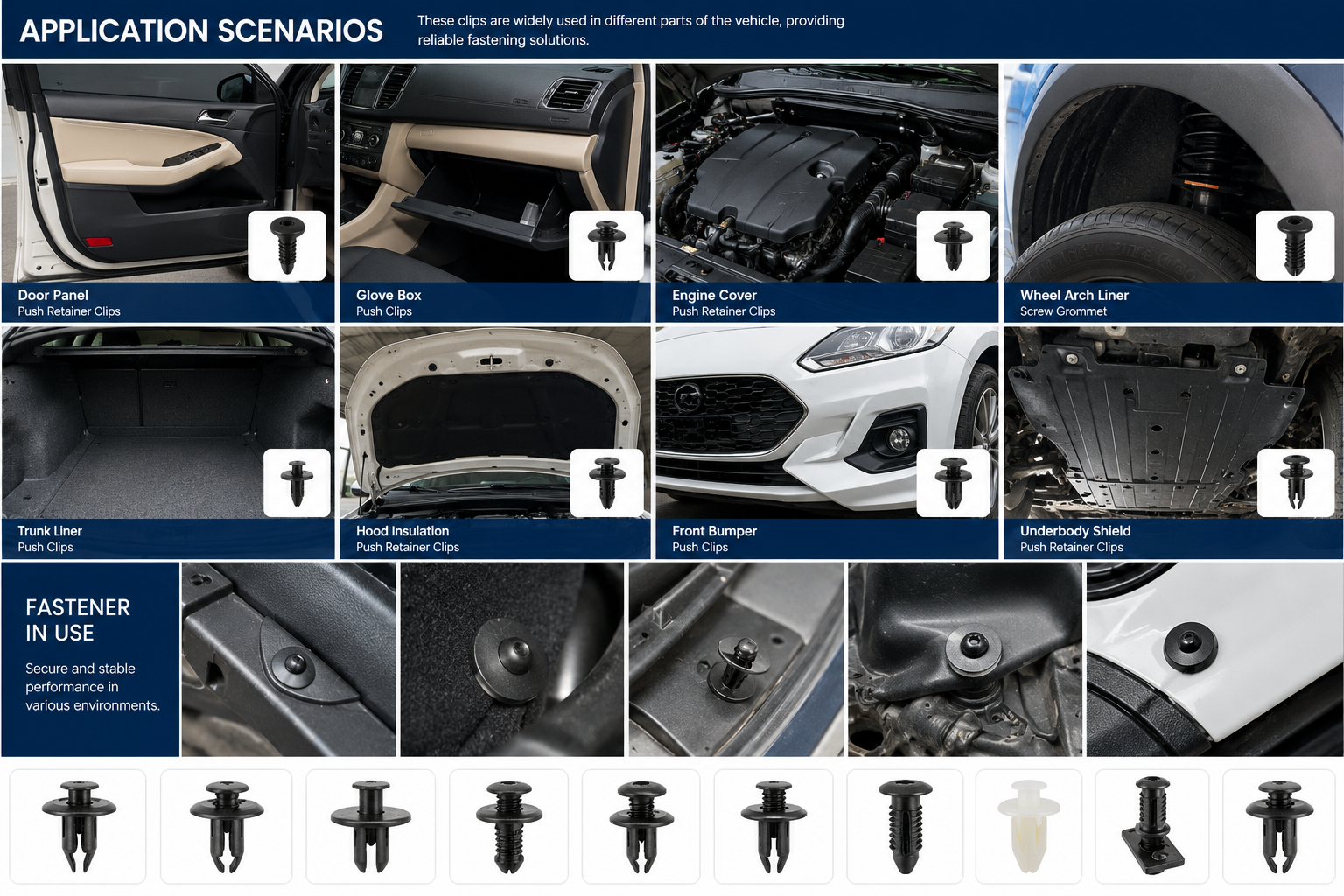

When automotive clips fail, most people blame installation. But in many field investigations, the real cause lies deeper—in the material itself.
Door panels that rattle after six months. Bumpers that shift slightly in high heat. Engine-bay clips that crack during winter. These are not random failures. They are polymer behavior problems.
At QEEPEI, we regularly analyze clip performance in different climates and vehicle applications. As an experienced Automotive Clips manufacturer, we know that material selection determines not only initial retention—but long-term structural stability.
Polymer Selection: The Engineering Foundation of Retention Stability
Before discussing performance, we must understand the mechanical variables that clip materials influence.
Automotive clips must balance:
-
Elastic recovery
-
Tensile strength
-
Creep resistance
-
Thermal deformation stability
-
Impact absorption
-
Moisture sensitivity
The most common materials include:
-
PA6 (Nylon 6)
-
PA66 (Nylon 66)
-
PA66 + GF (Glass Fiber Reinforced)
-
POM (Polyoxymethylene)
-
PP Impact-Modified Blends
Each behaves differently under load.
For example:
PA6 tensile strength: ~65–75 MPa
PA66 tensile strength: ~75–85 MPa
PA66 GF30 tensile strength: 110–140 MPa
Glass fiber reinforcement can increase stiffness by 30–50%, but also reduces elongation at break.
Material choice is not cosmetic—it is structural engineering.
Why Professional Manufacturing Experience Changes Material Performance
Material alone does not guarantee performance. Processing control determines whether polymer properties are preserved.
At QEEPEI, production includes:
-
Resin drying below 0.2% moisture content
-
Mold temperature control within ±2°C
-
Injection pressure monitoring
-
Post-molding tensile validation
-
IATF 16949 certified quality systems
(https://www.iatfglobaloversight.org)
According to SAE discussions on polymer fasteners (https://www.sae.org), improper moisture control can reduce impact resistance by up to 15%.
As an Automotive Clips manufacturer, we treat material preparation as critical engineering—not routine molding.
Comparing Clip Materials Under Real Load Conditions
| Material | Tensile Strength | Heat Resistance | Creep Resistance | Impact Stability | Typical Application |
|---|---|---|---|---|---|
| PA6 | 65–75 MPa | Up to 110°C | Moderate | Good | Interior trim |
| PA66 | 75–85 MPa | Up to 120°C | Good | Good | Door panels |
| PA66 GF10 | 95–110 MPa | 130°C | High | Moderate | Bumpers |
| PA66 GF30 | 110–140 MPa | 140°C | Very High | Lower | Structural zones |
| POM | 60–70 MPa | 120°C | Excellent | Moderate | Removable fasteners |
This comparison explains why interior-grade nylon cannot reliably survive engine-bay temperatures.
Environmental Stress: The Silent Performance Modifier
Material performance shifts under environmental stress.
High Temperature
Above 90°C sustained, standard nylon may begin creep deformation.
Cold Climate
Below –20°C, brittle fracture risk increases for non-modified polymers.
Humidity
Nylon absorbs moisture (up to 2–3%), affecting dimensional stability.
UV Exposure
Exterior clips require UV stabilizers to prevent polymer chain degradation.
According to REACH regulatory data (https://echa.europa.eu/regulations/reach), additive formulation must meet environmental safety standards without compromising durability.
Material formulation is a balance between compliance and performance.
Real-World Case Study: Climate-Specific Material Upgrade
A European distributor reported bumper clip loosening in southern markets.
Initial conditions:
-
Material: PA6
-
Ambient temperature: 45°C summer exposure
-
Retention force drop: 22% after 8 months
Engineering adjustment:
-
Switched to PA66 GF10
-
Increased shaft stiffness
-
Added heat stabilizer package
Result:
-
Retention stability maintained above 230 N
-
Repeat failure reduced by 78%
This demonstrates how material selection directly impacts lifecycle cost.
How Material Influences Installation and Serviceability
Material stiffness affects:
-
Insertion force (30–50 N typical range)
-
Elastic recovery angle
-
Removal damage risk
-
Panel stress concentration
Overly rigid glass-fiber clips may crack thin ABS panels if not matched correctly.
An experienced Automotive Clips manufacturer evaluates not just strength—but compatibility with panel substrate.
Cost vs Lifecycle Durability: A False Economy
Lower-cost PA6 clips may reduce unit price by $0.002–$0.004.
However:
-
Reduced retention stability increases return rates
-
Higher fatigue loss raises service frequency
-
Warranty exposure escalates
Fleet maintenance data suggests improper material choice can increase long-term fastening-related service cost by 8–12%.
Material selection is a lifecycle investment decision.
Practical Material Selection Guide
| Application Area | Recommended Material | Reason |
|---|---|---|
| Interior trim | PA66 | Balanced elasticity |
| Exterior bumper | PA66 GF10 | Heat + vibration resistance |
| Engine bay | PA66 GF30 or hybrid | High-temperature stability |
| Underbody shield | POM | Wear resistance |
Choosing material based on environment prevents premature loosening.
FAQ
Q: Is glass fiber always better?
A: No. It increases stiffness but reduces flexibility. Interior panels may require balanced elasticity.
Q: Does moisture affect clip performance?
A: Yes. Nylon absorbs moisture, altering dimensions and retention force.
Q: What material is safest for high-temperature zones?
A: Heat-stabilized PA66 GF or hybrid insert designs.
Conclusion: Material Determines Mechanical Destiny
Clip material is not a purchasing afterthought. It defines retention force, fatigue life, thermal endurance, and environmental resistance.
A qualified Automotive Clips manufacturer evaluates polymer chemistry, processing stability, and real-world load conditions before recommending solutions.
At QEEPEI, material selection is integrated with dimensional precision and lifecycle validation to ensure fastening reliability across global climates.
For technical drawings and cooperation:
👉 https://www.cnclip.com/
👉 https://www.cnclip.com/contact-us