
Auto Fastener & Clip Manufacturer: Engineering Reliability from the Inside Out
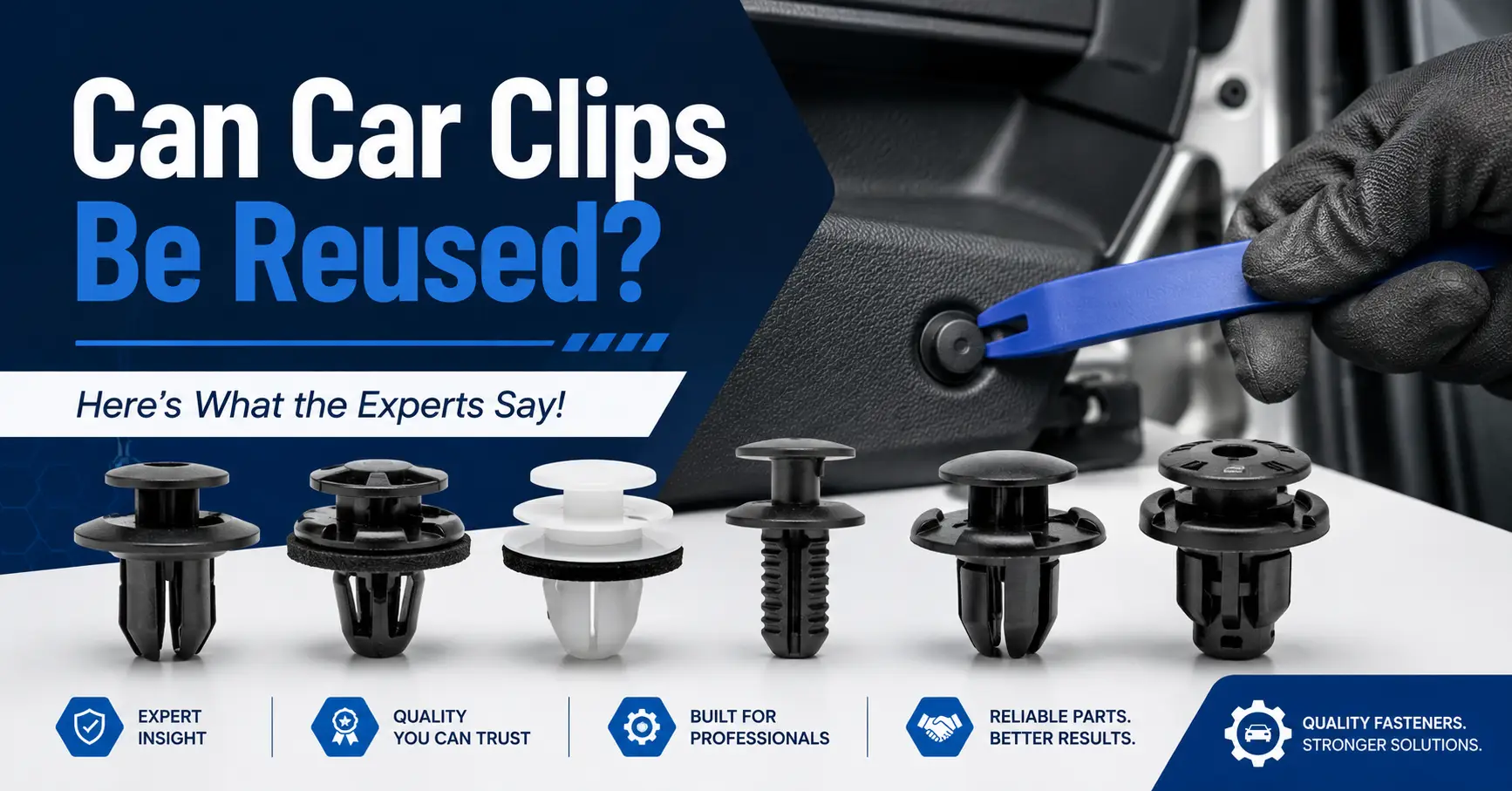
In modern vehicle manufacturing, precision fastening is more than just mechanical connection—it’s the foundation of stability, silence, and design quality. Every dashboard, fender, and door panel depends on the reliability of small yet critical components. As an experienced auto fastener manufacturer and auto clip manufacturer, QEEPEI specializes in delivering fastening systems that combine structural integrity, easy installation, and thermal resistance to meet OEM and aftermarket demands.
Industry Pain Points: The Hidden Cost of Poor Fastening
Vehicle producers and service centers face recurring issues that stem from substandard clips and fasteners:
-
Noise and vibration caused by loose fitment or material fatigue.
-
Panel distortion from improper clip tension or low-grade materials.
-
Time-consuming assembly increasing labor costs.
-
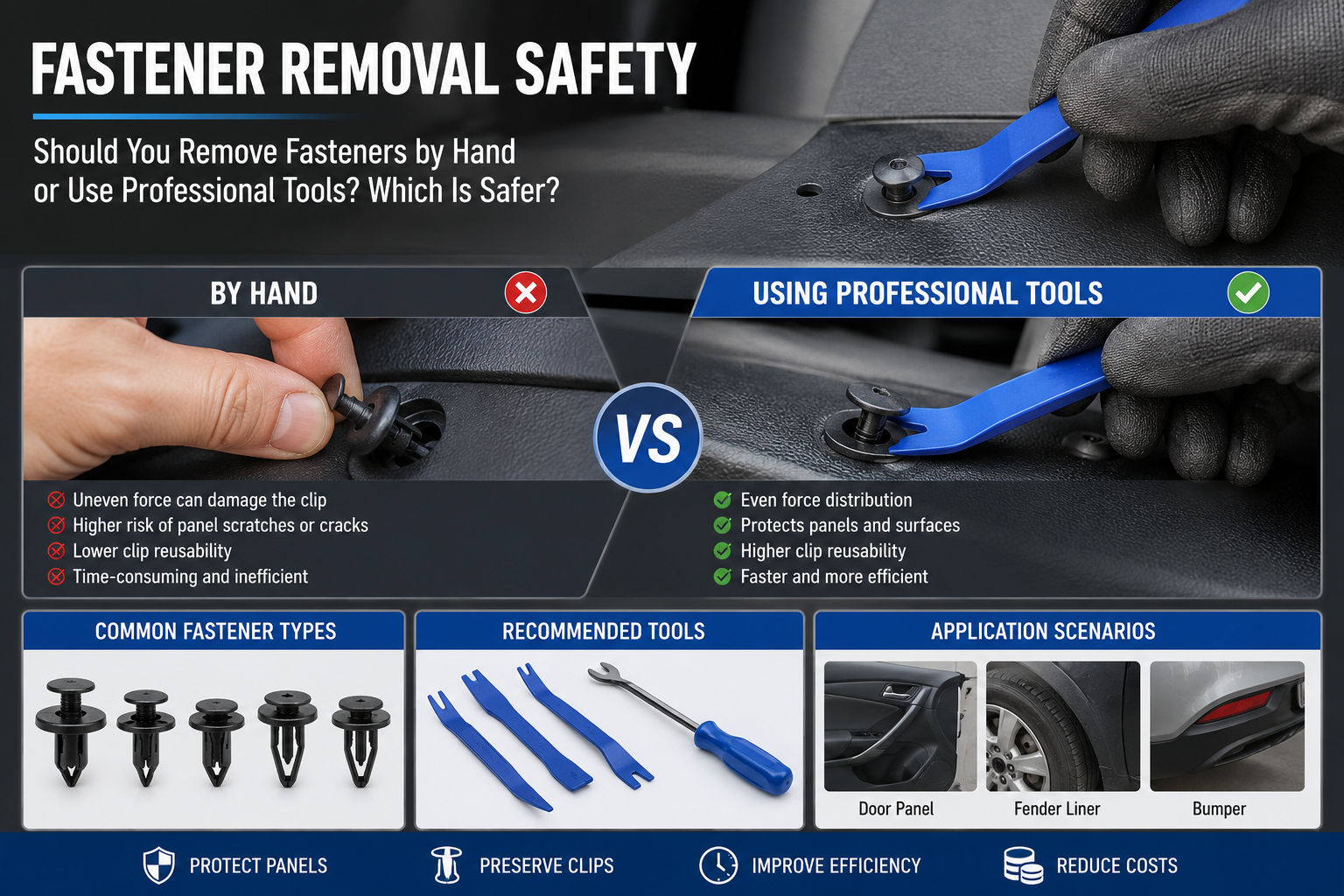
Difficult disassembly damaging interior panels during maintenance.
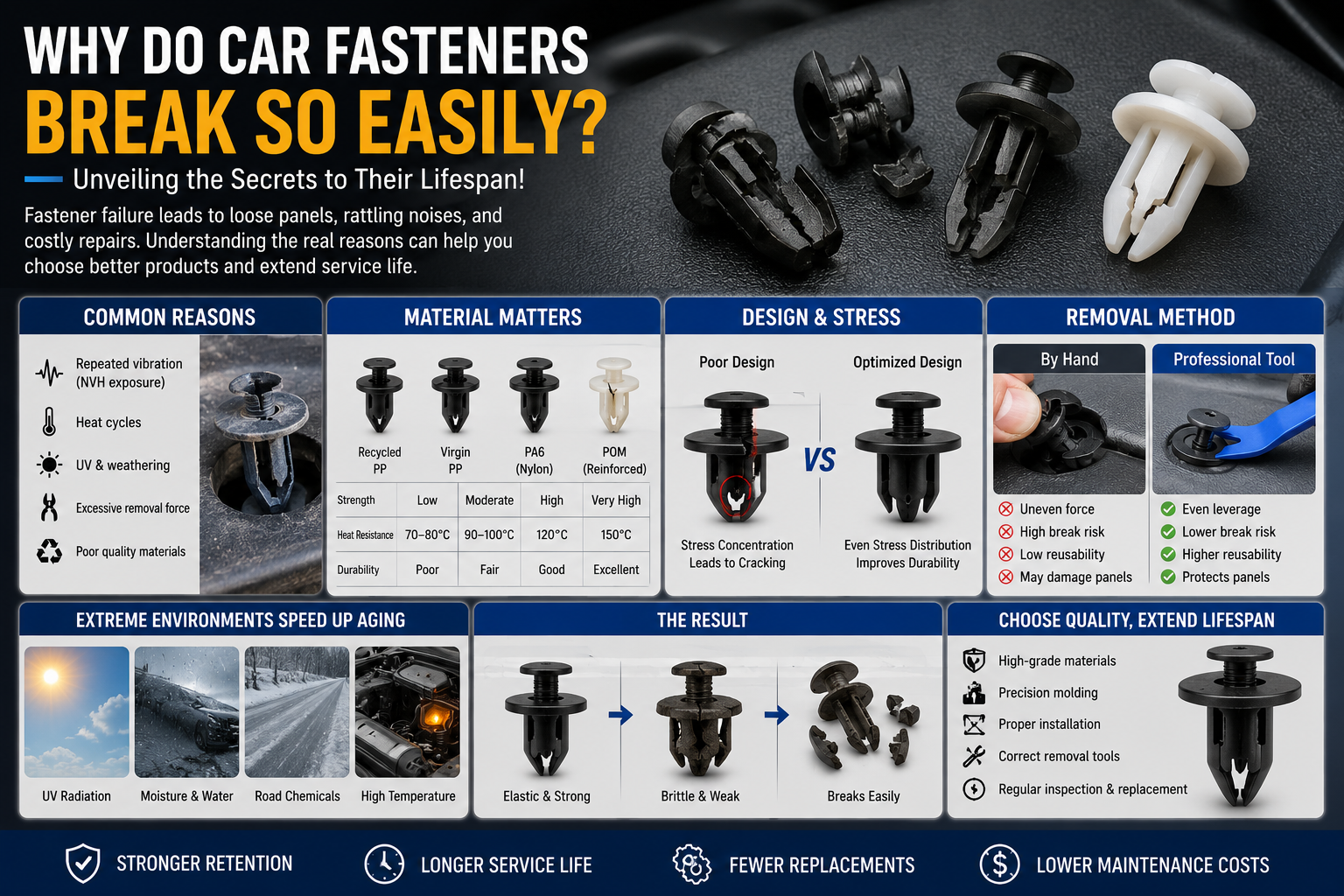
These issues not only compromise user comfort but also erode long-term brand reputation. High-quality fasteners, designed to resist stress and temperature cycles, are therefore essential to every automotive build.
The Engineering Logic Behind Modern Auto Fasteners
Fasteners and clips are designed under strict mechanical and thermal performance parameters. Their engineering focuses on load distribution, retention force, and vibration control.
| Function | Engineering Design | Performance Target |
|---|---|---|
| Retention | Multi-rib locking geometry | Prevents loosening over vibration cycles |
| Flexibility | Elastic plastic blends (PA6 + GF) | Enables smooth insertion without damage |
| Durability | UV + heat-resistant polymers | Ensures stability under 100°C+ |
| Compatibility | Multi-surface locking head | Fits steel, plastic, and composite panels |
Through precision injection molding and reinforced polymer selection, QEEPEI ensures that each fastener supports long-term performance in all environments.
Material Comparison: Balancing Strength and Elasticity
| Material | Key Feature | Ideal Application |
|---|---|---|
| PA6 (Nylon) | Excellent strength and heat stability | Engine bay, structural joints |
| POM (Acetal) | Low friction, high fatigue resistance | Dashboards, glove compartments |
| PP (Polypropylene) | Lightweight, flexible | Trim panels, interior fittings |
| ABS | Smooth finish, paintable surface | Visible interior clips |
This material diversity enables QEEPEI to deliver tailored solutions for OEM assembly and global distributors seeking multi-model compatibility.
Precision Manufacturing and Quality Control
QEEPEI’s production process integrates robotic injection systems, in-line dimensional inspection, and mechanical testing to maintain consistent part performance:
-
±0.02 mm dimensional accuracy for perfect fit.
-
Fatigue and vibration endurance tests simulating 100,000 cycles.
-
Salt spray and UV aging resistance validation.
-
Custom mold creation based on OEM drawings or samples.
Each step guarantees that fasteners retain the mechanical integrity expected in global automotive supply chains.
Competitive Advantages of QEEPEI
| Core Capability | Technical Advantage | Customer Benefit |
|---|---|---|
| OEM Mold Development | In-house tooling with 3D scanning | Shorter lead time and high precision |
| Material Innovation | Reinforced polymers with glass fiber | Extended component lifespan |
| Surface Optimization | Anti-friction & matte finish | Easier installation and aesthetic quality |
| Quality Certification | ISO9001 & TS16949 compliance | Global acceptance for OEM use |
| Efficient Logistics | Automated packaging & bulk export | Reduced cost and faster delivery |
These factors position QEEPEI as a dependable partner for automotive manufacturers and component distributors worldwide.
Real-World Applications
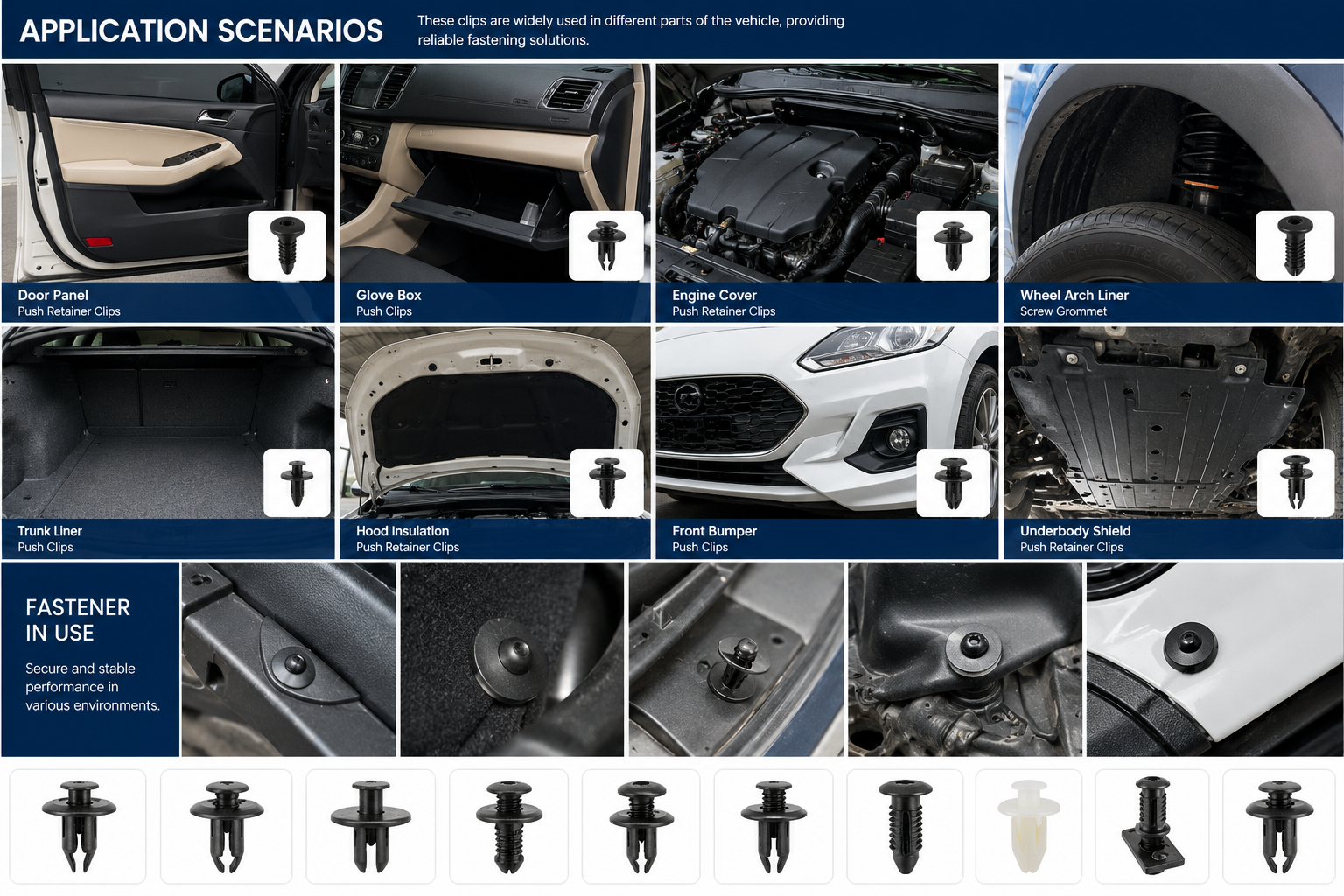
Precision clips and fasteners are essential in every section of a vehicle:
-
Dashboard and interior panels — prevent vibration noise.
-
Engine compartments — resist high heat and moisture.
-
Fenders and bumpers — maintain alignment under impact.
-
Roof linings and trims — secure components without visible fasteners.
With optimized geometry and material selection, QEEPEI ensures these parts support both performance and comfort.
Selecting the Right Fastening Solution
Different vehicle segments require tailored fastening solutions:
-
Passenger cars: prioritize vibration control and smooth aesthetics.
-
SUVs and trucks: need high-torque, reinforced fasteners for durability.
-
EVs: require lightweight clips to improve efficiency.
-
Aftermarket services: need reusable, multi-fit clips for repairs and replacements.
When choosing a supplier, consider factors like temperature range, assembly frequency, and panel type to ensure proper fitment and reliability.
Frequently Asked Questions
Q1: Do QEEPEI clips meet global automotive standards?
Yes, all products conform to ISO and TS16949 quality standards for OEM applications.
Q2: Can I request customized colors or branding?
Yes, custom colors, logo printing, and packaging are available for distributors.
Q3: What is your lead time for mold customization?
Typically 7–10 days, depending on part complexity.
Q4: Are the clips compatible with hybrid or EV designs?
Yes, our lightweight and heat-resistant materials are ideal for new-energy vehicles.
Building Vehicles That Last, One Clip at a Time
In automotive engineering, the smallest parts often carry the greatest responsibility.
By focusing on material science, mold precision, and vibration testing, QEEPEI ensures its fasteners and clips help manufacturers deliver vehicles that stay solid, silent, and safe.
Explore our complete range of fastening systems on the Homepage.
For cooperation and OEM inquiries, contact us here.