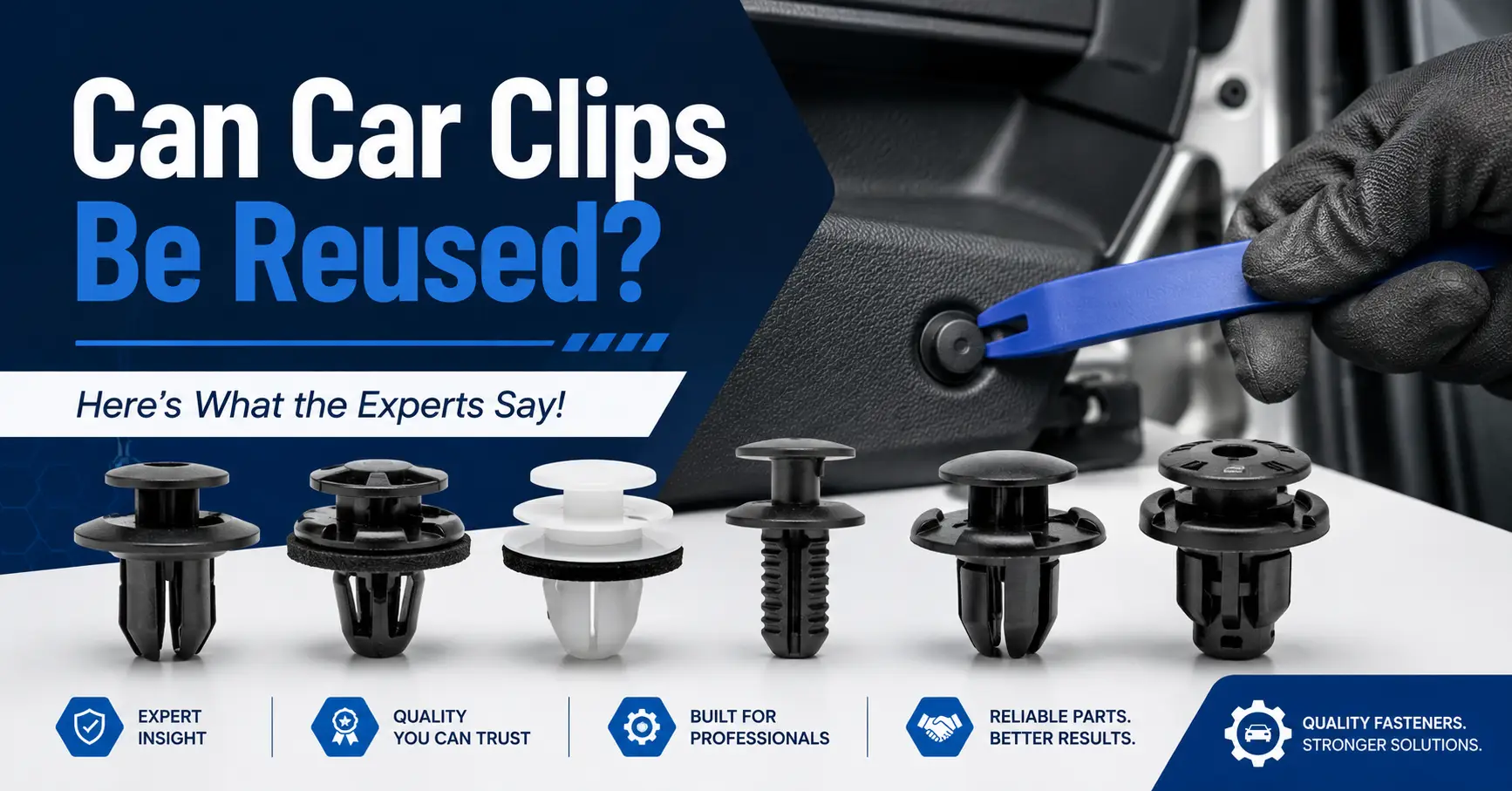

When working on automotive panels, many technicians ask whether clips can be removed by hand or require a specialized extractor. The real concern is fastener removal safety—because improper removal can crack panels, weaken retention holes, or permanently deform the clip.
For distributors, repair workshops, and OEM partners, understanding the safest removal method is essential for long-term component integrity and cost control.
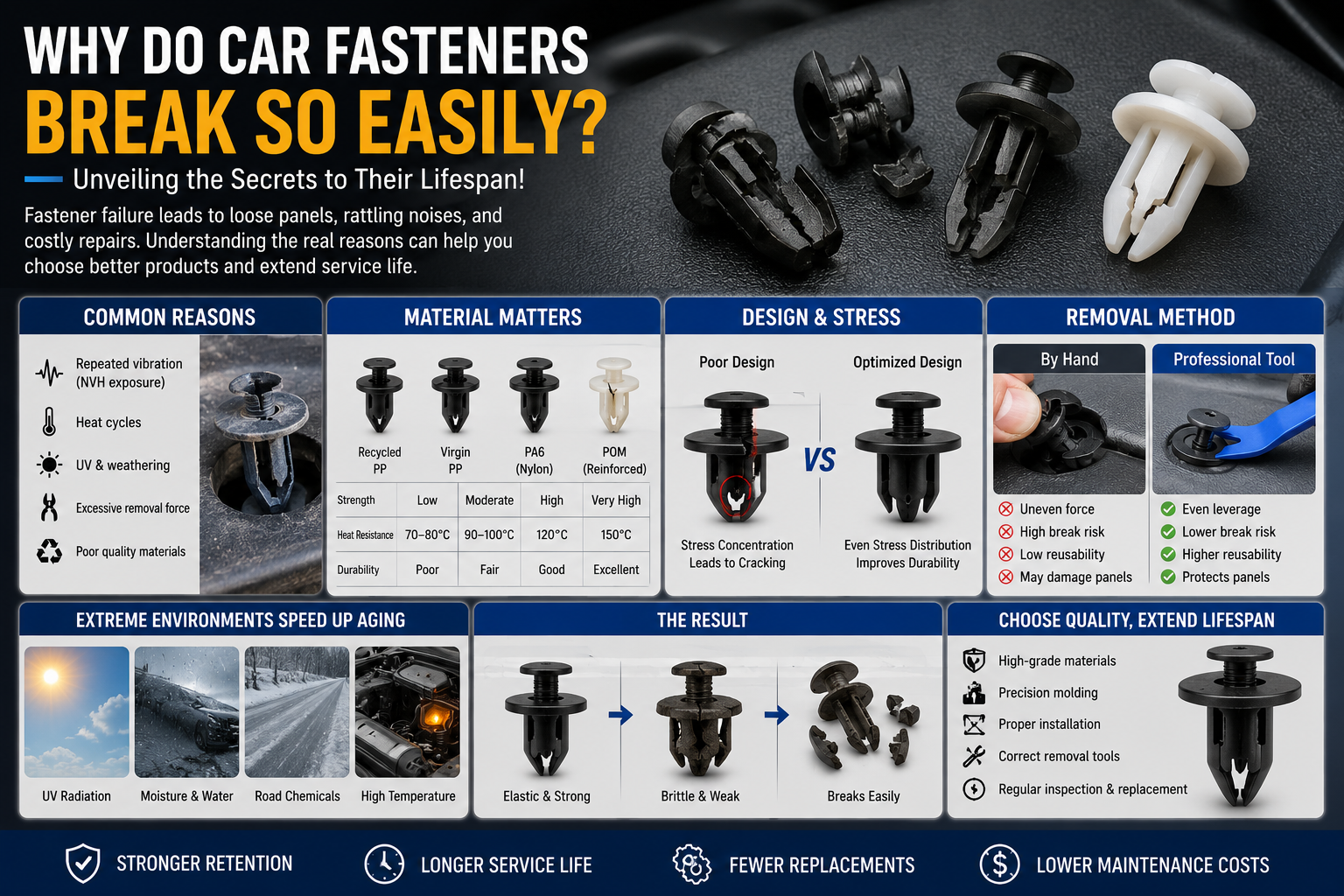
Why Improper Removal Causes Structural Damage
Automotive fasteners are engineered with controlled tension and locking geometry.
Pulling them without directional force control may result in:
- Bent stems
- Broken retention ribs
- Enlarged panel holes
- Scratched painted surfaces
- Reduced reinstallation stability
These issues directly affect fastener removal safety and often lead to unnecessary replacements.
How Fastener Locking Mechanisms Work
Most automotive clips rely on:
- Expansion legs that compress during insertion
- Barbed ribs that resist pull-out
- Elastic deformation for repeated cycles
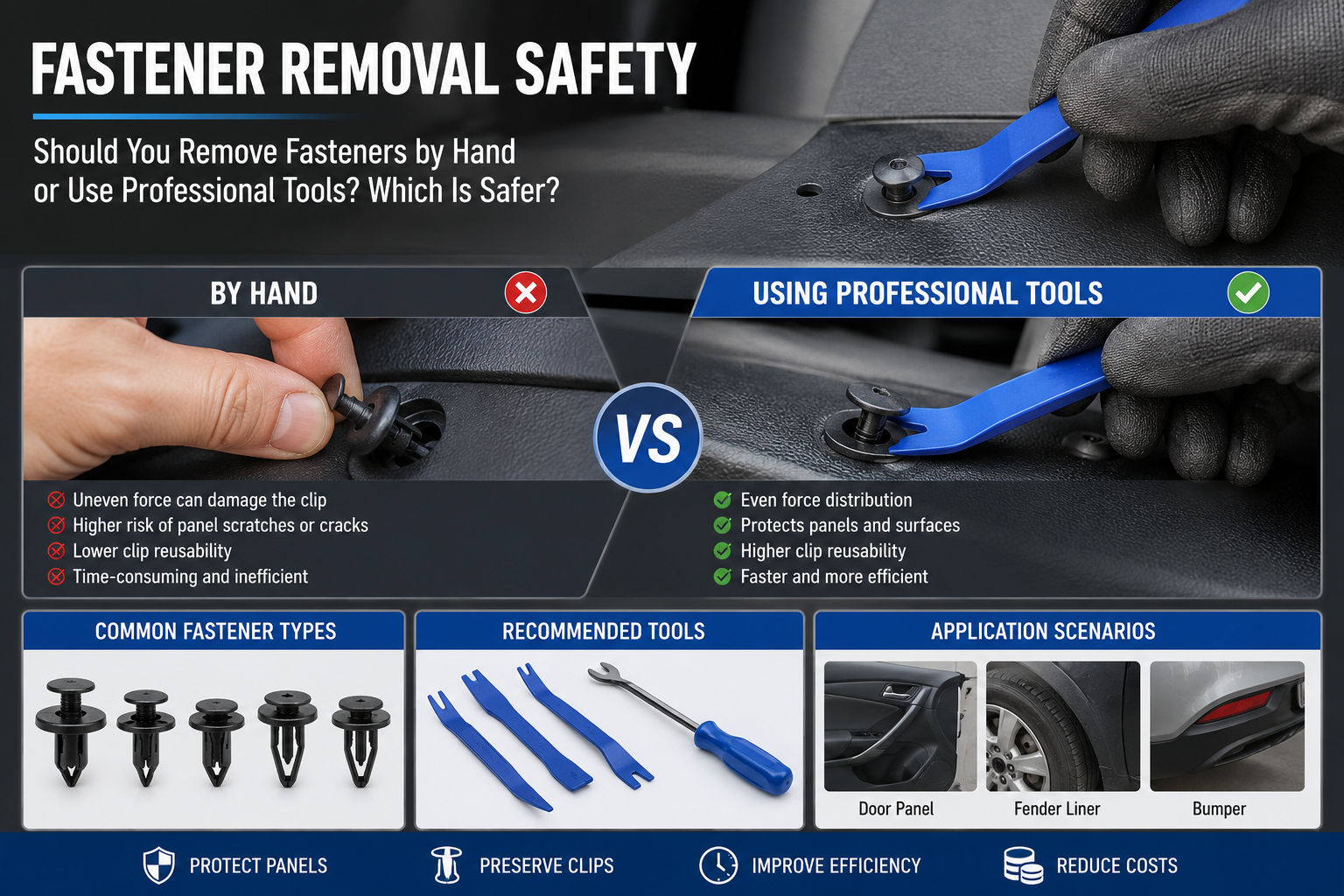
Removing by hand often applies uneven torque, stressing only one side of the locking structure.
Professional tools, by contrast, distribute force evenly along the clip base—preserving retention geometry.
Hand Removal vs Professional Tool Extraction
| Comparison Factor | By Hand | Professional Tool |
|---|---|---|
| Force Distribution | Uneven | Controlled and centered |
| Panel Protection | Low | High |
| Clip Reusability | Often damaged | Preserved |
| Removal Efficiency | Slower | Faster |
| Long-Term Integrity | Compromised | Maintained |
From a mechanical perspective, fastener removal safety improves significantly when using purpose-designed tools.
When Manual Removal Might Be Acceptable
There are limited scenarios where hand removal can be used:
- Large-diameter clips with low retention force
- Temporary trim parts
- Non-visible internal components
However, even in these cases, risk remains if leverage direction is incorrect.
Advantages of Using Automotive Clip Removal Tools
Professional trim clip extractors offer several advantages:
- Even pressure distribution
- Reduced surface damage
- Higher clip reuse rate
- Lower replacement cost
- Improved workflow efficiency
For high-volume repair centers or assembly lines, investing in proper tools enhances fastener removal safety and operational consistency.
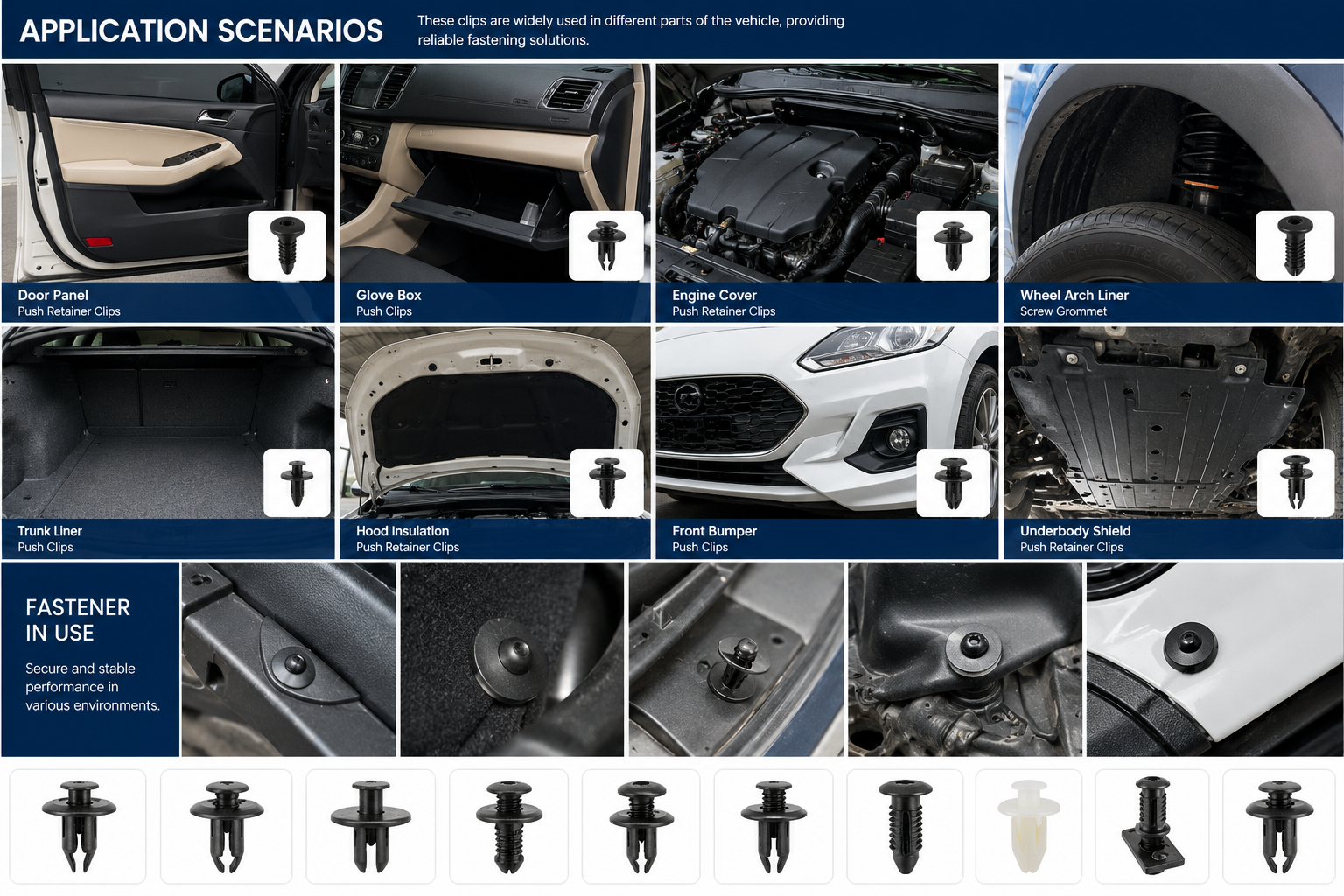
Real-World Workshop Scenarios
Interior Door Panel Repair
Using a tool prevents panel deformation and avoids costly repainting.
Fender Liner Replacement
Proper extraction maintains hole tolerance for reinstallation.
Bumper Clip Maintenance
Even removal reduces risk of micro-cracks in plastic retainers.
In all these cases, fastener removal safety directly impacts long-term durability.
Selecting the Right Removal Tool
When choosing a tool, consider:
- Clip head diameter
- Clearance space around panel
- Required leverage angle
- Material strength
Flat pry tools are suitable for shallow clips, while forked extractors work better for deep-seated retainers.
You can explore compatible fastener products on our
About Us page: https://www.cnclip.com/about-us
Products page: https://www.cnclip.com/products
FAQ page: https://www.cnclip.com/faqs
FAQ
Q1: Can automotive clips be reused after removal?
If removed with proper tools and without deformation, many clips maintain retention strength.
Q2: Does tool removal damage paint?
High-quality extractors minimize contact with painted surfaces when used correctly.
Q3: Is manual removal ever recommended?
Only for low-retention applications and non-critical trim areas.
Q4: What causes clip breakage during removal?
Excessive lateral force or uneven pulling stress.
Conclusion: Controlled Force Means Safer Removal
In automotive service and production environments, fastener removal safety is not about speed—it’s about precision.
Using professional removal tools protects panels, preserves clip integrity, and reduces long-term repair costs.
For reliable fastening components and compatible systems, visit our homepage:
https://www.cnclip.com/
For bulk inquiries or technical support, contact our team:
https://www.cnclip.com/contact-us