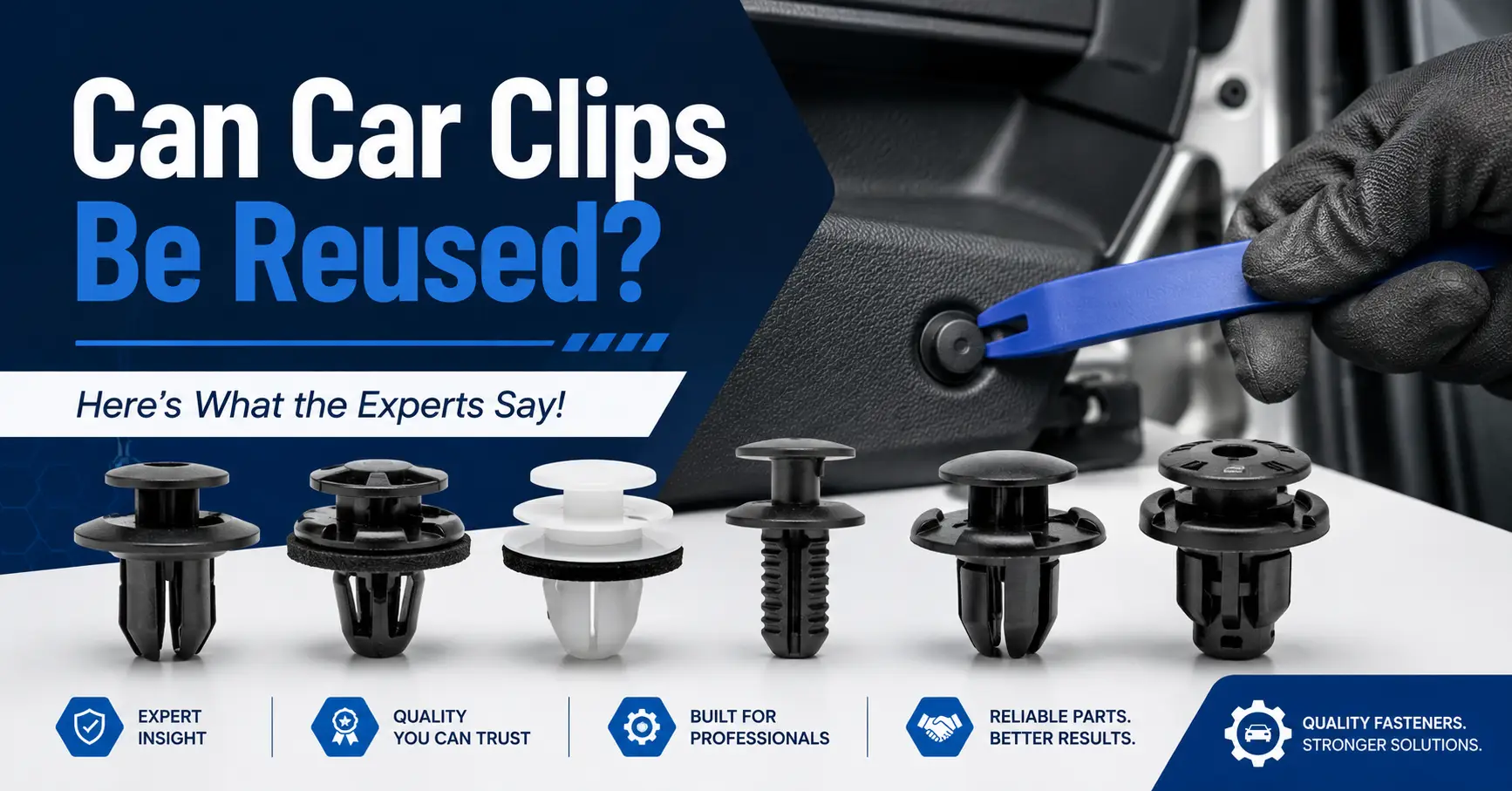

Many technicians and distributors notice the same problem: car fasteners break easily, especially during removal or after several years of use. Broken clips lead to rattling panels, loose bumpers, and recurring service costs. Understanding the mechanical and material causes behind this issue is essential for improving durability and reducing replacement frequency.
The Real Reasons Car Fasteners Fail
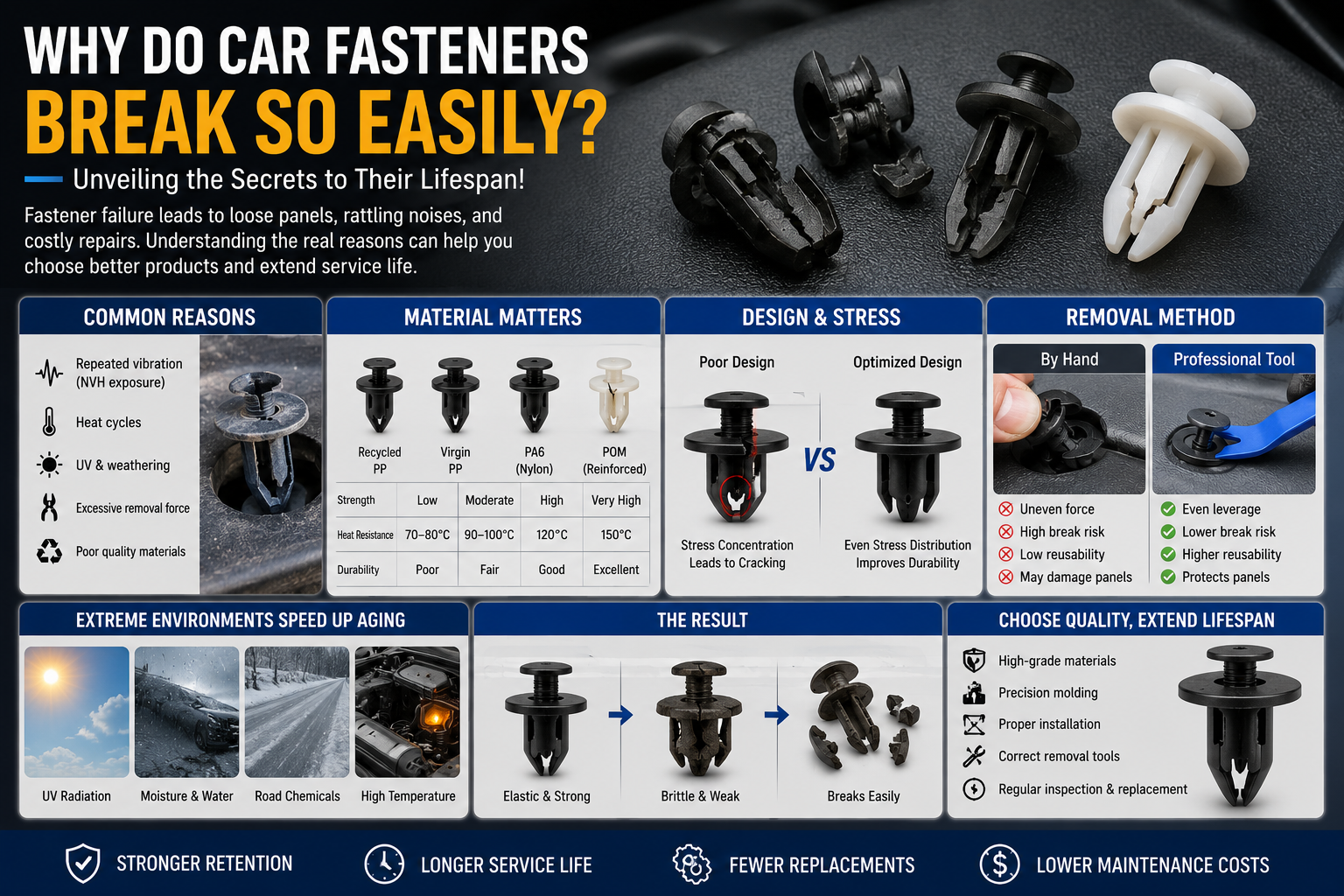
When evaluating why car fasteners break easily, the answer is rarely a single factor. It usually involves a combination of stress, material aging, and improper installation.
Common causes include:
- Repeated vibration cycles (NVH exposure)
- Thermal expansion and contraction
- UV degradation in exterior applications
- Excessive removal force
- Poor-quality recycled materials
Over time, these factors reduce elasticity, making fasteners brittle and prone to cracking.
Material Science: The Core of Fastener Lifespan
The lifespan of automotive plastic fasteners depends heavily on polymer structure.
| Material Type | Strength | Heat Resistance | Durability Impact |
|---|---|---|---|
| Recycled PP | Low | 70–80°C | Brittle over time |
| Virgin PP | Moderate | 90–100°C | Acceptable for interior |
| PA6 (Nylon) | High | 120°C | Strong and flexible |
| Reinforced POM | Very High | 150°C | Best for high-load areas |
Lower-grade plastics explain why car fasteners break easily in extreme environments. Engineering-grade polymers maintain tensile strength and elasticity even after years of exposure.
Design Geometry and Stress Distribution
Fasteners rely on expansion ribs and locking barbs. If rib geometry is too thin or poorly molded:
- Stress concentrates at root corners
- Micro-cracks form under load
- Breakage occurs during removal
Precision mold design reduces sharp stress points and improves load distribution.
This is why OEM automotive fasteners follow strict tolerance control (often ±0.02 mm).
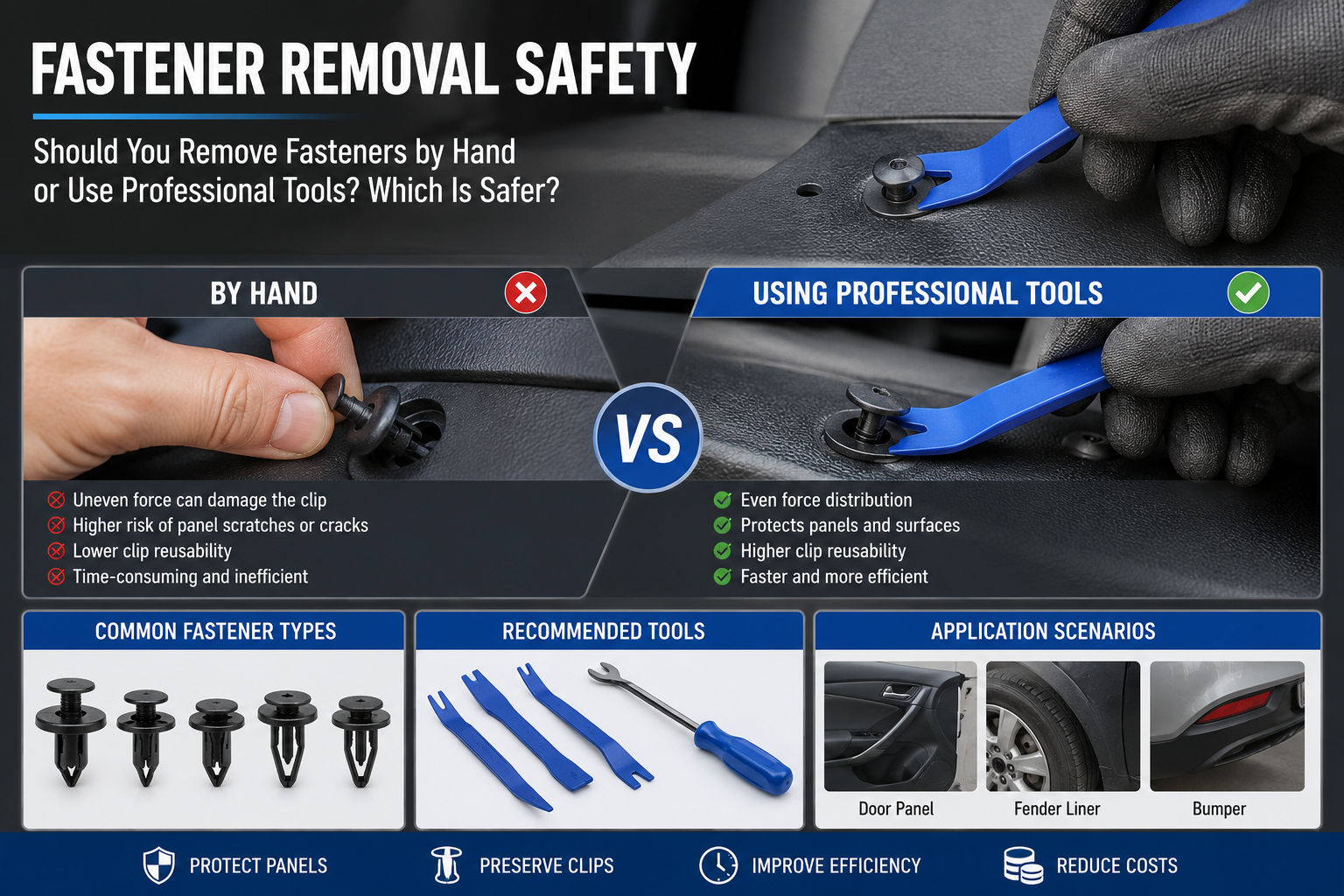
Manual Removal vs Controlled Extraction
Improper removal is another reason car fasteners break easily.
Uneven pulling force can:
- Twist expansion legs
- Snap locking ribs
- Damage retention stems
Professional trim removal tools distribute force evenly, reducing fracture risk and improving clip reusability.
Environmental Exposure and Aging
Exterior clips are exposed to:
- UV radiation
- Road chemicals
- Moisture
- Temperature cycles (-40°C to 120°C)
Over time, polymer chains degrade, leading to brittleness.
Using UV-stabilized materials significantly increases service life.
Comparing Low-Grade vs OEM-Level Fasteners
| Feature | Low-Grade Fasteners | OEM-Level Fasteners |
|---|---|---|
| Material Purity | Mixed recycled | Virgin engineered polymer |
| Tensile Strength | Inconsistent | Tested ≥30N |
| Heat Stability | Limited | High resistance |
| Dimensional Accuracy | ±0.1 mm | ±0.02 mm |
| Lifespan | Short-term | Multi-year durability |
Investing in quality reduces long-term maintenance costs and warranty claims.
How to Improve Fastener Lifespan
To reduce cases where car fasteners break easily:
- Select high-grade polymer materials
- Use proper removal tools
- Avoid over-tightening during installation
- Match fastener size exactly to panel hole
- Replace aged clips during major repairs
You can explore engineered fastening solutions on our
About Us page: https://www.cnclip.com/about-us
Product page: https://www.cnclip.com/products
FAQ page: https://www.cnclip.com/faqs
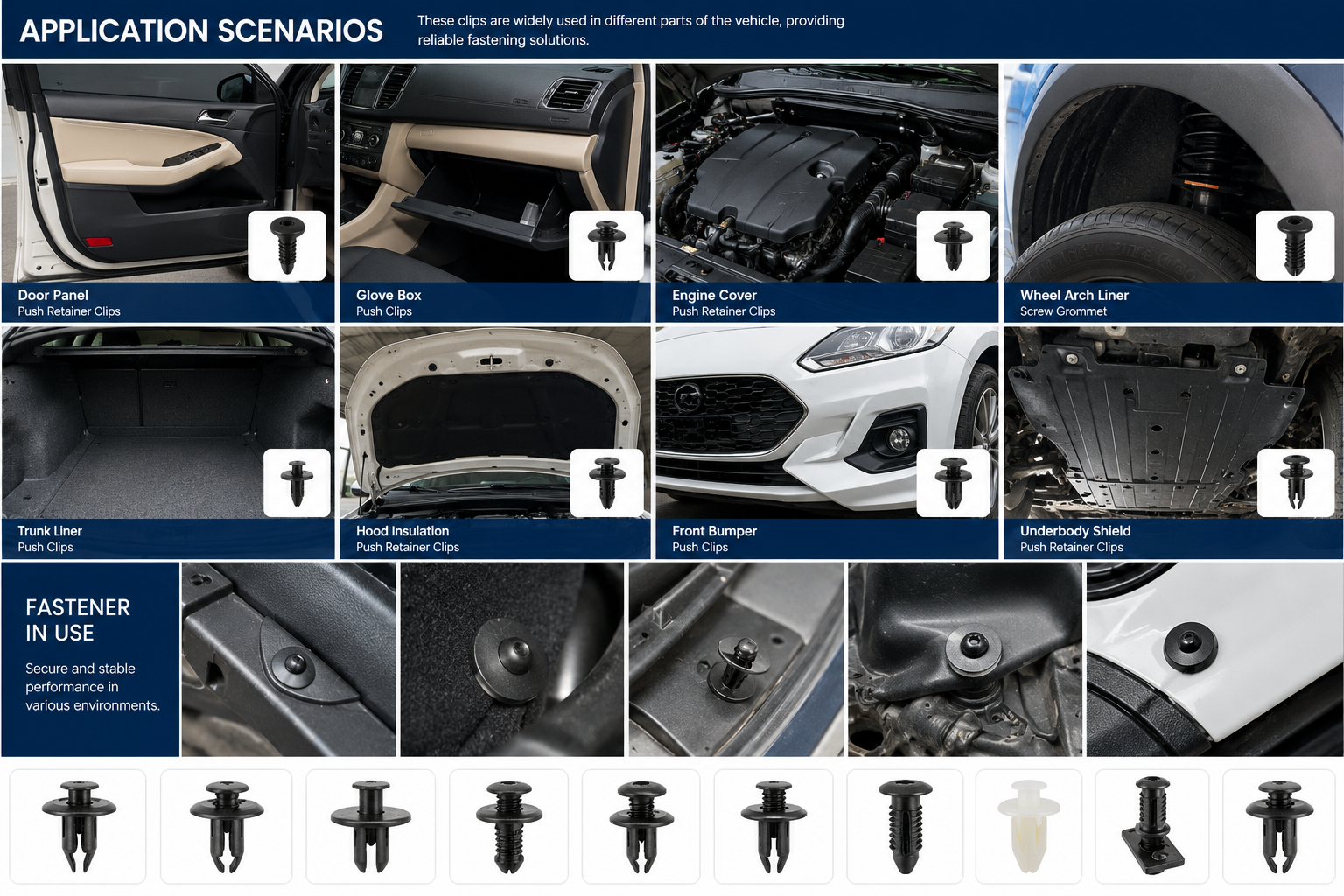
Application Scenarios Where Durability Matters Most
Door Panels
Frequent opening and closing increases stress cycles.
Bumper Assemblies
Exposure to vibration and minor impacts.
Fender Liners
Subject to water, dirt, and debris impact.
Engine Bay Covers
High temperature accelerates material fatigue.
In all these environments, preventing cases where car fasteners break easily improves vehicle reliability and customer satisfaction.
FAQ
Q1: Why do some fasteners crack during removal?
Aging plastic and uneven extraction force are the main causes.
Q2: Are nylon fasteners stronger than PP clips?
Yes, nylon provides higher tensile strength and heat resistance.
Q3: Can brittle clips be restored?
No. Once elasticity is lost, replacement is recommended.
Q4: How often should fasteners be replaced?
For exterior applications, inspection every major service cycle is recommended.
Conclusion: Durability Starts with Engineering Precision
The reason car fasteners break easily often lies in material choice, stress concentration, and environmental exposure. By selecting engineered polymers, controlling molding precision, and using proper installation techniques, manufacturers and distributors can significantly extend fastener lifespan.
Explore our full fastening solutions on the homepage:
https://www.cnclip.com/
For technical support or bulk inquiries, contact our team:
https://www.cnclip.com/contact-us