
When replacing interior panels or exterior trims, one of the most common problems buyers and repair shops face is mismatch in buckle clips standard sizes. Even a 0.5 mm variation in stem diameter can cause loose fitment, vibration noise, or panel misalignment.
For OEM manufacturers, distributors, and repair chains, understanding the real dimensional standards behind buckle clips is not optional—it directly affects assembly efficiency, NVH performance, and long-term durability.
Why Buckle Clip Size Accuracy Directly Impacts Vehicle Integrity
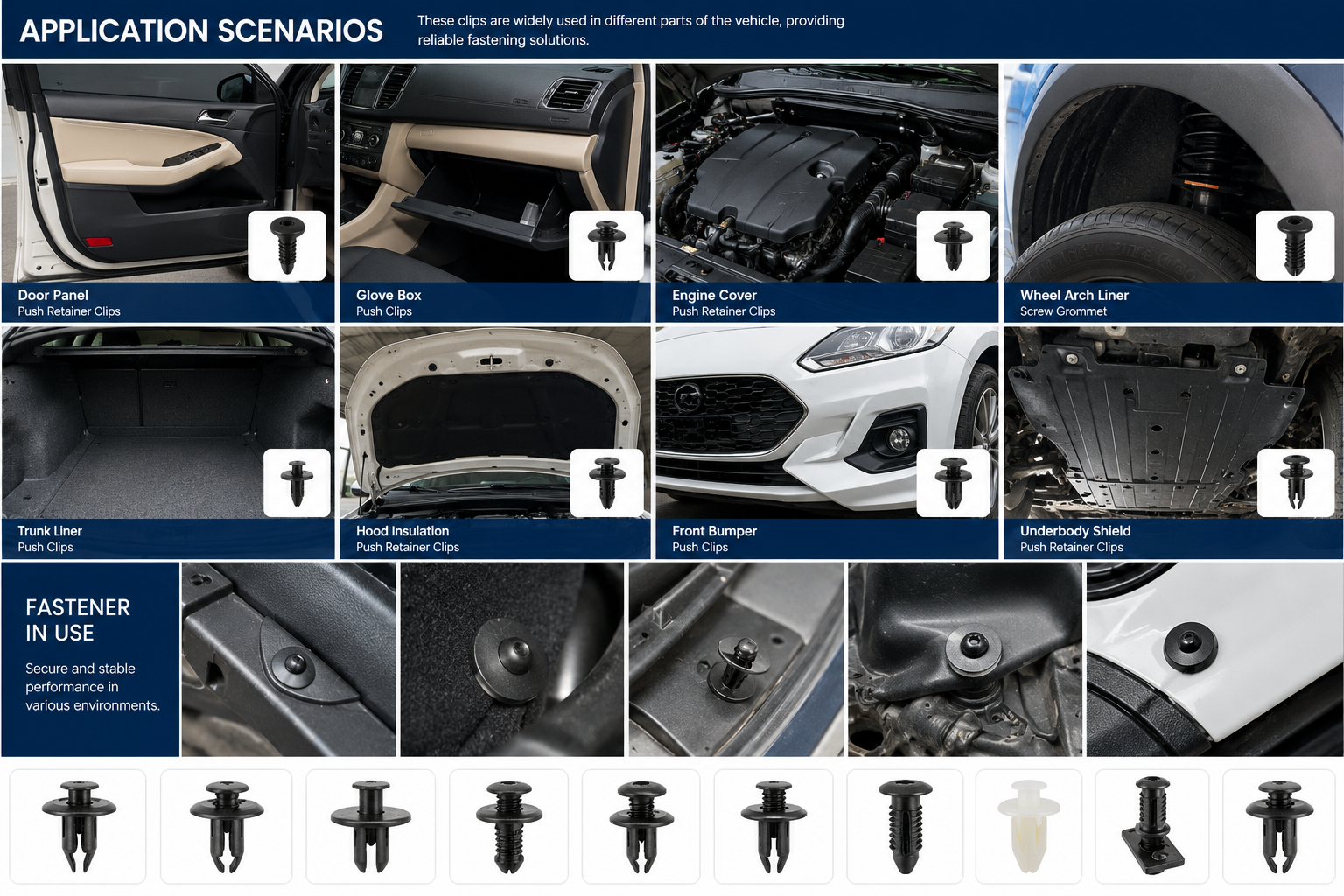
Buckle clips are widely used in:
- Door panel fastening
- Interior trim retention
- Fender liner fixation
- Bumper lining support
- Underbody splash shield installation
Incorrect buckle clips standard sizes can lead to:
- Panel rattling
- Premature wear of trim holes
- Repeated service replacements
- Increased warranty claims
This is why professional sourcing must go beyond “looks similar” and focus on dimensional precision.
Engineering Parameters Behind Buckle Clip Dimensions
Most buckle clips follow structural design logic based on hole diameter, panel thickness, and required pull-out force.
Below are the common buckle clips standard sizes used across major car brands:
| Hole Diameter | Stem Diameter | Head Diameter | Stem Length | Typical Application |
|---|---|---|---|---|
| 6 mm | 5.8–6.2 mm | 12–14 mm | 12–18 mm | Interior trim panels |
| 7 mm | 6.8–7.2 mm | 14–16 mm | 15–20 mm | Door liners |
| 8 mm | 7.8–8.2 mm | 16–18 mm | 18–25 mm | Fender and bumper areas |
| 9 mm | 8.8–9.2 mm | 18–20 mm | 20–28 mm | Exterior structural trim |
| 10 mm | 9.8–10.2 mm | 20–22 mm | 22–30 mm | Heavy-duty panel retention |
Material tolerance usually remains within ±0.02 mm in professional injection molding facilities.
Comparison: Generic Clips vs OEM-Grade Buckle Clips
| Feature | Generic Market Clips | OEM-Level Clips |
|---|---|---|
| Tolerance Control | ±0.1 mm | ±0.02 mm |
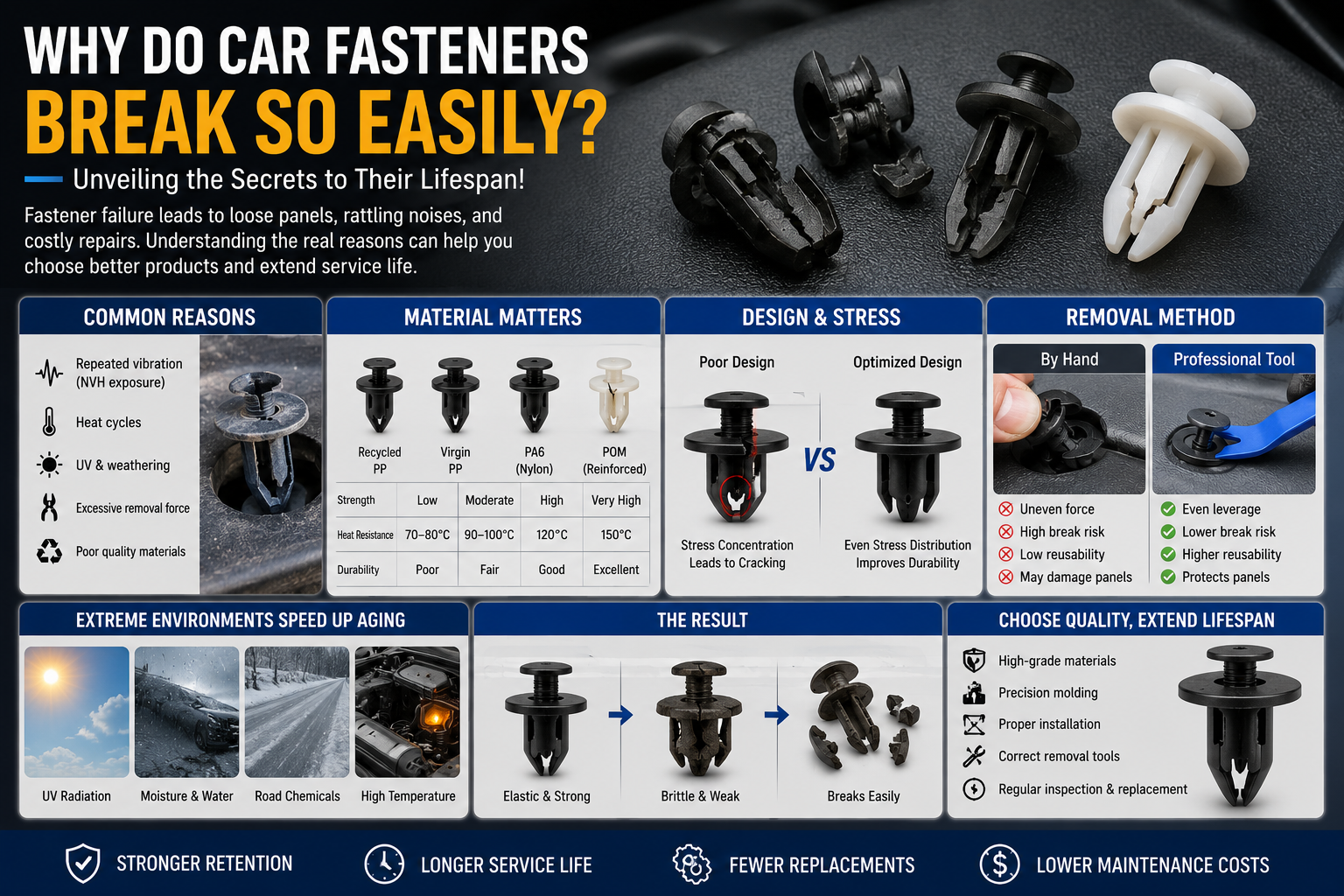
| Material | Recycled PP | Virgin PA / POM |
| Pull-Out Force | Inconsistent | Tested ≥25N |
| Heat Resistance | 80–90°C | Up to 120–150°C |
| Reusability | Low | Designed for multi-cycle use |
Understanding buckle clips standard sizes is not just about measurement—it’s about matching mechanical performance to vehicle design requirements.
How to Select the Correct Buckle Clip Size
For distributors and OEM buyers, proper selection follows this checklist:
- Measure hole diameter precisely (digital caliper recommended).
- Confirm panel thickness and engagement depth.
- Check head diameter clearance against trim surface.
- Identify material requirements (interior vs exterior).
- Validate pull-out force for safety-critical locations.
If sourcing in bulk, it is recommended to consult with an OEM buckle clips supplier to match exact automotive platform standards.
You can explore full product dimensions on our
About Us page: https://www.cnclip.com/about-us
Product page: https://www.cnclip.com/products
Application Scenarios Across Popular Car Brands
Typical buckle clips standard sizes vary by manufacturer:
- Toyota & Honda: 6–8 mm interior applications
- Volkswagen & Audi: 7–9 mm door panel systems
- Ford & GM: 8–10 mm exterior bumper and trim areas
- EV platforms: reinforced PA clips with higher heat tolerance
Electric vehicles often require higher temperature resistance near battery enclosures and wiring systems.
FAQ
Q1: Are buckle clips universal across all car models?
No. Even if head diameter looks similar, stem length and tolerance vary by platform.
Q2: How can I confirm buckle clips standard sizes before ordering bulk?
Provide OEM part number or physical sample for measurement comparison.
Q3: What material is best for high-temperature applications?
POM or reinforced PA is recommended for heat exposure above 100°C.
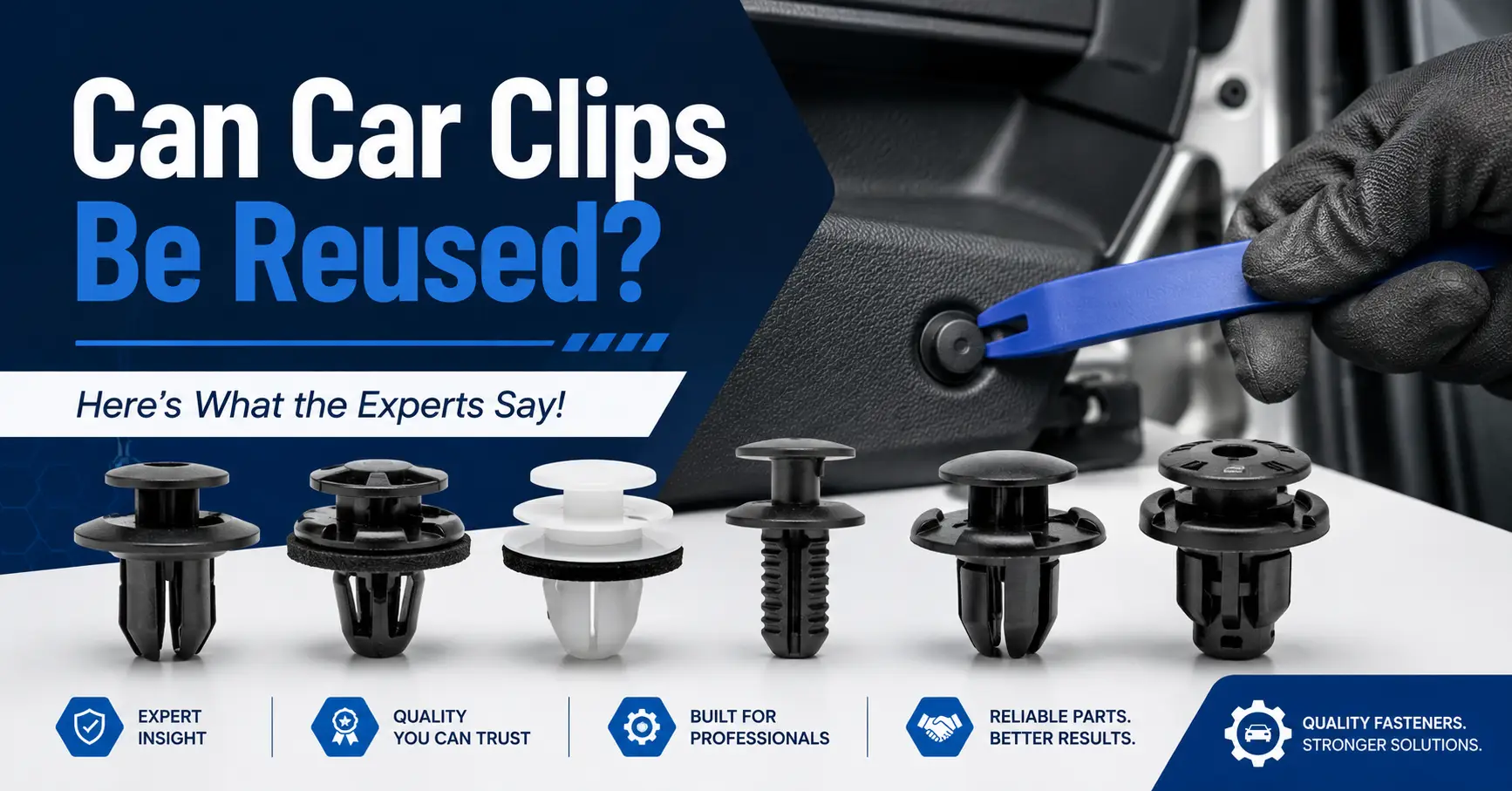
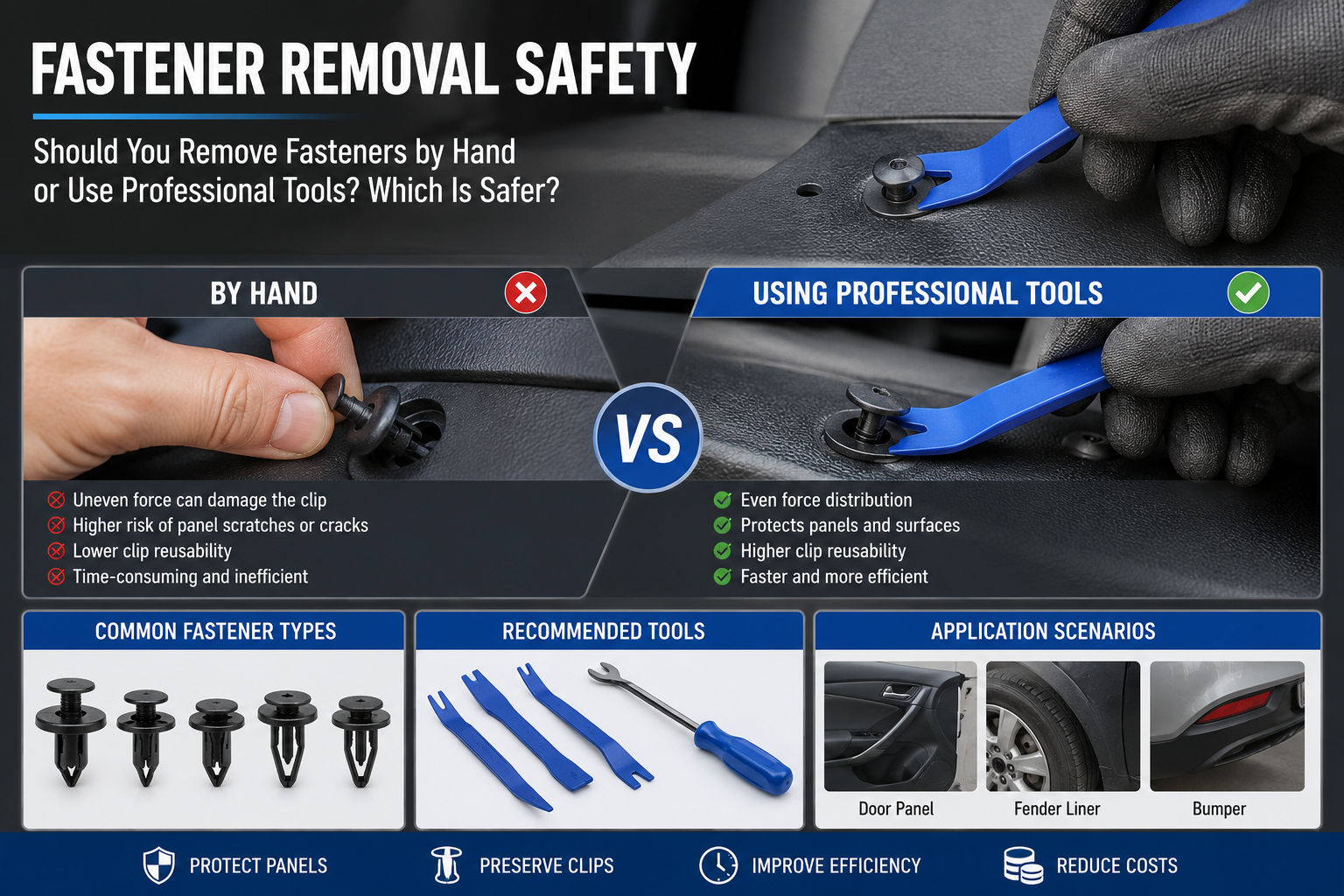
Q4: Can buckle clips be reused?
OEM-grade clips are designed for limited reinstallation cycles, but generic clips often lose retention force after removal.
More technical information can be found in our FAQ section:
https://www.cnclip.com/faqs
Final Considerations When Sourcing Buckle Clips
Selecting the correct buckle clips standard sizes ensures structural stability, noise reduction, and consistent vehicle quality.
For OEM plants and distributors, dimensional accuracy and certified materials matter more than low unit cost. Reliable manufacturing, precise molding, and global export capability are what define a dependable automotive fastening partner.
To explore full specifications and technical support, visit our homepage:
https://www.cnclip.com/
For bulk inquiries or custom projects, contact our team directly:
https://www.cnclip.com/contact-us