
What Types of Automotive Clips Are There — And Are You Choosing the Right One?
Many fastening failures are not caused by poor quality. They are caused by wrong type selection.
A door trim that vibrates. A bumper corner that shifts. An underbody shield that loosens after winter. In most of these cases, the clip was installed correctly—but it was not the correct type for the structural load.
At QEEPEI, we regularly support distributors and OEM clients in identifying correct fastening systems. As a professional Automotive Clips manufacturer, we classify clip types not by name—but by function, load, and environmental demand.
Selecting the right type determines long-term stability.
Structural Logic: Why Clip Types Exist
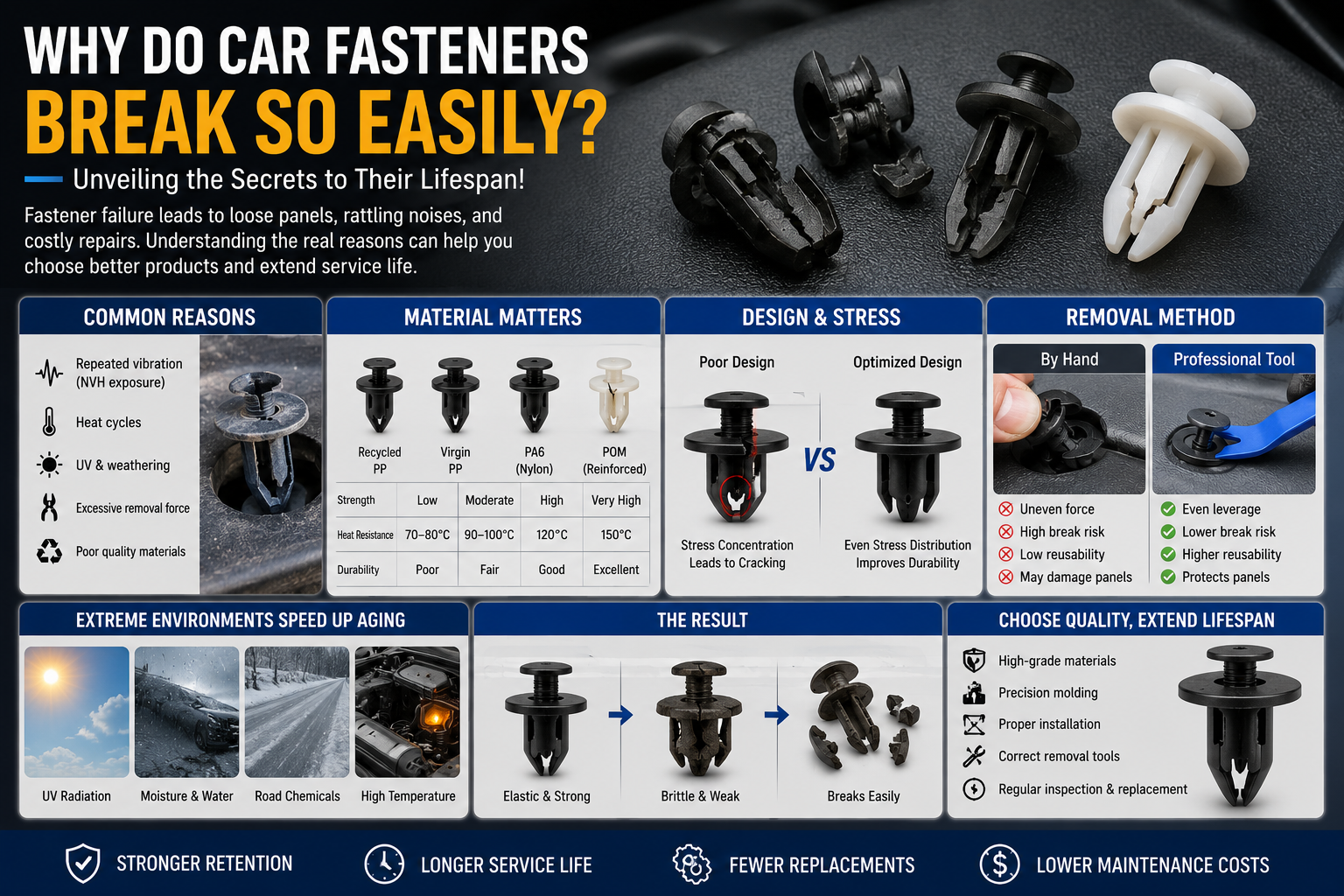
Automotive clips are engineered to solve specific fastening conditions. They differ in:
- Retention mechanism
- Load direction resistance
- Elastic recovery design
- Removal frequency tolerance
- Environmental suitability
According to SAE fastening discussions (https://www.sae.org), fastening system mismatch significantly contributes to NVH (Noise, Vibration, Harshness) issues.
Clip diversity exists because vehicle structures are diverse.
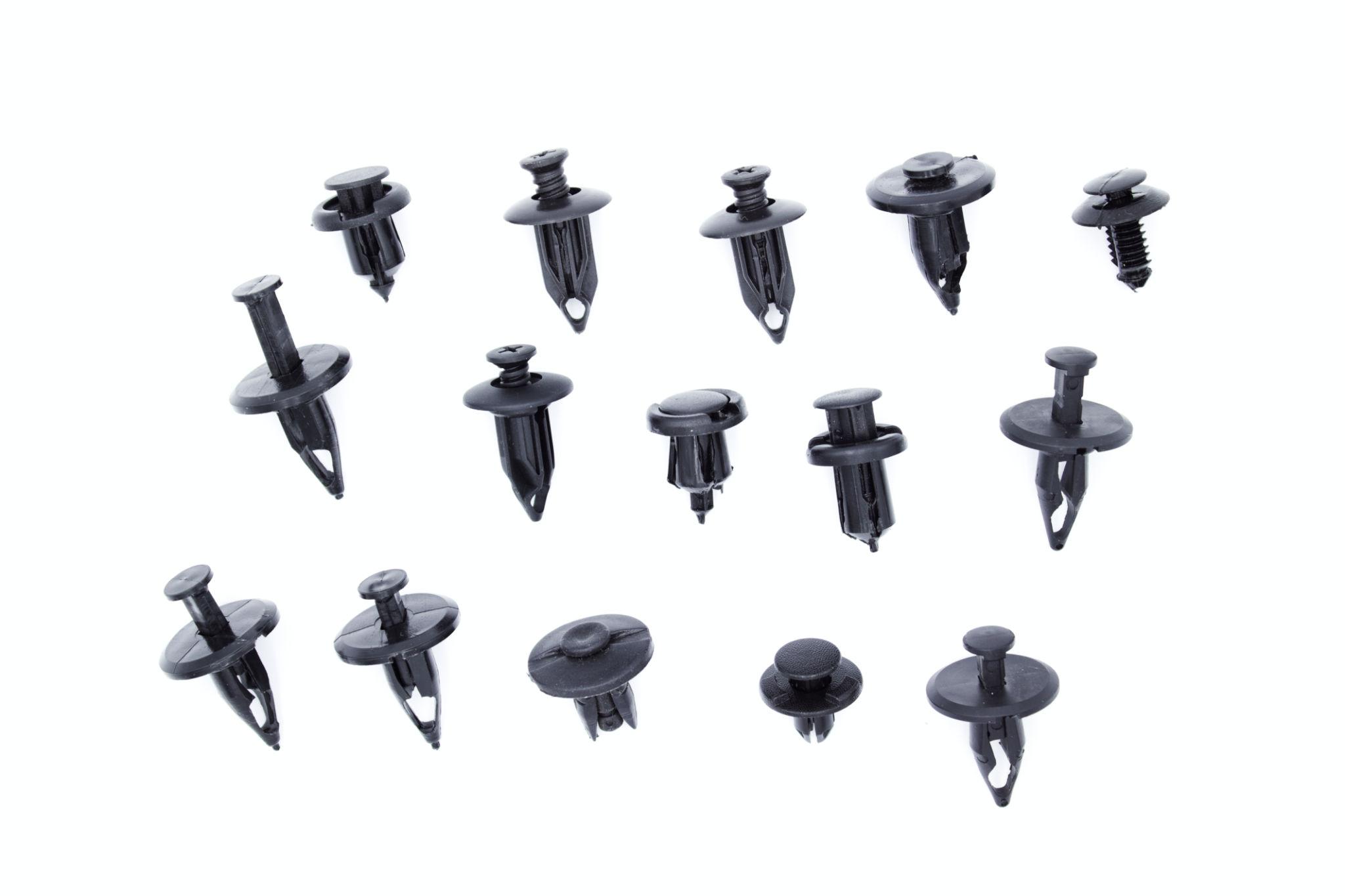
Main Types of Automotive Clips
Below are the primary categories used in modern vehicles:
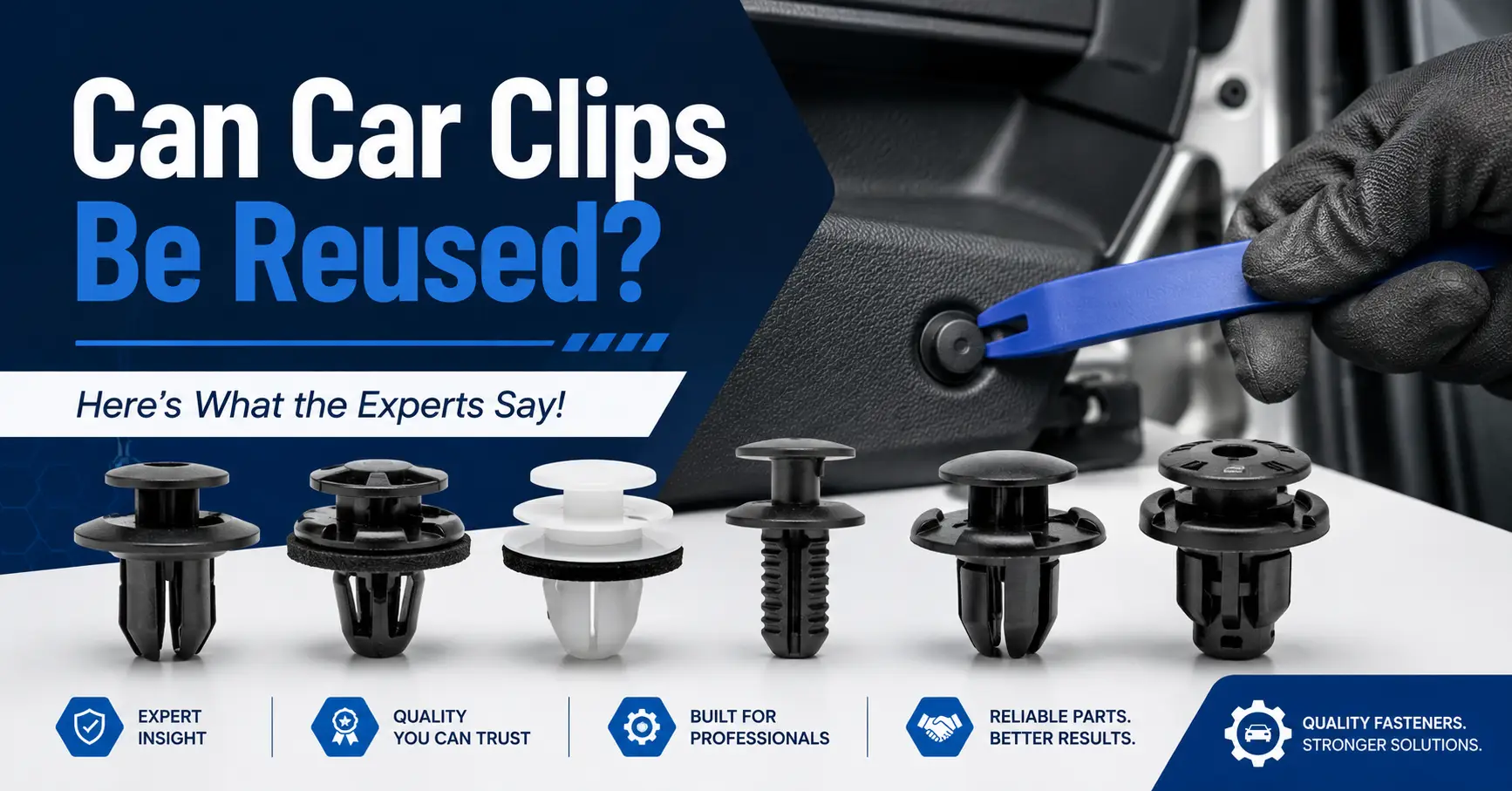
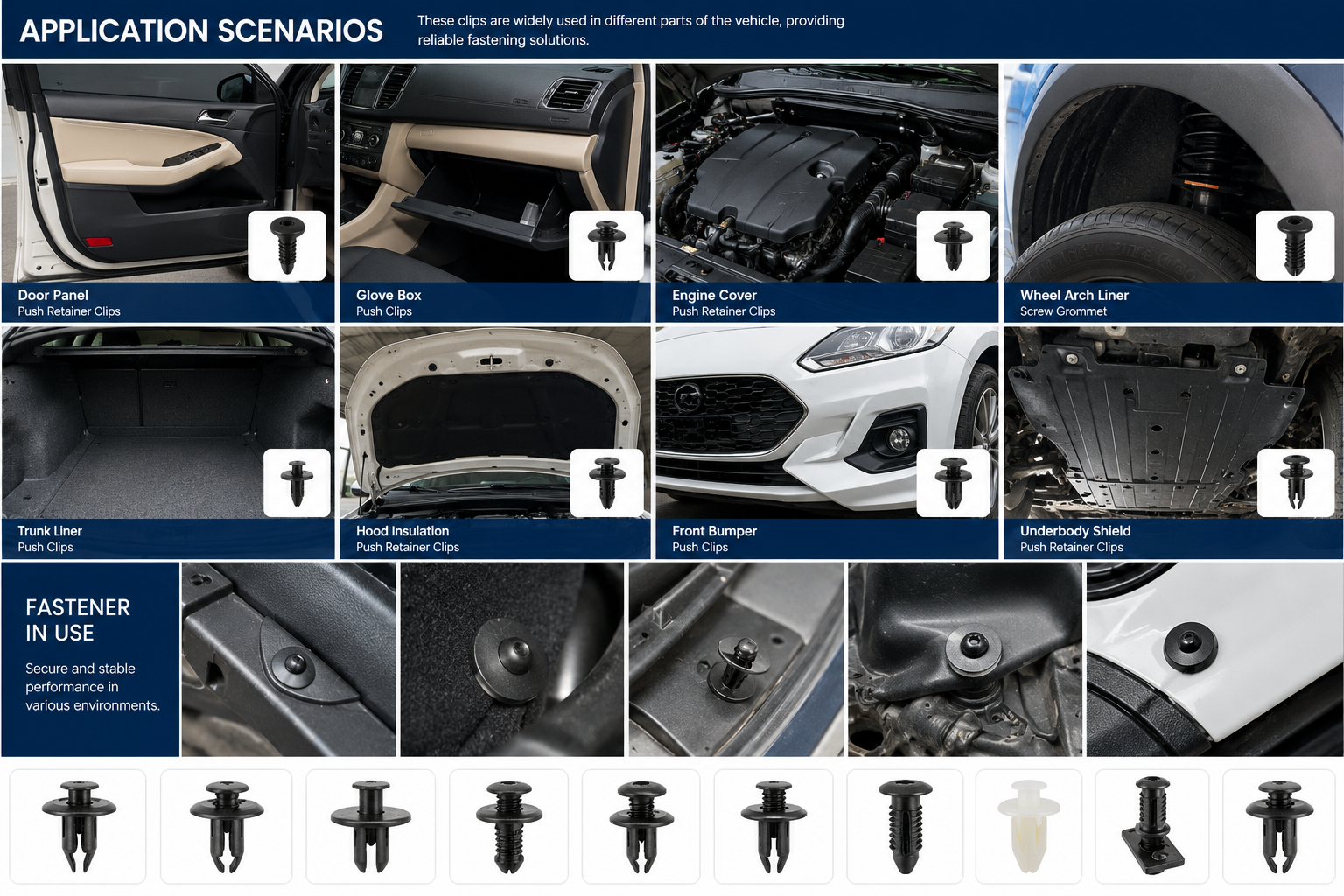
1. Push-Type Retainer Clips
Common for interior panels and trim.
- Retention force: 180–220 N
- Material: PA66
- Best for: Low-load interior trim
2. Expansion Rivet Clips
Used for bumpers and fender liners.
- Retention force: 220–260 N
- Material: PA66 GF10
- Best for: Exterior structural fastening
3. Screw-Type Fastener Clips
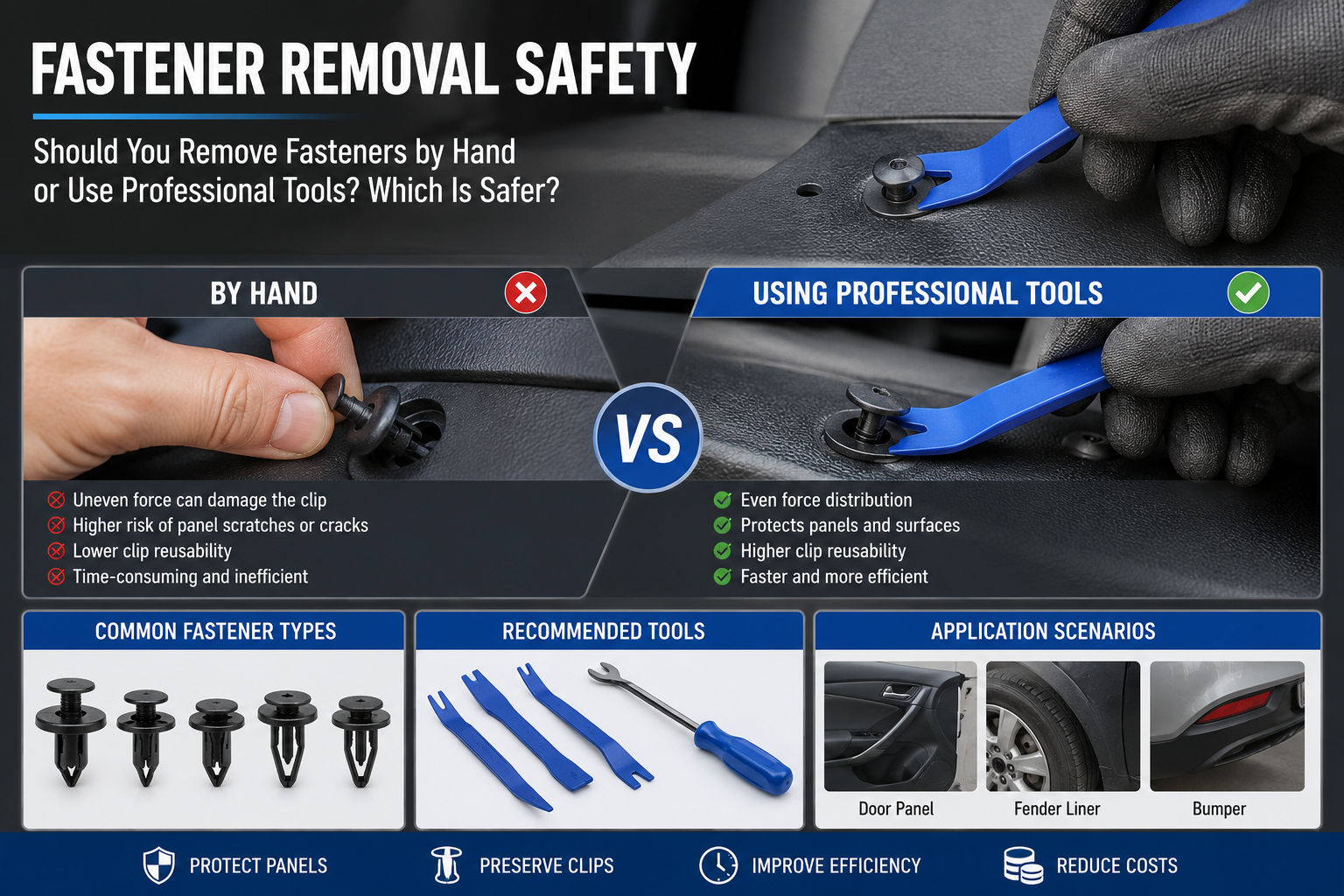
Allow repeated removal.
- Retention force: 200–240 N
- Material: POM or reinforced nylon
- Best for: Underbody panels
4. Hybrid Insert Clips
Contain metal core for high-load zones.
- Retention force: 250–300 N
- Best for: Engine compartment
5. Christmas Tree Clips
Multi-barb design for wiring harness or light trim.
- Flexible multi-stage retention
- Best for: Cable fixation
Each category exists to address a specific mechanical condition.
An experienced Automotive Clips manufacturer must evaluate application before recommending type.
Comparative Engineering Table
| Clip Type | Retention Strength (N) | Reuse Capability | Heat Resistance | Typical Application |
|---|---|---|---|---|
| Push-Type | 180–220 | Moderate | ≤120°C | Door trim |
| Expansion Rivet | 220–260 | Low | ≤130°C | Bumper |
| Screw-Type | 200–240 | High | ≤120°C | Underbody |
| Hybrid Insert | 250–300 | Low | ≤140°C | Engine bay |
| Christmas Tree | 150–200 | Moderate | ≤110°C | Harness |
Choosing incorrectly may reduce retention by 20–30%.
Common Misapplications
Frequent mistakes include:
- Using interior push clips in bumper zones
- Using non-reinforced nylon in engine heat areas
- Using rigid glass fiber clips in flexible trim panels
- Assuming diameter similarity equals compatibility
Small geometry differences cause large performance shifts.
As a structured Automotive Clips manufacturer, QEEPEI maintains dimensional tolerance within ±0.02–0.03 mm to ensure fitment accuracy.
Real Case: Bumper Loosening Due to Wrong Type
A distributor substituted interior push clips for bumper assembly to reduce cost.
Observed outcome:
- Retention dropped from 240 N to 180 N
- Panel vibration at 300–400 Hz
- 22% return rate
Correction:
- Switched to PA66 GF expansion rivet
- Restored retention to 250 N
- Complaint rate reduced by 75%
Type selection directly affects durability.
How to Choose Correctly
When selecting automotive clips, evaluate:
- Application location
- Load direction (pull-out or shear)
- Removal frequency
- Environmental exposure
- Panel thickness tolerance
A correct selection balances elasticity, strength, and durability.
FAQ
Q: Are all 8 mm clips interchangeable?
A: No. Shaft tolerance, barb angle, and material determine performance.
Q: Should I always use glass fiber reinforced clips?
A: Only in high-load or high-heat areas.
Q: Which type is safest for interior trim?
A: Standard PA66 push-type clips offer balanced flexibility.
Conclusion
Automotive clips are not universal parts. They are engineered retention systems designed for specific load and environmental conditions.
A qualified Automotive Clips manufacturer evaluates structure, material, and lifecycle before recommending the correct fastening solution.
At QEEPEI, we combine dimensional precision, polymer engineering, and validated retention testing to ensure global reliability.
Explore our full catalog:
https://www.cnclip.com/
For technical consultation or bulk cooperation:
https://www.cnclip.com/contact-us/