
In global automotive distribution, small parts carry large responsibility. A professional car push retainer clips importer does far more than move containers across borders. They manage risk, guarantee mechanical reliability, and protect downstream clients from fitment failures.
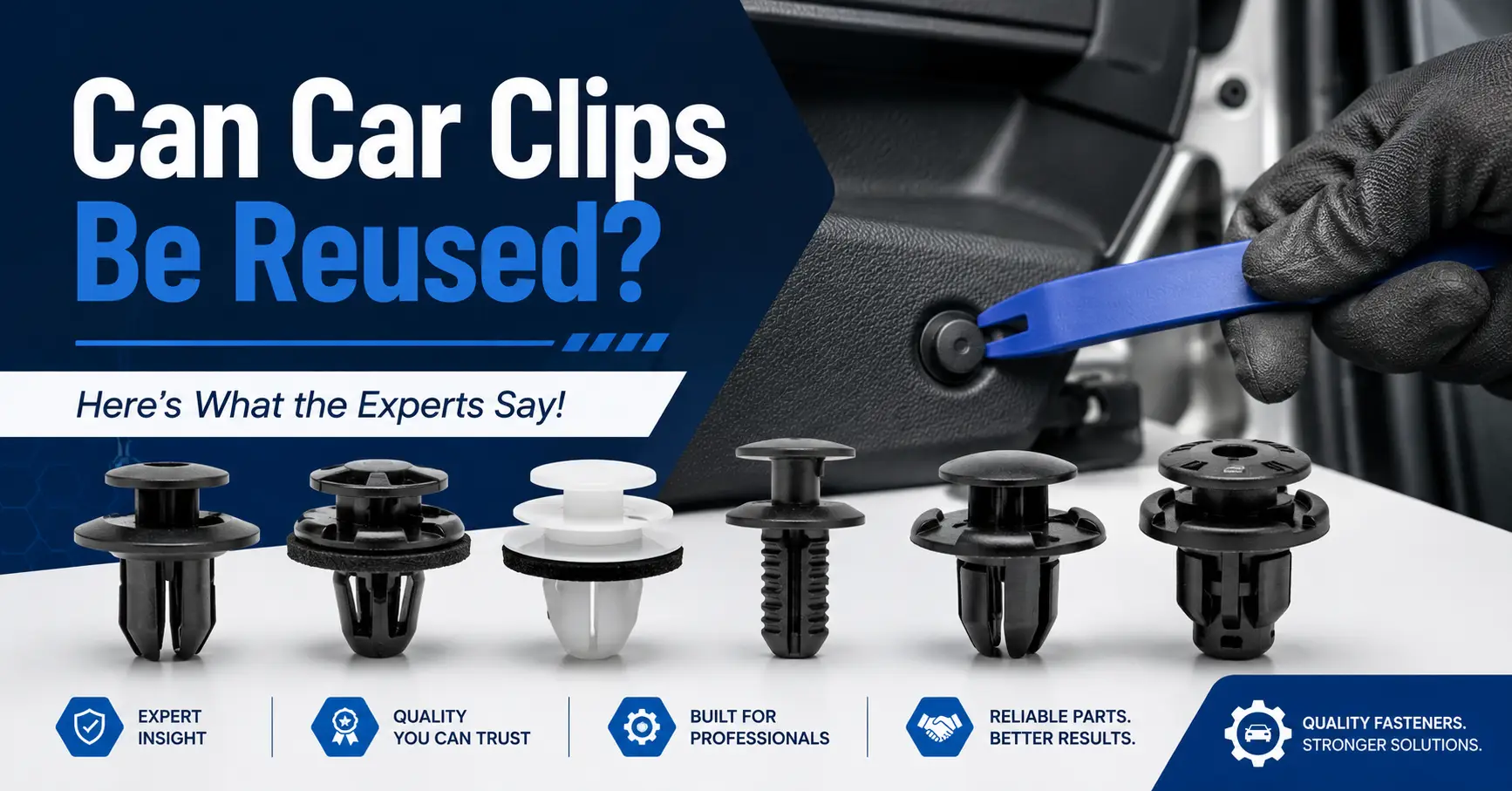
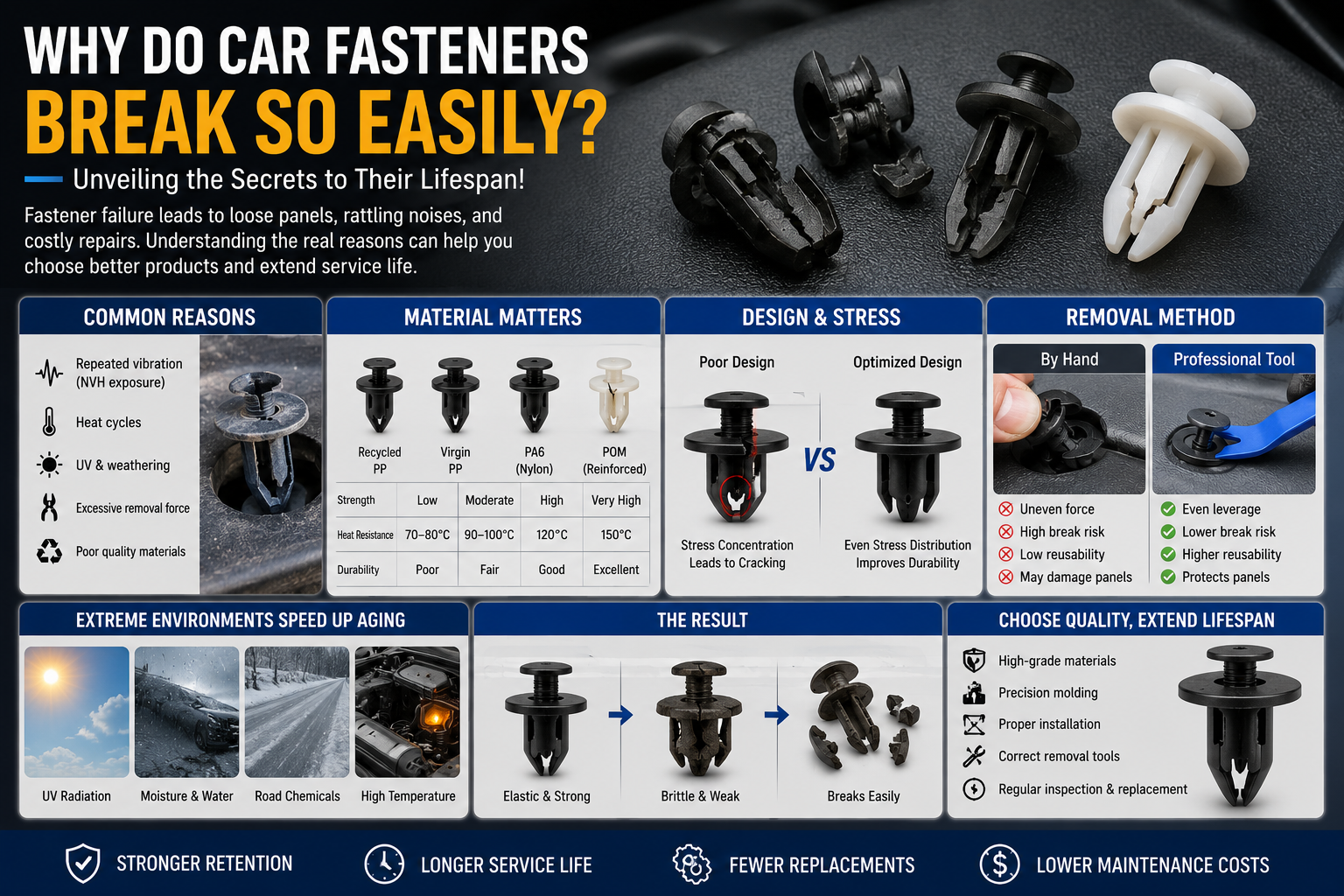
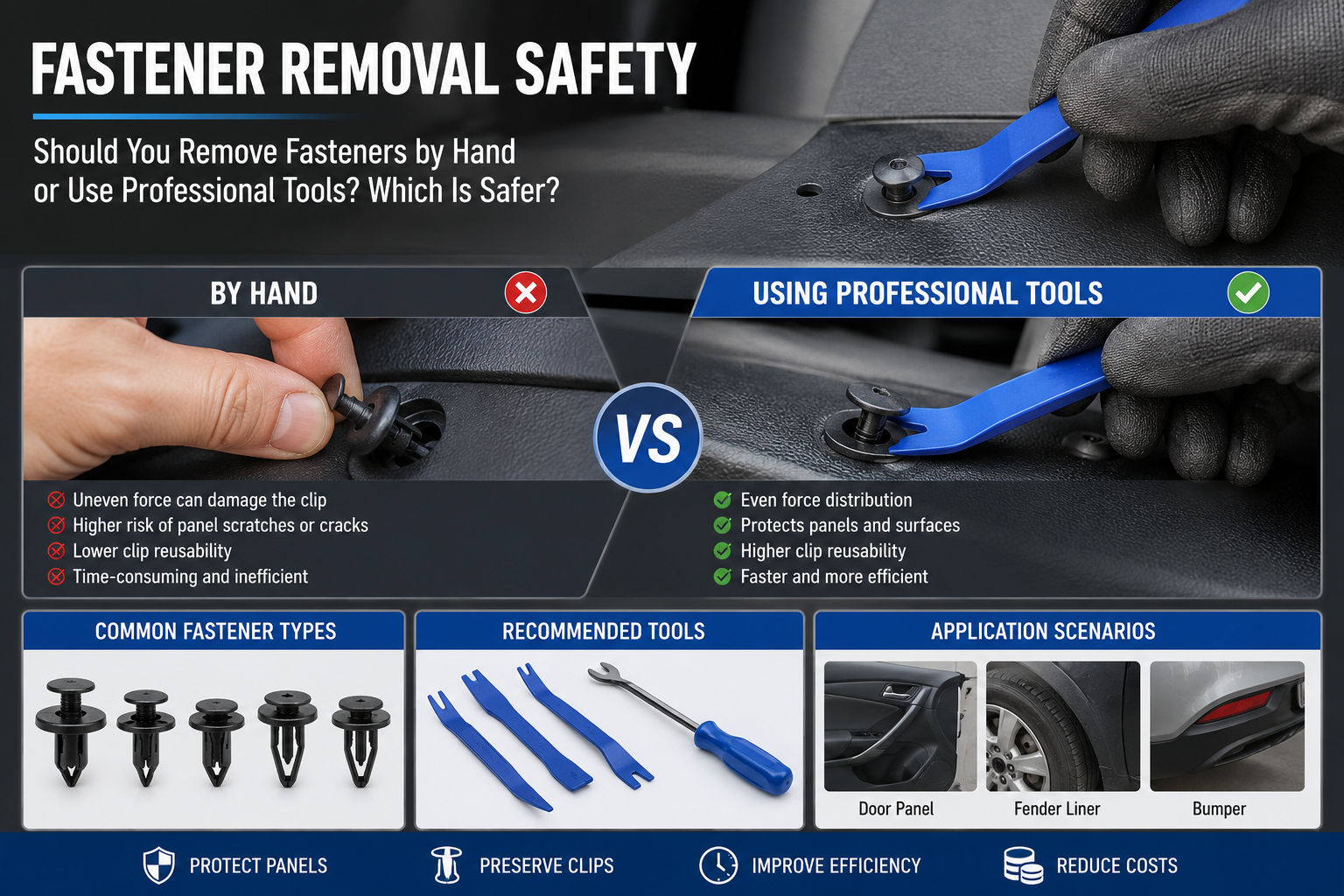
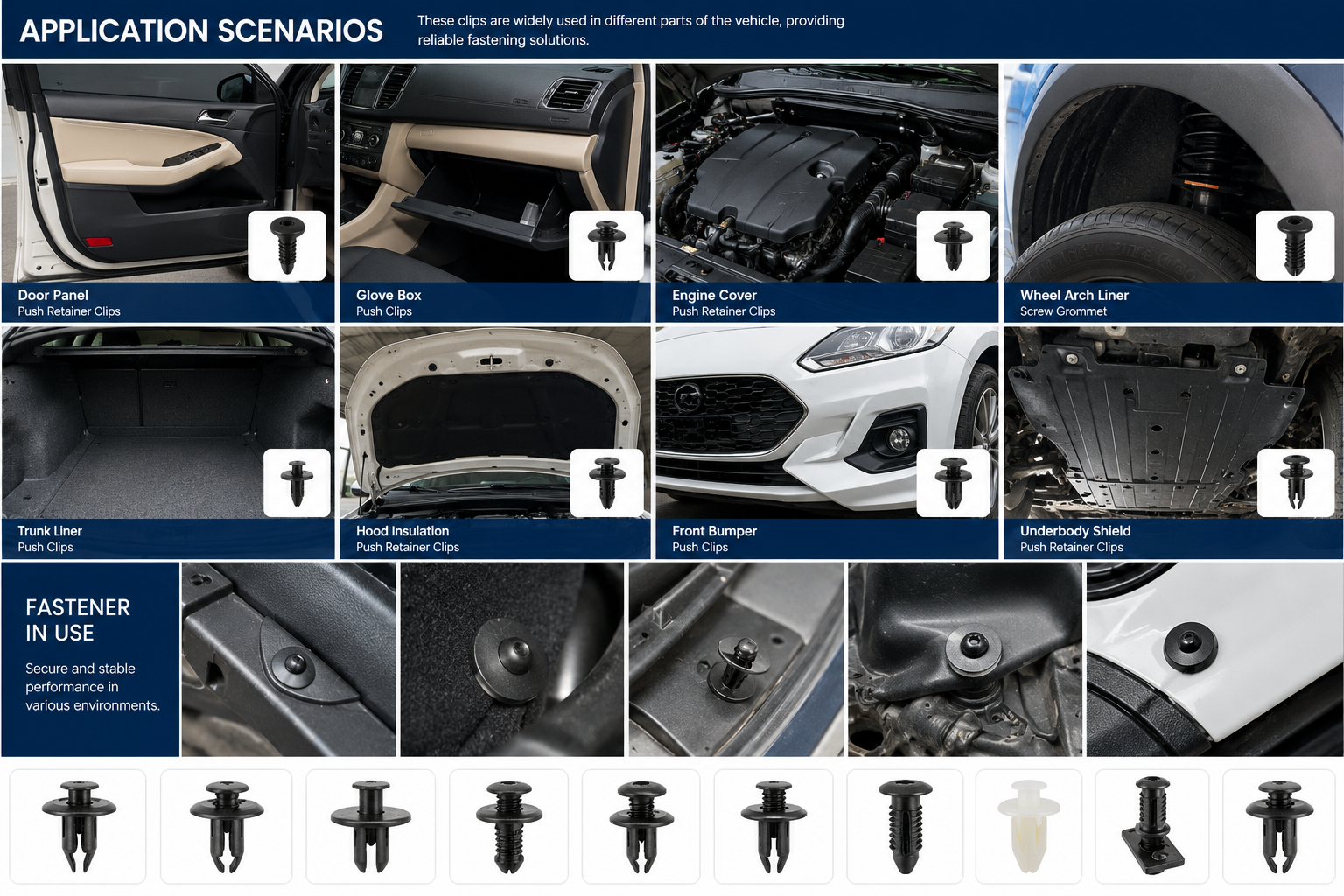
Push-type retainers are widely used in door panels, bumpers, engine covers, and underbody shields. Their function seems simple—insert, lock, secure. Yet performance depends on material behavior, tolerance control, and environmental stability. When importing these components at scale, oversight must extend beyond price negotiation.
Where Importers Commonly Encounter Risk
Many importers underestimate how technical push clips really are. Recurring issues include:
-
Dimensional variation exceeding ±0.08 mm, causing poor hole engagement
-
Brittleness in cold climates due to low-grade nylon
-
Insufficient tensile strength under vibration loads
-
Lack of REACH or RoHS compliance documentation
-
Shipment deformation caused by poor packaging compression strength
For aftermarket distributors and OEM spare part networks, these failures can translate into customer complaints, return costs, and damaged brand trust.
Mechanical Fundamentals of Push Retainer Clips
Push retainers function through expansion-based locking geometry. Once inserted into a pre-drilled hole, the shaft compresses and then expands, distributing load along retention ribs. Performance depends on several measurable parameters:
-
Pull-Out Strength: Typically 180–260 N for automotive-grade nylon clips
-
Insertion Force: Balanced between 30–45 N to prevent panel cracking
-
Thermal Range: –40°C to +130°C continuous stability
-
Fatigue Cycle Endurance: ≥8,000 installation-removal cycles
These metrics determine whether a push clip will remain secure after years of vibration and environmental stress.
Low-Cost Trading vs Structured Import Strategy
| Criteria | Low-Cost Trader | Professional Car Push Retainer Clips Importer |
|---|---|---|
| Dimensional Tolerance | ±0.10 mm | ±0.03 mm verified by 3D optical inspection |
| Resin Type | PA6 generic | PA66 + GF10 OEM-certified |
| Pull-Out Strength | 120–150 N | 200–260 N (ASTM D638 tested) |
| Heat Resistance | ≤100°C | 130°C sustained |
| Compliance Docs | Basic invoice only | MSDS + REACH + RoHS + HS code |
| Packaging Strength | 6–8 kN | 12–14 kN compression export cartons |
| Traceability | None | QR batch-level tracking |
The difference lies not in appearance—but in predictability.
How QEEPEI Supports Importers with Stable Manufacturing
A serious importer aligns with a manufacturer capable of repeatable precision. QEEPEI integrates engineering control and export readiness into one ecosystem:
-
Multi-cavity CNC-calibrated molds (±0.02–0.03 mm accuracy)
-
Servo-electric injection lines reducing shrinkage variation by 18%
-
AI optical inspection covering 100% of production batches
-
Climate-controlled warehousing to prevent polymer moisture absorption
-
Consolidated container export handling with bonded logistics
Through this structure, QEEPEI ensures every shipment meets both mechanical and documentary standards required by international buyers.
Advantages for Importers and Distributors
-
Reduced Return Rate: Dimensional consistency lowers field rejection by up to 22%
-
Custom SKU Management: Mixed-container shipments with serialized labeling
-
Stable Lead Times: 14–21 day export cycle under bonded shipping
-
Brand Protection: Consistent clip geometry maintains customer satisfaction
-
Regulatory Assurance: Full documentation simplifies customs clearance
For high-volume distributors, these operational efficiencies compound into long-term margin stability.
Application Segments Across Import Markets
| Market Region | Vehicle Segment | Typical Clip Size | Retention Strength (N) | Temperature Rating |
|---|---|---|---|---|
| North America | Pickup & SUV | 8–10 mm shaft | 240–260 | –40 to 130°C |
| Europe | Compact & EV | 6–8 mm shaft | 200–230 | –30 to 120°C |
| Middle East | Utility vehicles | 9 mm reinforced | 230–250 | –40 to 130°C |
| Southeast Asia | Passenger sedans | 6 mm standard | 180–210 | –20 to 110°C |
Such variation underscores why importers must align product specification with regional vehicle usage patterns.
Procurement Checklist for Professional Importers
-
Confirm resin specification (PA66 vs PA6)
-
Verify tensile and insertion force test reports
-
Inspect packaging compression certification
-
Request pre-shipment sample validation
-
Ensure harmonized system (HS) coding accuracy
-
Confirm traceability method for batch tracking
A disciplined checklist transforms importing from transactional purchasing into structured supply management.
FAQ
Q: What minimum order quantities are typical for push retainer imports?
A: Standard MOQ begins at 50,000 pieces per SKU, though mixed-container shipments are supported.
Q: How can an importer prevent deformation during sea freight?
A: Use double-wall export cartons rated above 12 kN compression and moisture barrier liners.
Q: Can QEEPEI customize packaging for branded distribution?
A: Yes. Private labeling, barcode systems, and serialized cartons are available for distributor networks.
Conclusion: Precision Procurement for Small but Critical Components
A professional car push retainer clips importer understands that these compact components influence structural stability, acoustic performance, and long-term durability. When import decisions are backed by certified materials, digital traceability, and industrial-grade manufacturing—risk declines, margins stabilize, and customer confidence strengthens.
Partnering with QEEPEI ensures that every shipment of push retainer clips delivers measurable consistency from factory floor to final installation.
For importer cooperation or bulk export inquiries, visit
https://www.cnclip.com/
or contact the team directly at
https://www.cnclip.com/contact-us