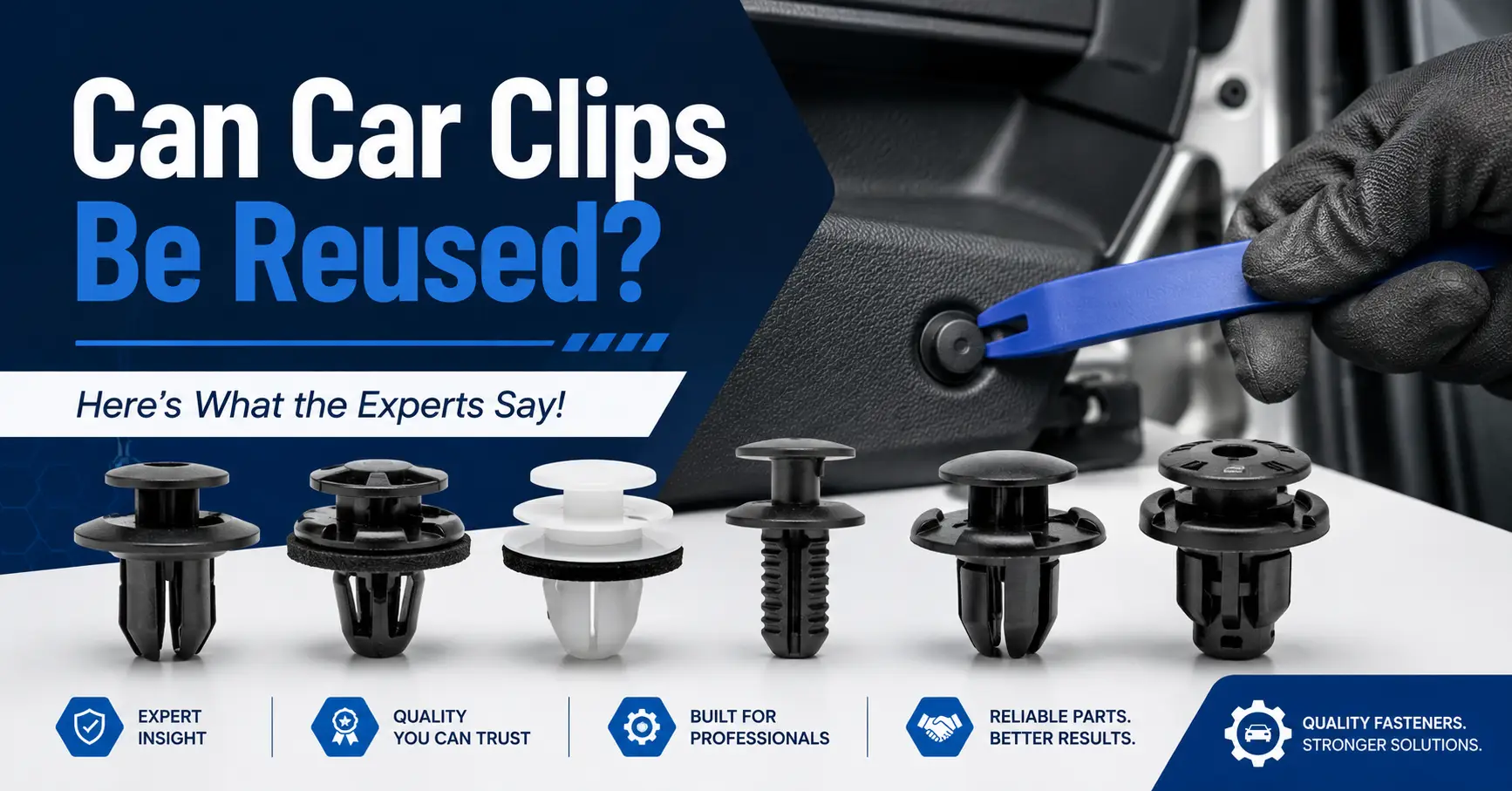

Industrial Supplier Plastic Rivet: Strength, Precision, and Efficiency in Modern Fastening Systems
In modern manufacturing, fastening systems define assembly reliability and cost predictability. The industrial supplier plastic rivet plays an often underestimated but critical role—anchoring trims, panels, and subassemblies with lightweight precision. For high-volume industries, the right supplier transforms fastening from a cost center into a strategic advantage.
QEEPEI supports global manufacturers by integrating polymer science, digitalized inspection, and logistics automation—delivering consistent rivet performance under industrial-grade expectations.
Persistent Challenges in Industrial Fastening Procurement
Procurement and production managers alike encounter recurring pain points when sourcing rivets:
-
Material inconsistency between suppliers, leading to uneven break loads.
-
Poor rivet head tolerance, causing misalignment or vibration noise.
-
Manual inspection methods that overlook micro defects.
-
Fragmented supplier networks lacking synchronized lead times.
Such inefficiencies directly increase rejection rates and rework costs—especially in automotive, HVAC, and appliance assembly lines.
Mechanical Logic Behind High-Performance Plastic Rivets
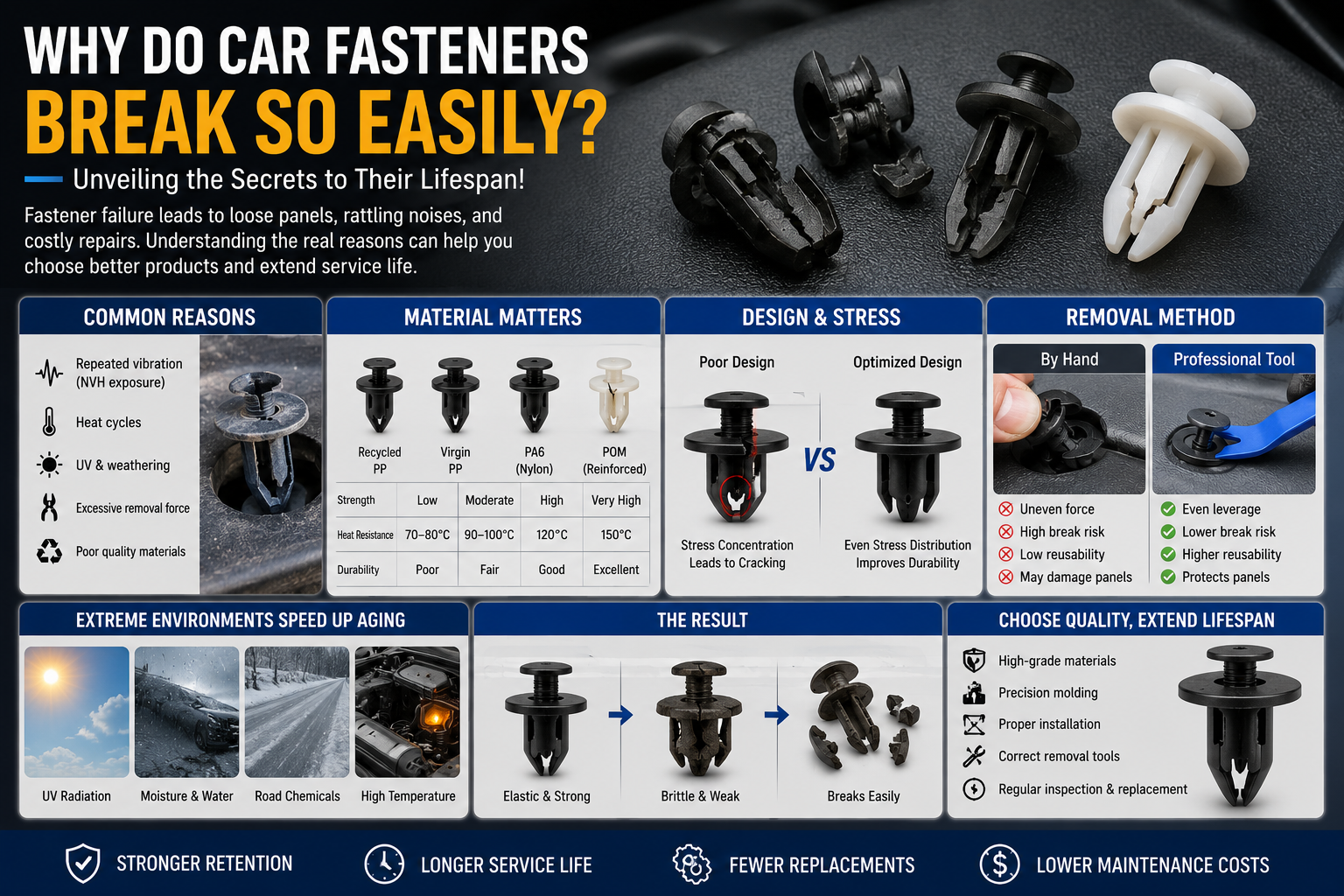
Industrial-grade rivets depend on a delicate balance of flexibility and strength. The geometry and polymer composition dictate both installation reliability and long-term durability.
-
Expansion Mechanism: Shaft expansion must ensure uniform compression without overstressing the substrate.
-
Elastic Memory: Thermoplastic polymers recover slightly after insertion to maintain consistent hold.
-
Tensile Load Resistance: Industrial rivets must exceed 180–250 N pull-out strength depending on diameter.
-
Thermal Stability: Nylon 66 and POM blends ensure stable performance between –40 °C and +120 °C.
When engineered correctly, the rivet functions as both a fastener and a vibration damper—preventing structural fatigue in dynamic assemblies.
Conventional Vendors vs. Industrial-Grade Supply Chains
| Criteria | Generic Vendor | Industrial Supplier (QEEPEI) |
|---|---|---|
| Material Certification | None or limited | ISO / RoHS / REACH compliant |
| Dimensional Tolerance | ±0.1 mm | ±0.03 mm |
| Inspection | Manual sampling | 100 % automated optical system |
| Logistics Control | Local dispatch | Multi-region JIT network |
| Customization | Limited | Full OEM mold capability |
An industrial supplier plastic rivet partner like QEEPEI ensures that every component meets controlled specifications, regardless of geography or production volume.
QEEPEI’s Integrated Manufacturing and Supply Framework
QEEPEI’s manufacturing architecture combines precision molding and intelligent logistics to ensure zero-defect supply:
-
Automated Injection Systems: Maintain uniform melt flow and dimensional stability.
-
Real-Time Optical Inspection: Detects surface defects down to 0.03 mm variance.
-
Mold Life Management: Predictive maintenance ensures long-term consistency.
-
Batch Coding and Digital Traceability: Each box carries QR-linked production data.
-
Regional Warehousing: Fast delivery through bonded industrial hubs.
This end-to-end model supports enterprise procurement teams seeking reliability under lean production frameworks.
Strategic Benefits for Industrial Buyers
-
Reduced Assembly Downtime: Consistent fit minimizes manual rework.
-
Stable Procurement Cost: Contract-based pricing over multiple fiscal periods.
-
Enhanced Product Safety: Verified resin sources prevent brittle fracture.
-
Sustainability: Fully recyclable polymers align with ESG procurement policies.
-
Design Flexibility: Supports automotive, electronics, and heavy machinery applications.
In essence, QEEPEI transforms fastening procurement into a long-term performance asset rather than a recurring sourcing challenge.
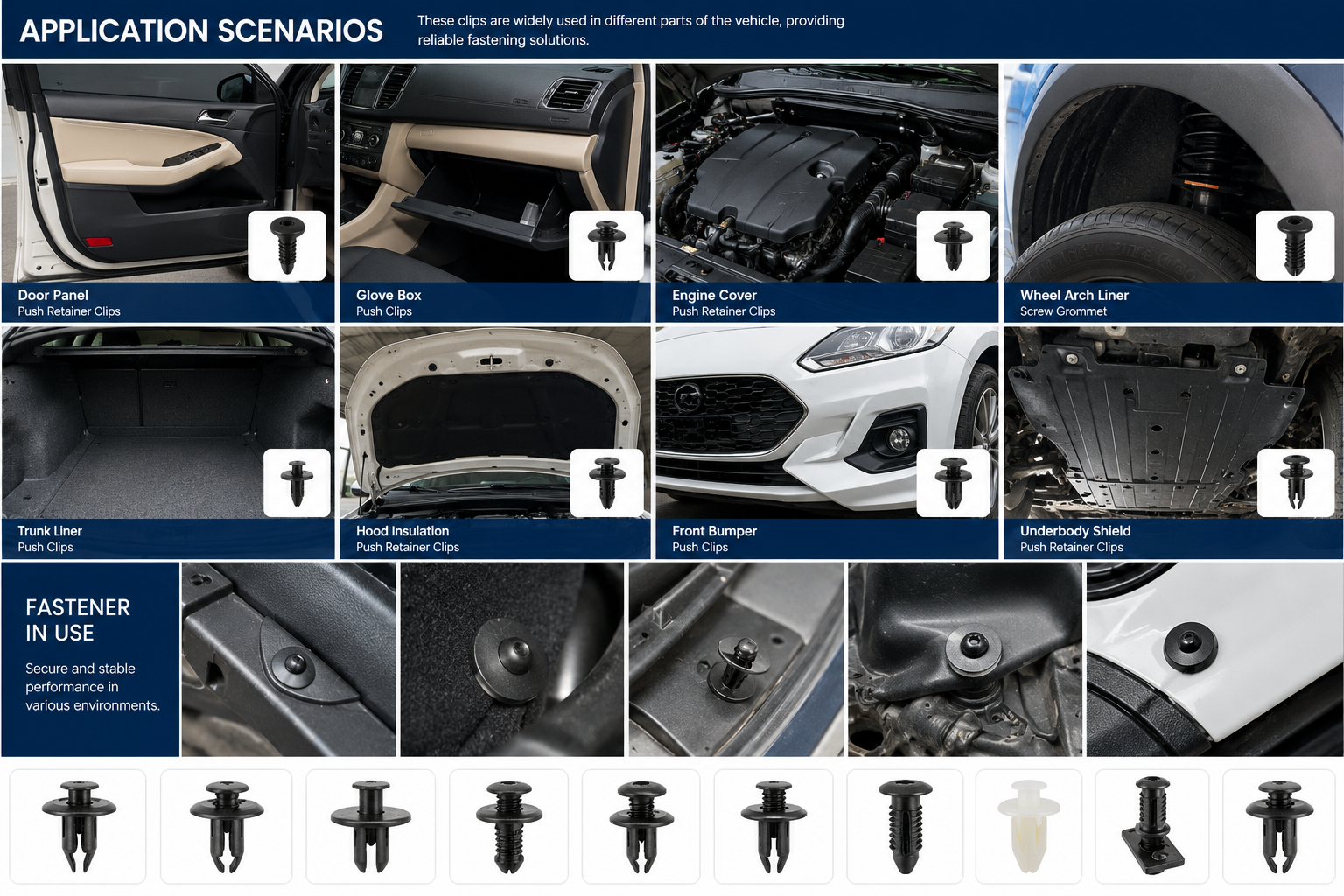
Applications Across Industrial Sectors
| Industry | Use Case | Rivet Type | Benefit |
|---|---|---|---|
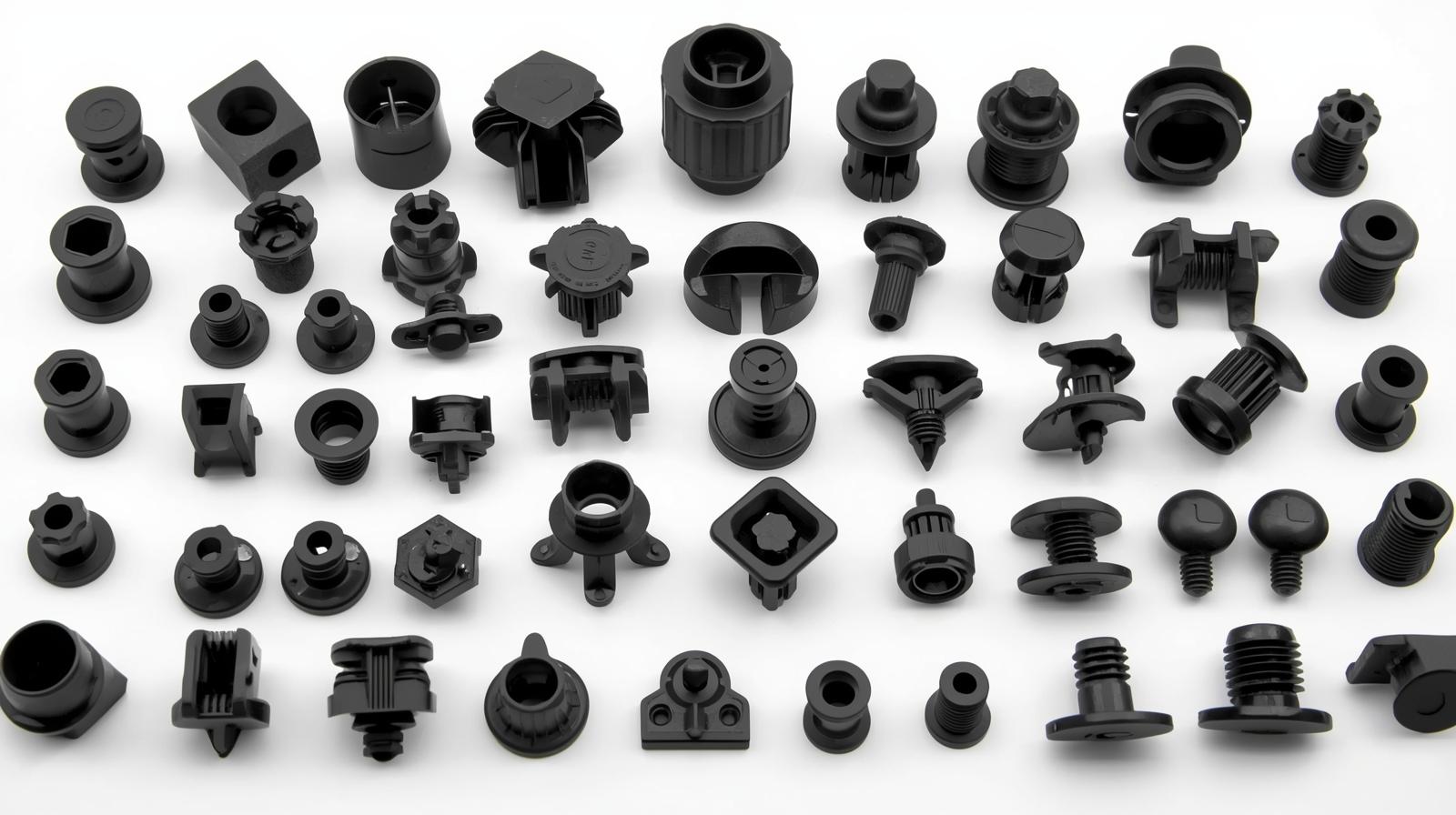
| Automotive | Panel assembly & interior trim | Push-type rivet | Stable retention under vibration |
| HVAC Systems | Air duct joints | Snap rivet | Lightweight corrosion-free fastening |
| Appliances | Plastic enclosure mounting | Blind rivet | Quick installation with clean finish |
| Electrical Equipment | Wiring brackets | Miniature rivet | Prevents insulation damage |
Each design adheres to the same principles—secure fixation with minimal weight and high repeatability.
Selection Guidelines for Procurement Engineers
-
Determine Load Requirements: Match pull-out strength with substrate density.
-
Check Polymer Compatibility: Choose PA66 or POM for thermal or chemical exposure.
-
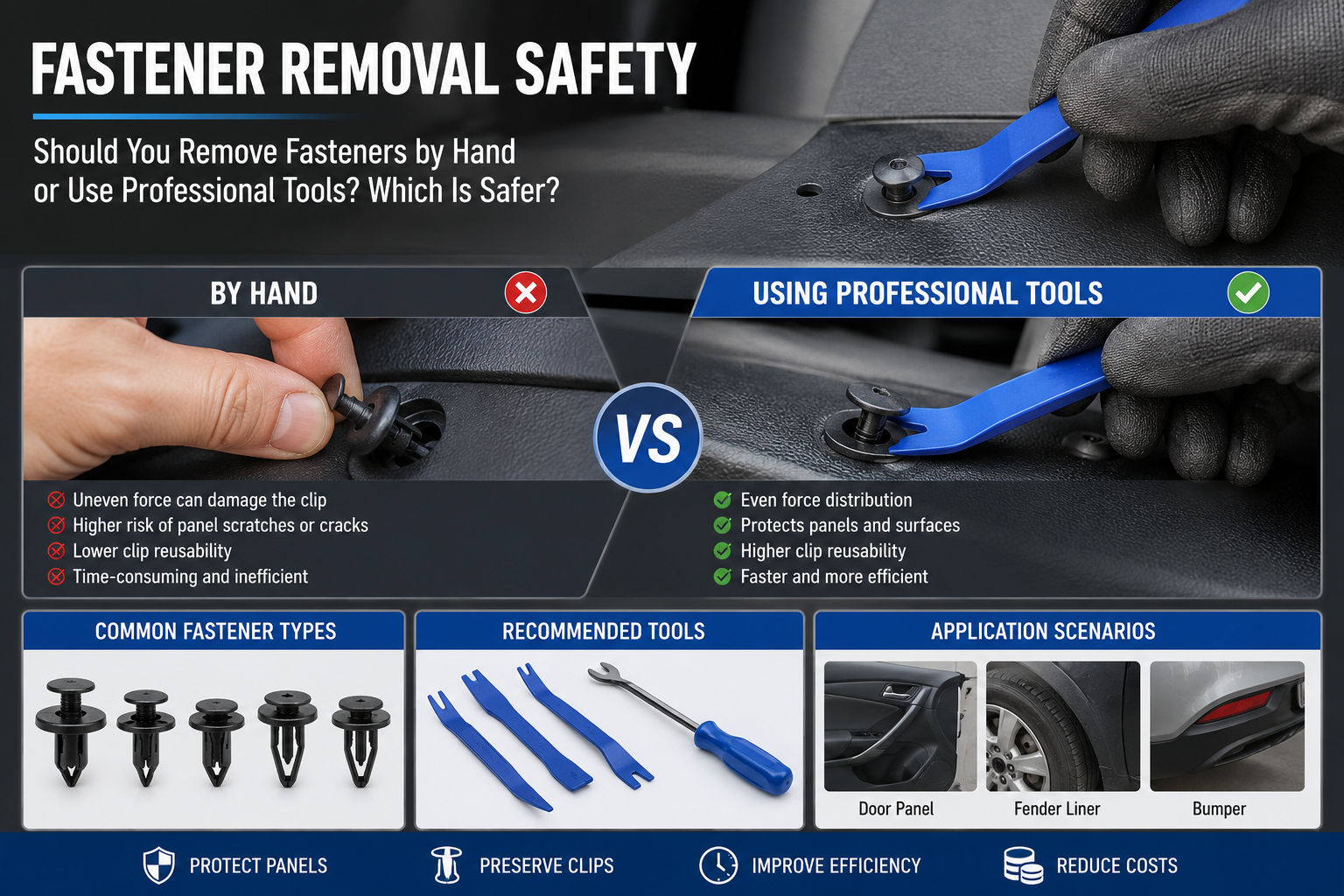
Review Installation Method: Manual vs. pneumatic insertion.
-
Assess Tolerance and Head Design: Based on hole diameter variance.
-
Request Digital Traceability Reports: Essential for multi-plant production.
Following these principles ensures the rivet remains reliable across batch runs and global assembly points.
FAQ
Q: Can QEEPEI design plastic rivets for automated robotic assembly lines?
A: Yes, all rivet models can be optimized for robotic insertion with precise grip and release control.
Q: Do you offer rivets resistant to fuel or chemical exposure?
A: Absolutely. We supply POM or PA66+GF rivets tested against industrial-grade solvents.
Q: How does QEEPEI ensure global delivery consistency?
A: Through synchronized ERP-driven warehousing and bonded export centers across Asia and Europe.
Conclusion: From Fasteners to Functional Reliability
In an industrial ecosystem driven by speed and precision, the industrial supplier plastic rivet defines both structural integrity and process efficiency. With advanced polymer control, global traceability, and quality automation, QEEPEI delivers fastening systems engineered for reliability—connecting components, industries, and continents through precision.
To explore industrial-grade rivet partnerships, visit QEEPEI Homepage or connect via Contact Us.