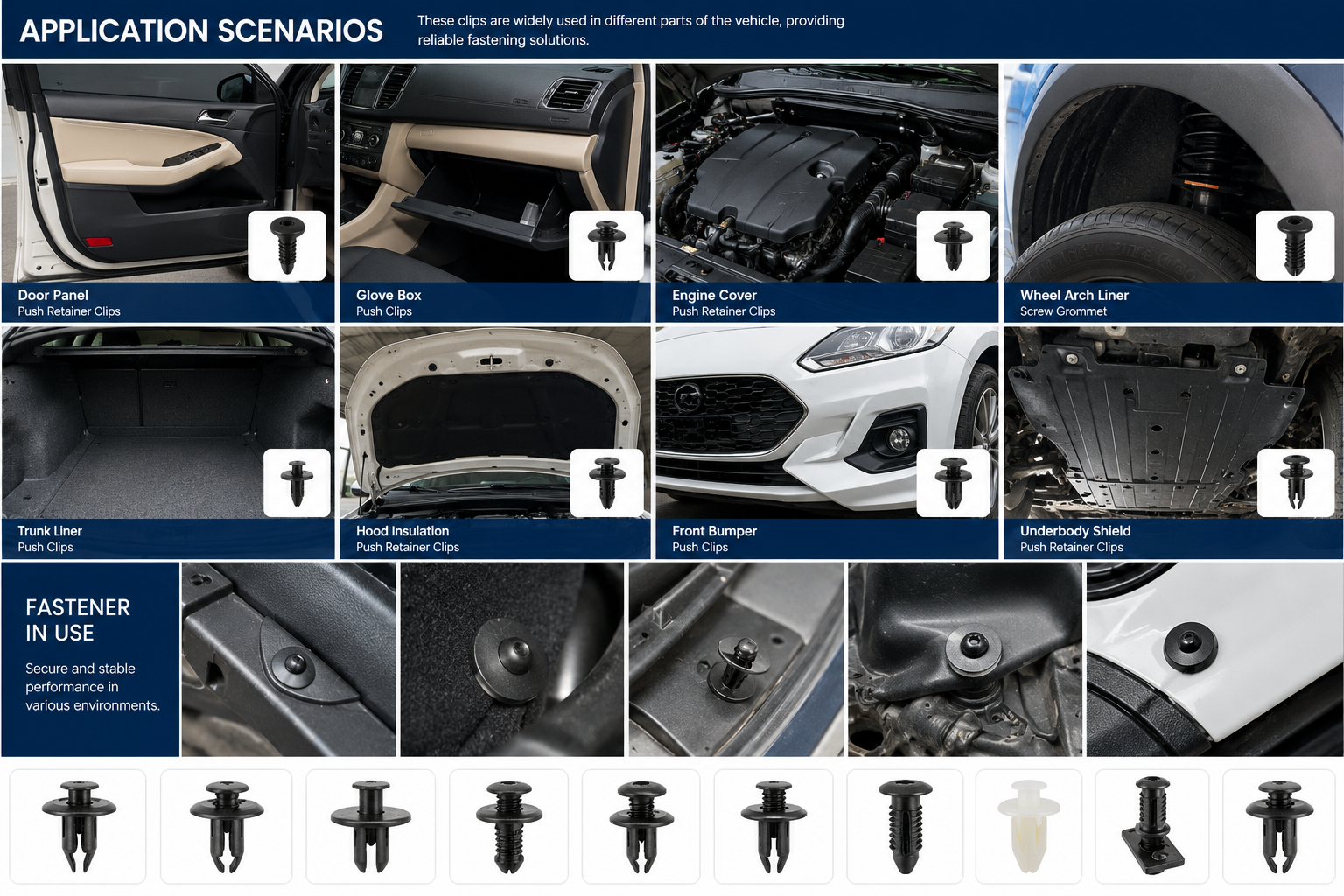

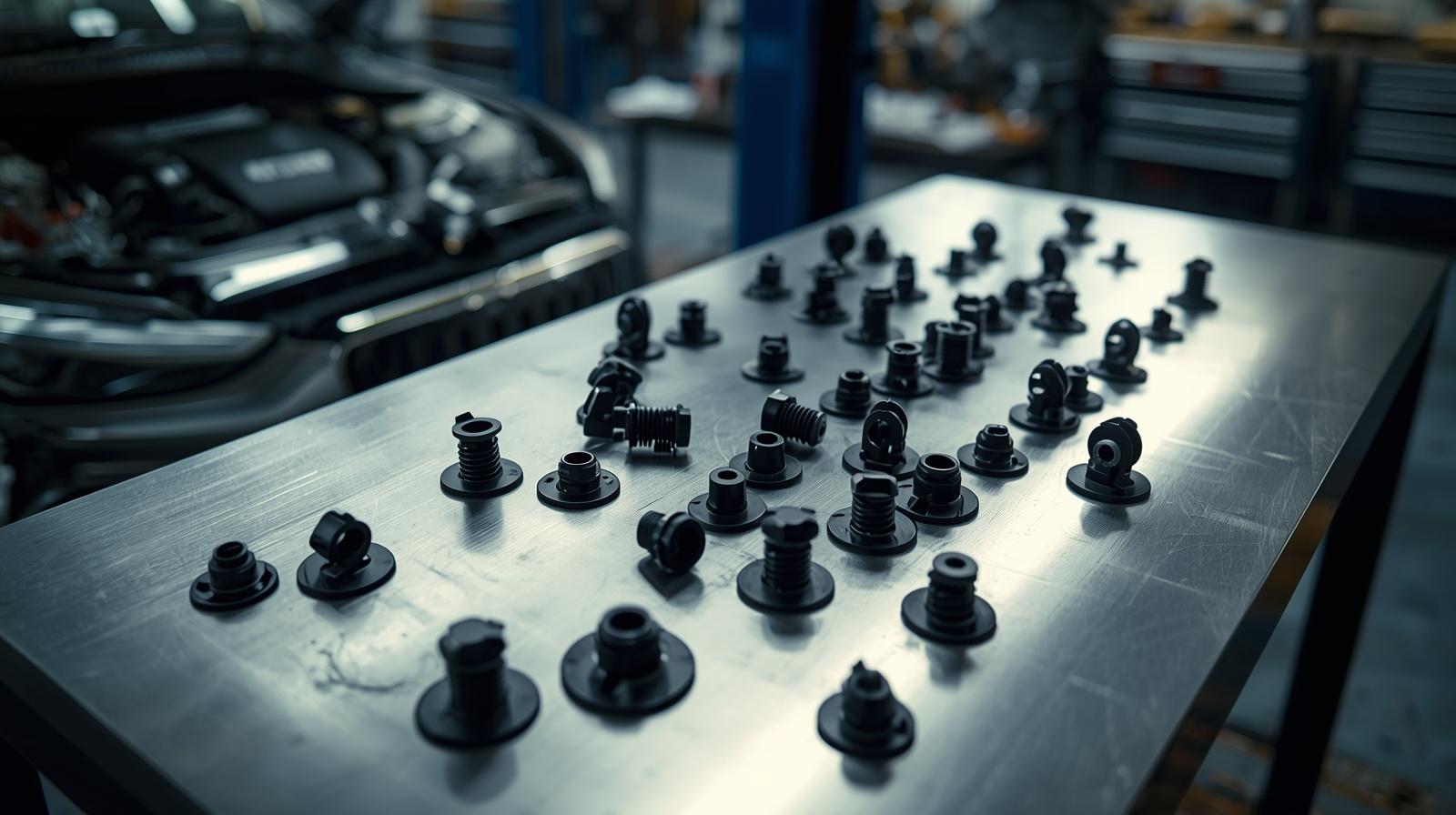
Automotive repair networks move fast. Workshops expect instant availability, consistent fitment, and zero returns. For a serious wholesaler car clips fasteners, the challenge is not simply selling in bulk—it is maintaining mechanical reliability while protecting commercial margins.
Fasteners sit at the intersection of technical performance and high-frequency demand. A clip that fails during installation creates frustration. A shipment delayed by ten days disrupts regional distribution cycles. Wholesale operations must therefore combine engineering discipline with inventory intelligence.
Where Wholesale Operations Commonly Struggle
Large-volume wholesalers often face structural inefficiencies:
-
Overreliance on low-cost suppliers with unstable dimensional control
-
SKU duplication across vehicle brands
-
Return rates above 5% due to poor retention force
-
Inconsistent pricing from short-term factory contracts
-
Overstocked slow-moving models tying up working capital
These pressures quietly erode profitability. The solution is not lower pricing—it is supply predictability.
Technical Benchmarks Every Wholesaler Should Verify
Fasteners may look identical, but performance metrics reveal the difference. A dependable clip should meet the following standards:
-
Dimensional Tolerance: ±0.03 mm for OEM compatibility
-
Pull-Out Strength: 200–260 N for bumper and trim applications
-
Insertion Force: 30–45 N balanced for manual workshops
-
Thermal Resistance: –40°C to +130°C continuous exposure
-
Salt Spray Resistance: ≥500 hours without material degradation
-
Fatigue Endurance: ≥8,000 installation cycles
Wholesale buyers who validate these parameters significantly reduce downstream claims.
Opportunistic Trading vs Structured Wholesale Model
| Criteria | Opportunistic Trader | Professional Wholesaler Car Clips Fasteners Model |
|---|---|---|
| Material Source | Generic PA6 | PA66 + GF10 OEM-grade |
| Dimensional Control | ±0.10 mm | ±0.03 mm CNC mold calibration |
| Return Rate | 6–9% | <2% with full-batch QC |
| Packaging | Bulk plastic bag | Reinforced carton + pallet stacking 12–14 kN |
| Lead Time | 30–45 days | 14–21 days bonded export |
| Price Stability | Volatile | Long-term pricing contracts |
| Traceability | None | QR-coded batch identification |
A structured model lowers operational noise and increases turnover velocity.
How QEEPEI Strengthens Wholesale Supply Chains
A wholesale network is only as stable as its manufacturing base. QEEPEI provides industrial-grade support through:
-
Multi-cavity precision molds (±0.02–0.03 mm accuracy)
-
AI optical inspection across 100% production volume
-
Automated tensile testing for each batch
-
Moisture-controlled warehousing preventing polymer degradation
-
Mixed-SKU container export options
Through collaboration with QEEPEI, wholesalers gain repeatable quality and stable replenishment cycles.
Commercial Advantages for Wholesale Distributors
-
Lower Warranty Claims: Stable retention force reduces customer returns by up to 20%
-
Faster Inventory Rotation: High-demand SKUs aligned with multi-brand compatibility
-
Margin Protection: Fixed-term pricing reduces fluctuation risk
-
Brand Expansion: Private-label packaging available for regional distributors
-
Operational Efficiency: Simplified SKU tracking through serialized cartons
Wholesale success depends not on volume alone—but on predictable turnover.
Market Segmentation and Product Demand
| Market Segment | Vehicle Category | Common Clip Size | Retention Strength (N) | Turnover Rate |
|---|---|---|---|---|
| Body Repair Networks | Passenger sedans | 6–8 mm | 200–230 | High |
| SUV & Pickup Repair | 8–10 mm reinforced | 230–260 | Medium | |
| Fleet Maintenance | Multi-model kits | 6–10 mm mixed | 220–250 | Seasonal |
| Retail Parts Stores | Compact car clips | 6 mm | 180–210 | Moderate |
Diversified SKU planning helps wholesalers align supply with demand patterns.
Procurement Framework for Wholesale Buyers
-
Verify tensile strength test documentation
-
Confirm compliance with IATF 16949 and REACH
-
Inspect packaging compression certification
-
Conduct random pre-shipment inspection
-
Negotiate stable quarterly or annual contracts
Wholesale purchasing becomes predictable when built on measurable quality metrics.
FAQ
Q: What MOQ is typical for wholesale automotive clips?
A: Standard MOQ begins at 50,000 pieces per SKU, with mixed-container options available.
Q: How can wholesalers reduce inventory risk?
A: Focus on high-compatibility SKUs used across multiple vehicle brands.
Q: Does QEEPEI support private-label wholesale packaging?
A: Yes. Customized labeling and barcode serialization are available for distributor networks.
Conclusion: Volume Means Nothing Without Consistency
A professional wholesaler car clips fasteners operation thrives on predictability—stable dimensions, reliable tensile strength, and synchronized logistics. Without that foundation, volume becomes risk.
By aligning with QEEPEI, wholesalers secure industrial-grade manufacturing support, lower return rates, and stronger long-term margins. Precision at the factory level translates directly into confidence at the distribution level.
For wholesale cooperation or bulk export inquiries, visit:
https://www.cnclip.com/
or contact directly:
https://www.cnclip.com/contact-us