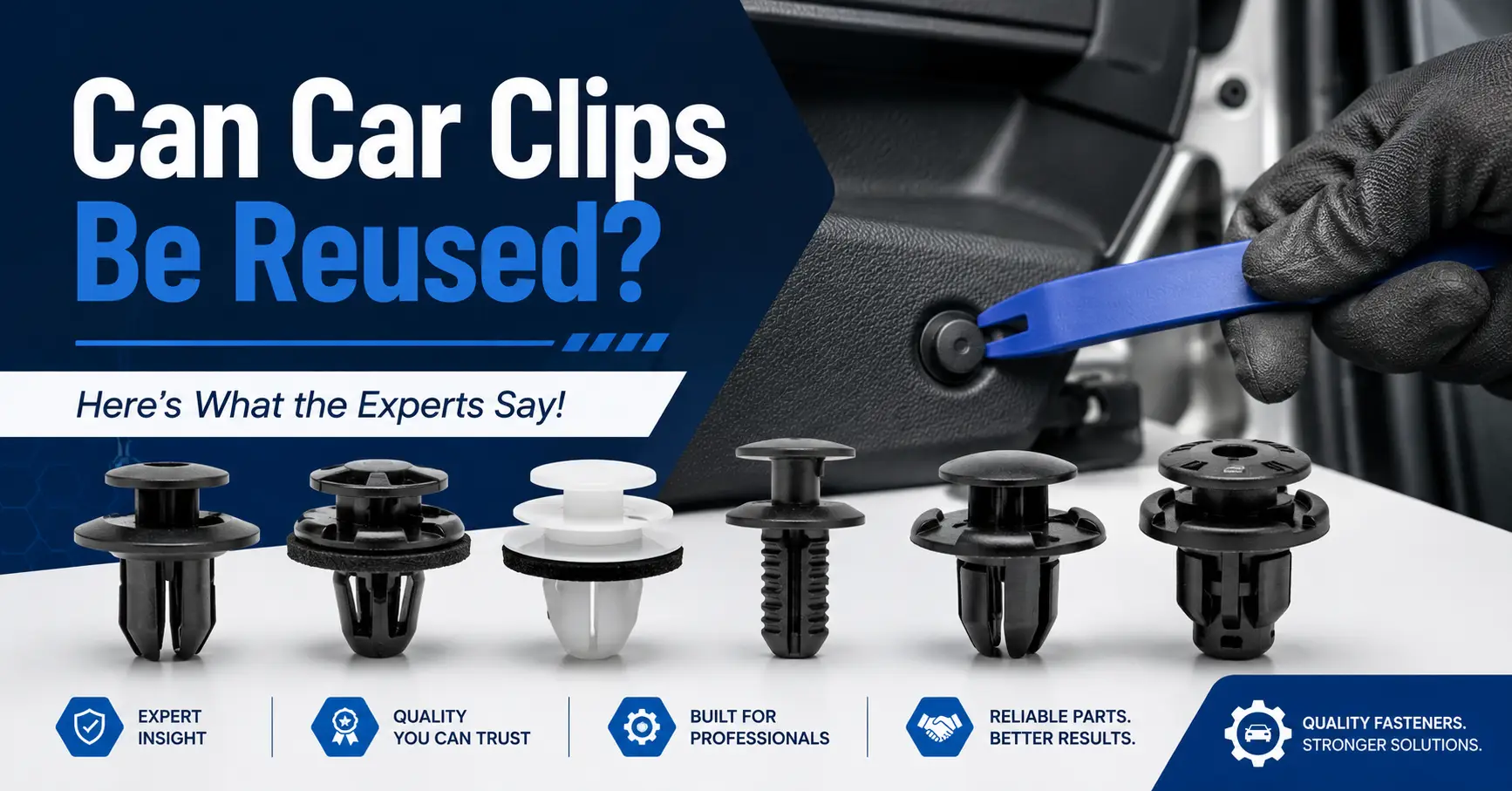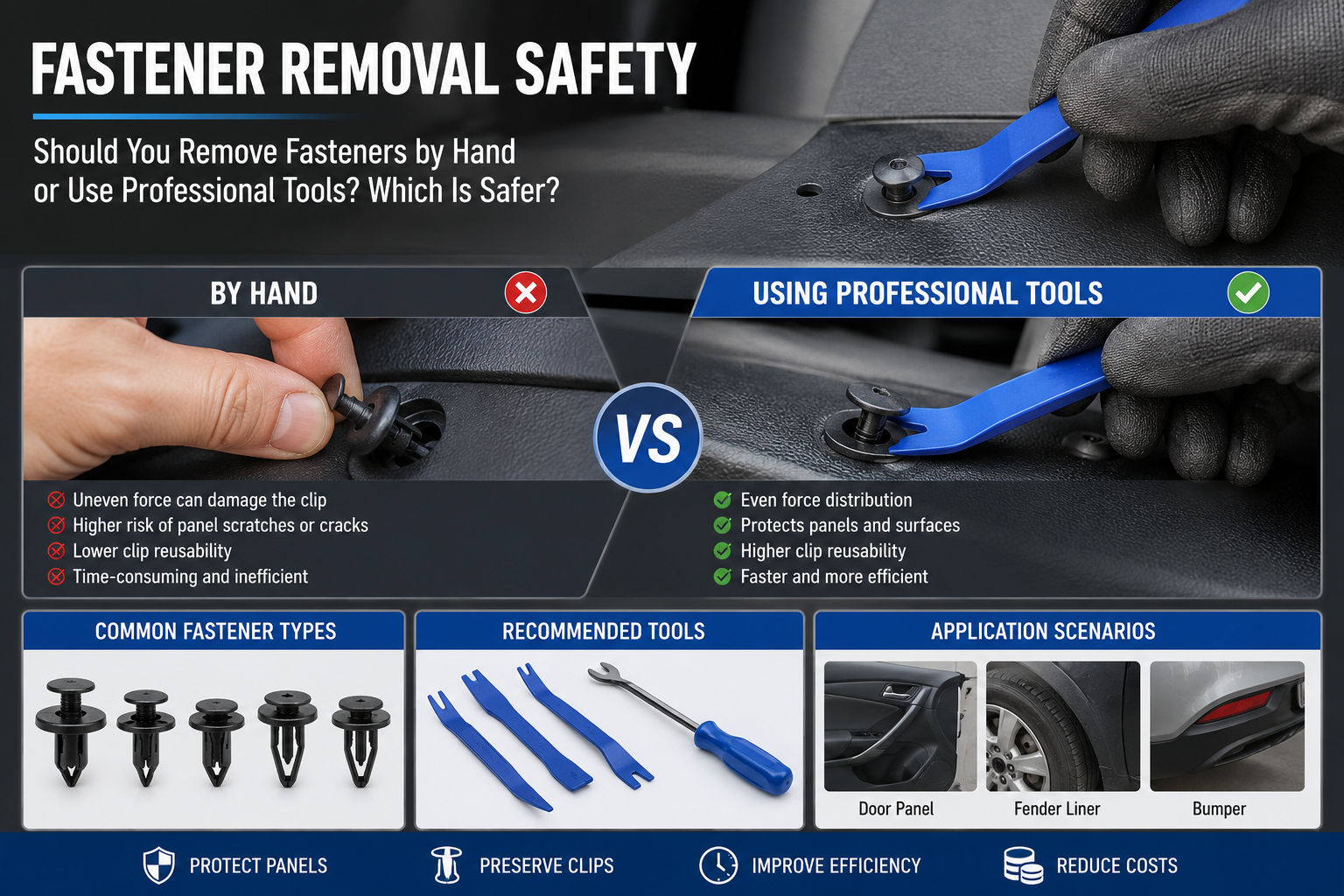

Platform Vendor Car Fender Clip: Reinventing Fastening Efficiency for Online Automotive Networks
In today’s marketplace, distributors no longer just store parts—they manage data, logistics, and customer trust. For the modern platform vendor car fender clip supplier, success depends on more than low prices; it requires quality control, data precision, and scalable packaging design. QEEPEI delivers these fundamentals through material innovation and process discipline that keep automotive fender fastening efficient and profitable.
Supply Chain Pain Points in Online Automotive Platforms
The rise of multi-vendor e-commerce has exposed recurring operational weaknesses:
-
Unverified fitment data causing buyer confusion.
-
Variations in clip size and retention strength.
-
Excess inventory of non-moving SKUs.
-
High return costs from incorrect model matching.
According to Automotive Parts Market Report 2025, platform vendors lose an estimated 18 % of annual gross margin to logistics inefficiency and misidentified components—losses that can be avoided through unified product coding and consistent testing protocols.
Mechanical Principle Behind Fender Clip Performance
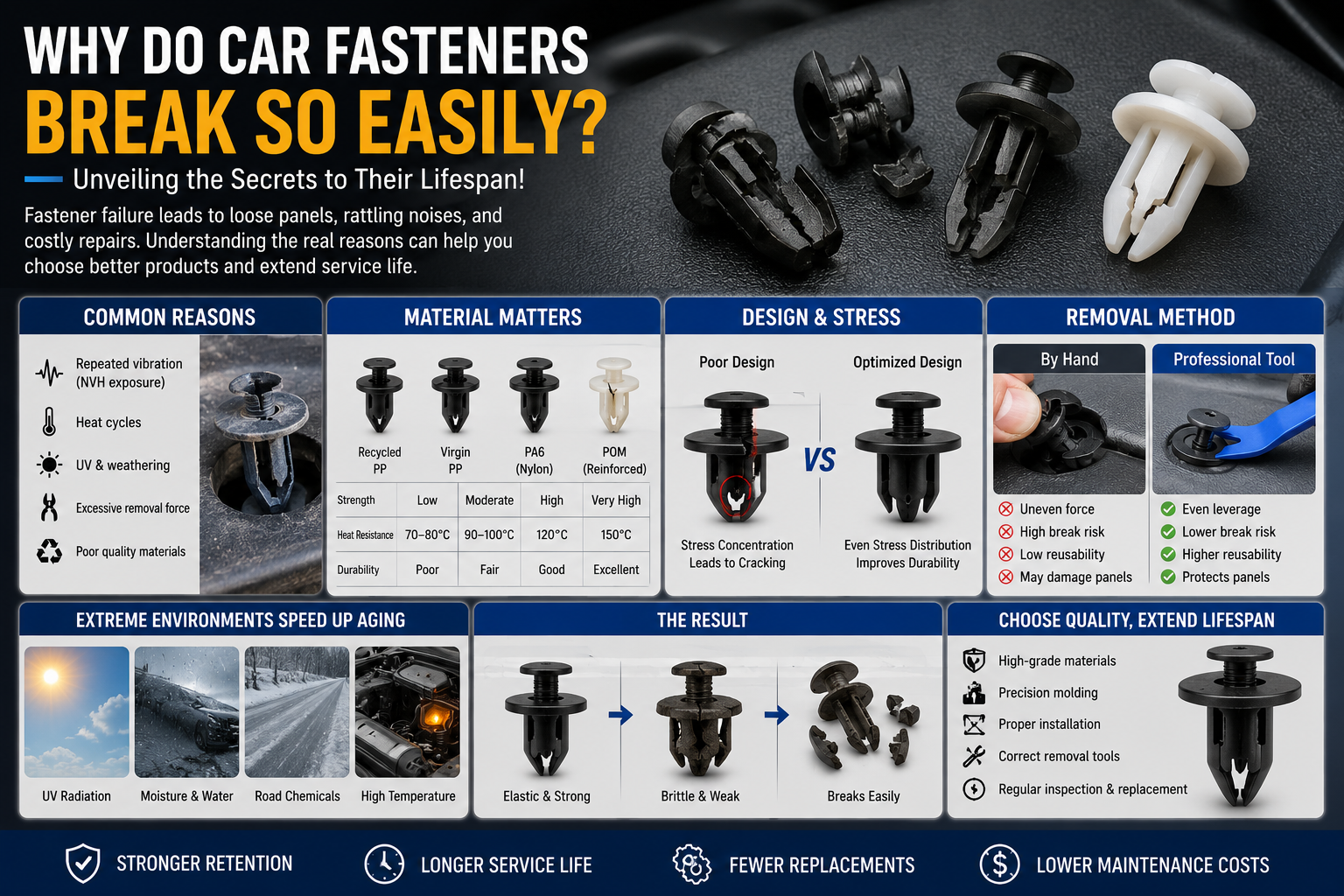
A fender clip’s role is deceptively simple: secure panels, absorb vibration, and allow quick service access. Yet its efficiency relies on mechanical and material harmony:
-
Elastic Deformation allows snug insertion without cracking.
-
Barbed Shank Design prevents dislodgement under vibration.
-
Reinforced Collar Geometry disperses stress during impact.
-
Temperature Stability ensures reliable retention from -40 °C to 120 °C.
By mastering these micro-mechanics, manufacturers like QEEPEI maintain consistent clip tension across millions of units.
Conventional Sourcing vs. Platform-Ready Supply
| Feature | Traditional Wholesale | Platform-Ready Supply (QEEPEI) |
|---|---|---|
| SKU Traceability | Manual entry | Digital QR + OEM reference |
| Packaging | Bulk cartons | Retail-ready & barcode labeled |
| Model Fit Data | Limited to paper catalog | Integrated vehicle database |
| Quality Check | Random batch | 100 % inspection, tensile tested |
| MOQ | Fixed volume | Flexible to vendor scale |
This transformation helps platform vendors manage SKUs efficiently and ensure consistent consumer experience across multiple regions.
Material Science and Manufacturing Standards
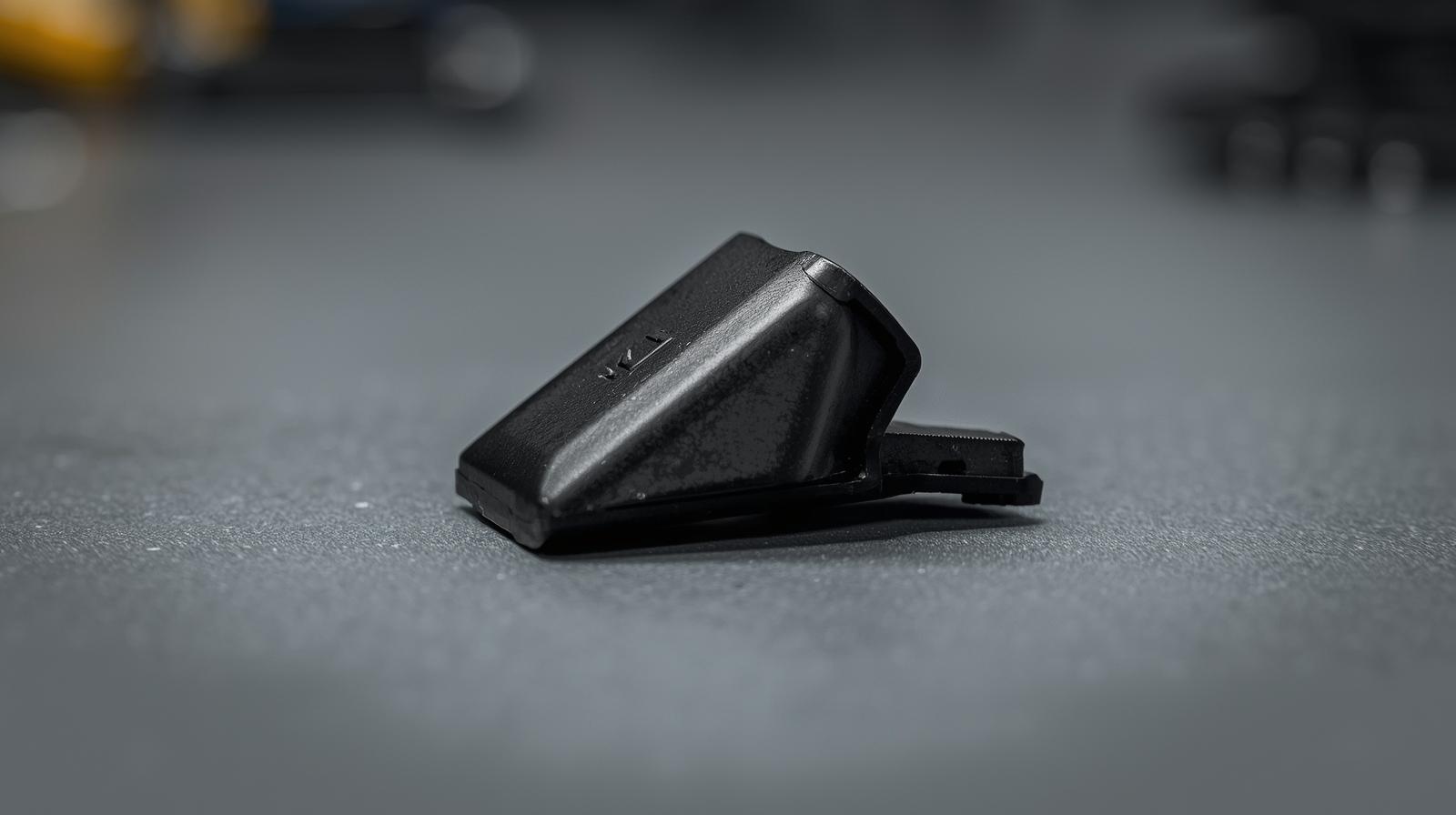
Each platform vendor car fender clip is molded using automotive-grade Nylon 66 or POM polymer, enhanced with UV stabilizers for outdoor exposure.
Production follows:
-
Injection Pressure Calibration – ± 1 % consistency.
-
Moisture Conditioning – Prevents brittleness in dry climates.
-
Dynamic Load Testing – 30 000 cycle vibration tolerance.
-
Dimensional Audit – Laser measurement to 0.05 mm.
These standards guarantee reliable panel fastening for global OEM and aftermarket applications.
Advantages for Platform Vendors
-
Reduced Returns: Unified labeling minimizes mismatch complaints.
-
Optimized Logistics: Stackable boxes maximize pallet utilization.
-
Flexible Supply: MOQ options fit both large and emerging sellers.
-
Data Transparency: OEM mapping enables precise product listings.
-
Branding Options: Private-label printing and custom barcoding.
With QEEPEI’s assistance, platform vendors convert supply accuracy into market trust.
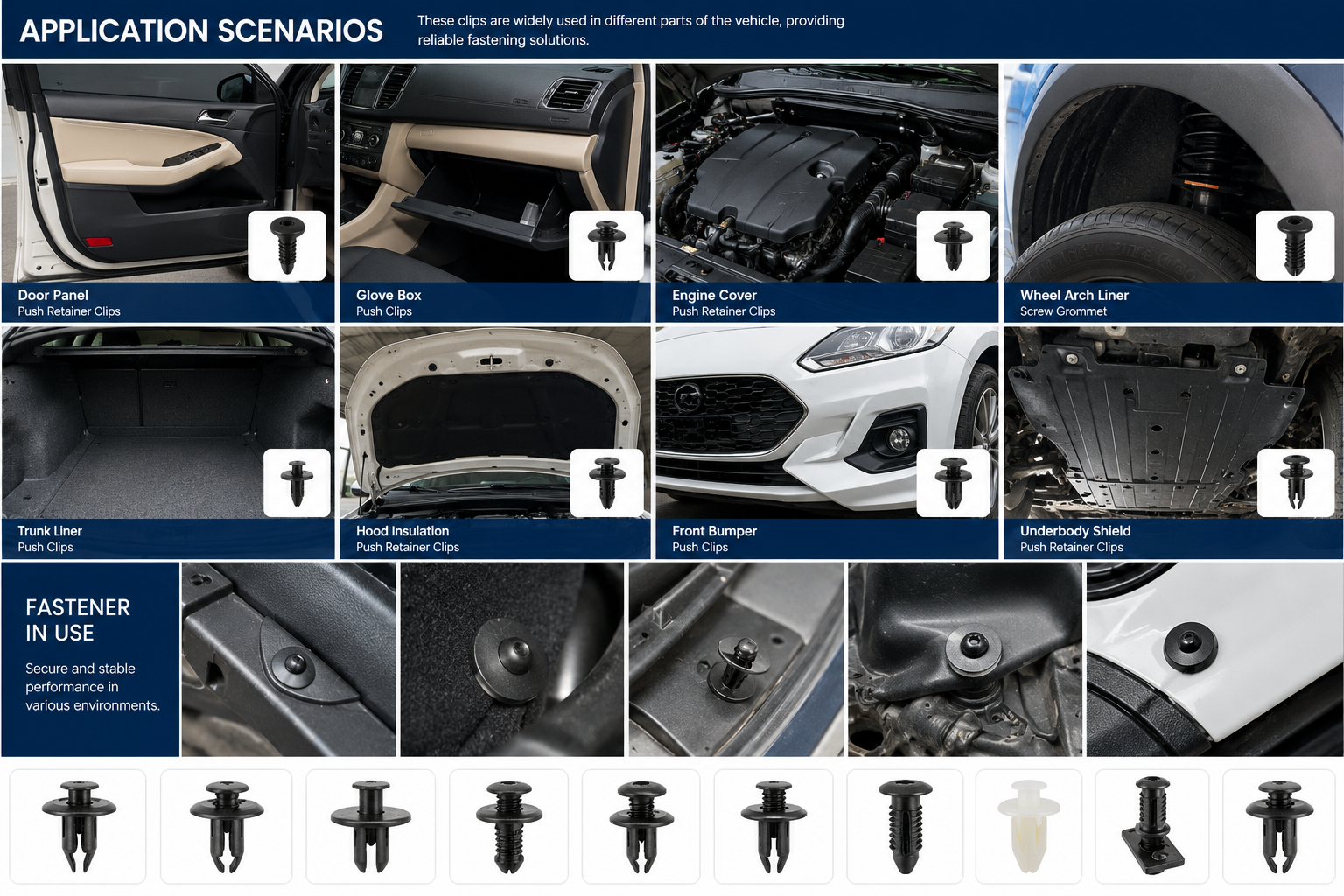
Real-World Application Scenarios
| Application | Description | Outcome |
|---|---|---|
| Online Marketplaces | Amazon, eBay, Shopee, AliExpress | Reduced dispute rate by 32 % |
| Regional Distribution | EU & Middle-East warehouses | Stable temperature resistance |
| OEM Supply Chains | Car manufacturers and Tier-1 suppliers | Seamless assembly integration |
| Auto Repair Platforms | Independent garages | Faster part replacement workflow |
Such adaptability allows a single clip specification to satisfy multiple market layers.
Selecting the Ideal Fender Clip Type
When choosing car fender clips for your catalog:
-
Match OEM Part Codes – Guarantees exact compatibility.
-
Check Retention Strength – Required > 120 N for panel security.
-
Confirm Material Grade – Nylon 66 preferred for durability.
-
Consider Clip Color & Design – For body color alignment.
-
Verify Operating Temperature Range – Essential for export climates.
By following these standards, platform vendors can minimize product disputes and optimize SKU relevance.
FAQ
Q: Are QEEPEI fender clips compatible with both OEM and aftermarket panels?
A: Yes, each model is dimensionally verified to OEM reference standards.
Q: Can I order mixed-brand clip kits for platform listing?
A: Absolutely, we provide curated multi-brand assortments for online catalogs.
Q: How do you ensure color and finish consistency?
A: Automated optical inspection ensures 100 % color uniformity and surface integrity.
Conclusion: Building Scalable E-Commerce Reliability
For digital automotive ecosystems, reliability is measured in seconds—how fast data syncs, how fast shipments move, and how fast installations fit. A proven platform vendor car fender clip supplier like QEEPEI bridges those gaps with tested materials, standardized logistics, and model-verified fitment, helping every vendor build an efficient, low-risk supply chain.
Explore partnership or private-label options via QEEPEI Homepage or reach our global export team through Contact Us.