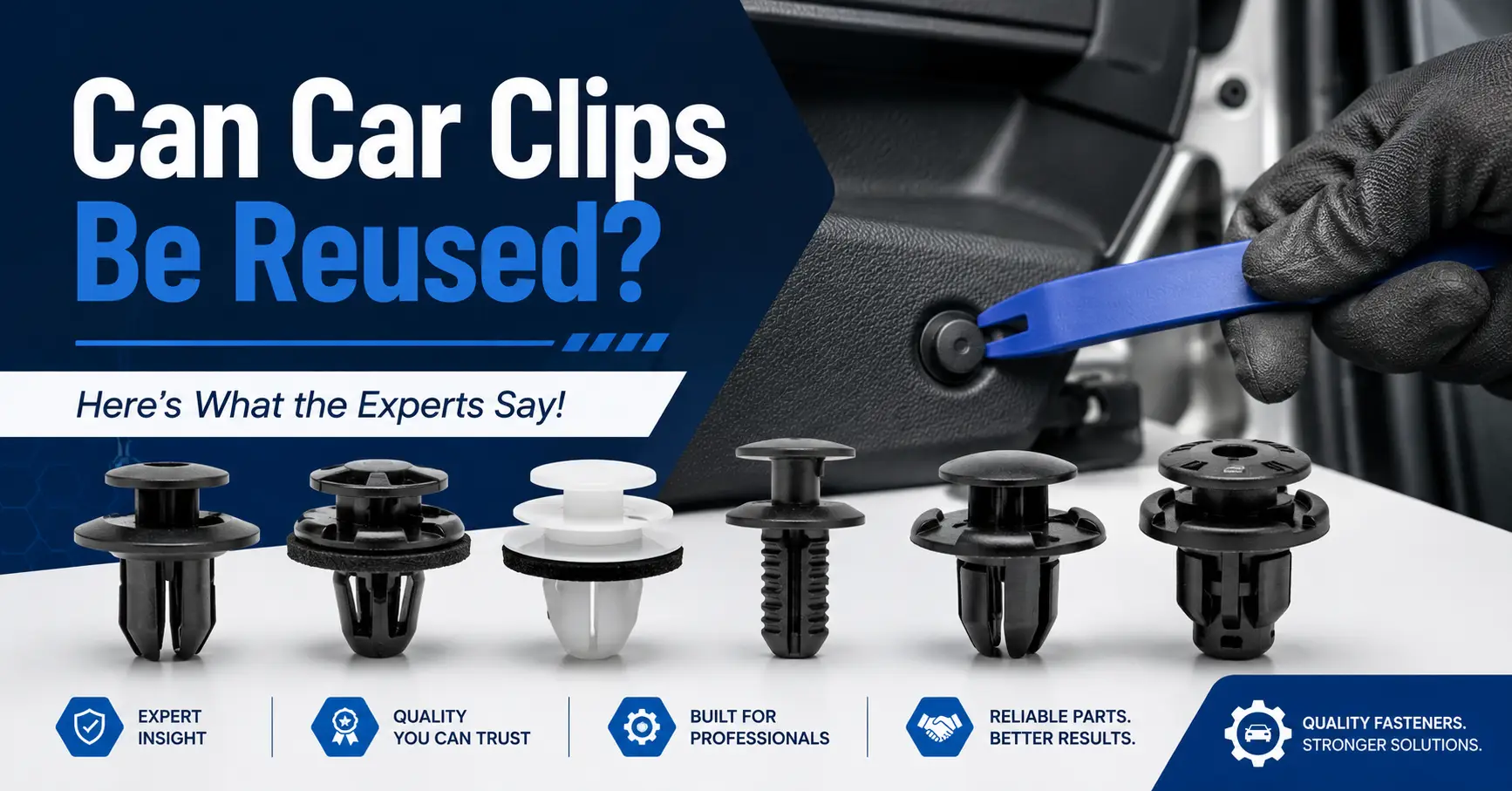

Interior Trim Clips Always Break During Removal? These Technical Techniques Prevent Damage
If you have ever removed a door panel or dashboard trim, you have likely heard that sharp “snap.” The clip fractures. Sometimes the panel scratches. Sometimes the hole deforms. And suddenly, a simple maintenance task becomes a structural problem.
Interior trim clips are not fragile by accident. They are engineered within elastic limits. When removal exceeds those limits, failure is inevitable.
At QEEPEI, we analyze returned fasteners from global distributors and service workshops. As a professional Automotive Clips manufacturer, we have identified that most interior clip breakage is caused not by material weakness—but by improper force direction and tool misuse.
Clip damage is often preventable.
Why Interior Clips Fail Under Improper Removal Stress
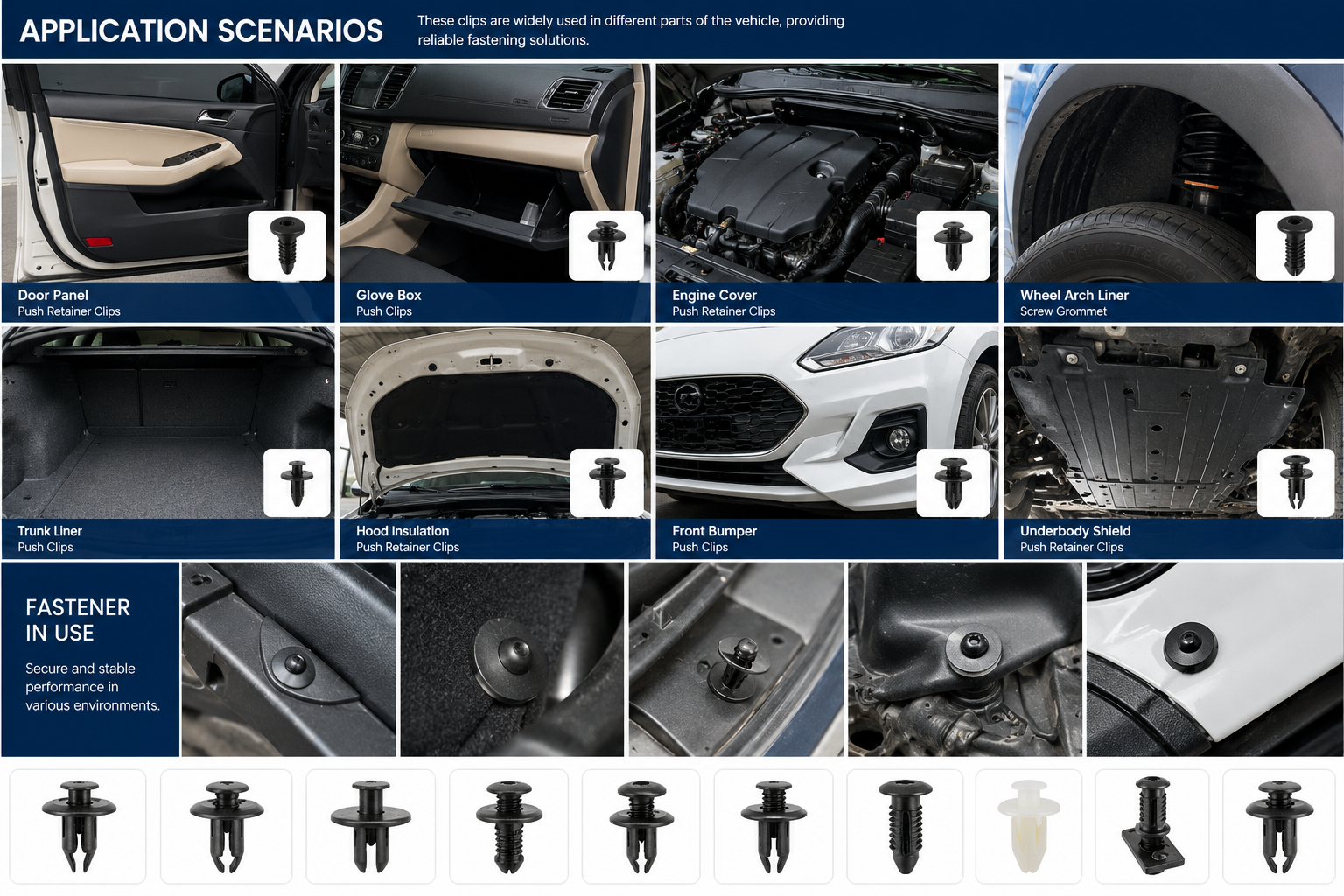
Interior trim clips typically use:
- PA6 or PA66 nylon
- Elastic barb expansion
- Controlled retention force (160–220 N)
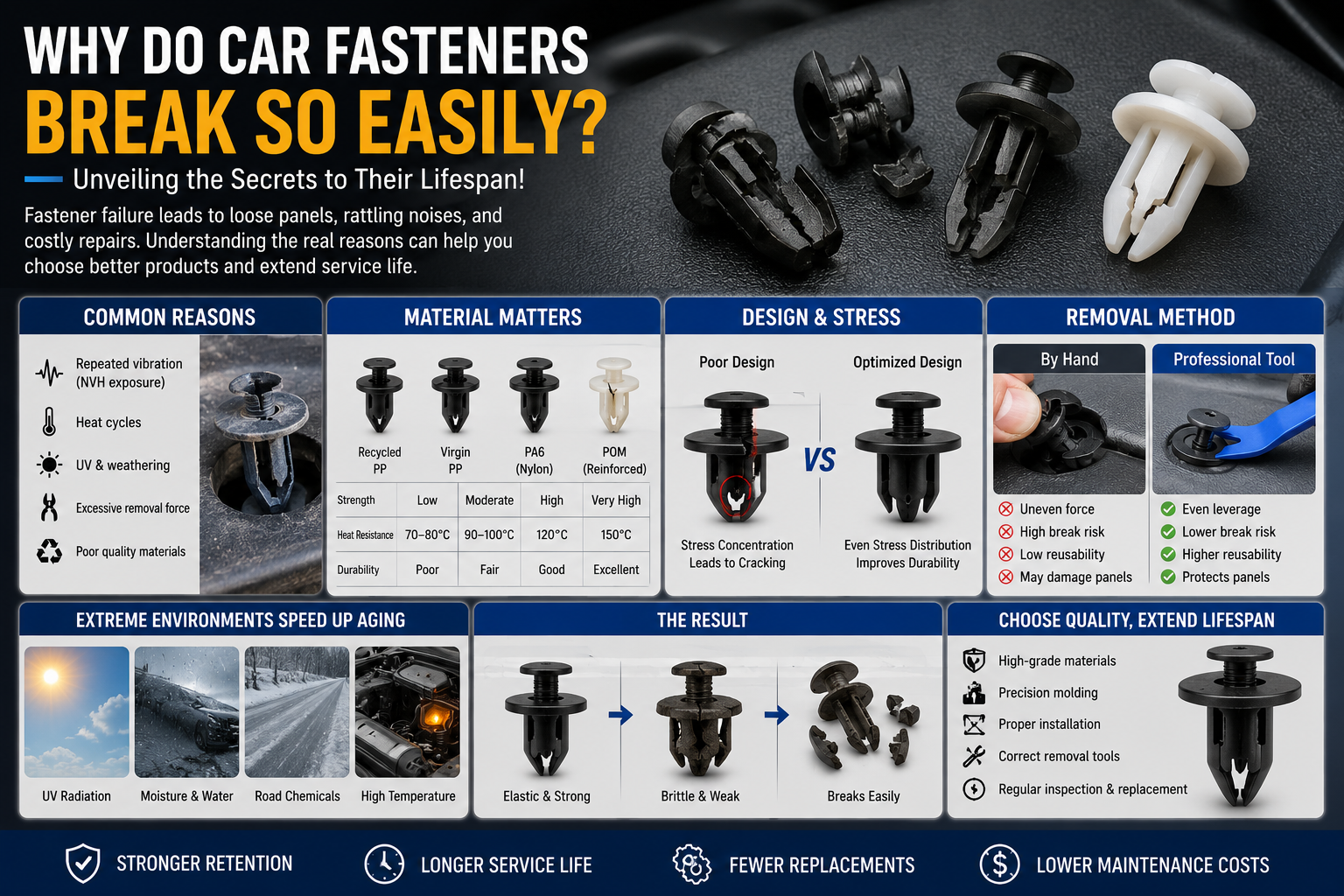
They are designed for controlled insertion and limited removal cycles. When pried at excessive angles (often >25°), barb roots experience stress concentration.
Micro-fractures begin invisibly.
According to SAE polymer fatigue discussions (https://www.sae.org), repeated overstress accelerates crack propagation in nylon fastening components.
Breakage is mechanical—not mysterious.
The Real Root Cause: Stress Concentration at the Barb Root
Interior clips fail primarily at one point:
The barb base.
Why?
Because removal force creates:
- Lever arm amplification
- Uneven load distribution
- Localized shear
If force is applied only from one side, stress multiplies.
Typical engineering tolerance:
- Recommended removal angle: <18°
- Maximum elastic strain: 2–3%
- Retention reduction after 2 improper removals: up to 30%
Understanding stress distribution changes removal outcomes dramatically.
An experienced Automotive Clips manufacturer always considers removal stress during structural design.
Correct Removal Techniques That Reduce Damage
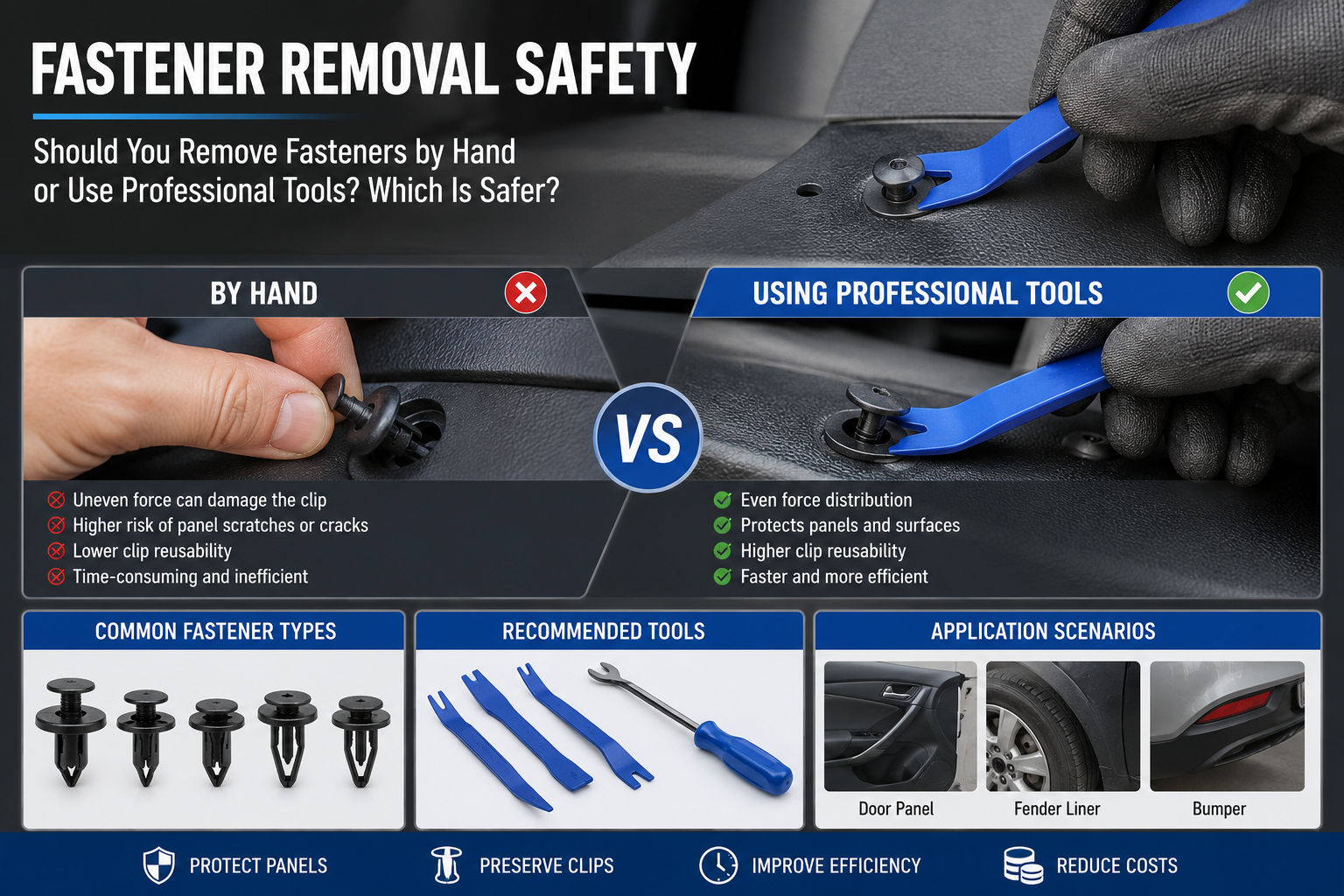
Professional removal follows structured steps:
- Identify clip location and locking direction
- Insert fork-style trim tool beneath clip head
- Apply balanced upward pressure
- Avoid twisting or rotating the shaft
- Remove vertically, not diagonally
Tool-based extraction reduces barb deformation by 30–40% compared to screwdriver leverage.
Manual pulling increases fracture probability significantly.
Material and Design Perspective: Why Some Clips Survive Longer
Interior clip durability depends on:
- Polymer formulation stability
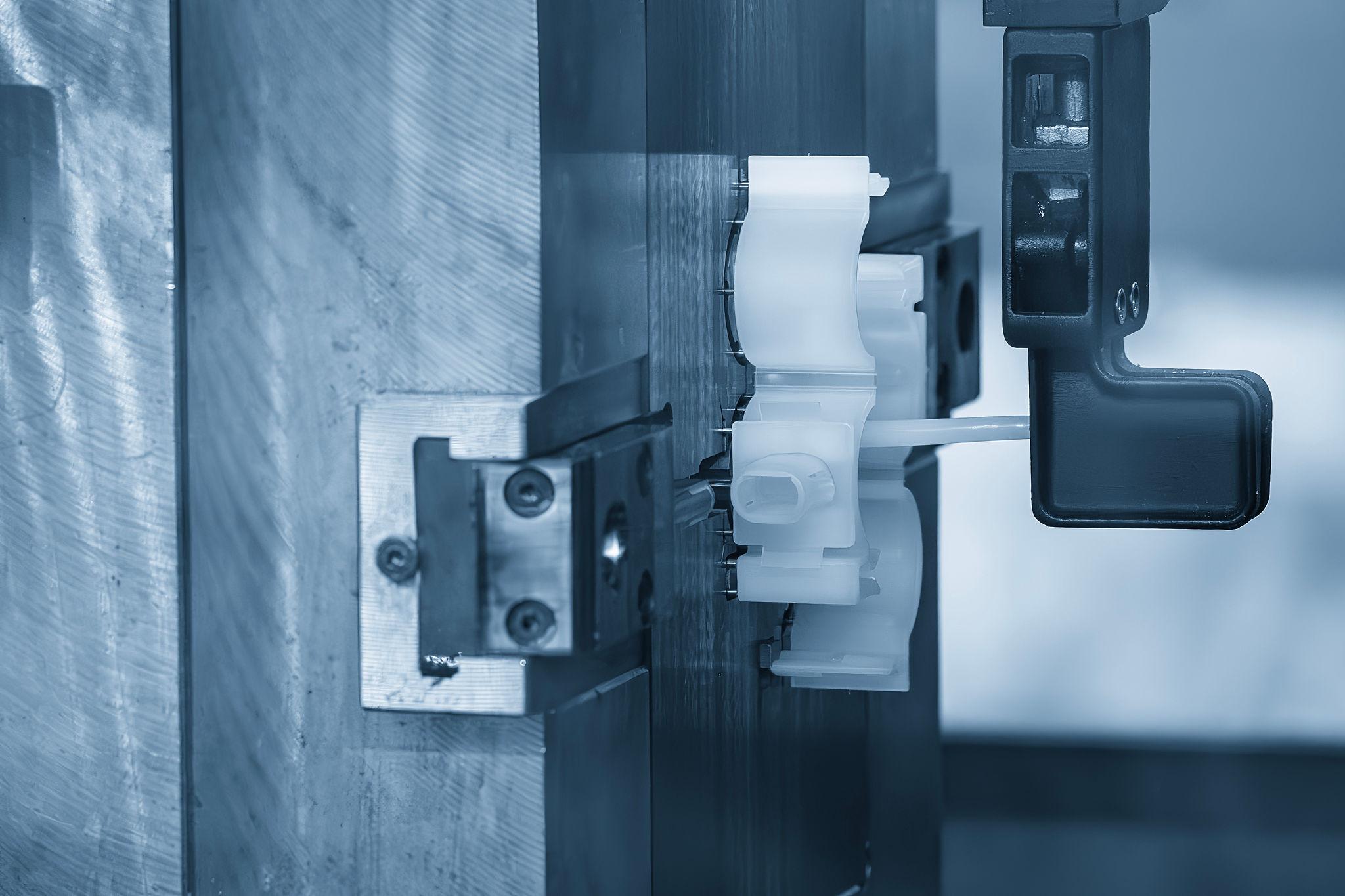
- Moisture control during molding
- Wall thickness optimization
- Barb angle geometry
- Mold precision ±0.02–0.03 mm
At QEEPEI, we integrate:
- Heat-stabilized PA66
- Dimensional consistency
- IATF 16949 certified production
https://www.iatfglobaloversight.org
As a global Automotive Clips manufacturer, we design retention systems that tolerate real-world service conditions.
But even the best material cannot overcome improper leverage.
Why Professional Supply Quality Matters
Low-grade interior clips often:
- Contain recycled resin
- Show uneven fiber dispersion
- Have dimensional deviation
- Exhibit brittle fracture earlier
Reliable supply reduces workshop failure rates and warranty complaints.
QEEPEI emphasizes:
- Resin purity control
- Process moisture monitoring (<0.2%)
- Retention force validation
- Lot traceability
Consistency prevents repeat damage.
Real Case: Dashboard Trim Damage from Improper Tool Use
A distributor reported high interior trim warranty returns.
Investigation found:
- Technicians used flat screwdrivers
- Removal angle exceeded 30°
- Barb deformation occurred on first removal
After training staff to use trim removal tools:
- Clip breakage reduced by 64%
- Panel surface damage reduced significantly
- Replacement cost lowered
Correct method improved both speed and structural safety.
Signs You Should Replace Instead of Reuse
Replace the clip if:
- Barb shows whitening
- Shaft slightly bent
- Retention feels weak
- Panel hole enlarged
Interior clips may tolerate one controlled removal—but not repeated stress.
Cost per clip is minor compared to panel damage.
FAQ
Q: Why do interior clips break more often than bumper clips?
A: Interior clips prioritize flexibility, not heavy-load resistance.
Q: Can I reuse interior clips safely?
A: Only if removal stayed within elastic limits.
Q: Is glass fiber reinforcement recommended for interior trim?
A: Usually no. It increases stiffness and may cause panel stress.
Conclusion
Interior trim clips break primarily due to improper removal technique, stress concentration, and tool misuse—not necessarily due to poor material.
A qualified Automotive Clips manufacturer designs retention systems within elastic thresholds, but correct handling determines real-world durability.
At QEEPEI, we combine material science, structural optimization, and manufacturing discipline to ensure stable interior fastening performance.
Explore our full clip solutions:
https://www.cnclip.com/
For bulk supply or engineering consultation:
https://www.cnclip.com/contact-us/