
Car Clips Keep Loosening After Installation? 4 Root Causes You Must Understand
You install a new clip. It feels tight. The panel looks secure.
A few weeks later—rattle. Vibration. Slight gap.
Loose automotive clips are one of the most common complaints in both aftermarket service and OEM assembly lines. Yet loosening is not accidental. It follows mechanical logic.
At QEEPEI, we evaluate fastening stability across multiple vehicle platforms. As a professional Automotive Clips manufacturer, we have identified four consistent root causes behind clip loosening.
Understanding these causes prevents repeat failure.
Root Cause 1: Hole Diameter Mismatch
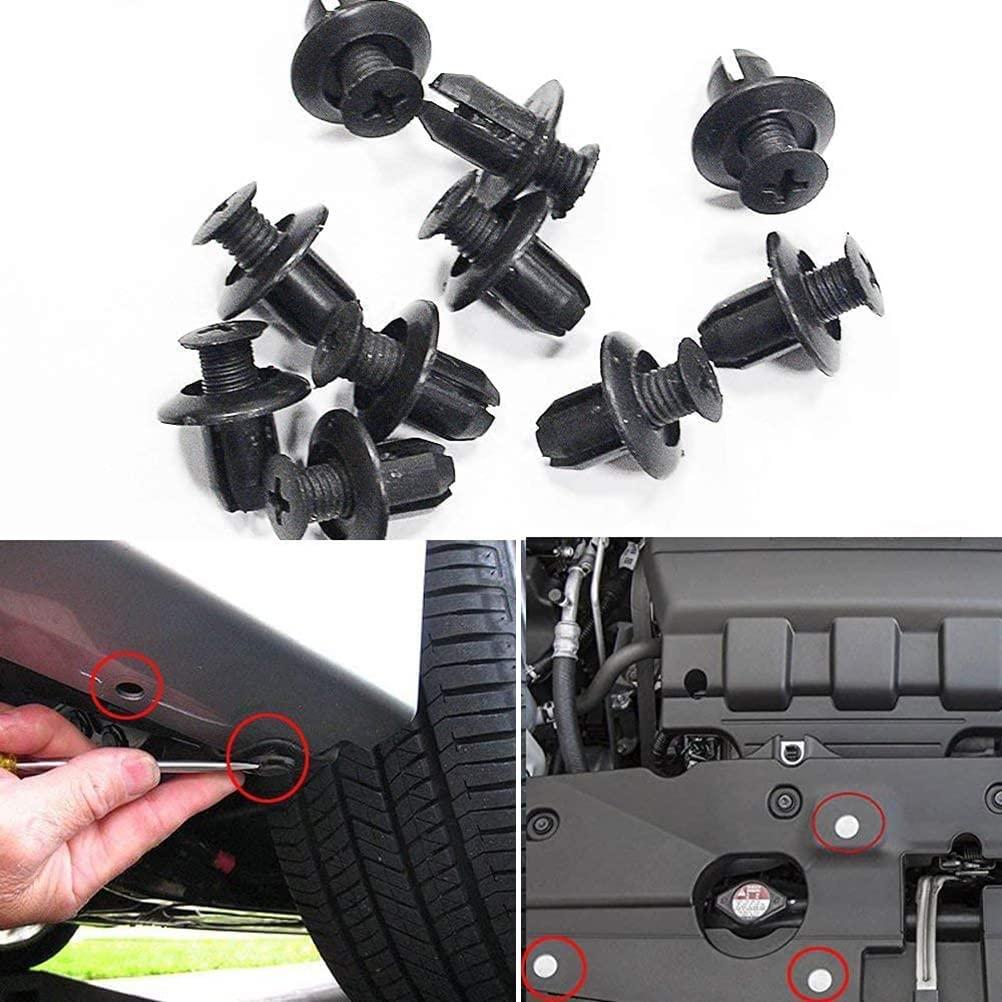
Retention depends on interference fit between clip shaft and panel hole.
Typical tolerance:
- Clip shaft: ±0.02–0.03 mm
- Panel hole: ±0.1 mm
If hole diameter exceeds design specification by even 0.2 mm, retention force may drop 20–35%.
Panel deformation during improper removal often enlarges hole geometry.
This is the most underestimated cause.
According to SAE fastening studies (https://www.sae.org), dimensional mismatch directly impacts vibration-induced loosening in plastic retention systems.
Root Cause 2: Incorrect Clip Type Selection
Not all clips are interchangeable.
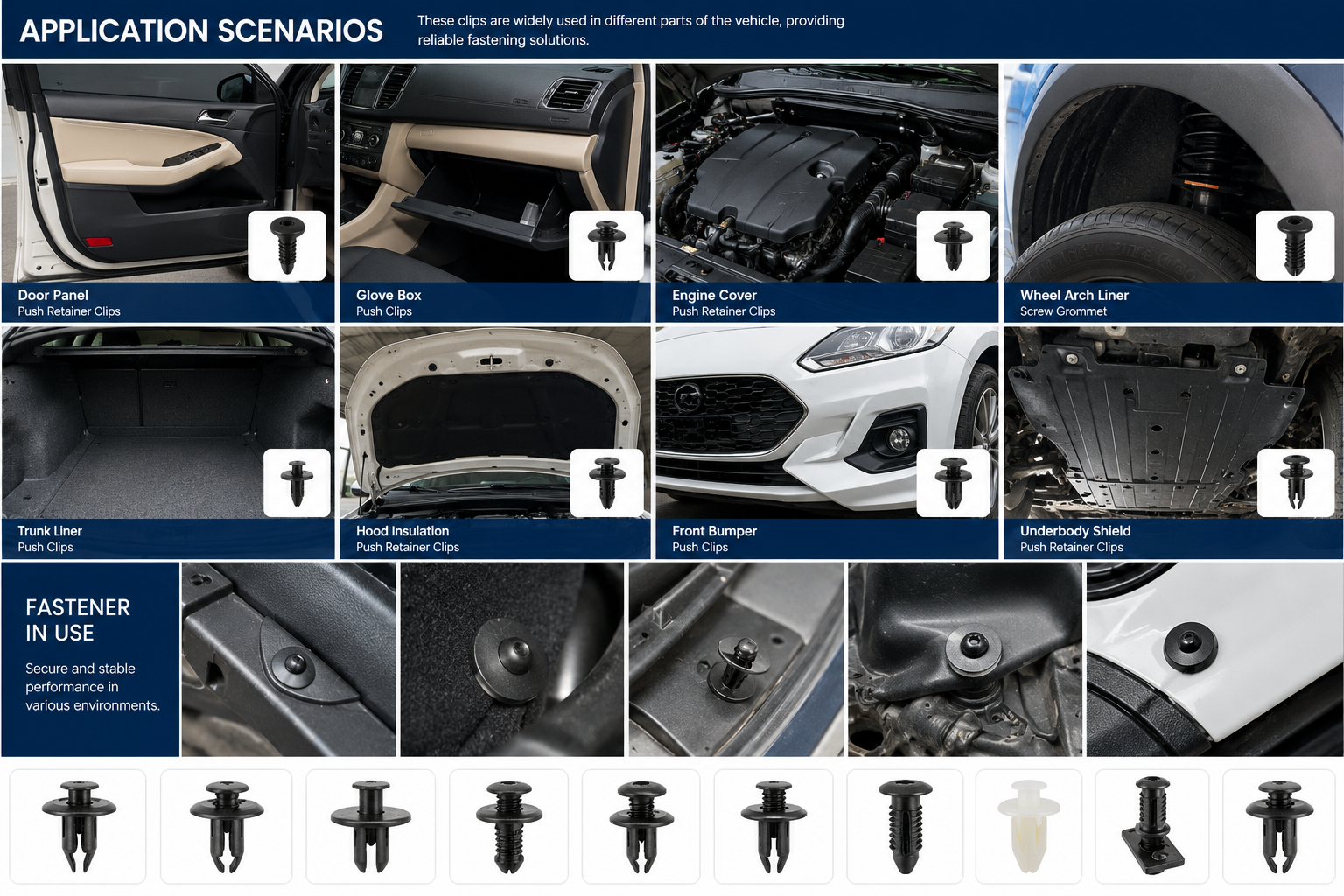
Interior trim push clips are often mistakenly used in bumper or underbody zones.
Engineering comparison:
| Clip Type | Retention (N) | Heat Resistance | Recommended Use |
|---|---|---|---|
| Interior Push | 180–220 | ≤120°C | Door trim |
| Expansion Rivet | 220–260 | ≤130°C | Bumper |
| Reinforced GF | 250–300 | ≤140°C | Engine area |
Installing low-load clip in high-load zone results in vibration-induced loosening.
An experienced Automotive Clips manufacturer matches clip structure to load condition.
Root Cause 3: Material Creep and Thermal Cycling
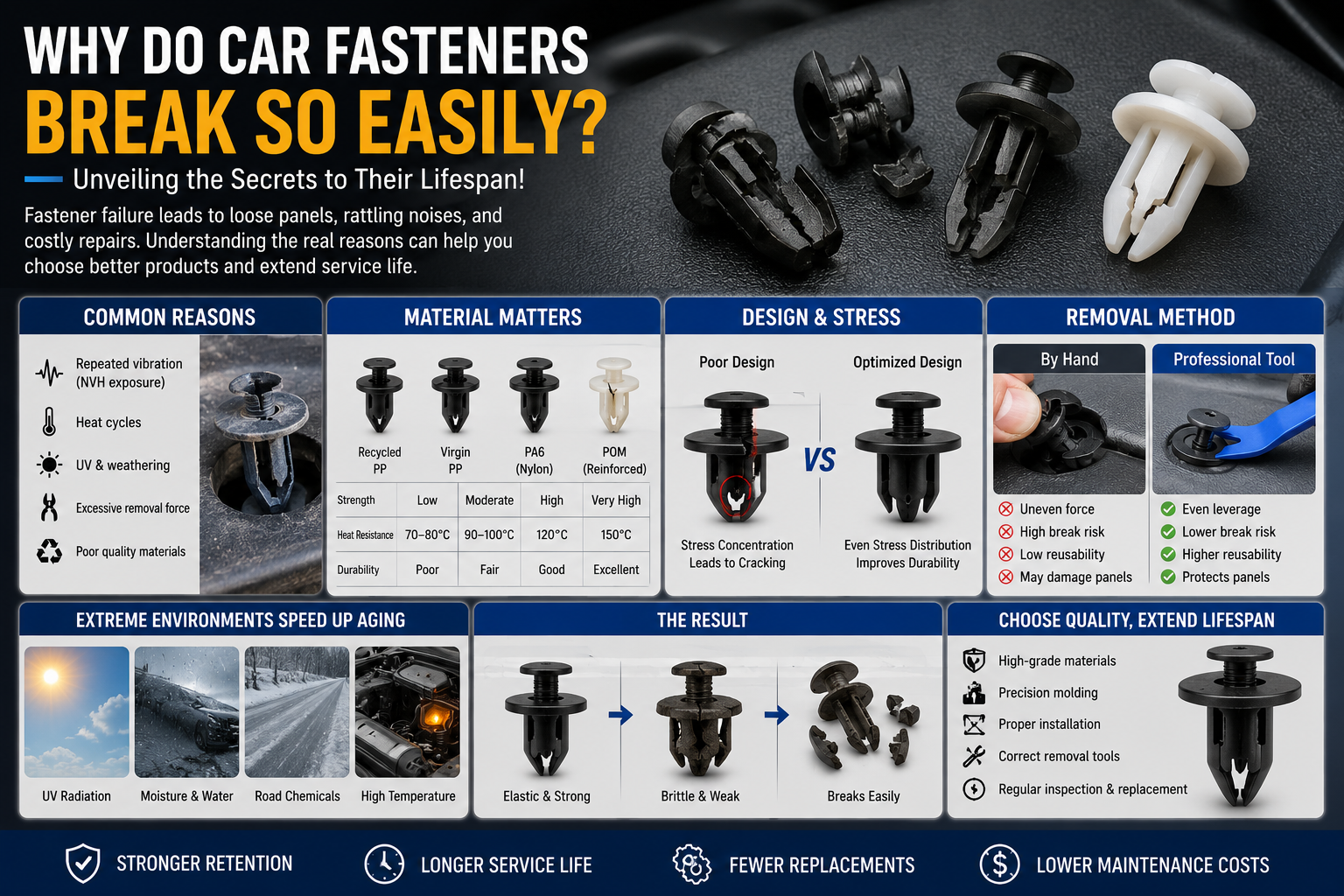
Polymer materials exhibit creep under constant stress.
Under high temperature (80–120°C):
- PA6 may lose up to 18–28% tensile strength within 3 years
- Retention force gradually decreases
Thermal expansion and contraction cycles further reduce structural memory.
Interior clips may survive years. Engine bay clips face accelerated degradation.
Material stability matters.
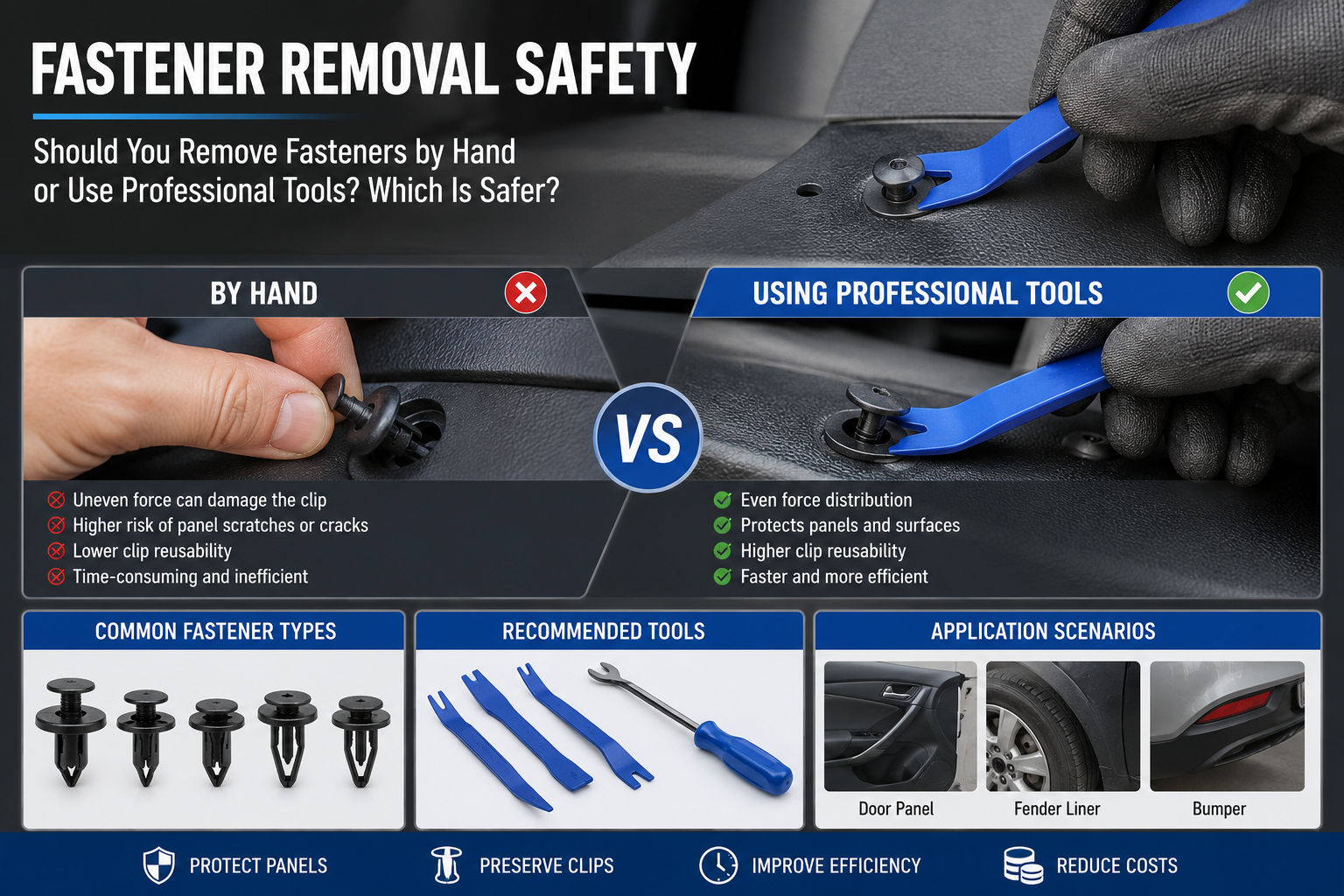
Root Cause 4: Improper Installation Force
Over-compression weakens barb structure.
Common mistakes:
- Hammering push clips
- Twisting during insertion
- Misalignment during pressing
Overstressed barbs partially fracture internally, reducing long-term holding capacity.
Correct installation requires vertical alignment and steady pressure.
Structural Design and Manufacturing Discipline
Retention stability is not only installation-dependent. It originates in manufacturing.
At QEEPEI, we implement:
- Heat-stabilized PA66
- Controlled resin moisture (<0.2%)
- Mold precision ±0.02 mm
- Retention force validation testing
- IATF 16949 certified system
https://www.iatfglobaloversight.org
As a global Automotive Clips manufacturer, we design fastening systems for dimensional stability and long-term retention.
Durability is engineered.
Real Case: Fender Liner Loosening in Coastal Climate
A distributor in Southeast Asia reported recurring fender liner vibration.
Findings:
- Standard PA6 used
- Exposure to UV and humidity
- Hole tolerance slightly enlarged
Solution:
- Switched to PA66 GF10
- Improved installation alignment
- Retention increased to 240 N
Complaint rate reduced by 70%.
Material + installation correction solved issue.
Diagnostic Checklist Before Replacing
When clip loosening occurs:
- Measure hole diameter
- Verify clip type
- Inspect barb condition
- Confirm installation method
- Evaluate environmental exposure
Replacing blindly without diagnosis often leads to repeat failure.
FAQ
Q: Why do new clips still loosen?
A: Likely hole enlargement or wrong type selection.
Q: Should I always use reinforced clips?
A: Only in high-load or high-temperature zones.
Q: Can thermal cycling alone cause loosening?
A: Yes, especially in engine bay environments.
Conclusion
Automotive clips loosen due to dimensional mismatch, wrong type selection, material creep, or improper installation. These failures follow engineering principles—not randomness.
A qualified Automotive Clips manufacturer evaluates structure, material, and tolerance control to ensure retention stability under real-world conditions.
At QEEPEI, we combine polymer science, dimensional precision, and validated retention testing to provide reliable fastening solutions for global B2B customers.
Explore our full clip range:
https://www.cnclip.com/
For bulk supply or technical consultation:
https://www.cnclip.com/contact-us/