

Car Ceiling Clips Factory: Ensuring Reliable Interior Assembly and Long-Term Comfort
In automotive interiors, roof stability and cabin quietness depend heavily on a small yet vital component—the ceiling clip. As an experienced car ceiling clips factory, QEEPEI specializes in precision fasteners that secure headliners and interior trims, ensuring long-term reliability, aesthetic consistency, and superior comfort in every vehicle.
Persistent Problems in Roof Lining Installation
Inconsistent or low-quality ceiling clips can lead to costly issues during production or long-term use:
-
Sagging or uneven roof lining from poor retention strength.
-
Rattling or creaking noises caused by loose fasteners.
-
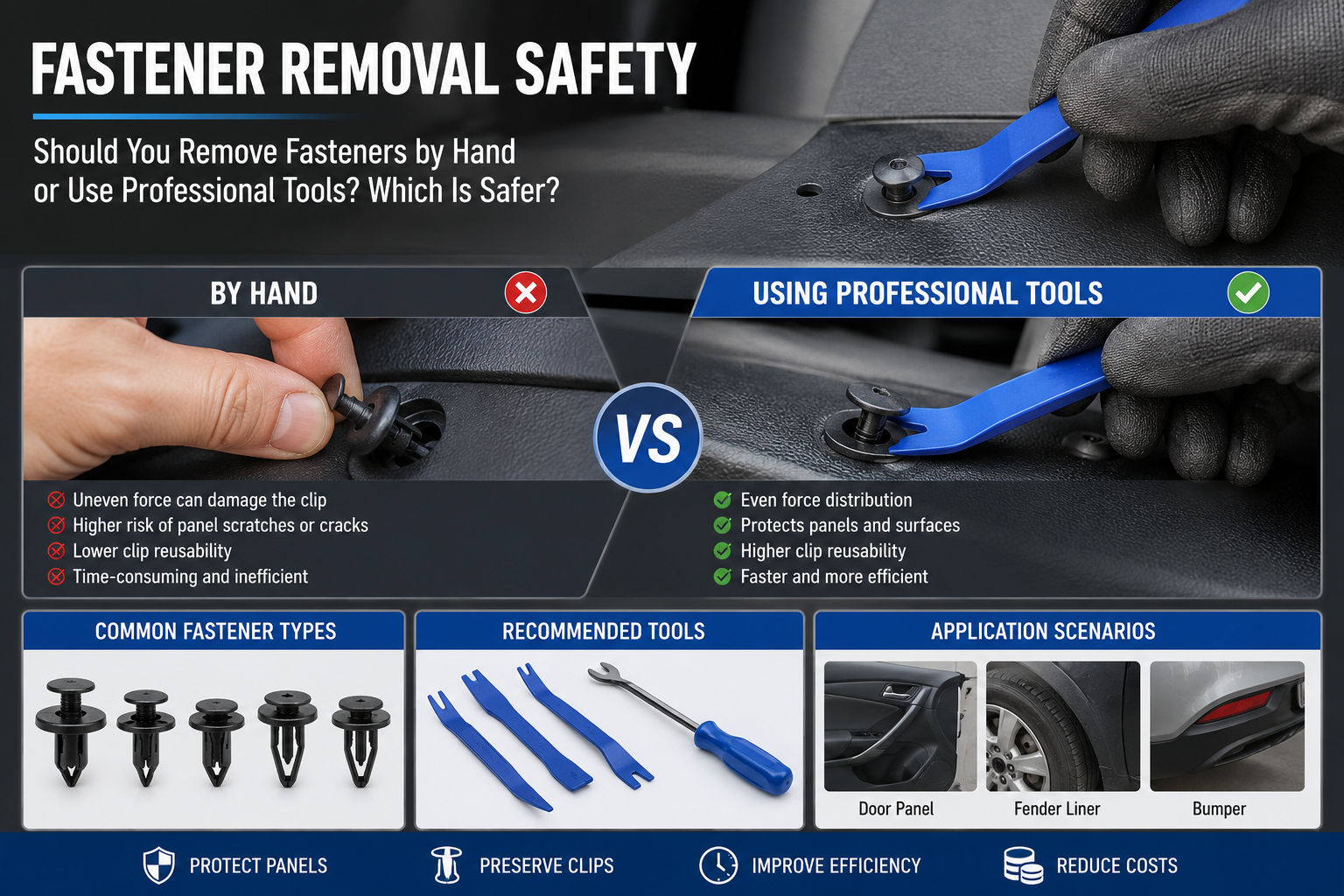
Difficult assembly resulting in higher labor time.
-
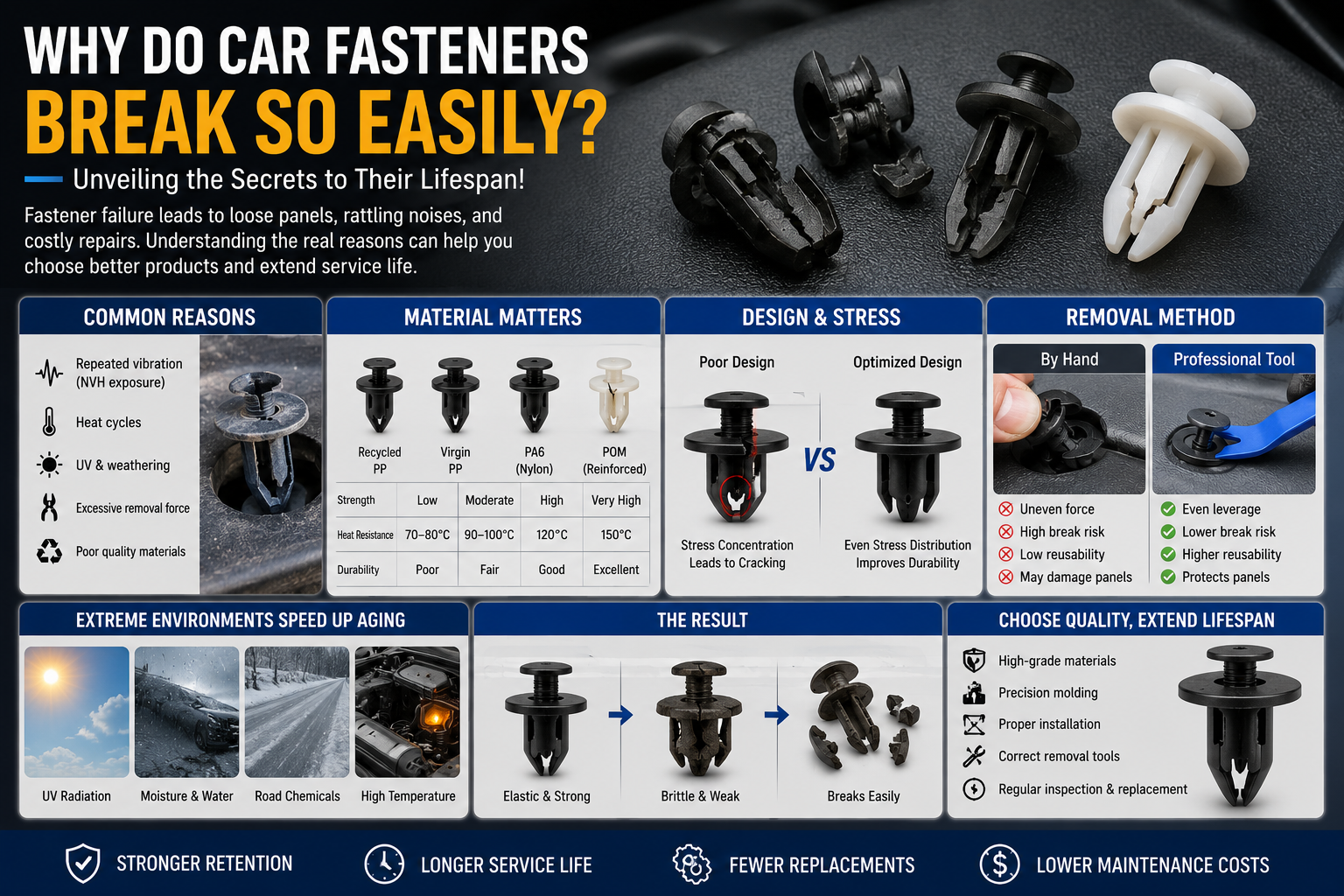
Material deformation under prolonged heat exposure.
For manufacturers, these problems affect not only production efficiency but also customer satisfaction and perceived vehicle quality.
How Ceiling Clips Maintain Structural Integrity
Ceiling clips work as tension-based connectors between the headliner, insulation, and the metal roof frame. Their function depends on two engineering principles:
-
Elastic retention — clips must flex for insertion but lock firmly afterward.
-
Thermal endurance — materials must resist deformation at 80–100°C cabin temperatures.
| Parameter | Function | Ideal Range |
|---|---|---|
| Retention Force | Prevents sagging | 15–25 N |
| Material Shrinkage | Dimensional stability | <0.3% |
| Operating Temperature | Heat resistance | -30°C to +120°C |
| Insertion Force | Ease of installation | <20 N |
These parameters ensure secure fitment under daily use and maintain the vehicle’s clean roof contour.
Material Selection and Comparative Performance
| Material | Benefits | Limitations | Typical Use |
|---|---|---|---|
| PA6 (Nylon) | High heat tolerance and rigidity | Costlier than PP | Premium OEM interiors |
| PP (Polypropylene) | Lightweight, affordable | Limited strength | Mass-market models |
| POM (Acetal) | Excellent wear resistance | Lower UV stability | Hidden interior fittings |
QEEPEI engineers often blend materials or reinforce PA6 with glass fiber for maximum retention and long-term performance.
Manufacturing Solutions for Stable and Efficient Assembly
QEEPEI applies precision injection molding and automated inspection systems to ensure every clip meets automotive-grade standards:
-
±0.02 mm tolerance control for consistent fit.
-
High-cycle mold design for mass production without dimension drift.
-
Anti-friction coatings reducing assembly force.
-
Color coding and part numbering to simplify logistics.
This systematized approach guarantees smooth installation and minimal rejection rates on high-speed production lines.
Core Advantages of QEEPEI Ceiling Fasteners
| Advantage | Technical Value | Buyer Benefit |
|---|---|---|
| High Heat Resistance | Retains strength under high cabin temperatures | Ideal for tropical markets |
| Noise Reduction Design | Integrated damping ribs | Quieter driving experience |
| Quick Fit Geometry | Push-in or slide-lock structures | Reduces assembly time |
| Consistent Dimensions | Automated molding and inspection | Ensures perfect panel alignment |
| Custom Mold Service | CAD-to-sample in 7–10 days | Faster development for OEMs |
These factors make QEEPEI a trusted partner for manufacturers seeking efficiency and quality.
Application Scenarios in Automotive Interiors
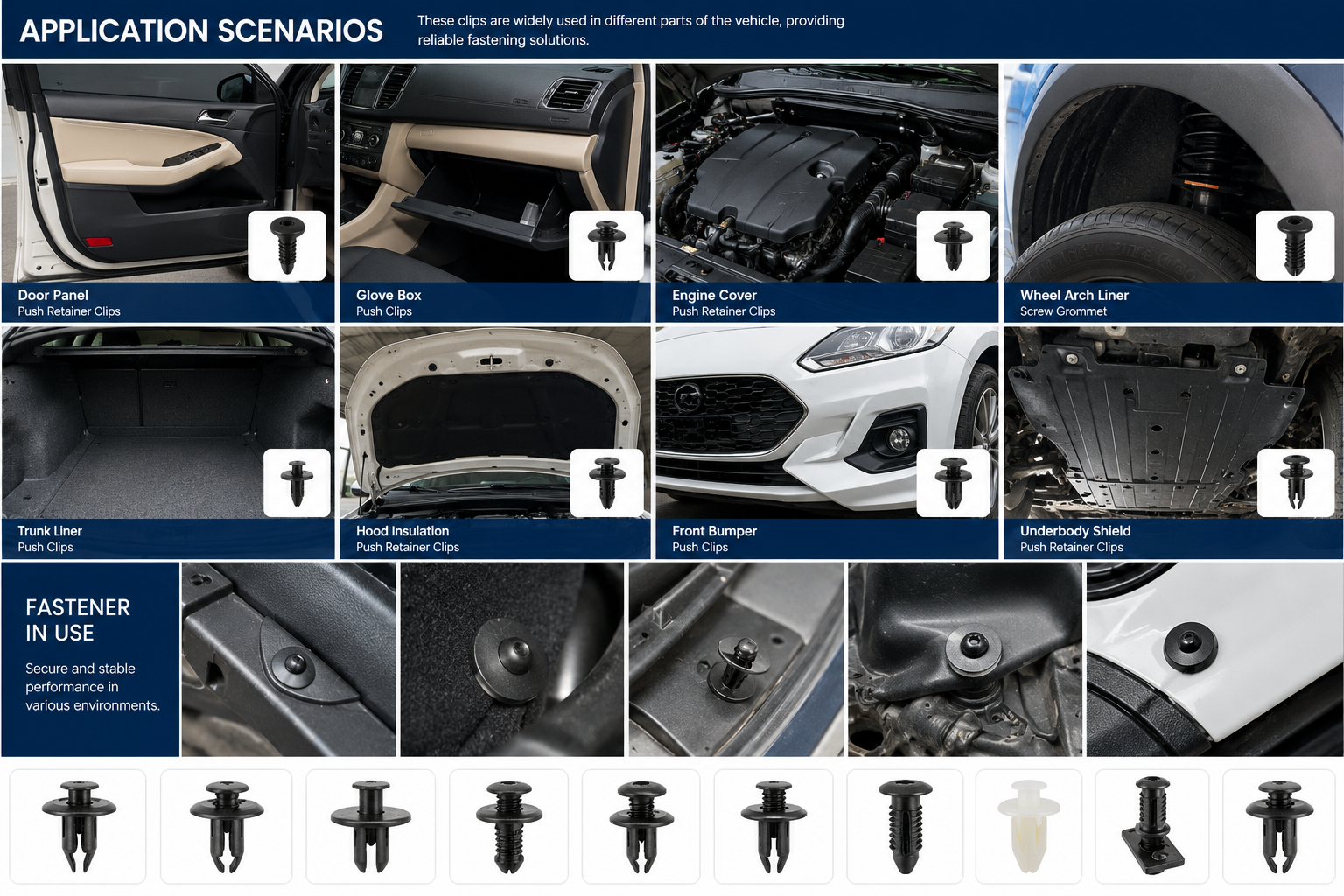
Ceiling clips are widely used in:
-
Headliner and roof insulation panels — securing soft materials against vibration.
-
Sunroof surrounds — maintaining structural alignment.
-
Pillar trims and grab handles — providing hidden yet strong attachment.
-
Cargo area ceilings in SUVs — supporting heavier linings under movement.
For EVs, QEEPEI’s lightweight variants help reduce total vehicle weight while maintaining structural firmness.
Choosing the Right Ceiling Clip for Common Scenarios
Selecting the correct clip ensures both durability and ease of maintenance:
-
For sedans and hatchbacks, choose nylon or POM clips for smooth surfaces and noise control.
-
For SUVs or vans, select reinforced PA6 clips with stronger retention under vibration.
-
For repair and aftermarket use, use universal PP clips compatible with multiple vehicle models.
Proper selection prevents ceiling sagging and enhances the perceived build quality of the vehicle interior.
Frequently Asked Questions
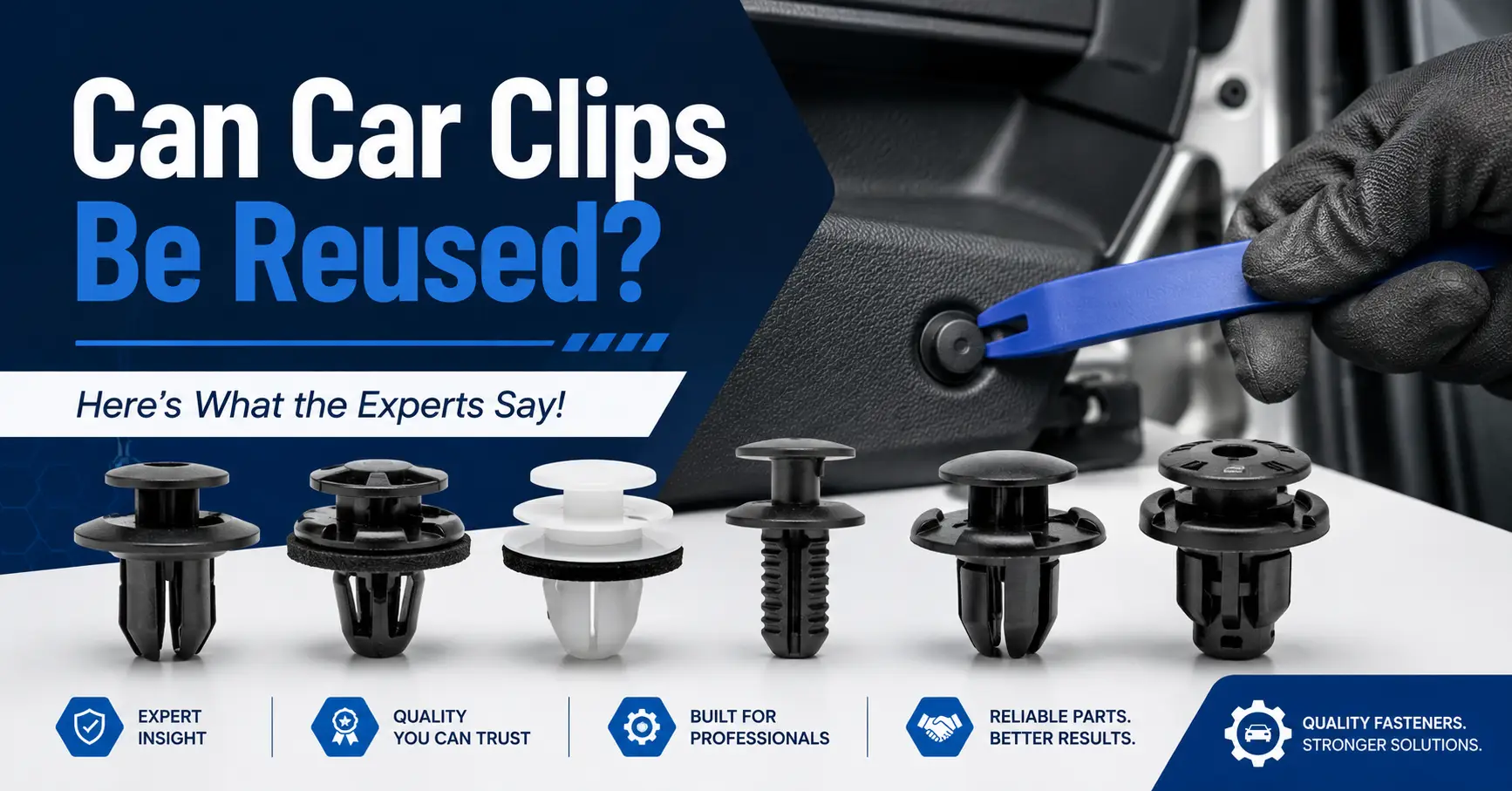
Q1: Can ceiling clips be reused after disassembly?
Yes, depending on material; nylon-based clips retain shape after multiple uses.
Q2: Do you offer color customization?
Yes, QEEPEI provides color-matched clips for visible interior applications.
Q3: What’s the typical production lead time?
7–10 days for tooling, 2–3 weeks for batch production.
Q4: Are clips compatible with EV headliner materials?
Yes, our lightweight polymer clips are designed for composite and fabric-based EV interiors.
Quiet Strength Above Every Passenger
The roof is one of the most sensitive areas in vehicle interior acoustics.
By focusing on heat stability, dimensional precision, and easy assembly, QEEPEI provides ceiling clip solutions that improve both comfort and production efficiency.
Explore the full range of interior fastening products on the Homepage.
For OEM development or bulk supply inquiries, contact us here.