
Dashboard Clips Supplier: Precision Fastening Solutions for Stable and Silent Interiors
The dashboard is one of the most complex assemblies inside a vehicle, integrating electronics, air vents, and panels. Behind its sleek appearance lies a network of fasteners that keep everything stable and silent. As a professional dashboard clips supplier, QEEPEI engineers fastening systems that improve assembly accuracy, reduce cabin noise, and ensure long-term reliability in automotive interiors.
Pain Points in Dashboard Assembly and Maintenance
Dashboard installation presents multiple recurring challenges for OEMs and repair facilities:
-
Panel vibration and noise due to poor clip tension or material mismatch.
-
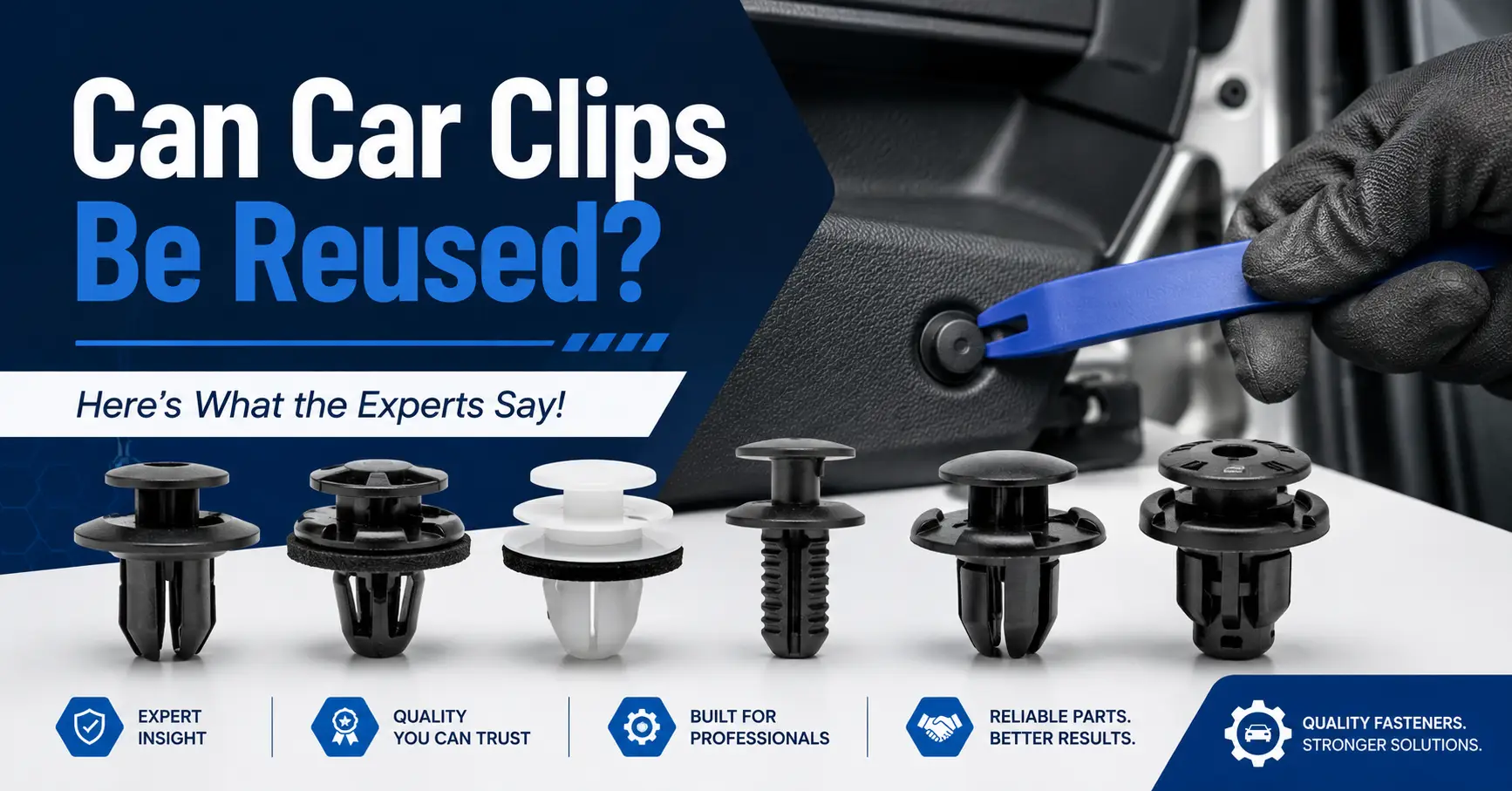
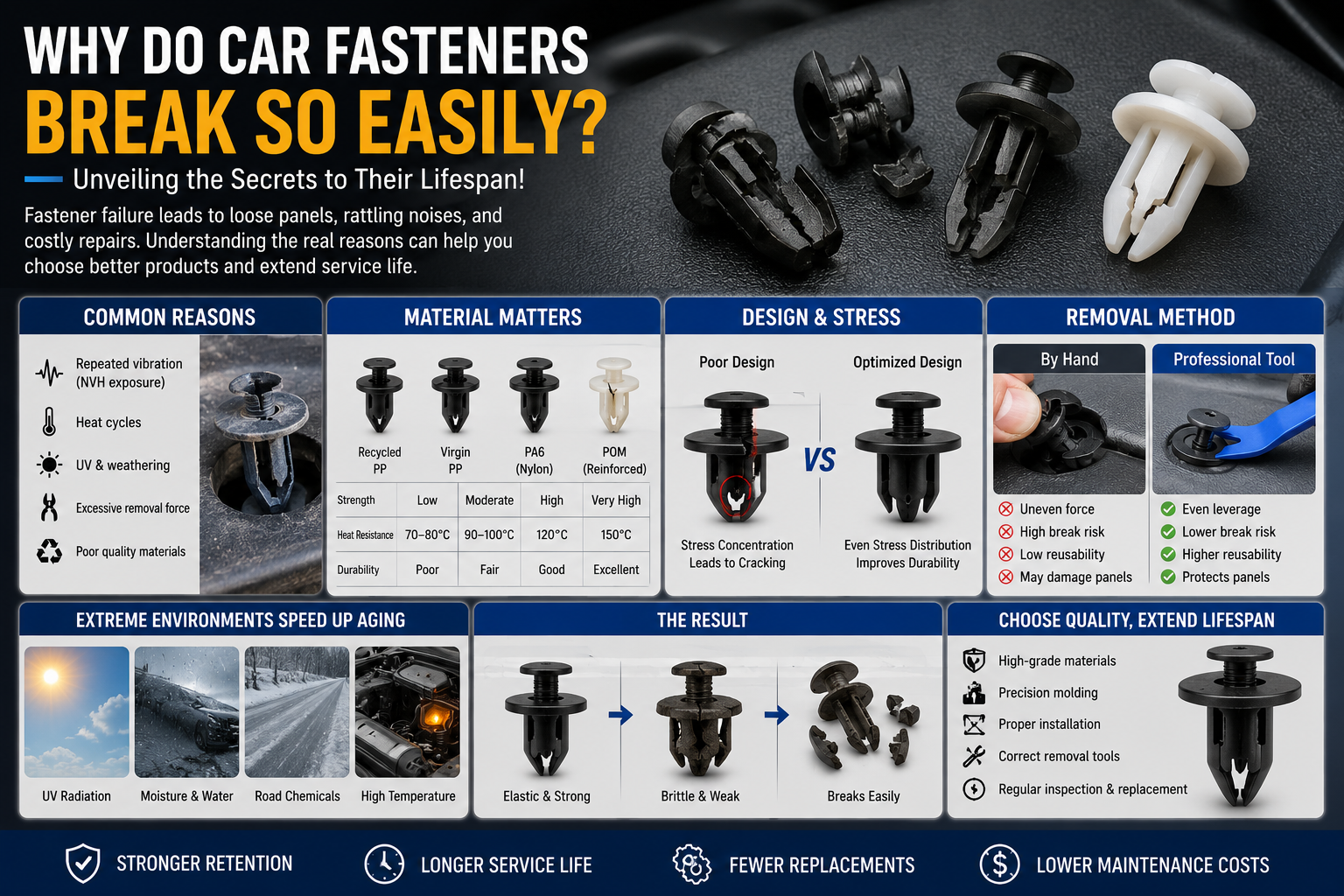
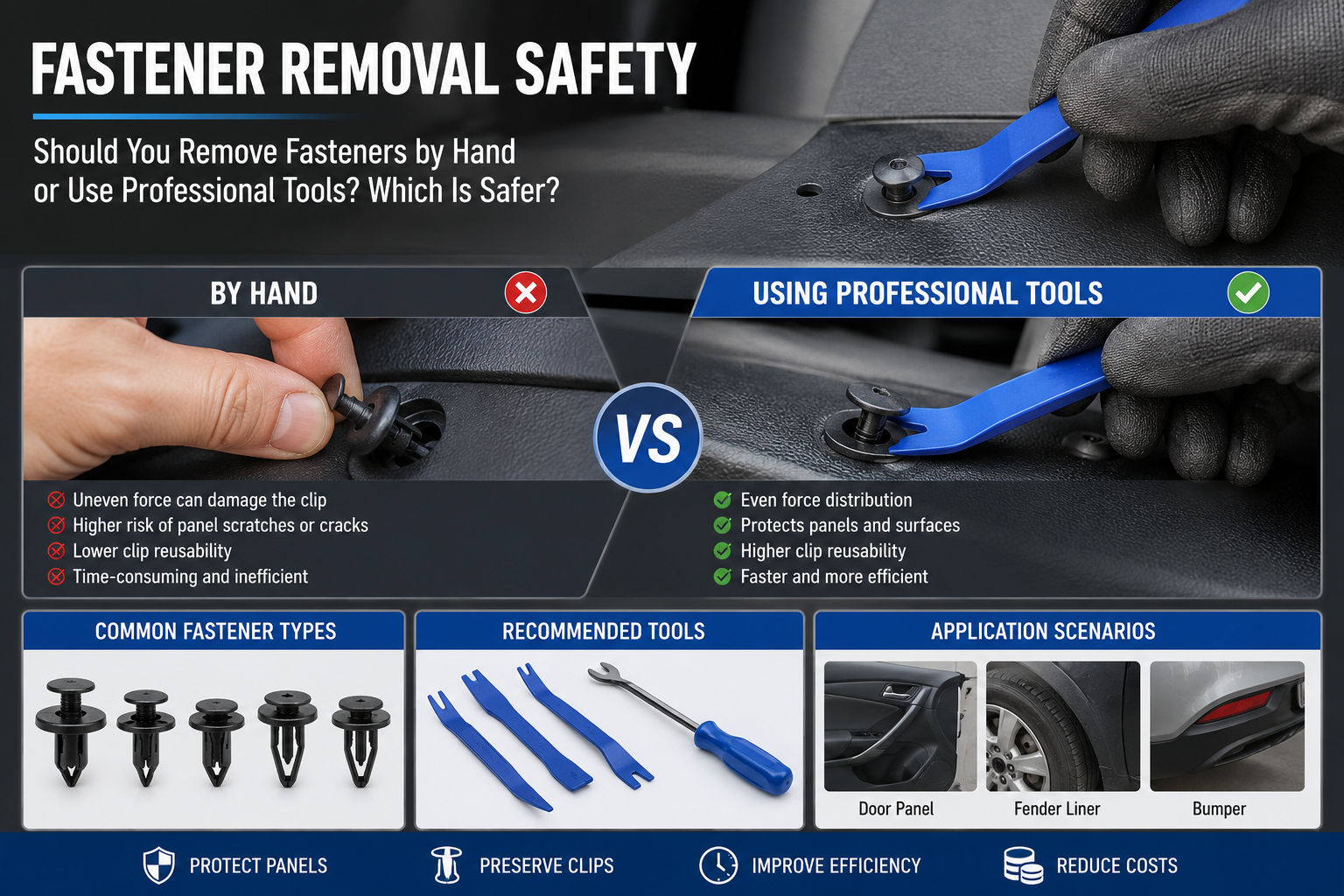
Difficult removal during servicing, causing broken clips or damaged panels.
-
Heat deformation from constant exposure to sunlight.
-
Inconsistent fitment leading to visible gaps between parts.
These problems can quickly escalate into higher warranty claims, increased repair costs, and a negative driving experience.
The Engineering Logic Behind Dashboard Clip Design
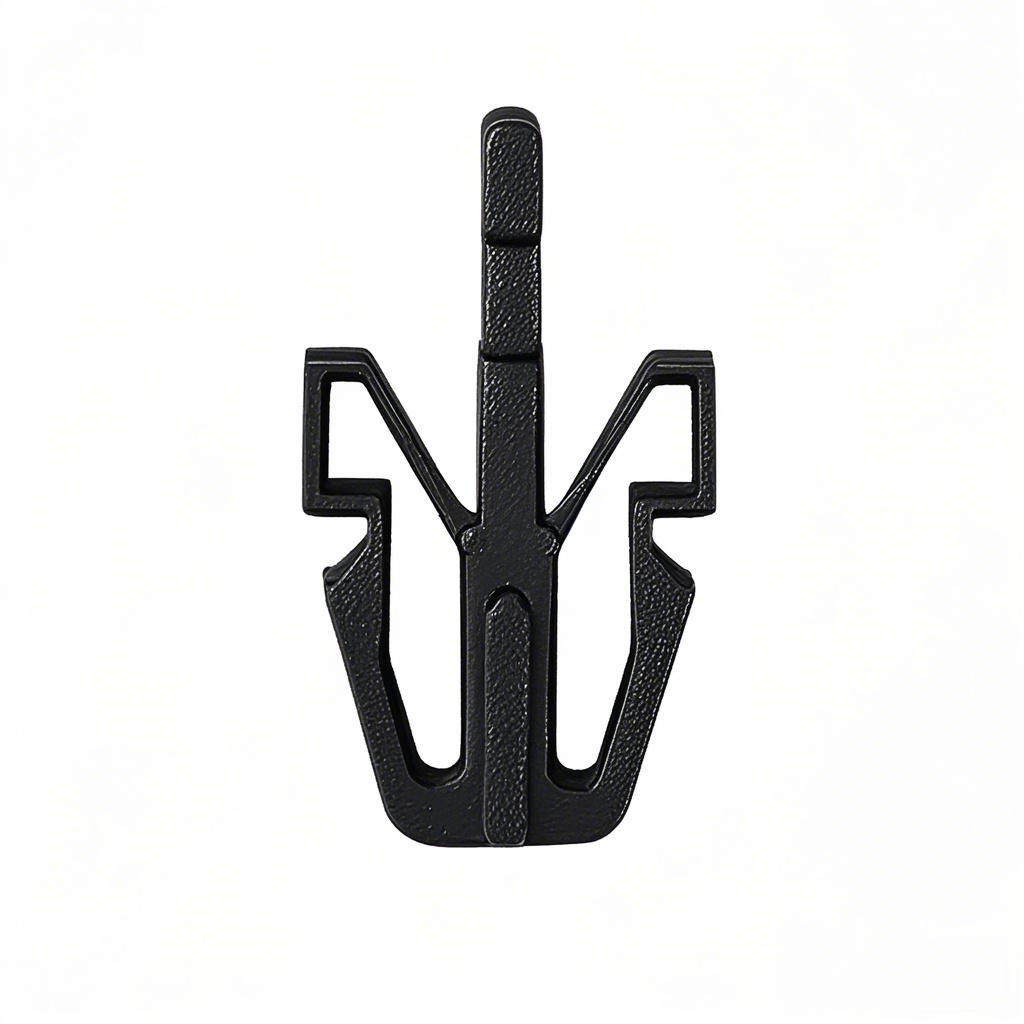
Dashboard clips must balance holding strength, flexibility, and heat resistance—all within tight design tolerances. Their function depends on how precisely they can lock panels while absorbing vibration.
| Parameter | Engineering Target | Result |
|---|---|---|
| Retention Force | 15–30 N | Prevents rattling during vibration |
| Insertion Force | <20 N | Enables quick, damage-free assembly |
| Operating Temp. | -30°C to 100°C | Maintains elasticity under cabin heat |
| Elastic Recovery | ≥90% | Supports repeated removal cycles |
This balance allows dashboards to stay quiet and aligned even after years of thermal cycling.
Comparing Materials for Dashboard Fasteners
| Material | Advantages | Limitations | Recommended Application |
|---|---|---|---|
| PA6 (Nylon) | High strength and stiffness | Slightly brittle under cold | Structural dashboard frames |
| POM (Acetal) | Excellent wear and friction resistance | Lower UV stability | Hidden interior clips |
| PP (Polypropylene) | Lightweight, flexible, cost-effective | Less heat-resistant | General-purpose trim panels |
QEEPEI combines these materials with UV stabilizers and glass fiber for enhanced performance in high-temperature interiors.
QEEPEI’s Engineering and Production Solutions
To ensure OEM-level consistency, QEEPEI integrates automated injection molding, stress testing, and dimensional inspection into every production cycle:
-
±0.02 mm tolerance control for perfect fitment.
-
Anti-friction surface finishing for smooth insertion.
-
Vibration simulation tests replicating real driving conditions.
-
Customized design from CAD files or OEM samples within 10 days.
This system ensures each clip performs with precision—no looseness, no noise, no mismatch.
Advantages for Automotive Manufacturers and Distributors
| Feature | Engineering Benefit | Buyer Value |
|---|---|---|
| Noise Control Design | Damping ribs reduce resonance | Quieter cabins |
| Precision Fit | Eliminates gaps in dashboard assembly | Improved visual quality |
| Material Stability | Resists sunlight and heat deformation | Longer lifespan |
| Custom Mold Capability | Fits unique dashboard geometries | Ideal for OEM and EV models |
| Efficient Packaging | Bulk and labeled exports | Simplifies inventory management |
These technical advantages translate directly into better performance and lower assembly costs for global buyers.
Real-World Scenarios and Use Cases
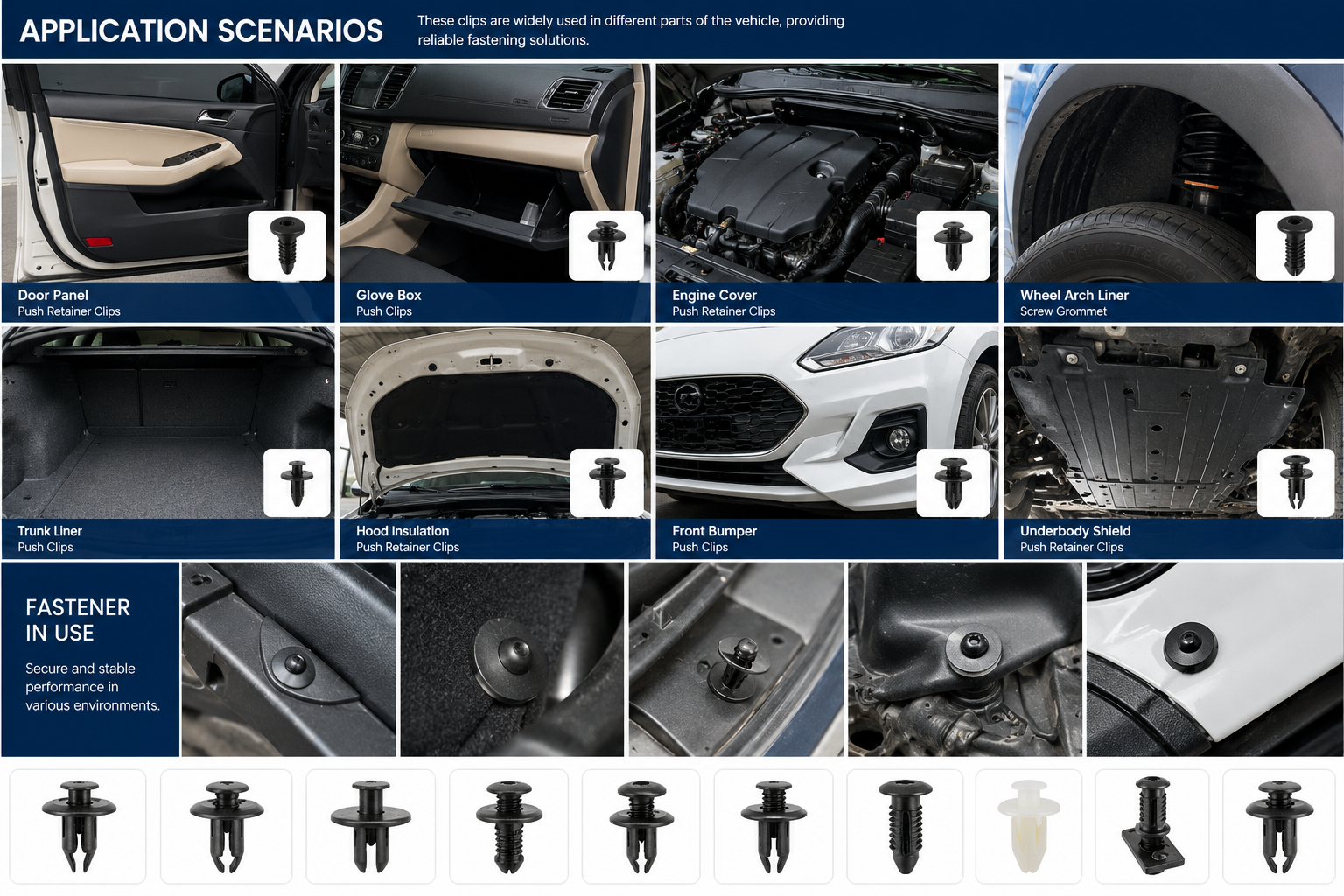
Dashboard clips play a critical role across multiple interior applications:
-
Instrument panels and display clusters — maintain alignment under vibration.
-
Glove box and air vents — prevent noise from movement and temperature expansion.
-
Center consoles and trim covers — ensure tight, seamless visual finish.
-
EV dashboards — lightweight designs to support energy efficiency.
With precision-fit clips, QEEPEI helps automakers create interiors that feel solid, stable, and refined.
Selecting the Right Dashboard Clip for Common Needs
Different vehicles and applications require tailored clip solutions:
-
Luxury sedans → low-friction, color-matched clips to complement premium interiors.
-
SUVs and trucks → reinforced nylon clips for durability under vibration.
-
Fleet or commercial vehicles → reusable clips for easy serviceability.
-
Aftermarket workshops → universal dashboard clips compatible with multiple models.
Selecting the right design improves both assembly efficiency and post-sale service performance.
Frequently Asked Questions
Q1: Can dashboard clips be reused after disassembly?
Yes. Most nylon and POM clips are designed for multiple installation cycles without deformation.
Q2: Are color-matched clips available?
Yes, QEEPEI provides custom pigmentation and matte finish options for visible panels.
Q3: How do you control noise performance?
Through dynamic vibration testing and material damping optimization.
Q4: Do you support OEM custom molds?
Yes, OEM-specific designs can be developed within 7–10 working days.
Building Stability You Can Feel
Every sound and surface in a car’s interior reflects engineering precision.
By combining advanced molding, controlled tension design, and heat-resistant materials, QEEPEI provides dashboard clip solutions that help manufacturers achieve lasting quality and comfort.
Discover the full range of automotive interior clips on the Homepage.
For OEM development or distribution cooperation, contact us here.