
Automotive Sealing Clips Manufacturer: Reinforcing Durability and Noise Control in Vehicle Assemblies
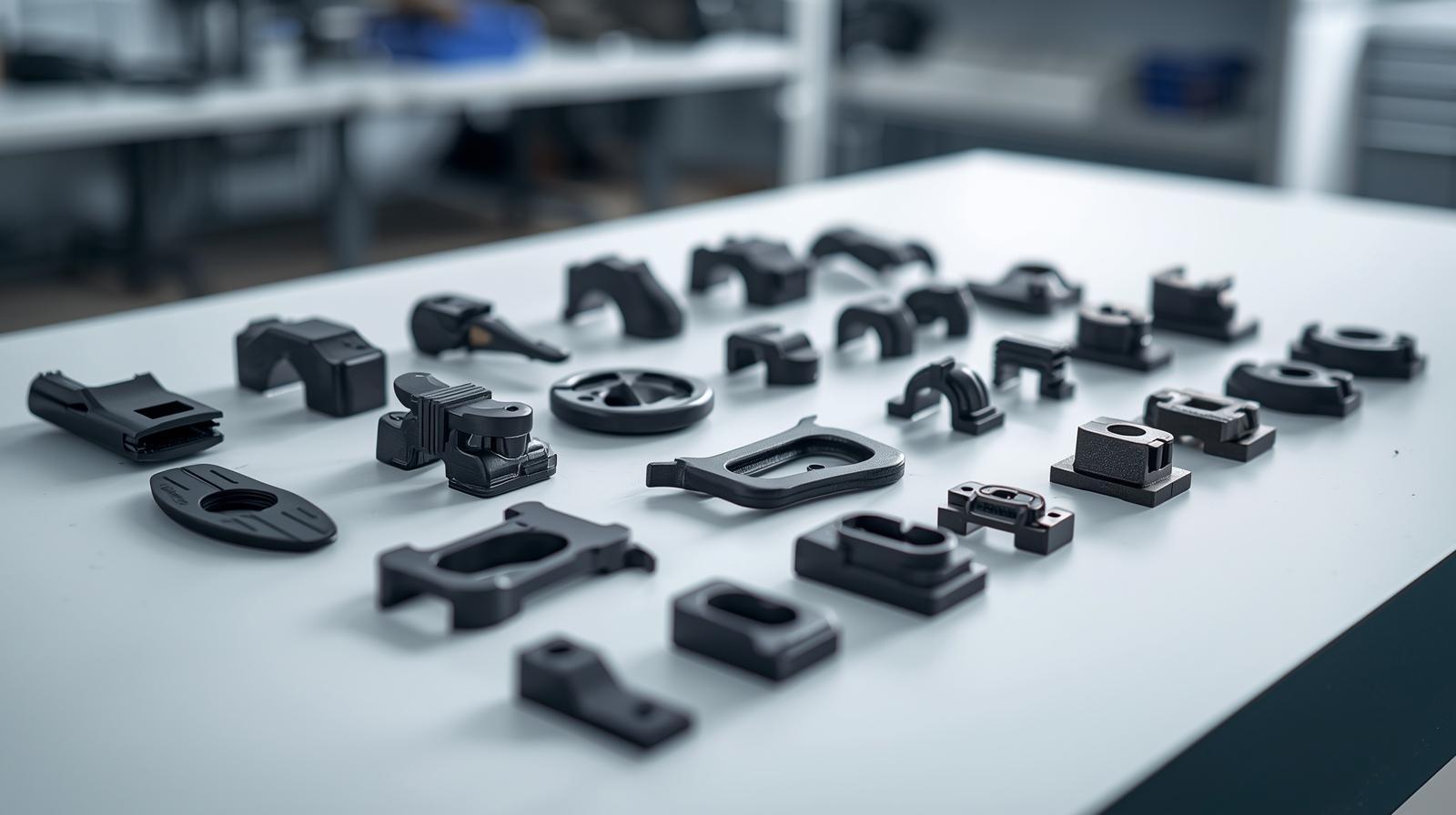
The silent comfort inside a car isn’t just about insulation—it begins with precision fastening. A dependable automotive sealing clips manufacturer ensures every rubber seal, weatherstrip, and trim panel remains firmly anchored even after years of vibration and climate exposure. QEEPEI specializes in designing high-tolerance clips that keep vehicles airtight, watertight, and structurally cohesive, transforming small plastic parts into silent guardians of quality.
The Real Pain: Seal Fatigue and Customer Complaints
When sealing systems fail, problems multiply:
-
Persistent wind noise and cabin drafts.
-
Water seepage near doors or trunks.
-
Rubber strips detaching under high temperature.
-
Warranty claims triggered by minor retention loss.
Industry reports (Auto Components Reliability Review, 2025) show that 25% of vehicle NVH (Noise, Vibration, Harshness) complaints originate from improper sealing clip performance—a preventable cost for both OEMs and distributors.
The Engineering Logic of Sealing Clips
Though small, these clips integrate mechanical and material science:
-
Compression Balance: Ensures consistent pressure between metal panel and rubber trim.
-
Elastic Flexure: Allows repeated insertions during maintenance.
-
Surface Texture Control: Prevents slippage in vibration zones.
-
Thermal Endurance: Maintains grip from -40 °C to 125 °C.
Each clip design goes through shear, tensile, and torsion validation to confirm real-world reliability.
Standard Clips vs. Advanced OEM-Grade Solutions
| Criteria | Standard Plastic Fasteners | QEEPEI Sealing Clips |
|---|---|---|
| Material | Generic PP | Nylon 66 + Elastomer Blend |
| Retention Force | ~60 N | 110 – 130 N |
| Weather Resistance | 6 months | 3 – 5 years |
| NVH Reduction | Minimal | 15 % noise attenuation |
| Fitment | Universal only | OEM-matched geometries |
The combination of polymer strength and design accuracy delivers better fitment and long-term sealing stability.
Manufacturing Excellence: Precision that Defines Reliability
Every automotive sealing clips manufacturer aims for consistency—but QEEPEI achieves it through discipline and data:
-
Automated Molding Lines: Tolerance control within ± 0.03 mm.
-
Resin Moisture Calibration: Prevents embrittlement and stress cracking.
-
Ultrasonic Cleaning: Removes particulate residue before packaging.
-
Batch Traceability: Each lot labeled with production timestamp and QC code.
This framework guarantees interchangeability and uniform installation torque across global shipments.
Distinct Advantages for Automotive Partners
-
Acoustic Optimization: Uniform sealing pressure reduces NVH complaints.
-
Assembly Efficiency: Quick-insert barbed structure cuts installation time.
-
Export Compliance: Meets ISO 9001, RoHS, and REACH requirements.
-
Private Label Support: Branding, labeling, and barcode integration.
-
Supply Scalability: Small-lot OEM prototypes or bulk distributor orders alike.
Such advantages allow manufacturers and aftermarket resellers to maintain reliability under diverse operating environments.
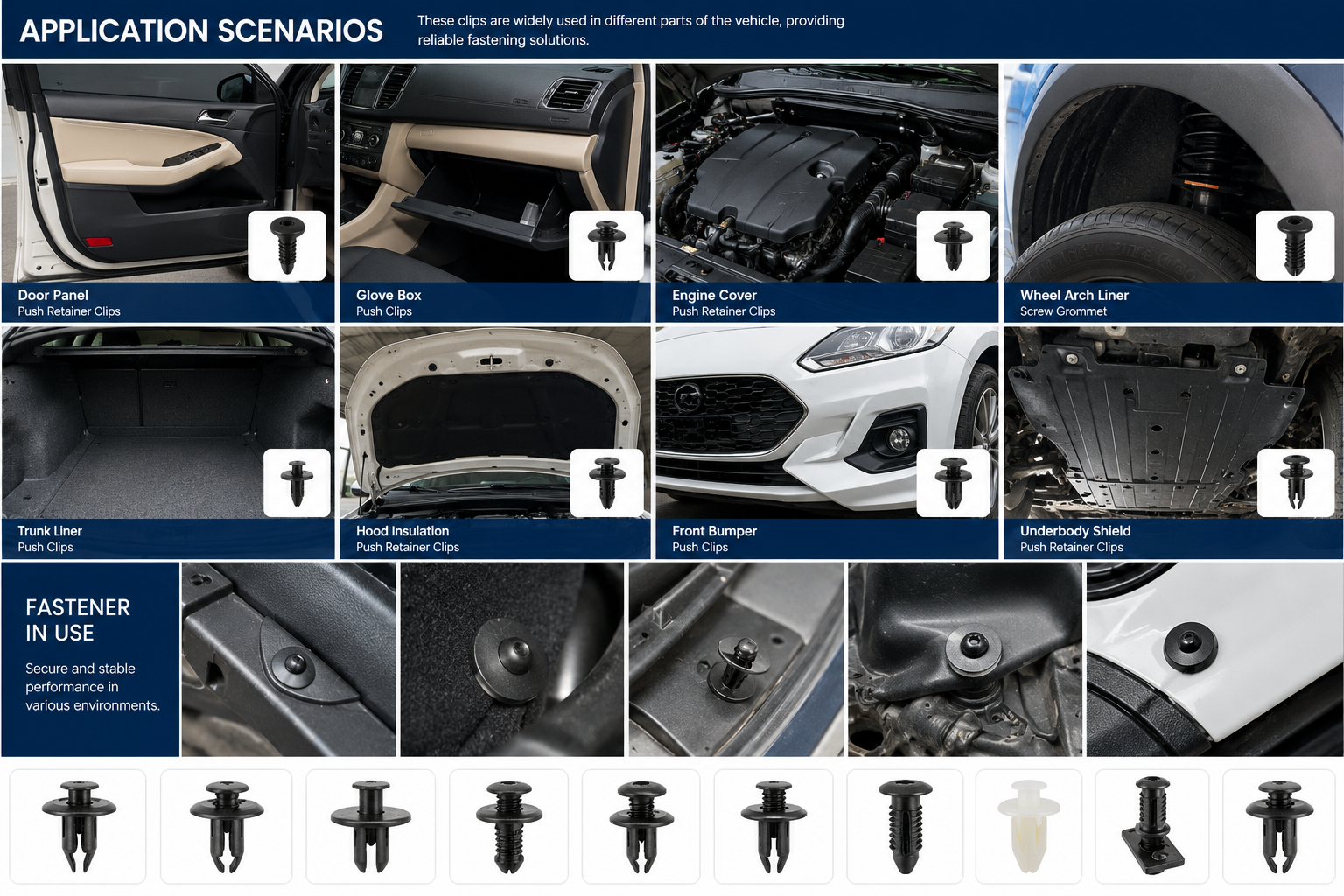
Applications Across Vehicle Structures
| Vehicle Zone | Function | Result |
|---|---|---|
| Door Perimeter | Holds rubber seal | Prevents wind intrusion |
| Trunk Frame | Supports dual-layer seal | Moisture protection |
| Hood Edge | Stabilizes thermal barrier | Prevents heat leakage |
| Roof Channel | Locks weatherstrip | Reduces vibration transfer |
| A-Pillar Trim | Anchors acoustic liner | Maintains cabin silence |
These use-cases highlight how one clip type can influence vehicle comfort and durability at scale.
Selecting the Right Sealing Clip
When sourcing sealing clips for OEM or aftermarket use:
-
Identify Vehicle Zone: Door, trunk, or roof line.
-
Choose Material Grade: Nylon 66 for strength, POM for flexibility.
-
Check Retention Strength: 100 – 120 N typical for outer seals.
-
Consider Installation Method: Manual press-fit or robotic insertion.
-
Confirm Environmental Compatibility: Temperature, UV, and chemical exposure.
Following these technical checkpoints ensures proper retention and long-term stability.
FAQ
Q: Are QEEPEI sealing clips compatible with multiple car models?
A: Yes, we supply both universal and OEM-matched variants with model-specific labeling.
Q: What testing standards are applied?
A: Tensile, vibration, and salt-spray tests under ISO/TS 16949 protocols.
Q: Can you develop customized tooling for new models?
A: Absolutely, our in-house mold design supports OEM and ODM requirements.
Conclusion: From Small Components to Large-Scale Reliability
Every vehicle’s refinement depends on the invisible details holding it together. Partnering with a certified automotive sealing clips manufacturer like QEEPEI means fewer assembly issues, higher acoustic quality, and longer component life. Precision-made sealing fasteners turn basic plastic into enduring performance.
For collaboration or wholesale inquiries, visit QEEPEI Homepage or reach our technical export team via Contact Us.