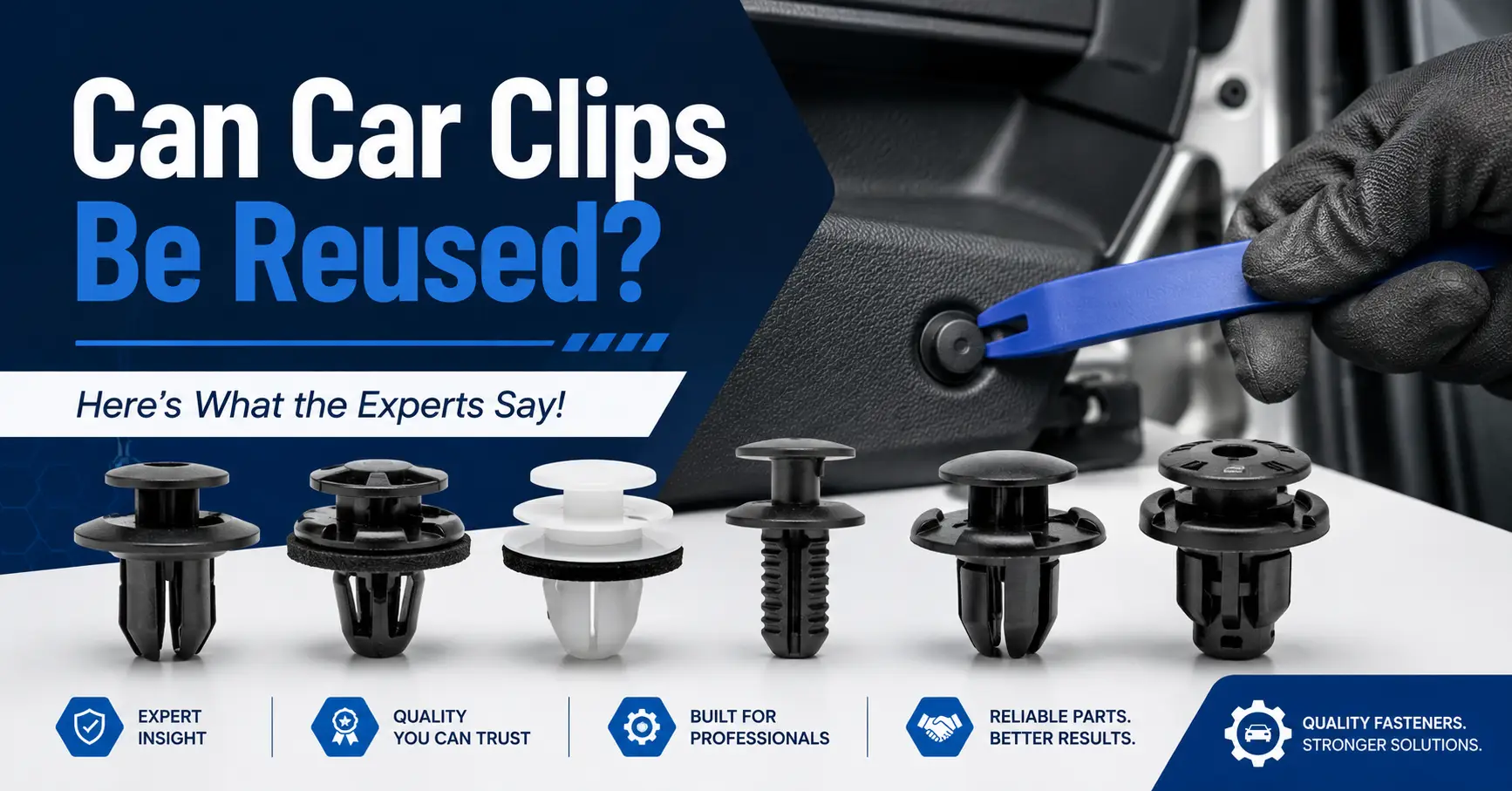

Can Automotive Clips Be Reused? Engineering Reality Behind Retention Performance
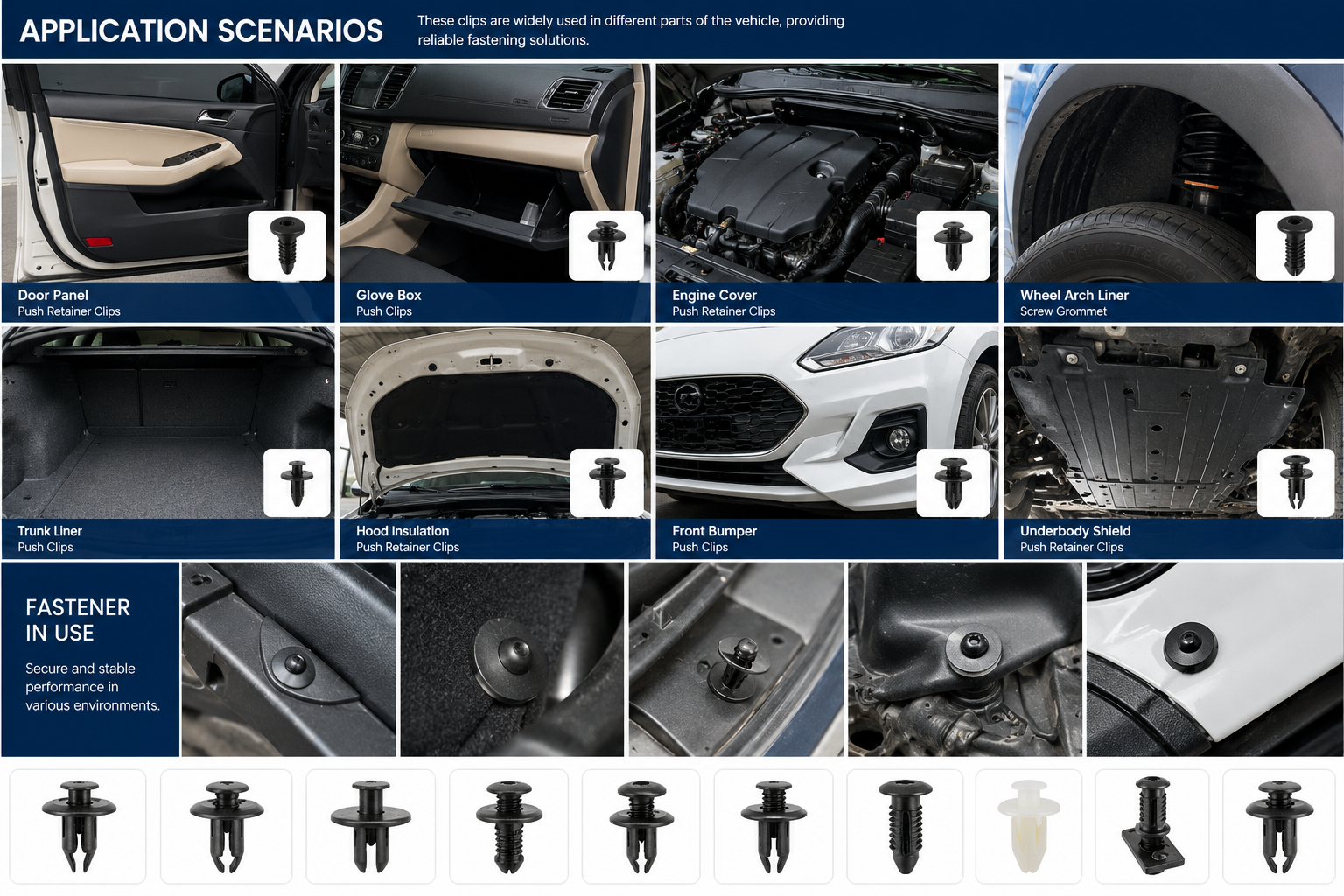
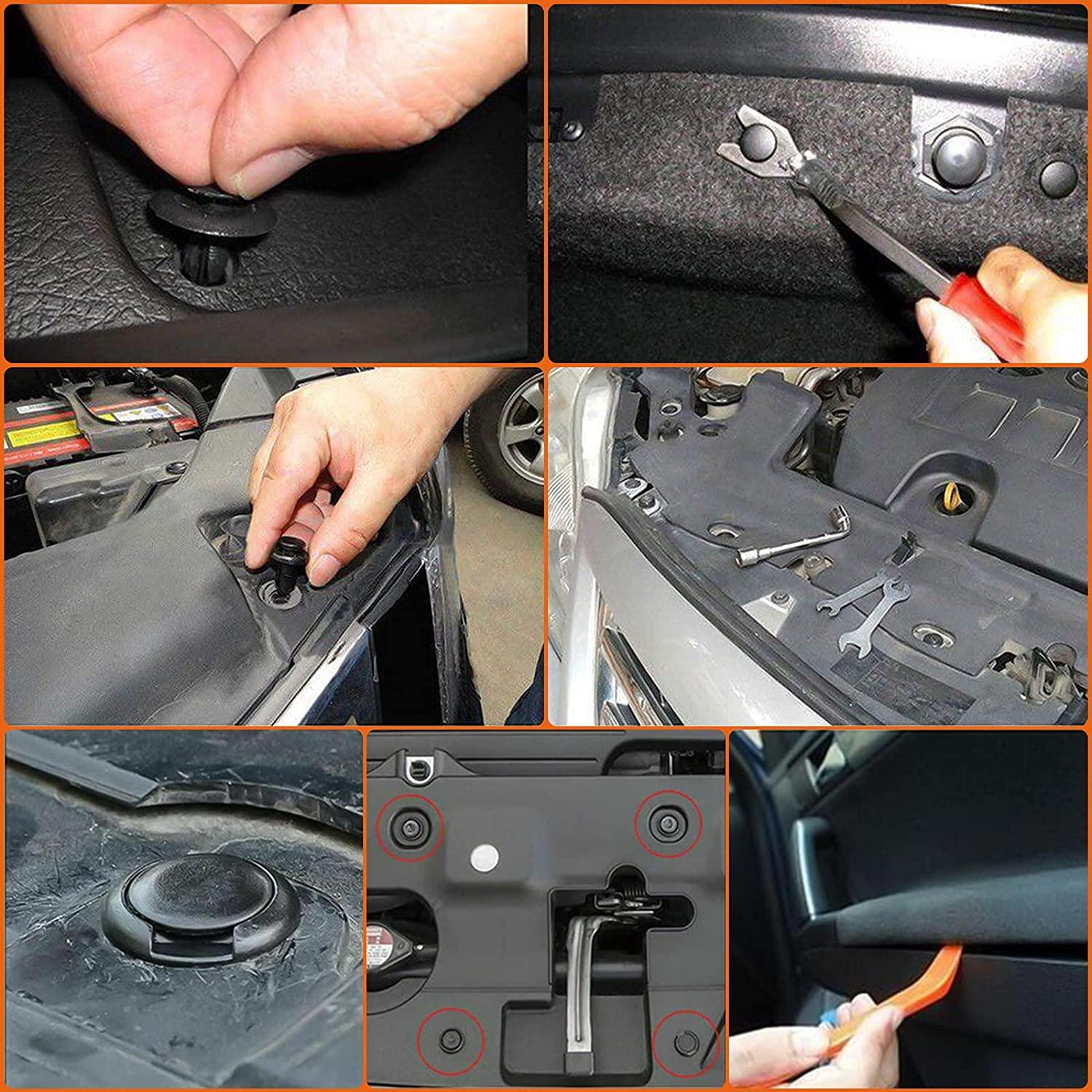
During vehicle maintenance, technicians often remove trim panels, bumpers, or engine covers. The question always arises:
Can the clip be reused?
In practice, many are reused without inspection. Sometimes nothing happens. Other times, panels loosen weeks later.
At QEEPEI, we regularly evaluate field-return samples from distributors and workshops. As a professional Automotive Clips manufacturer, we can confirm that clip reuse depends on material behavior, deformation limits, and environmental exposure history.
Reuse is not a yes-or-no issue. It is a structural question.
Elastic Deformation vs Plastic Deformation
Automotive clips function through elastic expansion. During installation:
- Legs compress
- Barbs pass through panel hole
- Elastic recovery creates retention force
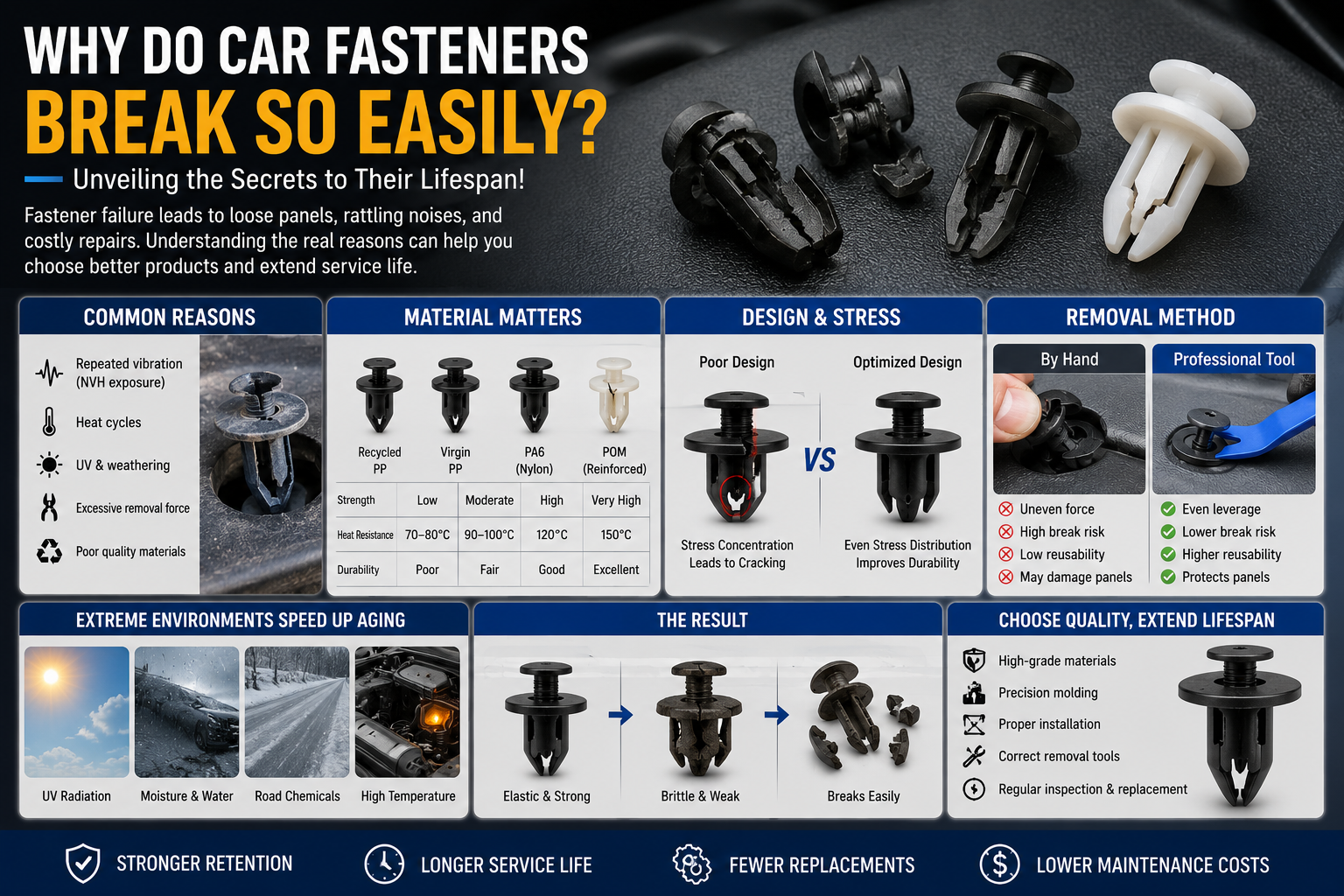
However, when removal force exceeds elastic limits, the material enters plastic deformation.
Typical material properties:
- PA66 elastic modulus: ~2.8 GPa
- Recommended maximum deformation angle: ≤18°
- Retention force (new clip): 180–260 N
If deformation exceeds elastic range, internal microfractures begin. The clip may look intact but loses structural memory.
According to SAE discussions on polymer fatigue (https://www.sae.org), repeated overstress significantly reduces retention stability in nylon fasteners.
Measured Retention Force After Reuse
Laboratory testing shows measurable decline.
Retention Force Degradation After Removal Cycles
| Removal Cycles | PA6 Retention (Interior Use) | PA66 Retention | PA66 GF10 Retention |
|---|---|---|---|
| 0 (New) | 210 N | 220 N | 250 N |
| 1 | 195 N | 210 N | 240 N |
| 2 | 175 N | 195 N | 230 N |
| 3 | 155 N | 180 N | 215 N |
| 5 | 135 N | 160 N | 200 N |
Observations:
- PA6 loses up to 35% retention after 3–5 cycles
- Reinforced materials degrade slower
- Interior-grade clips are more reuse-sensitive
This explains why reused clips often feel “looser.”
An experienced Automotive Clips manufacturer evaluates fatigue behavior during product validation.
When Reuse Is Acceptable
Reuse may be acceptable when:
- Clip shows no whitening or crack marks
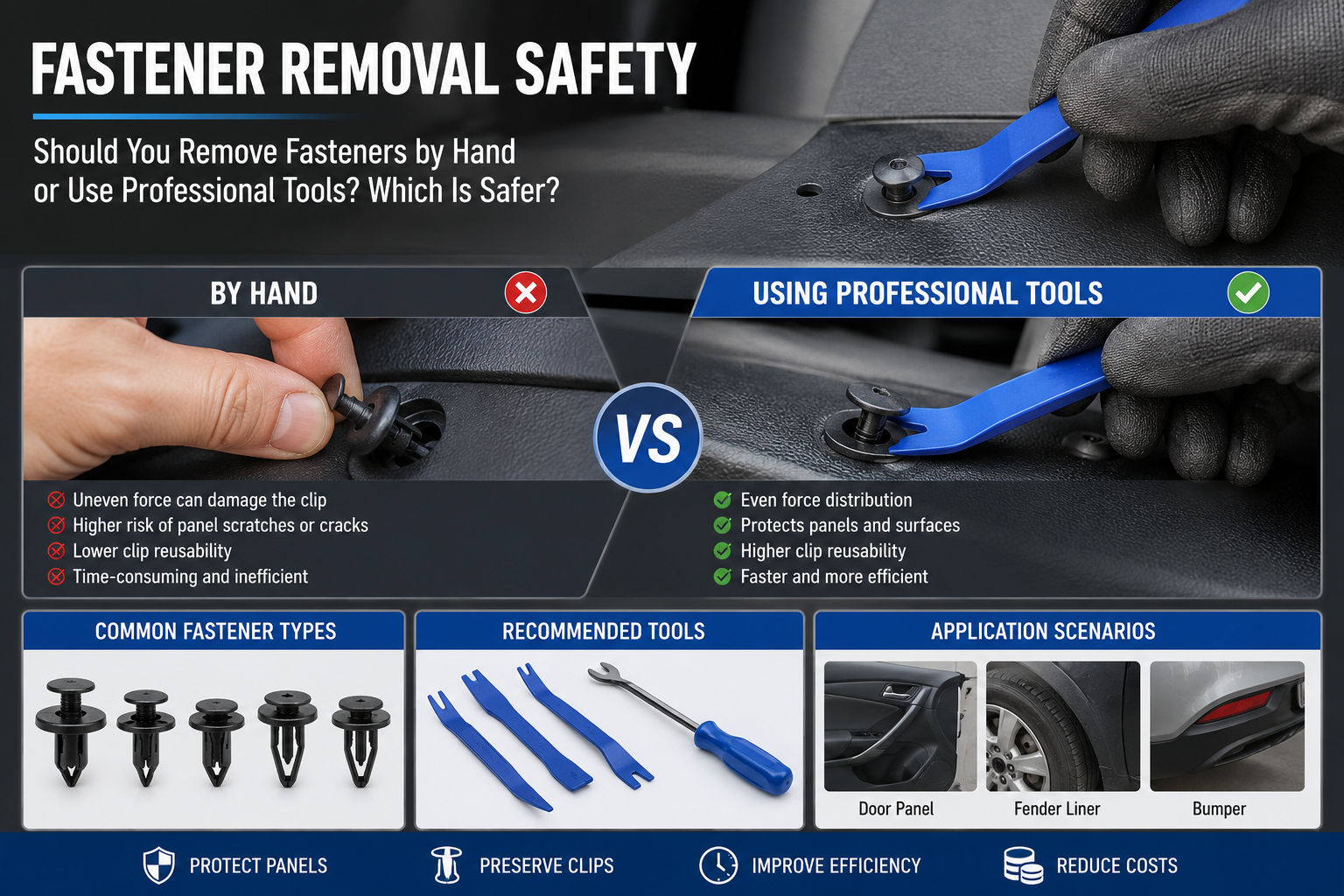
- Removal was performed with professional trim tools
- Panel hole remains within ±0.1 mm tolerance
- Application is low-load interior trim
Interior decorative panels may tolerate minor retention reduction.
However, high-load zones do not.
When Replacement Is Mandatory
Replacement is strongly recommended when:
- Clip used in bumper or fender areas
- Engine bay exposure above 90°C
- Visible deformation or barb rounding
- Hole enlargement >0.2 mm
- More than two removal cycles
Retention below 150 N significantly increases risk of vibration-induced loosening.
Professional maintenance standards often recommend single-use policy for exterior clips.
Why Manufacturing Discipline Matters
At QEEPEI, clips are produced with:
- Heat-stabilized PA66 formulations
- Glass fiber reinforcement options
- Dimensional tolerance ±0.02–0.03 mm
- Moisture control below 0.2%
- IATF 16949 certified systems
https://www.iatfglobaloversight.org
As a global Automotive Clips manufacturer, we design for durability, but even engineered clips have elastic limits.
Understanding those limits prevents improper reuse decisions.
Real Case: Reuse Policy Change in Fleet Maintenance
A fleet service center reused bumper clips to reduce cost.
Observed issue:
- 18% of vehicles returned with panel looseness
- Retention measured below 160 N
After switching to mandatory replacement policy:
- Repeat complaints reduced by 72%
- Service time reduced (no secondary repair)
- Customer satisfaction improved
Clip replacement cost was marginal compared to rework cost.
Economic Perspective: Reuse vs Replacement
Cost comparison:
| Factor | Reuse | Replacement |
|---|---|---|
| Immediate Cost | $0 | $0.02–$0.05 per clip |
| Retention Reliability | Reduced | Restored |
| Rework Risk | High | Low |
| Customer Satisfaction | Variable | Stable |
Short-term savings often create long-term expense.
FAQ
Q: Can automotive clips be reused safely?
A: Only if deformation limits were not exceeded and application load is low.
Q: Are bumper clips single-use?
A: For high-load zones, replacement is recommended.
Q: Does glass fiber reinforcement improve reuse capability?
A: Yes, reinforced materials retain higher structural memory but still degrade over repeated cycles.
Conclusion
Automotive clips can sometimes be reused—but only under controlled conditions. Material fatigue, deformation limits, and environmental exposure determine safety.
A qualified Automotive Clips manufacturer designs clips within elastic recovery limits, but no polymer is immune to overstress.
At QEEPEI, we prioritize retention stability, lifecycle validation, and application-specific design to ensure fastening reliability across global markets.
Explore our full range here:
https://www.cnclip.com/
For technical consultation or bulk orders:
https://www.cnclip.com/contact-us/