
Car Retainer Clips Factory: Precision-Made Solutions for Reliable Vehicle Assembly
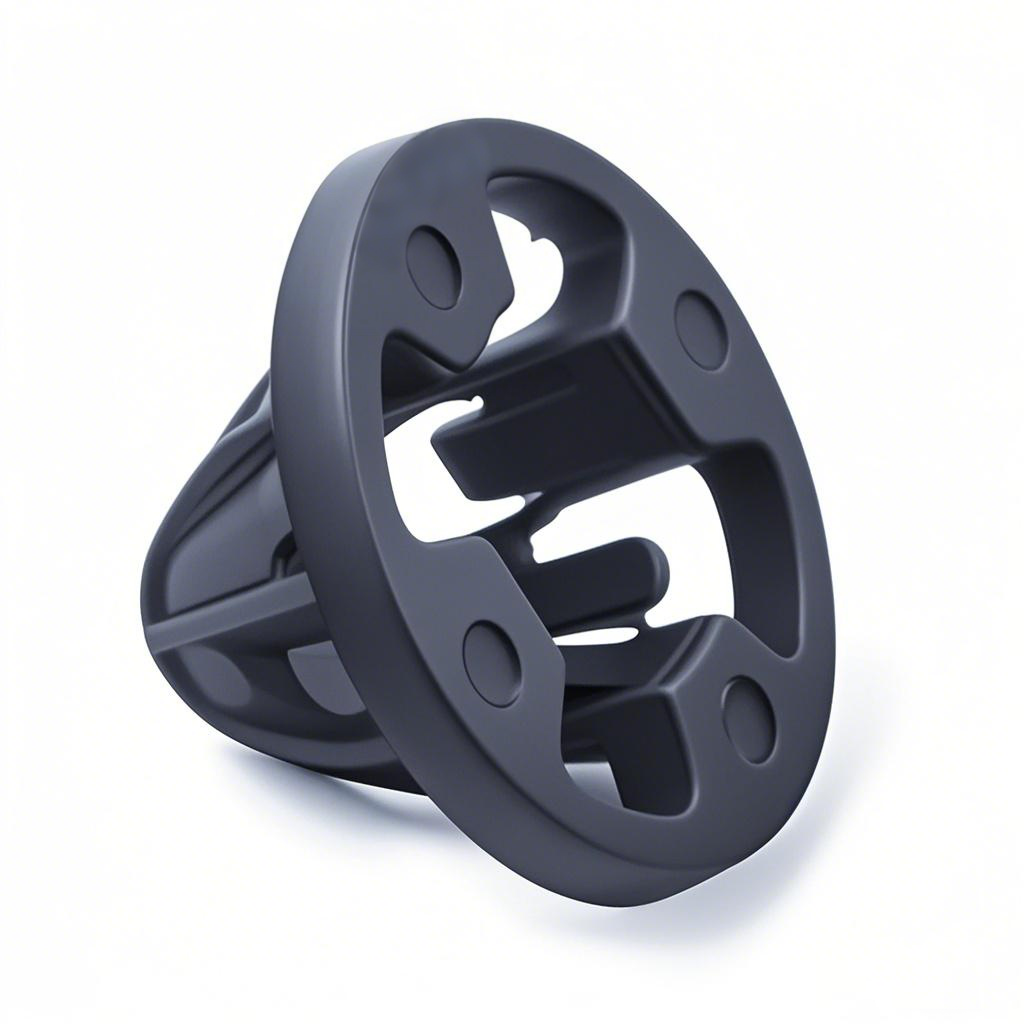
In automotive production, even the smallest fasteners define the long-term reliability of the entire assembly. Car retainer clips secure panels, trims, and internal fittings—ensuring vehicles remain silent, sturdy, and easy to service. As an established car retainer clips factory, QEEPEI focuses on transforming small components into high-value engineering assets for OEM and aftermarket clients.
The Real Pain Points in Vehicle Assembly
Automotive manufacturers and service providers often face three recurring problems:
-
Inconsistent fit and loosening over time, causing panel gaps or vibration noise.
-
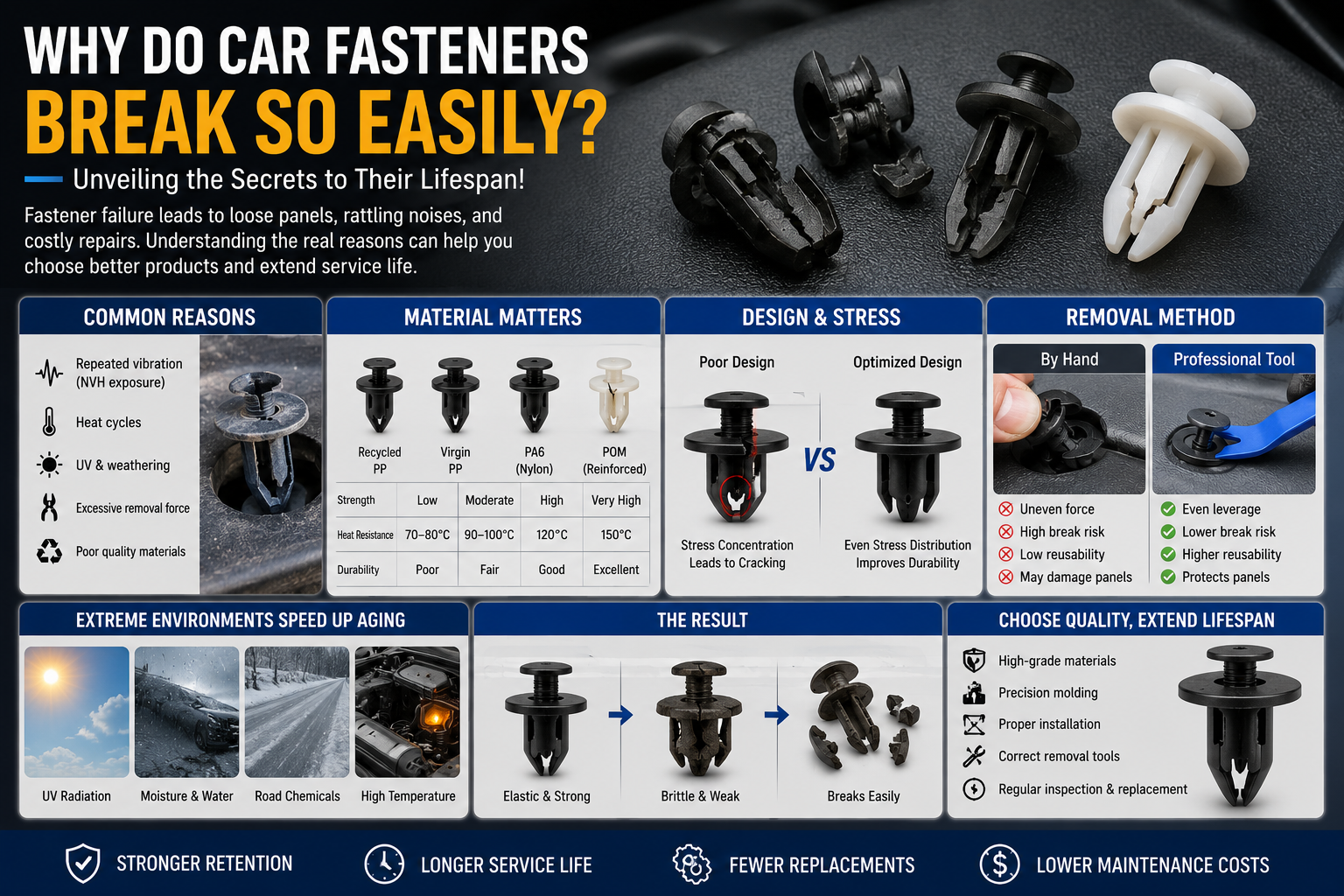
Material failure due to heat cycles, UV exposure, or moisture intrusion.
-
Complex replacement processes that slow down repair and inspection efficiency.
A well-engineered clip mitigates these challenges—ensuring each component maintains its structural integrity through thousands of hours of vehicle operation.
Structural Principles Behind High-Performance Retainer Clips
The functionality of retainer clips depends on three mechanical principles:
| Design Element | Technical Role | Benefit in Assembly |
|---|---|---|
| Elastic Deformation Zone | Enables easy insertion while maintaining tight grip | Faster installation without damaging panels |
| Ribbed Anchor Legs | Prevents clip rotation and backward movement | Reliable hold during vibration and impact |
| Heat-Stabilized Material Matrix | Maintains elasticity under temperature variation | Long service life in engine and door panels |
These mechanical interactions are fine-tuned through injection molding precision, ensuring consistent tension and alignment in every clip.
Comparing Manufacturing Techniques: Why Injection Control Matters
| Method | Advantages | Limitations | Typical Use |
|---|---|---|---|
| Conventional Injection | Fast and cost-efficient | Prone to warping in high-volume molds | Entry-level aftermarket clips |
| Precision Micro-Molding | Maintains dimensional accuracy ±0.03 mm | Higher tooling cost | OEM-grade and structural clips |
| Multi-material Overmolding | Combines rigid and flexible materials | Complex setup, longer cycle time | Trim clips and door fasteners |
QEEPEI’s Technical Solution Framework
QEEPEI ensures stable clip performance through three core solutions:
-
Material Optimization – Use of PA6, POM, and PP reinforced with glass fiber to achieve impact resistance and elasticity.
-
Fitment Engineering – CAD-based hole diameter calibration for Toyota, BMW, Honda, Nissan, Volkswagen, and Ford clips.
-
Testing Standards – Each batch undergoes 100% tensile and shear load testing, simulating long-term vibration exposure.
This systematic quality assurance guarantees that clips perform under real-world assembly pressures and environmental stress.
Product Advantages and Performance Highlights
-
High Retention Force: Each clip maintains over 90% holding strength after 1,000 vibration cycles.
-
UV and Heat Resistance: Engineered to withstand –40°C to +120°C without deformation.
-
Quick Assembly: Streamlined head design reduces assembly time by 20%.
-
Custom Color Matching: Integrates aesthetically into vehicle interiors and trims.
-
Corrosion-Free: No metallic elements, eliminating rust issues in long-term use.
Such features make QEEPEI clips a dependable choice for both OEM suppliers and automotive distributors managing multi-model inventories.
Real-World Applications in Vehicle Assembly
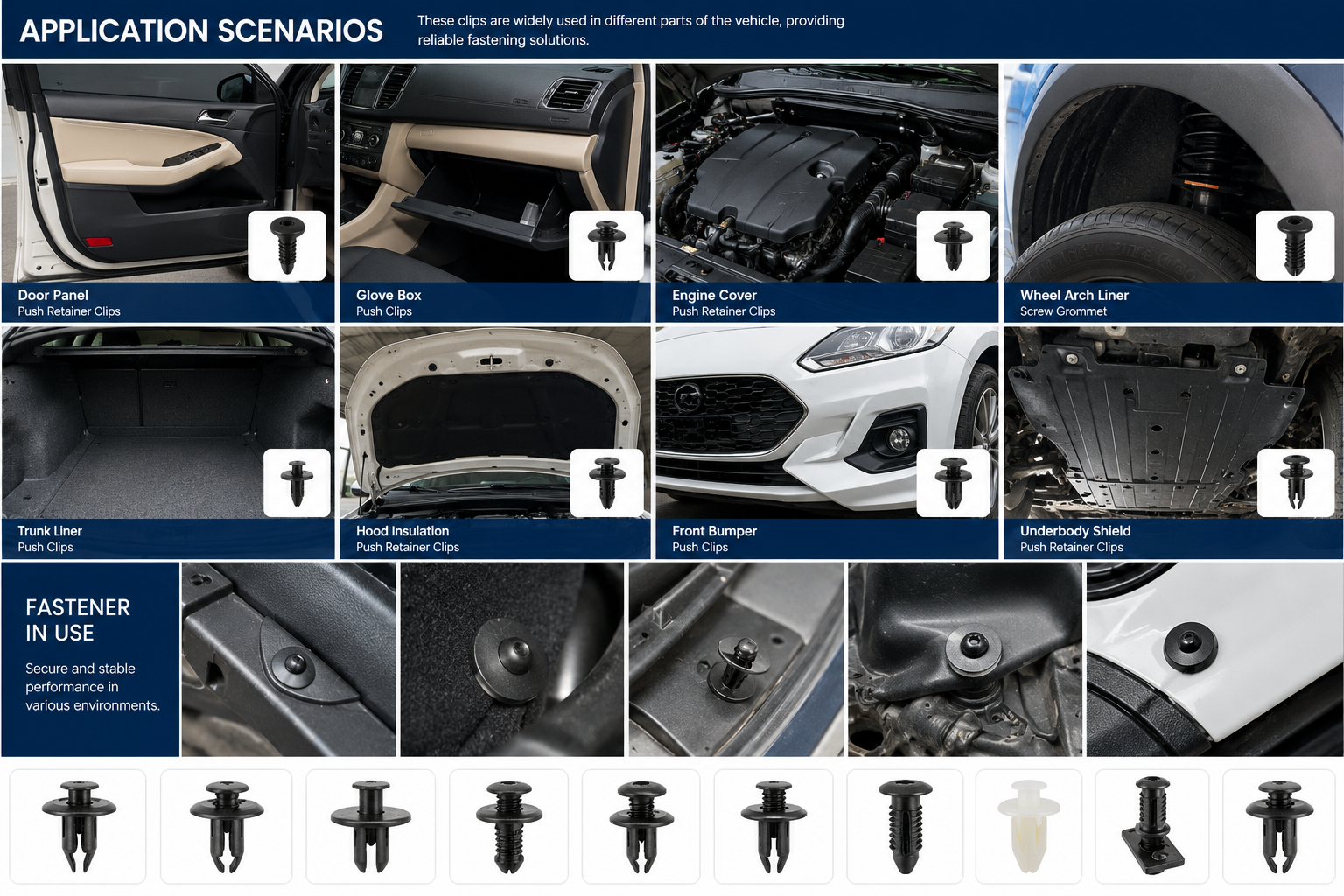
| Vehicle Area | Typical Clip Type | Functional Requirement |
|---|---|---|
| Front Bumper & Fender | Expansion Rivet Clip | Shock absorption and quick detachment |
| Interior Trim & Dashboards | Push-Type Retainer | Silent locking with anti-rattle design |
| Engine Compartment | Heat-Resistant Nylon Clip | Stability under vibration and heat |
| Door Panels | Double-Layer Trim Clip | Reusable fit and aesthetic alignment |
| Roof Lining | Mushroom-Head Clip | Lightweight holding for fabric and panels |
These clips are also adapted for fleet maintenance, aftermarket repairs, and assembly line automation.
Selecting the Right Clip for Common Vehicle Models
| Brand | Recommended Clip Type | Material | Function Focus |
|---|---|---|---|
| BMW / Volkswagen | Snap Lock Retainers | PA6-GF30 | Strong vibration resistance |
| Toyota / Honda | Push Clip | POM | Elastic, easy installation |
| Ford / Nissan | Panel Expansion Clip | PP + Rubber | Tight sealing and impact tolerance |
By matching clip design to model requirements, buyers ensure proper fitment and minimize repair costs.
Frequently Asked Questions
Q1: Do you support OEM or ODM customization?
Yes, QEEPEI provides both OEM and ODM clip development, including custom mold design, logo embossing, and export packaging.
Q2: How can I identify compatible clips for specific models?
Each part is cataloged with OEM cross-reference numbers to ensure direct fit.
Q3: Are QEEPEI clips certified for global markets?
Yes. All materials comply with ISO/TS16949 and RoHS environmental standards.
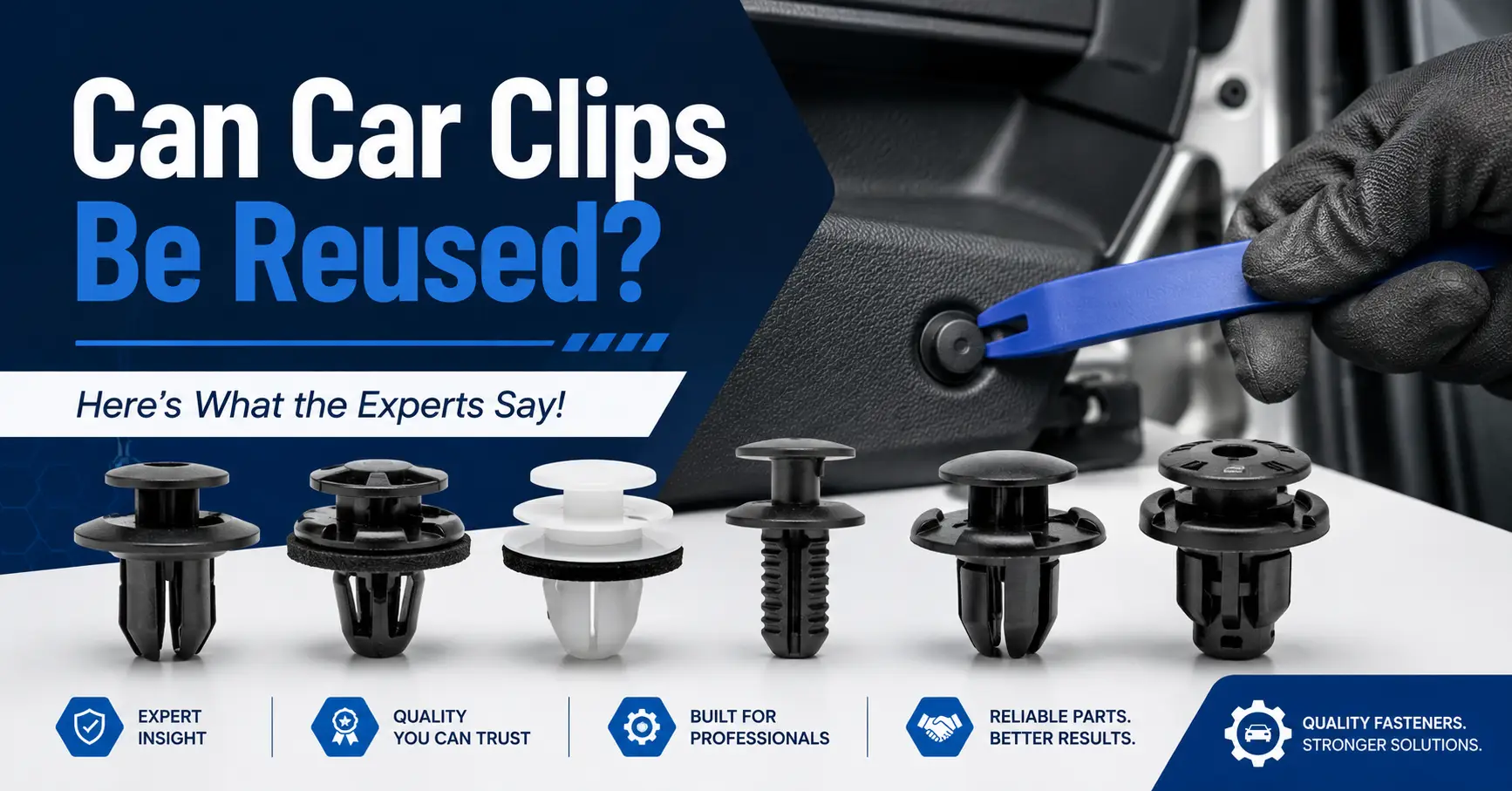
Q4: Can your clips be reused after panel removal?
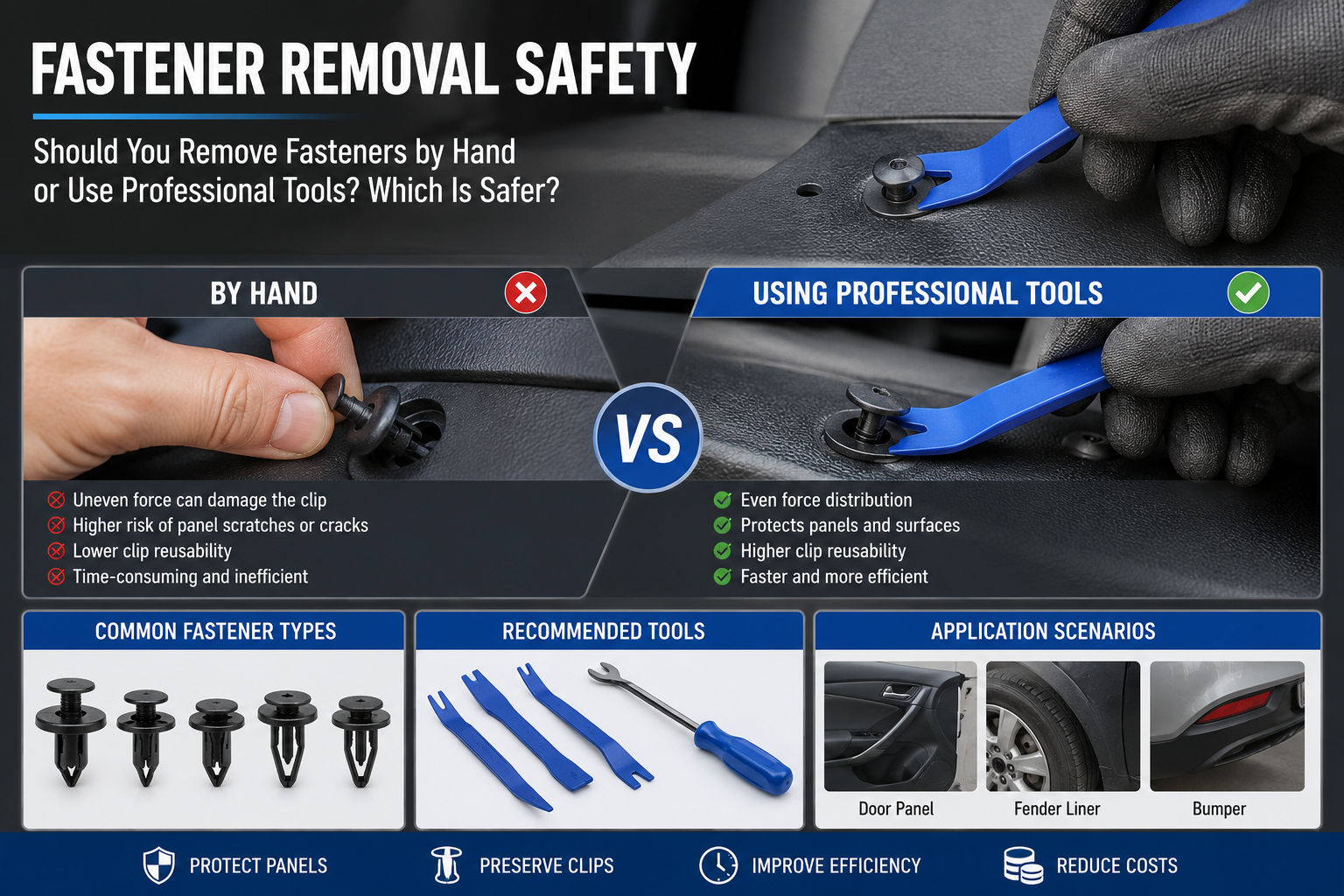
Most interior trim clips are reusable if removed using proper disassembly tools.
Building Reliable Partnerships in Automotive Supply
As automotive design evolves toward lightweight, recyclable components, fasteners play an increasingly strategic role. QEEPEI supports this shift with stable quality control, multi-brand compatibility, and long-term cooperation for global distributors.
To explore more automotive fastener solutions, visit our Homepage or reach out through the Contact Us page for customized support.