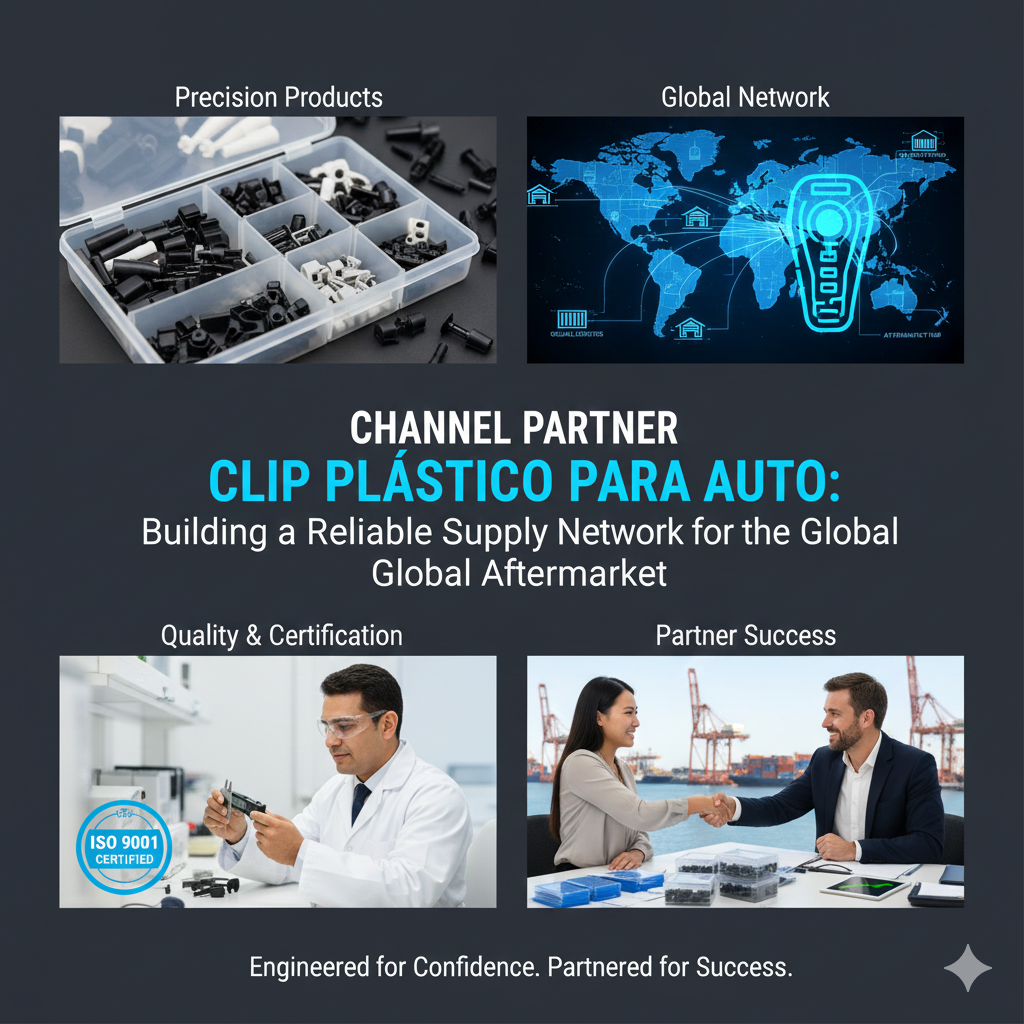
Channel Partner Clip Plástico para Auto: Building a Reliable Supply Network for the Global Aftermarket
In the vast ecosystem of automotive parts, clips may seem trivial. Yet when a single clip fails, an entire panel loosens, creating noise, misalignment, and warranty headaches. Channel partners understand this: stability in small parts defines credibility in large networks.
Pain Points in Channel Distribution
Automotive channel buyers often juggle dozens of SKUs from multiple factories. The outcome?
-
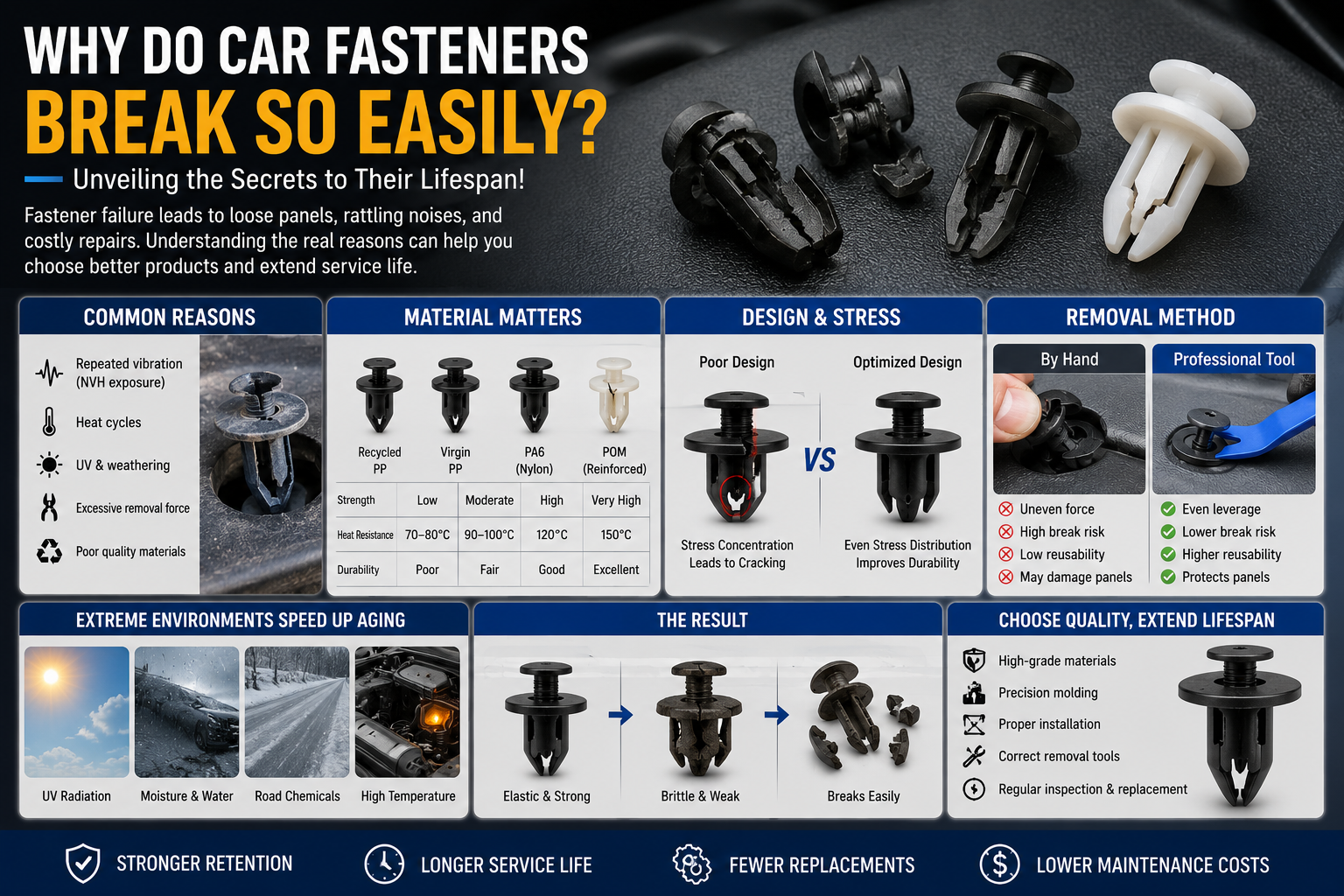
Material inconsistency between PP, PA6, and recycled blends.
-
Batch color deviation visible under showroom lighting.
-
Delayed restocking due to fragmented supplier communication.
-
Complex customs documentation that stretches lead times.
According to the 2024 Global Automotive Aftermarket Study by Frost & Sullivan, component inconsistency accounts for nearly 21% of product return cases—a hidden cost many distributors underestimate.
Principle: Structural Fit Over Volume
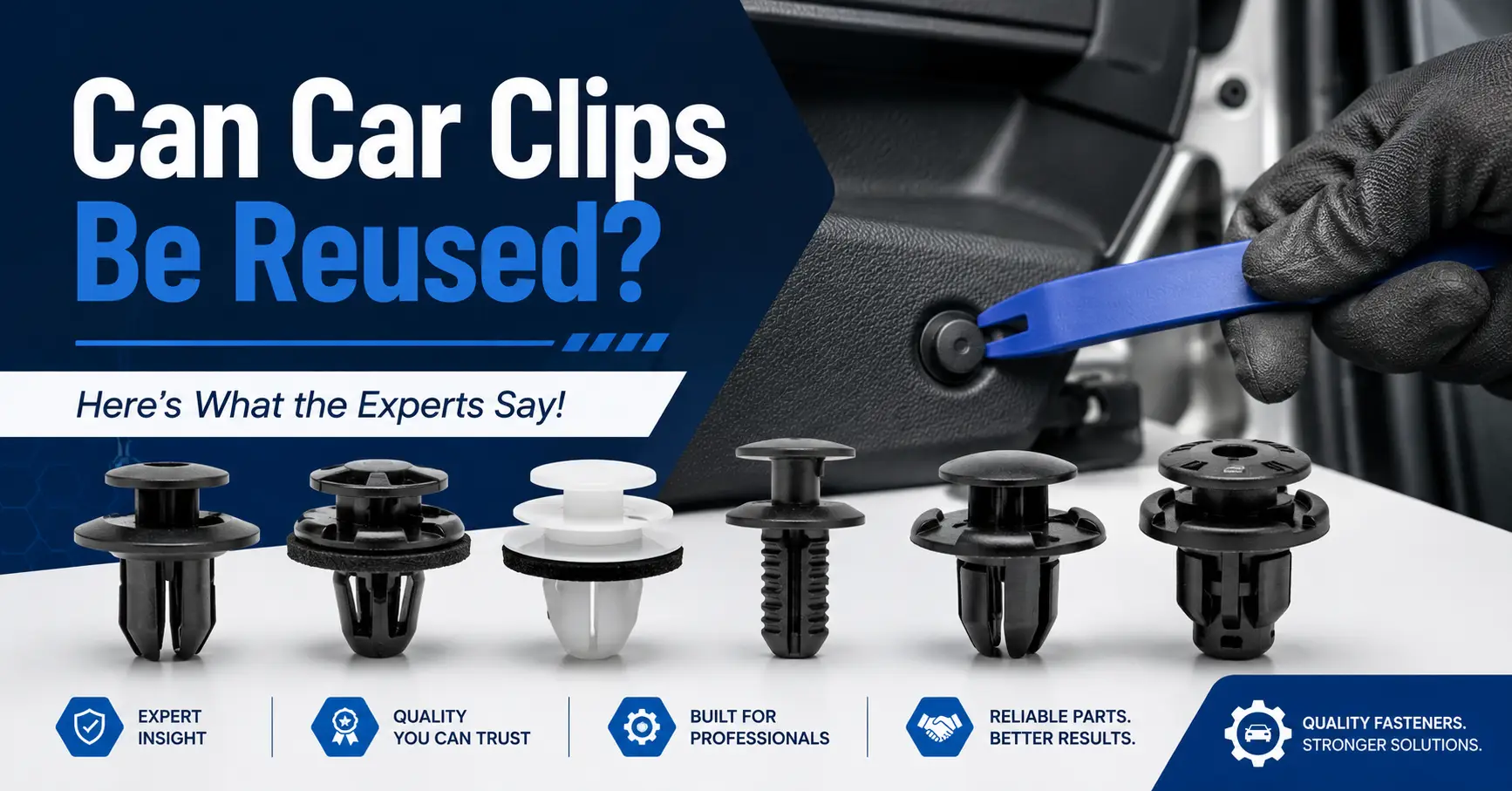
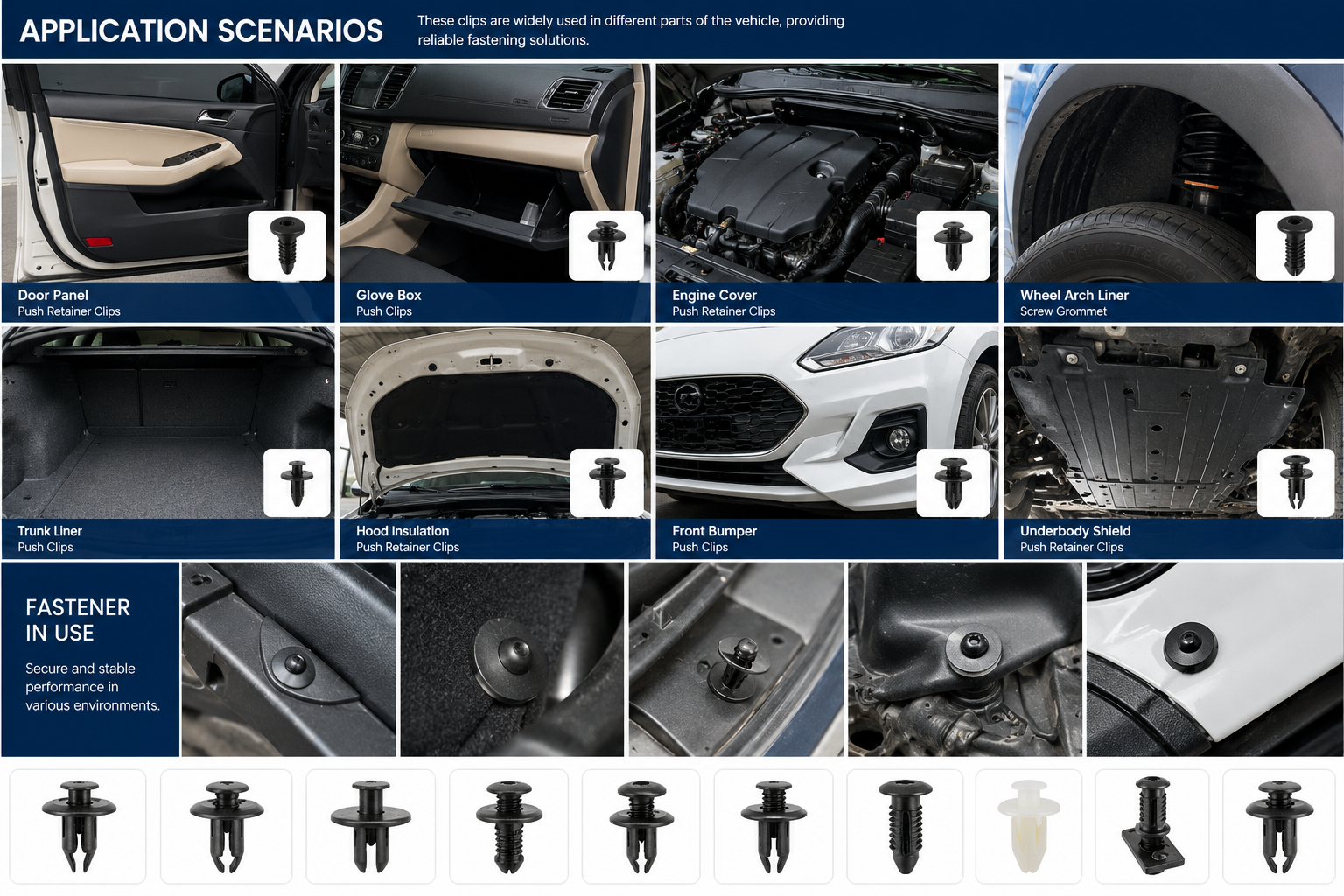
Each plastic clip is an engineered response to stress, temperature, and geometry. The tensile curve, insertion force, and elasticity threshold determine how securely it locks the trim.
QEEPEI’s production follows IATF 16949 and RoHS 2.0 standards, ensuring that every clip—door panel, bumper, or fender—is both dimensionally accurate and chemically stable.
| Clip Type | Material | Fitment | Key Property |
|---|---|---|---|
| Trim Retainer | PA6 + GF15 | Door & interior panels | Heat-resistant |
| Push Rivet | PP | Universal fit | Flexible insertion |
| Fender Mount | POM | Exterior wheel area | Vibration-proof |
| Panel Plug | ABS | Engine bay | Impact absorption |
Comparison: Fragmented Sourcing vs. Partner Integration
| Aspect | Multi-Source Approach | QEEPEI Channel Partner Model |
|---|---|---|
| SKU Uniformity | Low | Standardized molds |
| Supply Predictability | Fluctuating | Forecast-based production |
| Labeling & Traceability | Manual | Digital lot system |
| MOQ & Flexibility | Inflexible | Scalable batches (1k–50k) |
| Compliance | Varies by supplier | ISO / RoHS certified |
Consistency isn’t achieved by tightening inspection; it’s built through integrated standards and transparent communication loops.
Solution: A Collaborative Fulfillment Framework
QEEPEI developed a three-tier supply framework that synchronizes distributors, regional resellers, and assembly clients:
-
Unified Molding Line – minimizes dimensional deviation under 0.03 mm.
-
Smart Packing Logic – kits organized by vehicle type, not random assortment.
-
ERP Integration – live updates for order status, stock, and shipment.
-
Localized Labeling – multi-language print (EN / ES / FR / AR) for regional partners.
This approach doesn’t just deliver clips—it delivers continuity.
Competitive Advantages
-
Material Transparency: Virgin polymers sourced from BASF and Dupont supply chains.
-
Export Consistency: 100 % inspection prior to export, reducing claims.
-
Climate Adaptability: Stable performance under −40 °C ~ +120 °C.
-
Inventory Intelligence: Predictive restock alerts based on regional demand.
-
Custom Branding: Optional private label service for channel exclusivity.
Such structure converts what was once transactional into strategic alignment.
Application Scenarios
| Channel Type | Example Application | Value Gained |
|---|---|---|
| Regional Wholesaler | Distributes multi-brand kits | Reduced mismatch losses |
| Automotive Chain Store | Maintains fast-moving SKUs | Shorter downtime |
| Body Shop Network | Uses OEM-spec clips | Fewer rework cases |
| E-commerce Vendor | Packs by car type | Higher customer retention |
Each channel benefits differently—but all converge on one premise: consistency breeds trust.
Selection Guide for Channel Partners
Selecting the correct mix depends on your portfolio focus:
-
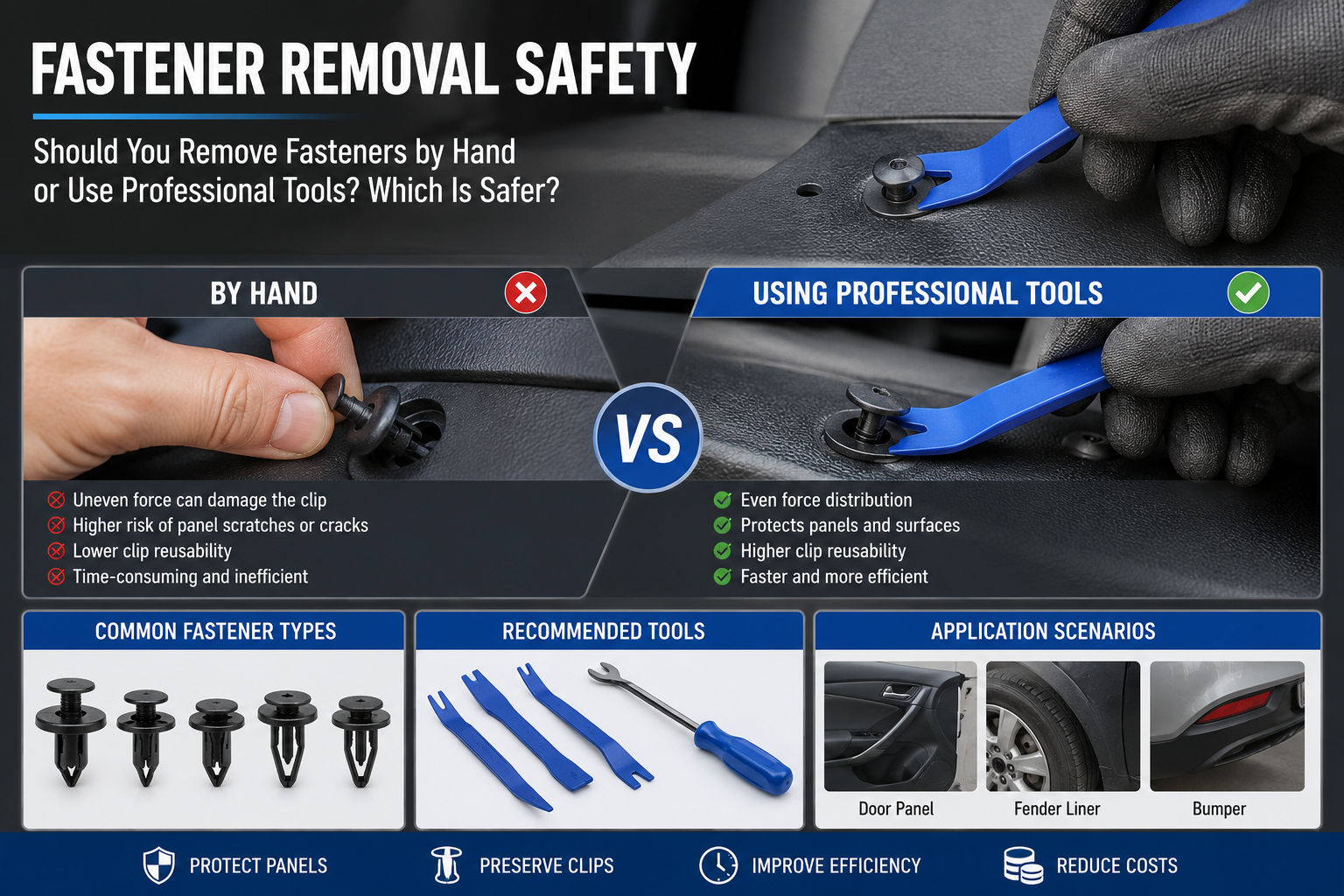
European Models (VW, BMW, Audi): Favor PA6 + GF reinforced clips for rigidity.
-
Asian Models (Toyota, Nissan, Honda): PP-based clips ensure elasticity and easy reinstallation.
-
American Models (Ford, Chevrolet): POM fasteners handle heavy vibration.
-
Universal Sets: Combine PP + PA6 variants to balance cost and versatility.
Before ordering, evaluate:
-
Expected yearly turnover by SKU.
-
Preferred packaging volume per carton.
-
Local climate exposure affecting polymer aging.
Channel Partners Common Questions
Q1. Can we request mixed-model kits under one container?
Yes—mixed SKUs consolidated with unified labeling.
Q2. Do clips come pre-sorted by vehicle brand?
Available upon request with barcode indexing.
Q3. What’s the lead time for repeat orders?
Standard 25 days; priority scheduling for partners with annual contracts.
Q4. Can we integrate with our ERP or POS?
API documentation available for seamless data exchange.
Summary: Partnership Is the New Infrastructure
In modern automotive distribution, parts alone no longer define value—process reliability does. Channel partners choose suppliers not for price, but for predictability, compliance, and shared visibility.
QEEPEI empowers this partnership with engineered plastic clips that perform, trace, and scale with every shipment.
To explore partnership structures or place a volume inquiry, visit QEEPEI Homepage or reach our export team via Contact Us.