
Corporate Supplier Toyota Clips: Driving Standardization and Reliability Across Global Manufacturing Lines
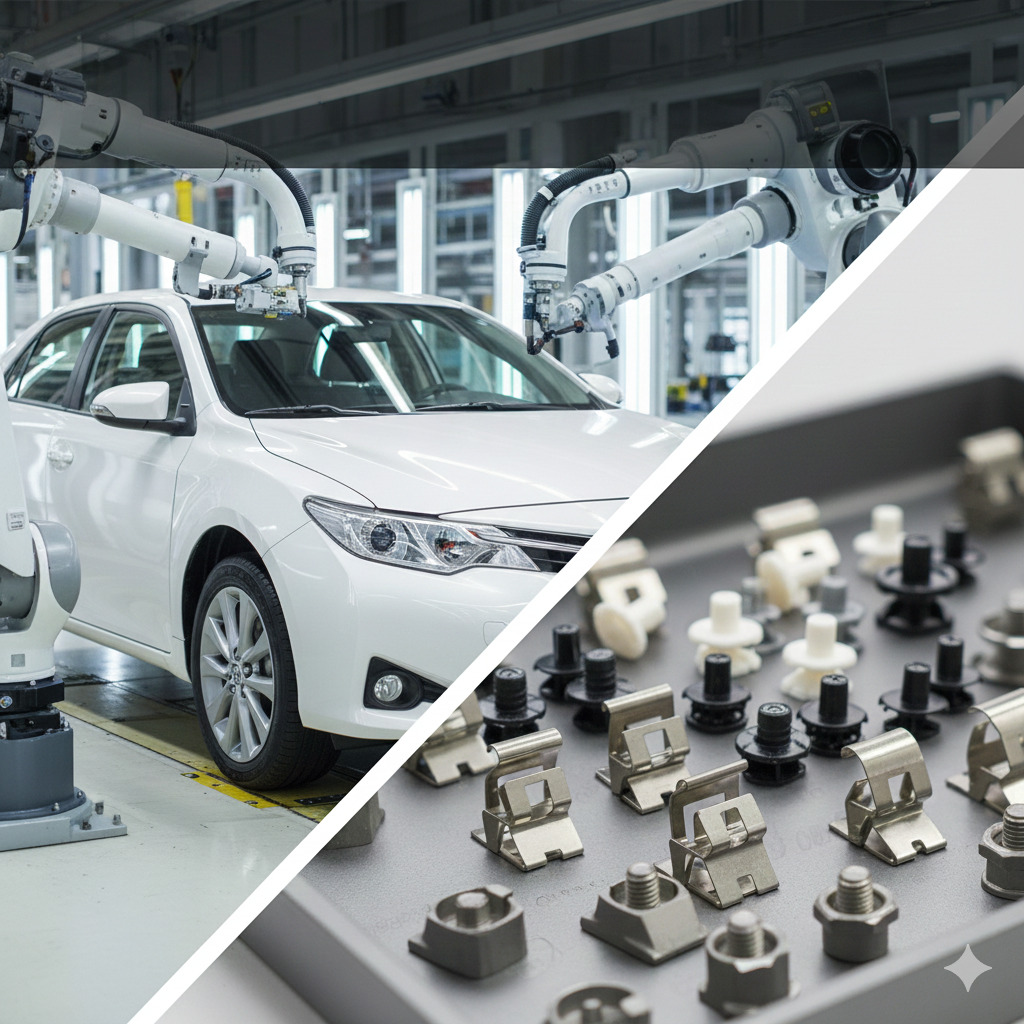
In large-scale vehicle production, fasteners define assembly rhythm and quality control efficiency. For brands like Toyota, precision fastening is a non-negotiable standard. A trusted corporate supplier Toyota clips manufacturer provides not only components, but a framework for repeatable performance—where every clip, seal, and retainer supports the company’s lean manufacturing philosophy.
QEEPEI integrates R&D, tooling, and digitalized logistics to ensure Toyota-compatible clips arrive tested, labeled, and production-ready—helping factories reduce downtime and rework costs.
Procurement Pain Points in Global Automotive Operations
Even the most advanced OEM networks face fastening-related inefficiencies:
-
Inconsistent fitment across regional suppliers.
-
Overlapping SKUs with limited interchangeability.
-
Unverified polymer batches leading to brittle clips.
-
Untracked batch codes causing warranty traceability gaps.
According to Automotive Manufacturing Insights 2025, 17 % of rework incidents in final assembly lines originate from fastening failures—often preventable through enterprise-grade supplier alignment.
Engineering Principles That Define Toyota-Compatible Clips
Toyota assembly standards emphasize modularity, low NVH (Noise, Vibration, Harshness), and maintenance efficiency.
Each clip integrates three mechanical objectives:
-
Dimensional Consistency – ± 0.03 mm tolerance for robotic installation.
-
Elastic Retention – Maintains grip strength beyond 50 000 vibration cycles.
-
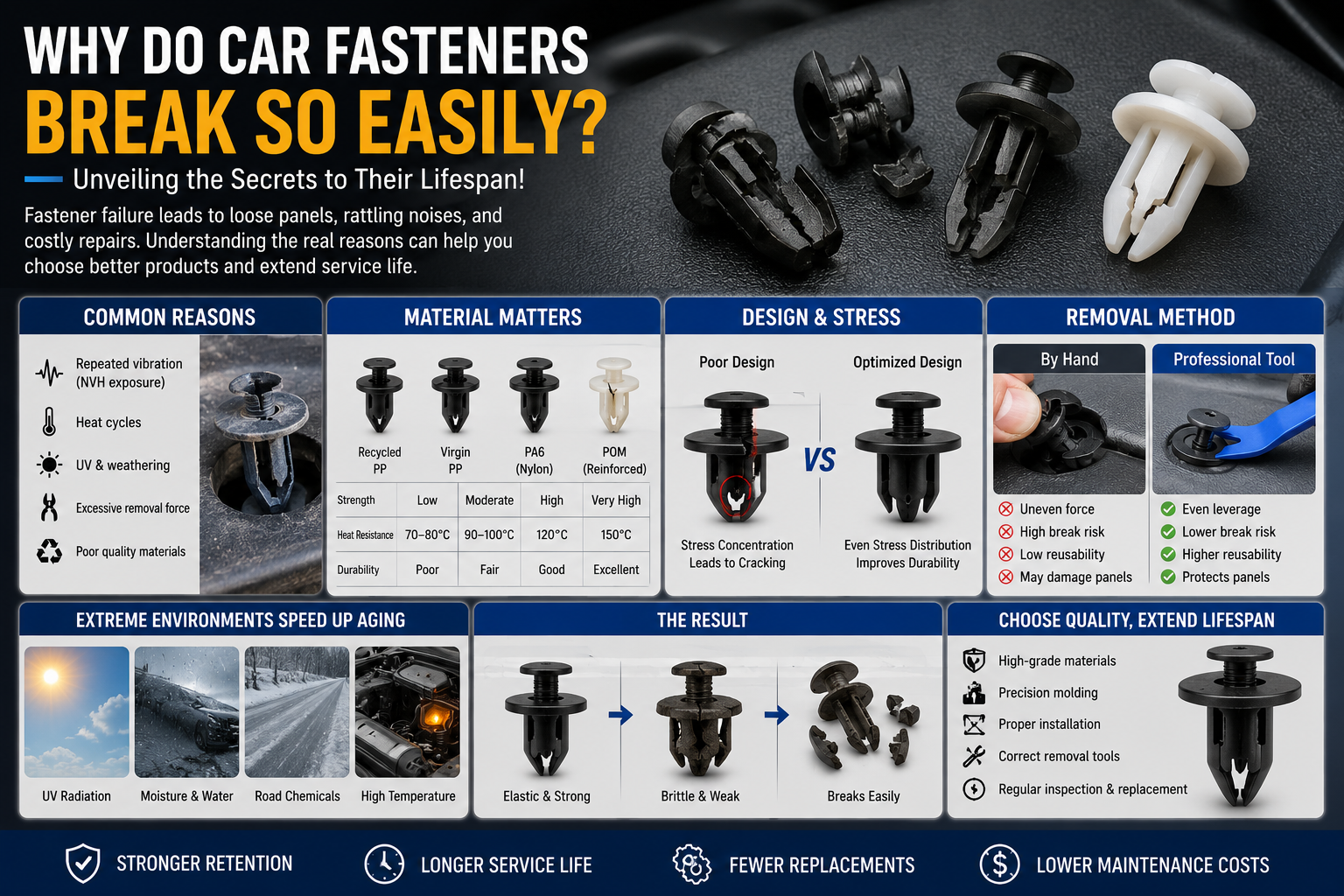
Material Uniformity – Nylon 66 + POM blends sustain integrity from – 40 °C to 125 °C.
These parameters guarantee repeatable insertion force and predictable removal torque—core to Toyota’s “right first time” production principle.
Traditional Vendors vs. Corporate-Level Supply Systems
| Criteria | Local Vendor | Corporate Supplier (QEEPEI) |
|---|---|---|
| Dimensional Tolerance | ± 0.1 mm | ± 0.03 mm |
| Batch Traceability | Manual | Digital QR system |
| Lead Time Control | Reactive | Forecast-driven scheduling |
| Global Certification | Limited | ISO 9001 / IATF 16949 |
| Cost Transparency | Variable | Contractual & auditable |
Centralized partnerships consolidate procurement, ensure consistency, and simplify cross-factory coordination under unified part codes.
How QEEPEI Enables Corporate-Scale Manufacturing Integration
-
Unified Tooling Network – Shared mold data across multiple plants for global interchangeability.
-
ERP Connectivity – Batch data synchronized with OEM inventory systems.
-
In-Process Sensor Monitoring – Real-time tensile and deformation analysis.
-
Customized Packaging Solutions – Pre-sorted kits for line-side installation.
-
Sustainability Controls – 100 % recyclable polymers aligned with Toyota’s environmental roadmap.
Through these measures, QEEPEI transforms fastening procurement into a fully traceable, data-driven supply process.
Strategic Benefits for OEM and Tier-1 Partners
-
Predictable Supply Chain – Harmonized standards minimize part substitution.
-
Reduced Operational Waste – Fewer assembly errors, faster takt time.
-
Design Support – Early engineering input improves fixture alignment.
-
Warranty Confidence – Digital traceability accelerates root-cause validation.
-
Cost Efficiency – Consolidated logistics lowers total landed cost.
A partnership with QEEPEI bridges procurement precision with Toyota’s production ethos—reliability through discipline.
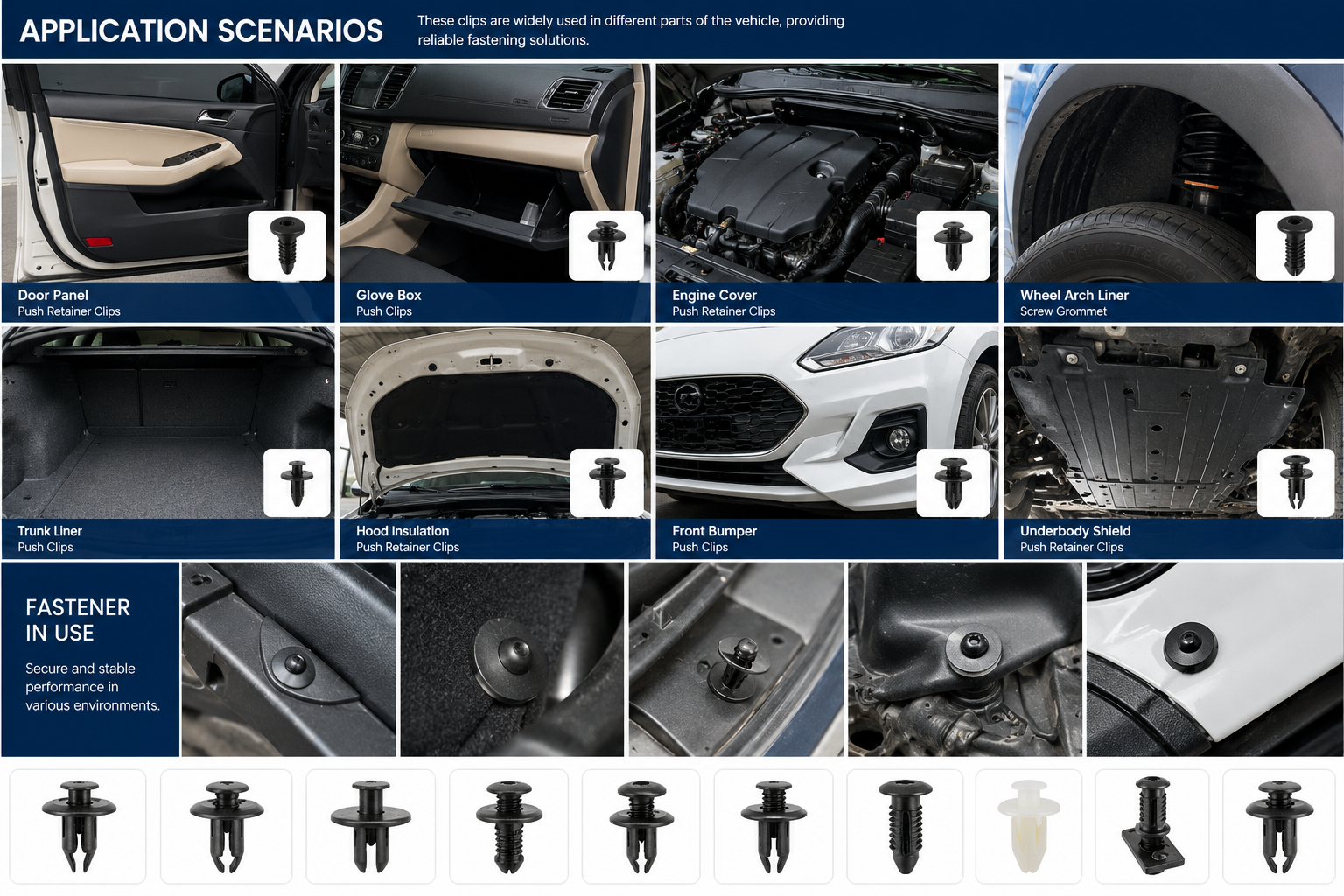
Application Scenarios Across Toyota Platforms
| Model Zone | Clip Type | Function | Result |
|---|---|---|---|
| Door Panels | Retainer clip | Anchors trims | Eliminates rattle noise |
| Bumper Assembly | Push-type clip | Holds fascia | Impact-resistant fit |
| Roof Liner | Seal strip clip | Secures insulation | NVH reduction > 15 % |
| Engine Bay | Heat-grade fastener | Fixes wiring harness | Long-term thermal stability |
Standardized designs across Corolla, Hilux, and RAV4 platforms ensure compatibility and reduced tooling complexity.
Selection Guidelines for Corporate Buyers
-
Confirm OEM Cross-Reference Codes – Match Toyota part ID and drawing no.
-
Assess Resin Specification – Nylon 66 + POM blend for endurance.
-
Inspect Retention Strength – Minimum > 110 N for structural integrity.
-
Verify Packaging Compliance – Anti-static and moisture-proof boxes.
-
Audit Traceability Protocols – QR and batch log integration required.
Adhering to these criteria ensures alignment with Toyota’s procurement governance.
FAQ
Q: Do QEEPEI clips meet Toyota’s OEM testing requirements?
A: Yes, all clips are validated through tensile, vibration, and salt-spray tests under IATF 16949 protocols.
Q: Can QEEPEI manage regional warehousing for Toyota suppliers?
A: Absolutely. We maintain bonded warehouses in Asia and Europe for JIT deliveries.
Q: Are private-label packaging and barcoding available?
A: Yes, enterprise customers can request customized branding and data labels compatible with OEM ERP systems.
Conclusion: A Partnership Built on Precision
Automotive efficiency depends on invisible precision. A certified corporate supplier Toyota clips partner like QEEPEI ensures every fastener contributes to structural consistency, noise reduction, and lean manufacturing performance. With unified tooling, material transparency, and predictive logistics, QEEPEI strengthens the foundation of every Toyota vehicle—from concept to customer delivery.
Learn more about enterprise supply integration via QEEPEI Homepage or reach our corporate procurement team through Contact Us.