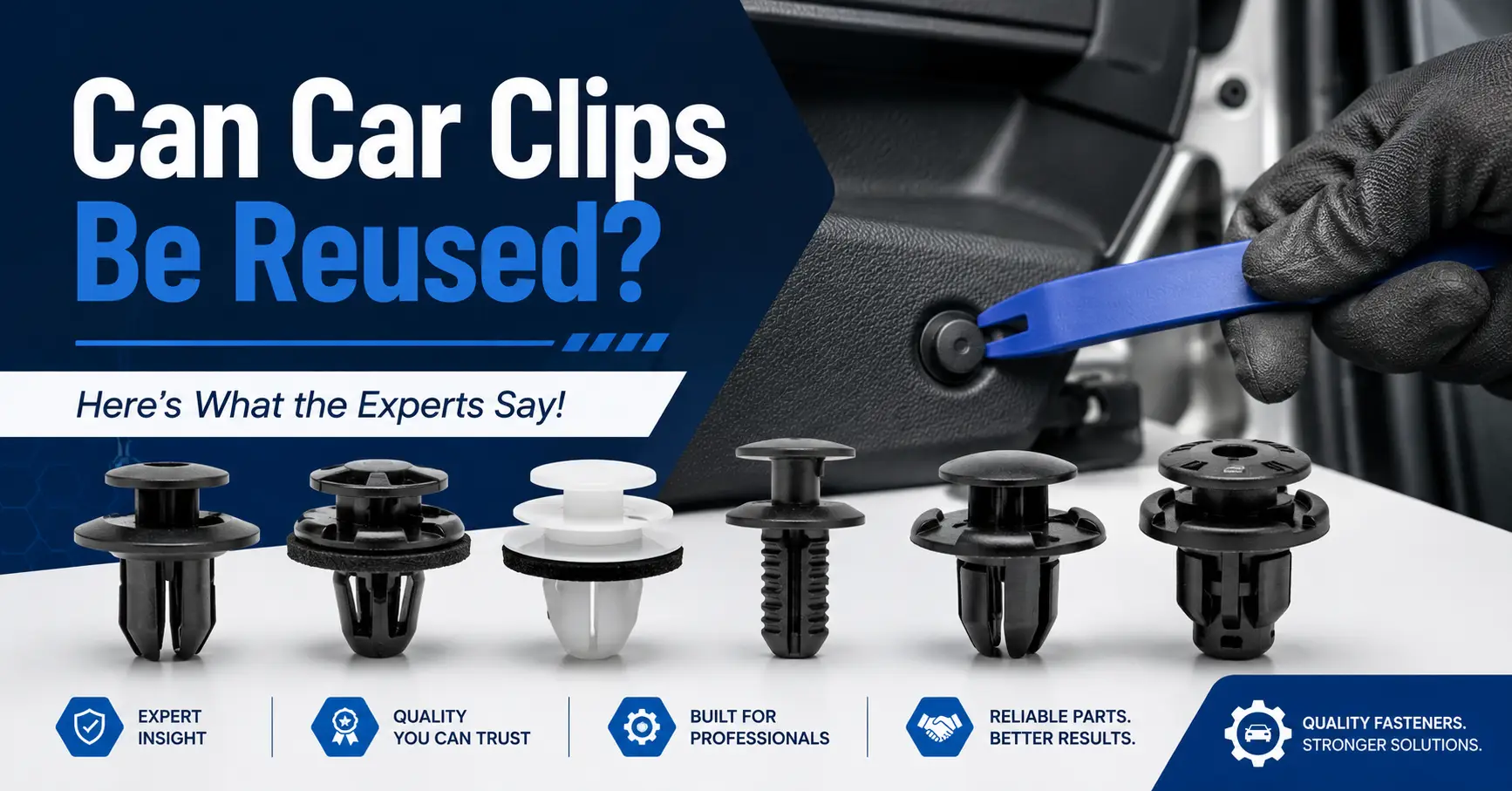

Cross-Border Supplier Clips for Cars: Consistent Fit, Compliant Supply, Global Confidence
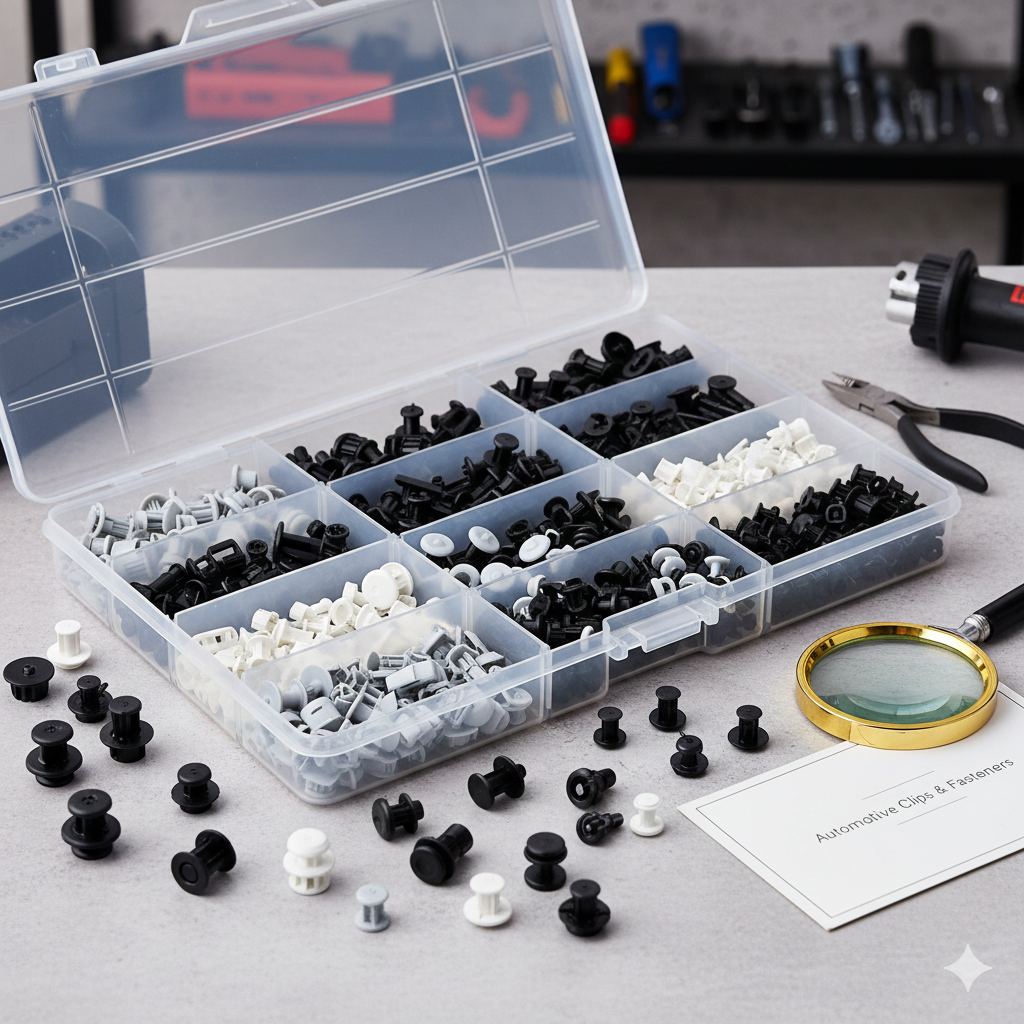
Every automotive clip that leaves a factory carries a silent responsibility: to hold panels together under vibration, heat, and time. For cross-border buyers, that responsibility expands — to customs clearance, moisture control, and market compatibility. QEEPEI’s export supply chain ensures every clip, from dashboard retainers to door fasteners, arrives with precision and purpose.
When Global Buyers Struggle with Unstable Clip Supply
Procurement teams across continents share similar frustrations: inconsistent material batches, shipment delays, and unverified compliance.
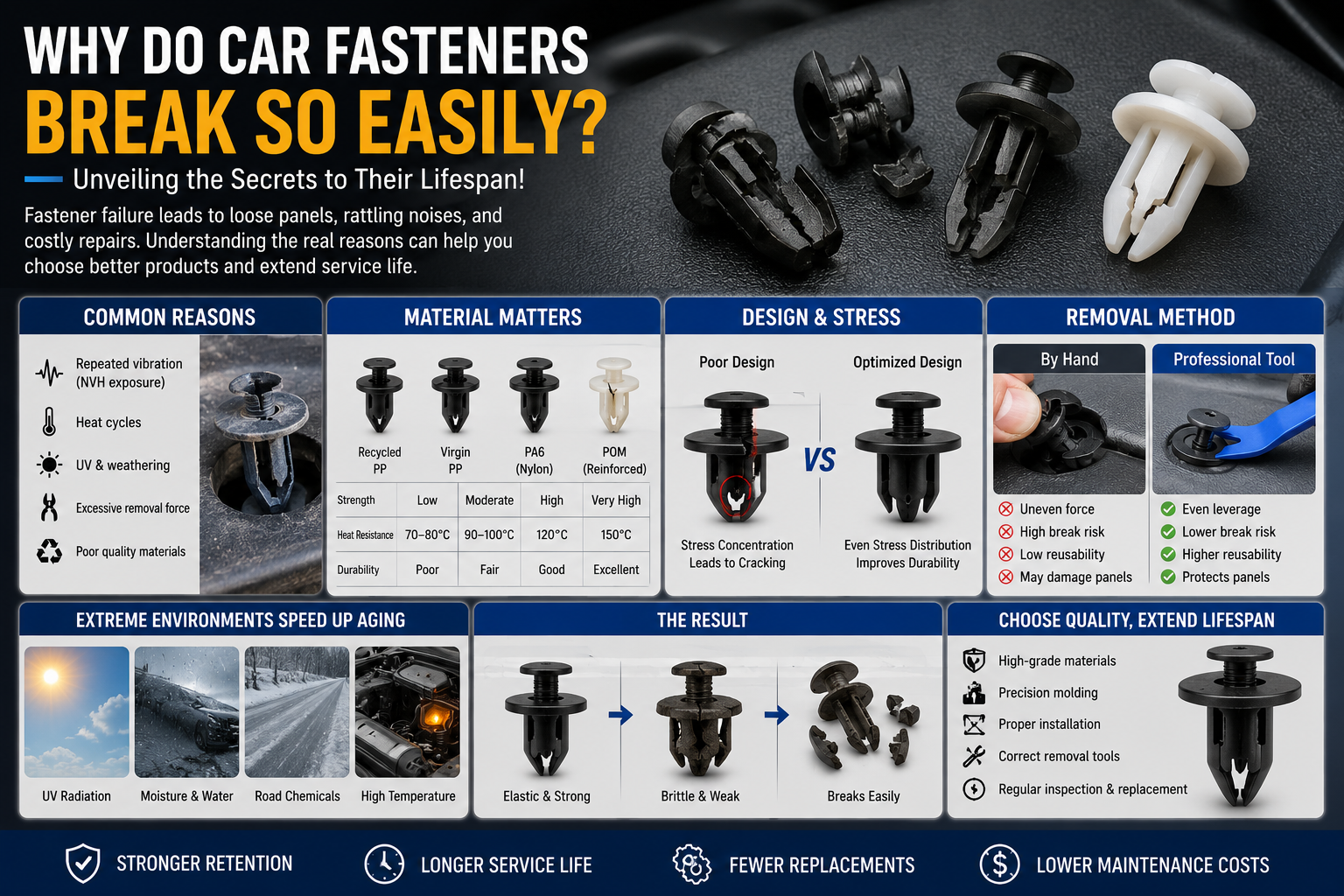
Inconsistent PP formulations cause brittle clips under extreme heat. Poor packaging absorbs humidity during maritime transport, warping shape and fit.
A report by ITLA (2024) found that 17% of delayed auto-parts shipments originate from packaging and certification errors, not manufacturing faults.
For car clip buyers managing multiple brands — Toyota, VW, Ford — unreliable sourcing means rework, lost time, and compromised assembly quality.
Why Export-Ready Automotive Clips Require Material Stability
QEEPEI designs every car clip for durability in transit as much as on-vehicle use. The brand’s formulation approach focuses on tensile strength, UV resistance, and chemical balance — ensuring clips remain dimensionally stable after 60+ days of container exposure.
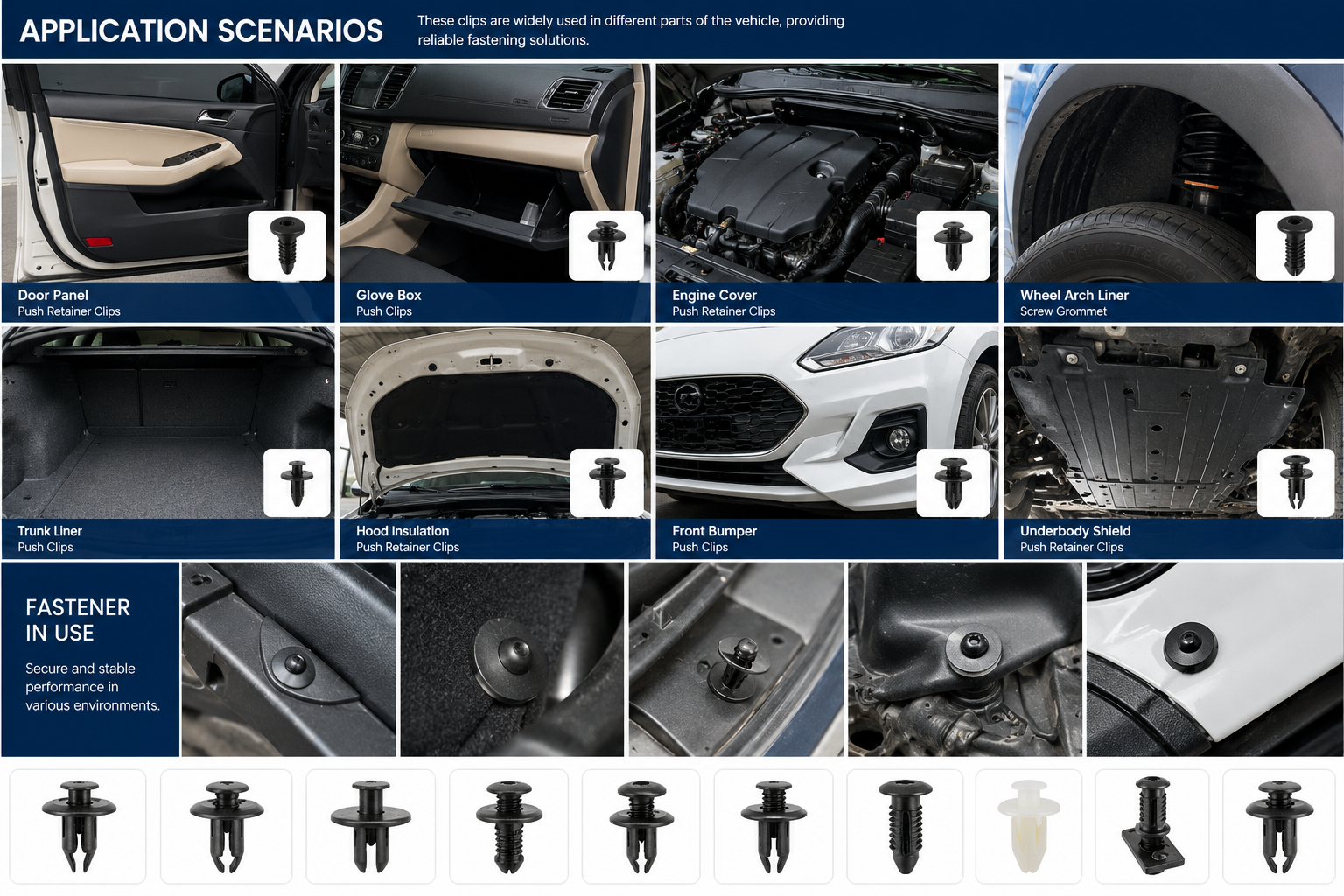
| Clip Category | Material Type | Application Area | Resistance Level |
|---|---|---|---|
| Door Panel Clip | PA6 + GF15 | Door interiors | Heat & vibration |
| Push-Type Rivet | PP | Bumper & interior trim | Elastic reusability |
| Fender Retainer | POM | Wheel housing | Moisture resistance |
| Plug-Type Clip | ABS | Engine area | Oil & temperature tolerance |
This focus on material science ensures clips maintain grip and flexibility, no matter the route — Ningbo to Hamburg, or Tianjin to São Paulo.
Comparing Traditional Local Vendors and Cross-Border Certified Supply
| Dimension | Local Vendor | QEEPEI Cross-Border Model |
|---|---|---|
| Compliance | Local factory standard | IATF 16949 + RoHS 2.0 certified |
| Packaging | Generic cartons | Moisture-sealed export cartons |
| Labeling | Single-language | EN / ES / FR / AR support |
| Traceability | Paper-based batch | Digital QR-linked documentation |
| Logistics | Uncoordinated | ERP-integrated multi-port shipping |
Cross-border supply isn’t just about exporting — it’s about maintaining technical consistency from mold to customs clearance.
How QEEPEI Builds a Predictable Export Workflow
-
Pre-Validated HS Codes ensure no customs rejections.
-
Vacuum-Sealed Packaging protects from salt air condensation.
-
Batch-Linked Certificates embed REACH / RoHS files within QR labels.
-
Real-Time Port Synchronization links order status and vessel tracking.
-
ERP Forecasting allows automatic batch scheduling for recurring buyers.
These measures transform what used to be a manual export routine into a traceable, automated, and compliant supply process.
Product-Level Advantages that Matter to Distributors
-
Consistent Polymer Quality: Virgin PP and PA6 sourced from BASF-certified suppliers.
-
Uniform Fitment: Mold deviation controlled under ±0.02 mm for all series.
-
Color Retention: Anti-fade UV stabilizers for long-term appearance consistency.
-
Flexible MOQ: From 2,000 to 50,000 units per type, depending on project size.
-
Custom Branding: Private labeling available for regional distributors.
The difference lies not in price, but in predictability — every batch behaves like the one before.
Where QEEPEI Clips Support Global Vehicle Markets
| Region | Major Brands Served | Buyer Focus | QEEPEI Support |
|---|---|---|---|
| Europe | VW / BMW / Peugeot | OEM precision | Material trace reports |
| Middle East | Toyota / Nissan | High-temp resistance | Multi-language labeling |
| Latin America | Hyundai / Ford | Price-performance balance | Flexible MOQ programs |
| Africa | Mixed aftermarket | Durability | Reinforced PA6 composite |
These configurations allow distributors to match regional model requirements with minimal adaptation — reducing rework time by up to 30%.
Selecting the Right Clip Mix for Cross-Border Orders
Choosing the correct clip assortment can mean the difference between profitability and backlog. QEEPEI’s technical advisors recommend:
-
PP series for universal interior parts.
-
PA6 + GF for reinforced exterior fitments.
-
POM for vibration-heavy wheel zones.
-
ABS for under-hood protection.
Additionally, customers should confirm:
-
Target vehicle mix (European, Japanese, or universal).
-
Destination climate (dry vs humid conditions).
-
Required labeling language for customs.
This proactive selection reduces mismatched SKUs and improves delivery efficiency.
Technical Questions from Cross-Border Buyers
Q: Can I mix multiple clip models in one shipment?
A: Yes — SKUs can be consolidated under one declaration with unified barcoding.
Q: Are the clips RoHS and REACH certified?
A: Each lot includes digital certificates linked by QR batch codes.
Q: How are clips protected during sea freight?
A: Packed in moisture-barrier cartons with silica desiccants.
Q: Do you support private label packaging?
A: Yes, branding and language customization available for distributors.
Reliable Supply Begins with Repeatable Quality
Cross-border business isn’t about moving boxes — it’s about moving consistent performance across continents.
Through strict compliance, robust packaging, and transparent documentation, QEEPEI ensures every car clip meets the same standard of durability and fitment, wherever it lands.
For distribution inquiries or partnership discussions, visit QEEPEI Homepage or reach the export team via Contact Us.