
Dealer Plastic Clips for Cars: Building Stronger Automotive Assembly Networks
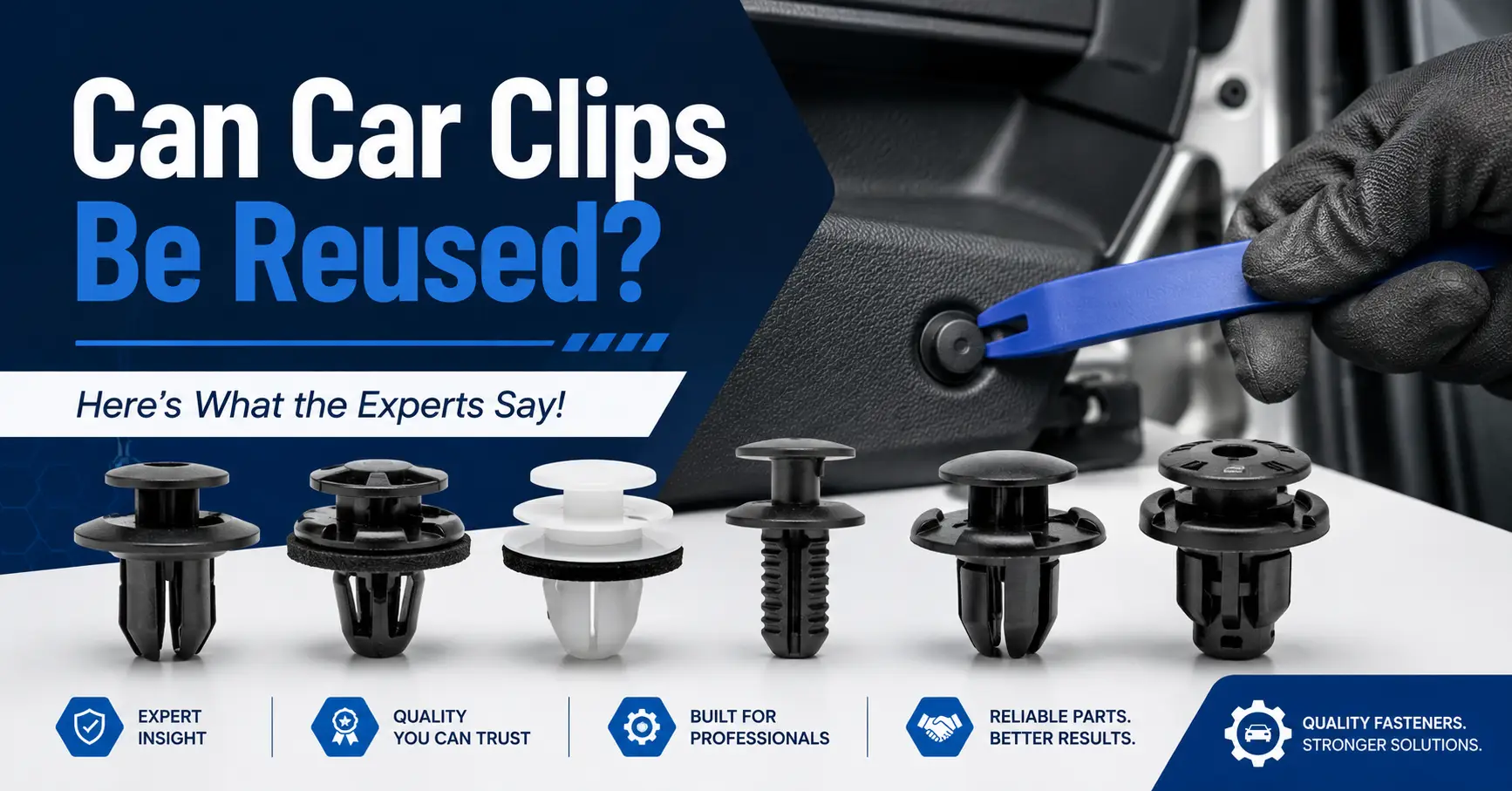
Behind every solid car interior or bumper alignment lies a simple but crucial part: the plastic clip. For automotive dealers, supplying the right fastening parts isn’t just a matter of stock—it’s about reliability, customer trust, and service efficiency. As an established dealer of plastic clips for cars, QEEPEI combines engineering precision with bulk supply capabilities to help dealers maintain consistent quality and streamline repair operations.
Why Dealers Struggle with Fastening Components
Many automotive dealers face recurring problems with plastic clips and fasteners that affect both service quality and customer satisfaction:
-
Compatibility issues between aftermarket clips and OEM designs.
-
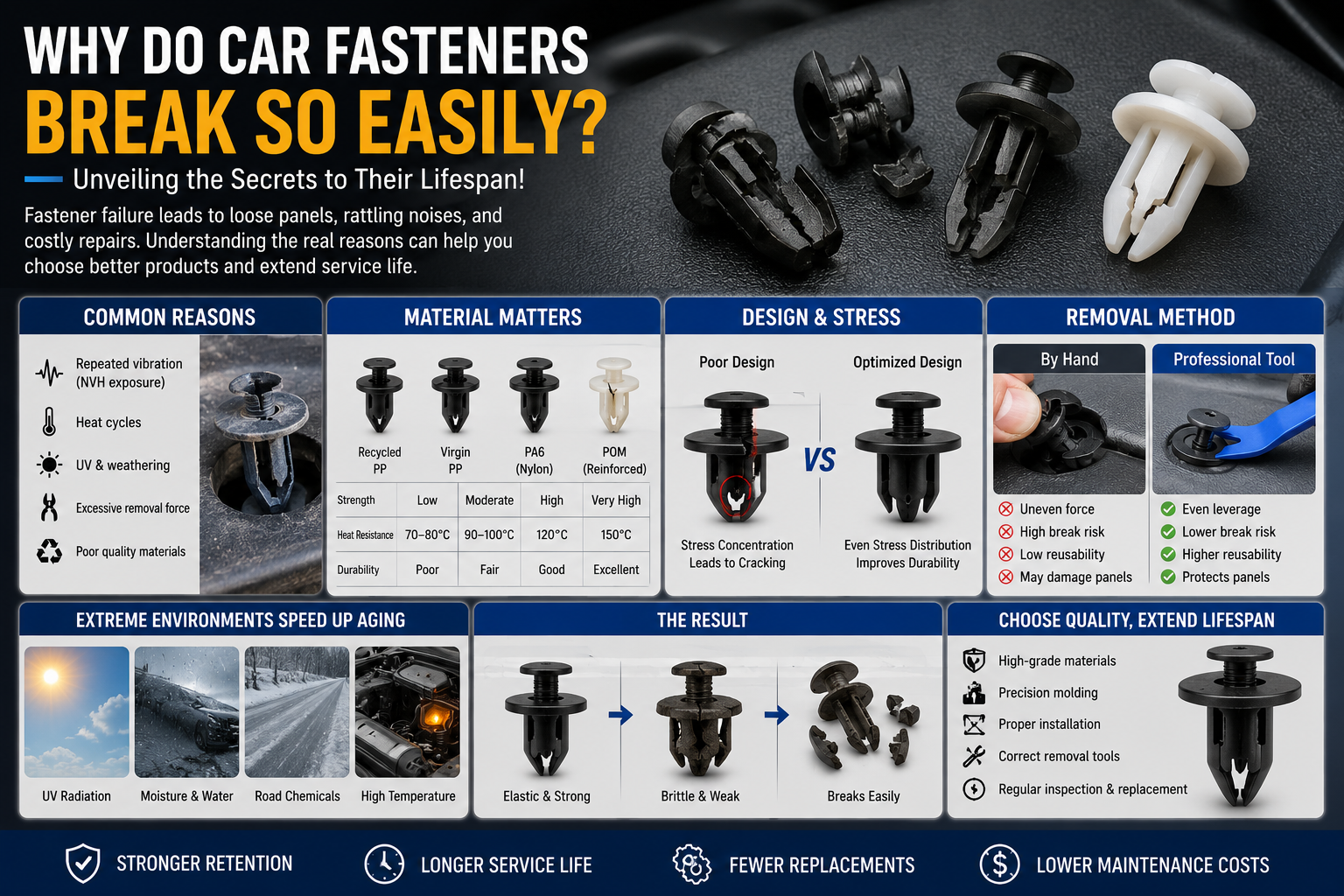
Fragile materials that crack during installation or in high-heat environments.
-
Limited availability of multi-brand clips, leading to repair delays.
-
Inconsistent packaging that complicates inventory management.
-
Lack of certification or dimensional standards, increasing replacement risk.
These challenges can damage a dealer’s reputation and reduce workshop productivity.
How Plastic Clips Maintain Structural Integrity
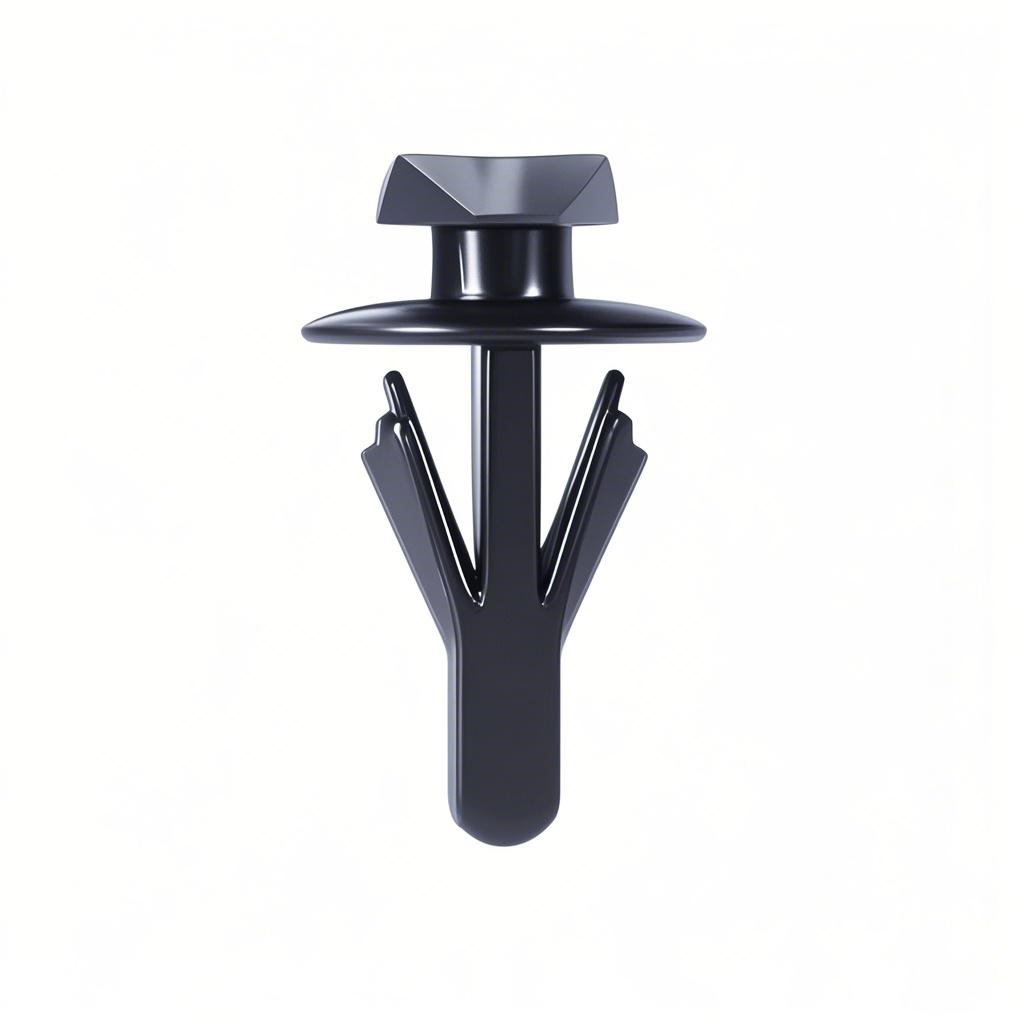
Plastic clips work through mechanical tension and flexible retention.
They are designed to hold, absorb, and release stress across multiple panels without damage.
| Clip Component | Function | Design Focus |
|---|---|---|
| Head / Flange | Allows tool-free installation | Smooth curvature for quick push-fit |
| Anchor Legs | Lock panels under compression | Elastic tension for anti-vibration performance |
| Retainer Body | Holds consistent pressure | Prevents rattling and panel distortion |
| Material Matrix | Provides flexibility and heat stability | Ensures long-term retention under variable climates |
A well-designed clip balances strength and elasticity—critical for both assembly and maintenance.
OEM-Grade vs. Generic Plastic Clips
| Parameter | OEM-Grade Plastic Clip | Generic Plastic Clip |
|---|---|---|
| Dimensional Accuracy | ±0.03 mm | ±0.10 mm |
| Material Strength | Nylon / POM | Mixed PP or recycled plastic |
| Temperature Resistance | –40°C to +130°C | –10°C to +80°C |
| Elastic Recovery | ≥90% after 1000 cycles | ≤70% after 500 cycles |
| Fitment Compatibility | Multi-model verified | Limited testing |
QEEPEI focuses exclusively on OEM-calibrated clips, ensuring consistent installation performance and zero rework during servicing.
QEEPEI’s Technical Solution for Automotive Dealers
To ensure precision and reliability, QEEPEI implements strict manufacturing and logistics processes:
-
Injection Molding Accuracy: CNC molds with real-time temperature control maintain geometry stability.
-
Material Verification: Nylon 6/66 and POM polymers tested for tensile strength and heat aging.
-
Batch Traceability: Each shipment labeled with part code, resin batch, and production date.
-
Pre-Shipment Testing: Vibration, UV, and tension tests simulate real vehicle conditions.
-
Dealer Packaging Options: Multi-size kits with clear labeling for workshop efficiency.
This ensures every batch meets global standards and supports dealership-level operations without costly delays.
Core Advantages of QEEPEI Plastic Clips
-
OEM-Level Compatibility: Fits popular models including Toyota, Nissan, Ford, Honda, and Volkswagen.
-
Durability Under Heat and Pressure: Retains elasticity even in hot engine bays or cold regions.
-
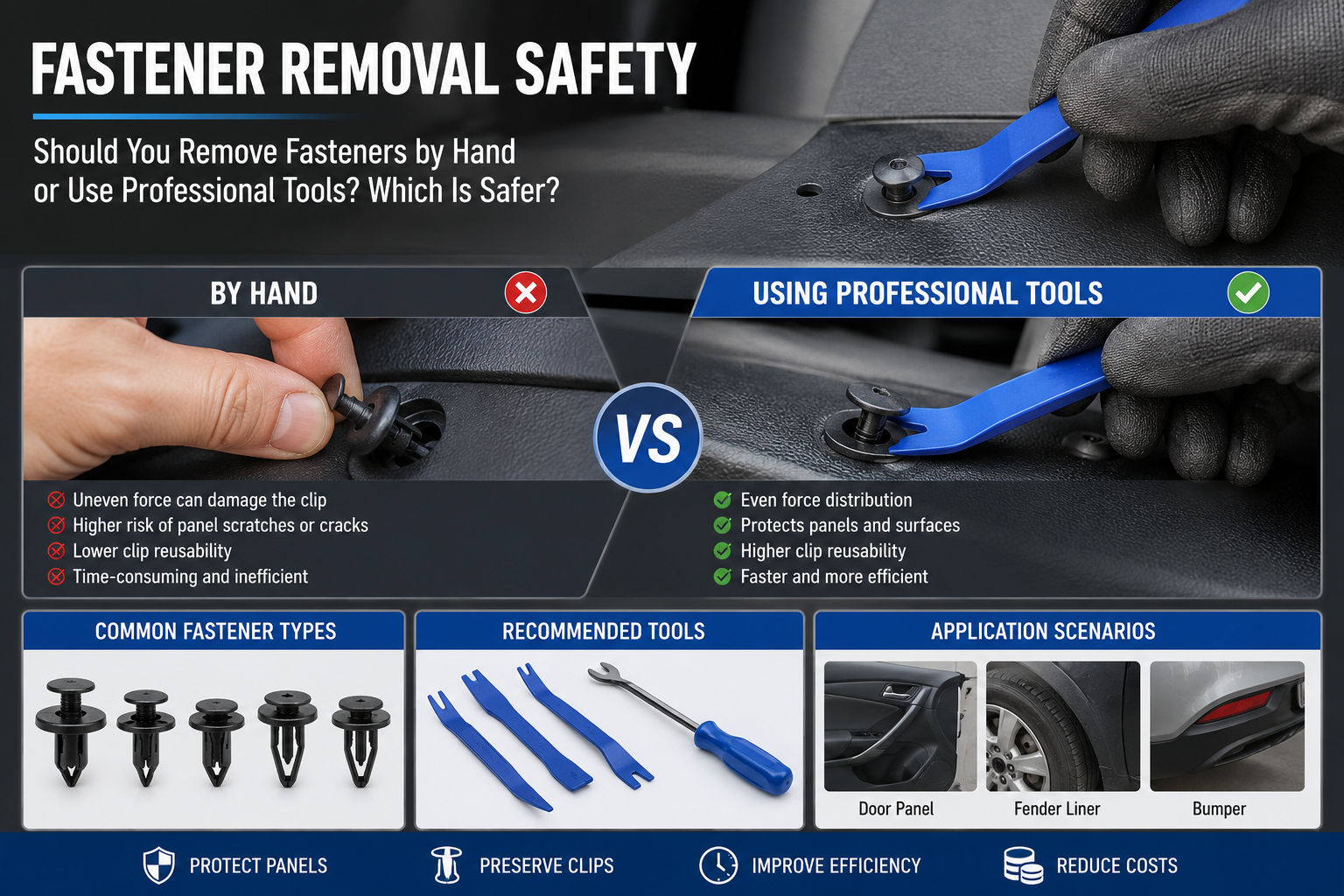
Quick Assembly Design: Push-fit structure reduces labor time and tool dependency.
-
Noise-Free Performance: Prevents panel vibration and squeaking.
-
Dealer-Oriented Logistics: Ready-to-ship kits with high stock availability.
These strengths help dealerships reduce after-sale returns and improve workshop throughput.
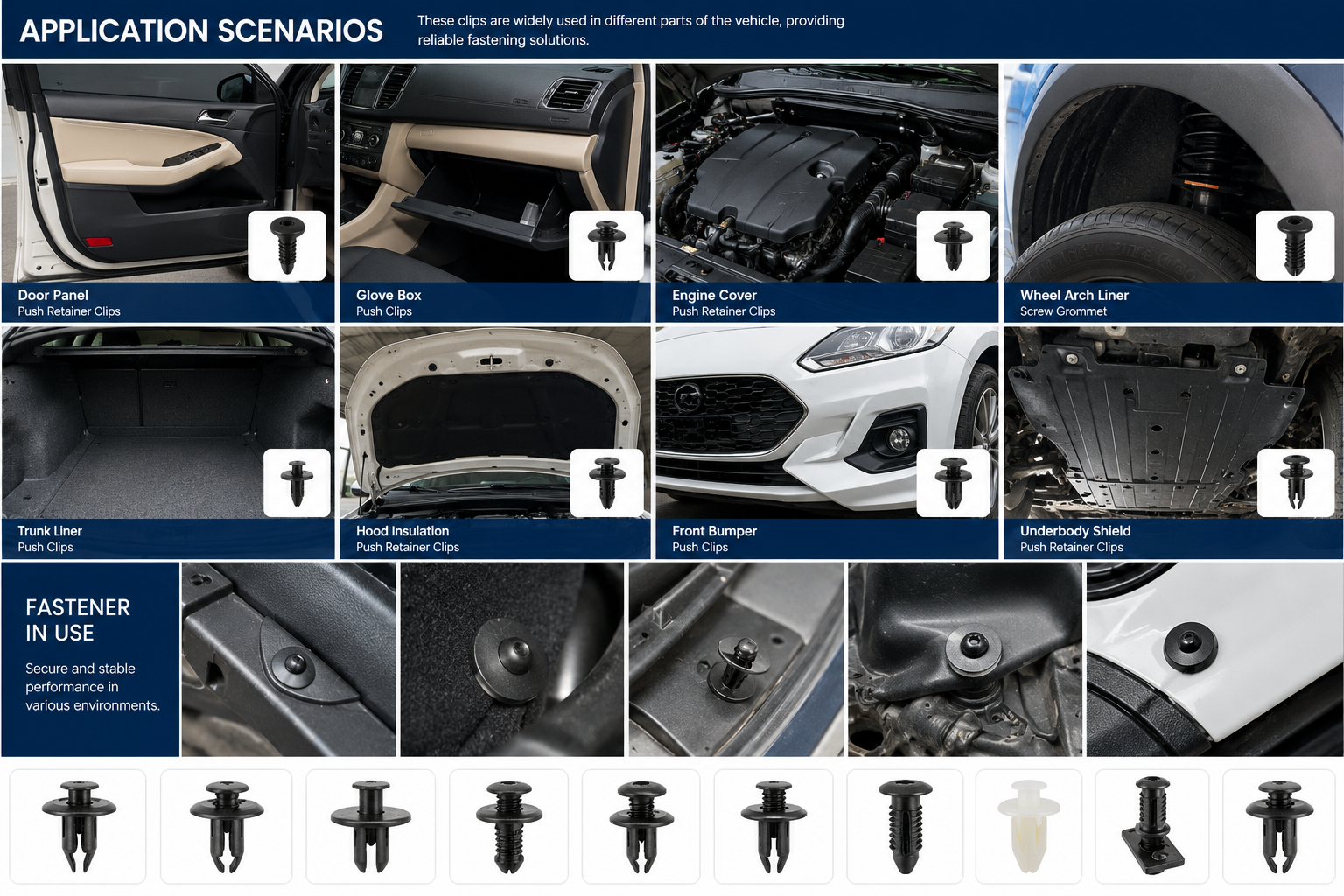
Where These Clips Make a Difference
| Application | Area of Vehicle | Required Property | QEEPEI Material Solution |
|---|---|---|---|
| Door Panels | Interior trims | Flexibility & reusability | POM clips |
| Front Bumper | Exterior frame | High grip strength | PA6 clips |
| Wheel Arch | Fender connection | Shock & debris resistance | PA66 + GF |
| Dashboard Assembly | Interior console | Anti-vibration fit | PP clips |
| Car Roof Linings | Cabin ceiling | Lightweight support | PP or POM |
From routine servicing to collision repair, these clips provide stable fixation with minimal damage risk.
Helping Dealers Choose the Right Clip
-
Identify Vehicle Segment:
-
Passenger cars → POM or PP clips for light interiors.
-
SUVs / commercial vehicles → Reinforced nylon clips for high stress.
-
-
Match the Environment:
-
Hot or humid regions → UV-stabilized PA6 or PA66.
-
Cold climates → Flexible POM with high impact resistance.
-
-
Stock by Frequency:
-
Keep fast-moving sizes (door, trim, bumper) in bulk inventory.
-
-
Prioritize Certification:
-
ISO9001 and RoHS compliance guarantees safer imports and resale.
-
Frequently Asked Questions
Q1: Can QEEPEI supply multi-brand clip kits for dealer workshops?
Yes. We provide labeled kits covering 10–20 common vehicle models per region.
Q2: What’s the MOQ for dealer orders?
MOQ starts from 5,000 pcs per model or mixed kit orders for first-time buyers.
Q3: Are these clips suitable for both OEM and aftermarket repairs?
Absolutely. QEEPEI supplies parts for both production lines and service centers.
Q4: How do you ensure color consistency across batches?
All materials undergo color matching and visual inspection under standard lighting conditions.
Reliability Starts with Every Clip
Dealerships depend on fasteners that last as long as the vehicles they support. QEEPEI’s plastic clips for cars offer OEM precision, consistent quality, and proven durability—helping automotive dealers simplify maintenance, strengthen brand reputation, and deliver superior after-sales service.
Explore more fastener solutions on our Homepage or reach out through Contact Us for tailored dealer cooperation.