
OEM Auto Fasteners: Precision Components That Hold the Automotive World Together
Every automobile depends on more than horsepower—it depends on connection. The OEM auto fasteners that join body panels, interiors, and subframes determine a vehicle’s stability, noise reduction, and longevity. In large-scale automotive manufacturing, consistency is everything: a single defect in a fastener can stop an entire assembly line.
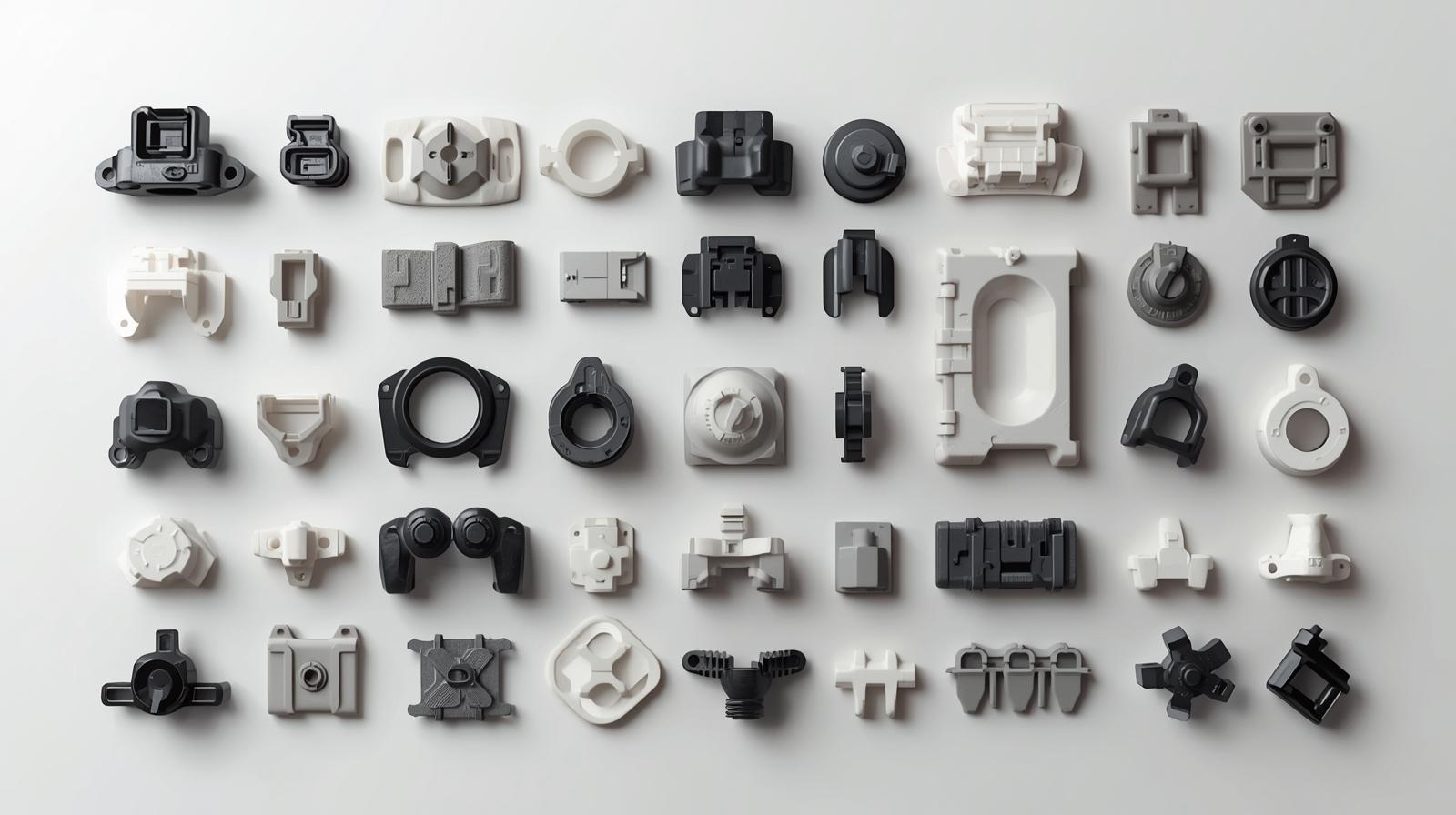
QEEPEI bridges engineering rigor and production discipline to deliver fastening systems that match OEM precision standards. From polymer retainer clips to hybrid metal-plastic joints, each fastener is designed to achieve flawless mechanical harmony.
Industry Pain Points in Automotive Fastening
Even the world’s best manufacturing lines face fastening challenges:
-
Uneven torque or retention force across suppliers.
-
Dimensional deviation causing poor alignment or rattling.
-
Non-certified materials compromising safety compliance.
-
Inconsistent batch performance disrupting robotic assembly.
These issues cascade into costly downtime, recalls, and customer dissatisfaction—turning a small clip into a million-dollar liability.
The Science and Logic Behind OEM Fastening Systems
High-performance fasteners combine precision geometry and material optimization.
-
Load Distribution: Ensures stress is spread evenly across panels.
-
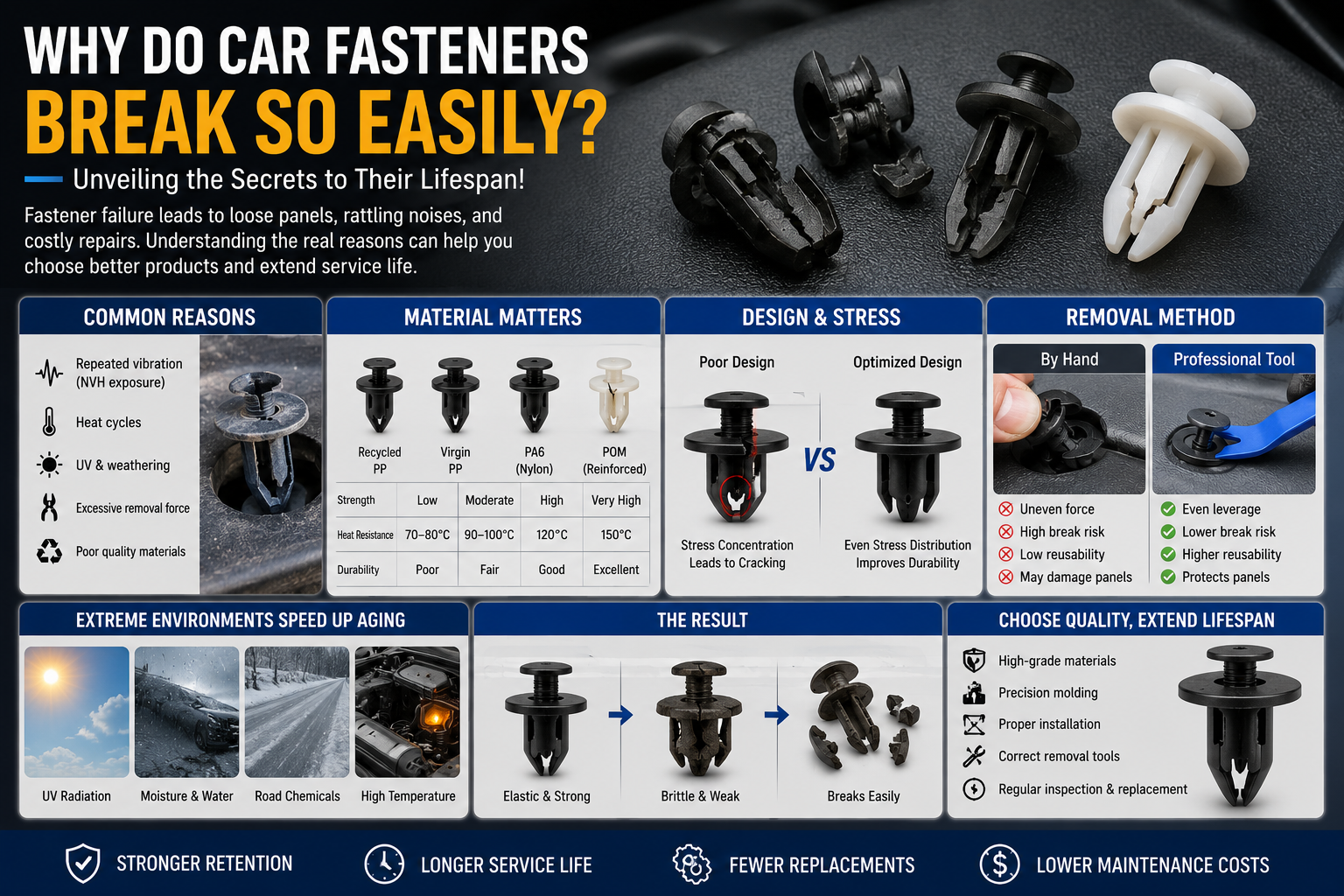
Elastic Modulus Design: Allows clips to absorb vibration without deformation.
-
Thermal Stability: Resists expansion and contraction through –40°C to +130°C.
-
Chemical Resistance: Withstands fuel, oil, and cleaning agents over long service life.
This fusion of mechanical engineering and polymer chemistry ensures repeatable performance in every fastening point of a car.
General Suppliers vs. OEM-Certified Manufacturers
| Criteria | Standard Supplier | OEM Auto Fasteners (QEEPEI) |
|---|---|---|
| Material Grade | Standard PA or ABS | Certified PA66 + GF blends |
| Mold Tolerance | ±0.1 mm | ±0.03 mm digital CNC tolerance |
| Quality Assurance | Manual inspection | Automated 3D optical & tensile testing |
| Certification | ISO 9001 | IATF 16949 / PPAP approved |
| Traceability | None | ERP-integrated QR batch tracking |
The difference is precision at every stage—from tooling to logistics.
QEEPEI’s OEM-Grade Production Framework
QEEPEI operates as an integrated engineering hub for OEM fastening solutions:
-
Advanced Tooling Design: CAD/CAM mold simulation prevents material warping.
-
Automated Molding Systems: Servo-driven injection lines ensure part repeatability.
-
Smart Inspection: Optical scanners measure dimensional variance to 0.02 mm.
-
Predictive Quality Analytics: AI-based models forecast resin shrinkage and cavity wear.
-
Global Distribution: Regional warehouses enable JIT delivery for OEM plants.
This framework eliminates batch inconsistency and enables stable long-term partnerships with automotive manufacturers.
Key Advantages for OEM Manufacturers
-
Zero-Defect Production: Achieved through full-cycle digital QC and traceability.
-
Seamless Assembly Integration: Designed for robotic insertion systems.
-
Reduced Warranty Costs: High tolerance prevents vibration-induced failures.
-
Sustainability Assurance: 100% recyclable resins meet ESG compliance.
-
Co-Development Flexibility: Engineering collaboration from design validation to tooling.
In essence, QEEPEI enables OEMs to achieve leaner, smarter, and safer vehicle assembly lines.
Applications Across Automotive Systems
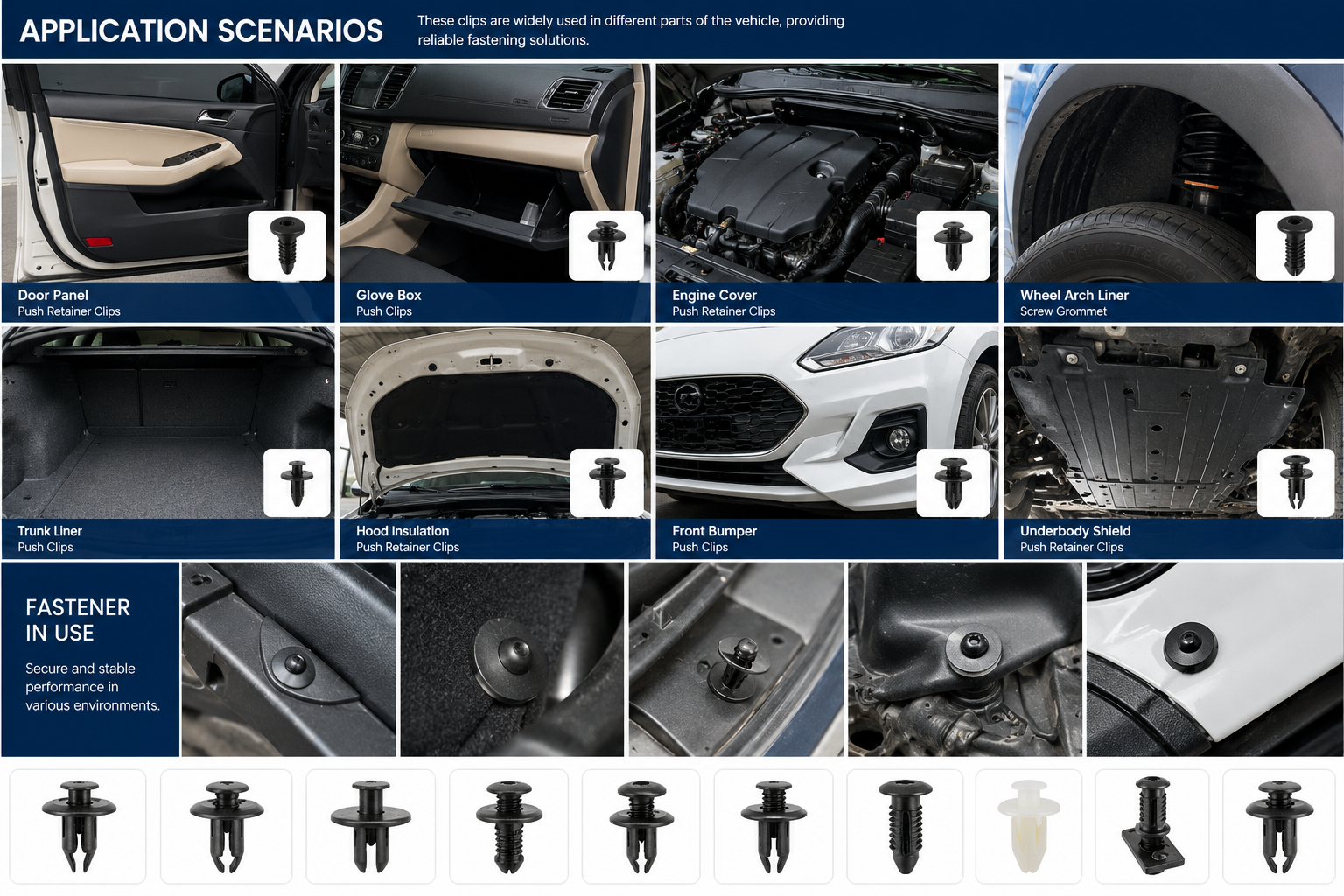
| Vehicle Zone | Fastener Type | Primary Role | Material Composition |
|---|---|---|---|
| Bumper & Fender | Retainer clip | Structural stability | PA66 + GF 10% |
| Door Panel | Trim clip | Noise isolation & alignment | POM reinforced |
| Engine Bay | Push rivet | Thermal endurance | PA66 heat stabilized |
| Dashboard | Mounting clip | Aesthetic alignment | Modified nylon |
| Underbody | Lock rivet | Vibration absorption | PA66 + rubber composite |
Every assembly point reflects the integrity of an OEM-compliant fastener system.
Guidelines for Engineering and Procurement Teams
-
Define Mechanical Requirements: Load, torque, and retention strength.
-
Assess Environmental Exposure: Heat, humidity, and chemical contact.
-
Match Material to Function: Nylon for flexibility, POM for rigidity.
-
Confirm Supplier Certification: IATF 16949 as a minimum standard.
-
Prioritize Global Logistics Support: Consistent replenishment across continents.
Precision in selection prevents future inefficiency—each fastener is a design decision, not just a part number.
FAQ
Q: Can QEEPEI co-develop fasteners with automotive R&D teams?
A: Yes. Our engineers collaborate on design validation and pre-production mold optimization for OEM platforms.
Q: How does QEEPEI guarantee inter-batch consistency?
A: Each production lot undergoes digital inspection with automated torque and tensile calibration.
Q: What is the lead time for OEM fastener supply?
A: Standard delivery within 4–6 weeks, supported by regional JIT inventory.
Connecting Components, Connecting Confidence
The OEM auto fasteners industry may be invisible to consumers, but its impact echoes through every drive. By uniting certified materials, advanced tooling, and digital quality control, QEEPEI delivers fastening systems that safeguard reliability from factory floor to open road.
For OEM partnerships and custom engineering consultation, visit QEEPEI Homepage or contact us directly via Contact Us.