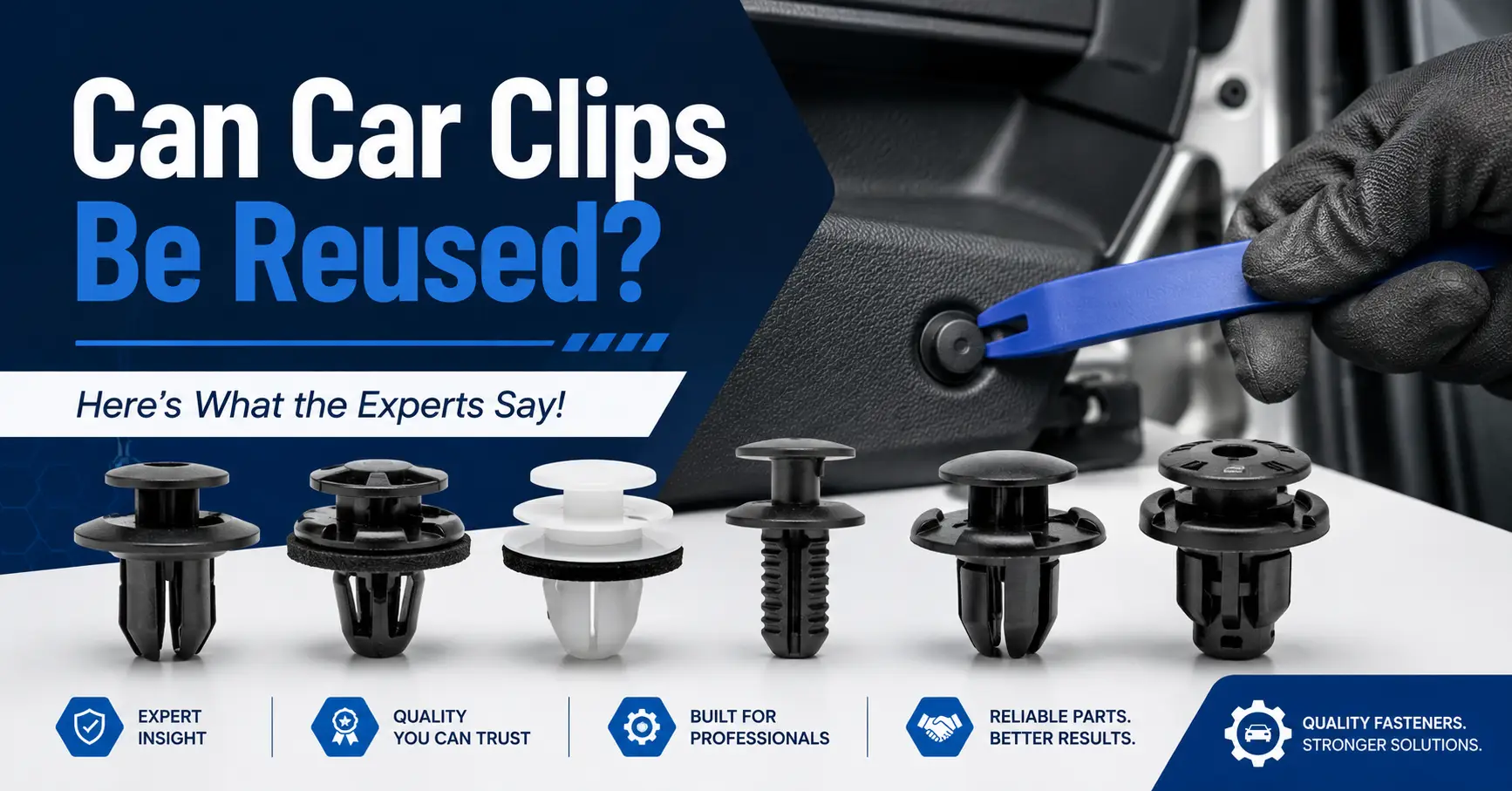

Producer of Car Bumper Clips: Strength, Precision, and Seamless Assembly
Every car bumper is more than just an exterior shell—it’s a critical safety and aerodynamic component. Beneath its smooth finish lies a network of car bumper clips that hold panels, absorb stress, and ensure structural stability. As a trusted producer of car bumper clips, QEEPEI delivers fastening solutions that support rapid assembly, long-term reliability, and sleek vehicle design.
Where Structural Failures Begin: Hidden Weaknesses in Bumper Assembly
Inconsistent fastening quality can compromise more than aesthetics—it directly affects vehicle safety and performance.
-
Panel misalignment disrupts airflow and increases drag.
-
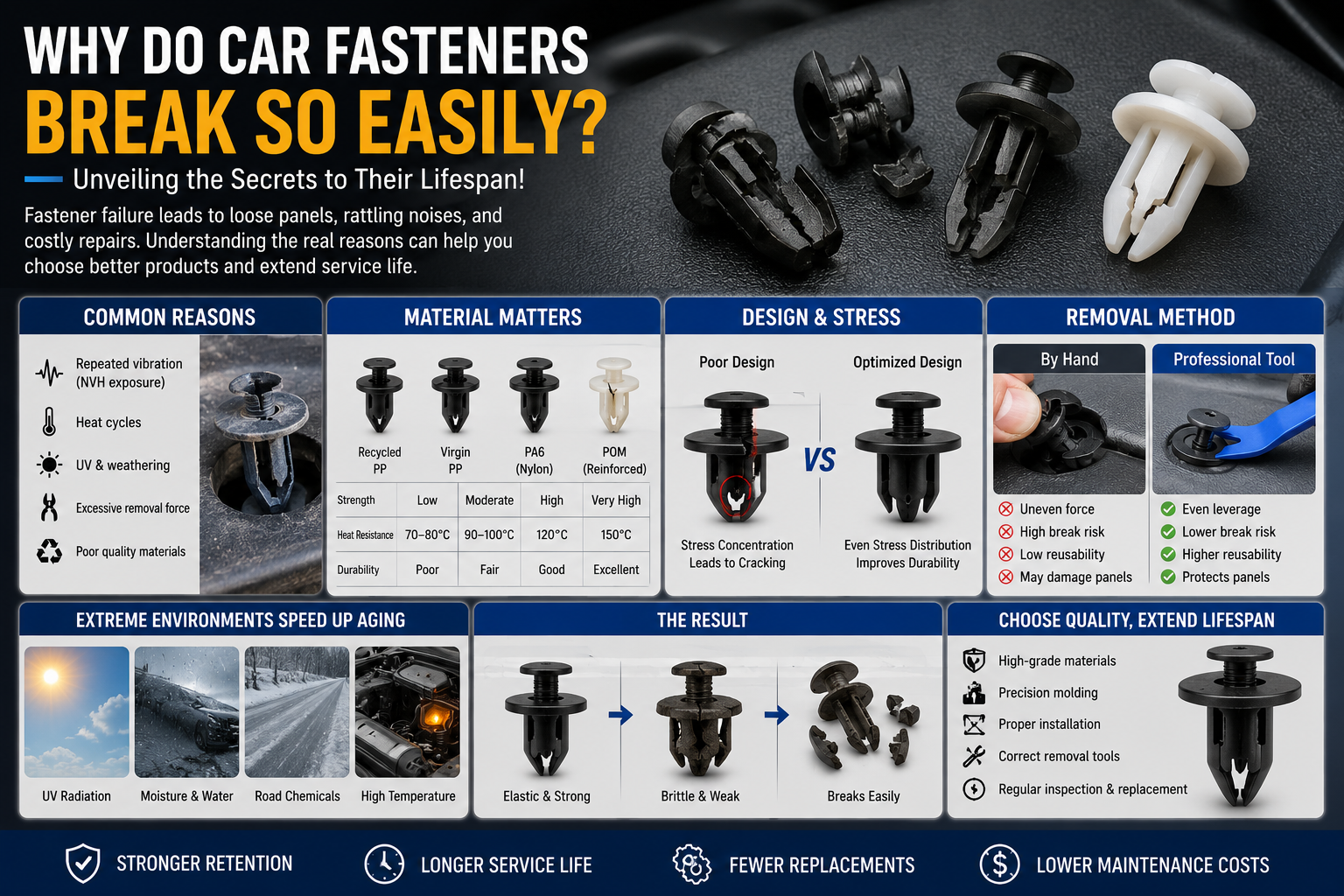
Loose or brittle clips lead to vibration, noise, and structural gaps.
-
Overtightened fittings damage paint and create tension cracks.
-
Non-reusable clips raise maintenance costs for workshops.
These are not cosmetic issues—they impact manufacturing efficiency, aerodynamic stability, and customer perception.
How Bumper Clips Distribute Stress
Car bumper clips are engineered to manage mechanical stress, temperature expansion, and impact load simultaneously.
| Structural Function | Design Principle | Typical Specification |
|---|---|---|
| Panel Locking | Multi-tooth retention geometry | 25–35 N pull strength |
| Vibration Damping | Flexible polymer arms | ±0.02 mm tolerance |
| Thermal Adaptation | Elastic recovery under 100°C | 90% shape retention |
| Impact Resistance | Multi-directional force dispersion | Survives 20,000 vibration cycles |
Through controlled elasticity, these clips prevent surface distortion and maintain alignment across the vehicle body.
From Metal to High-Performance Polymers
| Material | Feature | Use Case |
|---|---|---|
| PA6 + GF (Glass Fiber Reinforced Nylon) | High strength, heat resistance | Bumper frames, support brackets |
| POM (Acetal) | Smooth surface, anti-friction | Exterior trim mounting |
| PP (Polypropylene) | Flexible and cost-effective | Inner bumper retainers |
| ABS | Aesthetic coating compatibility | Visible bumper areas |
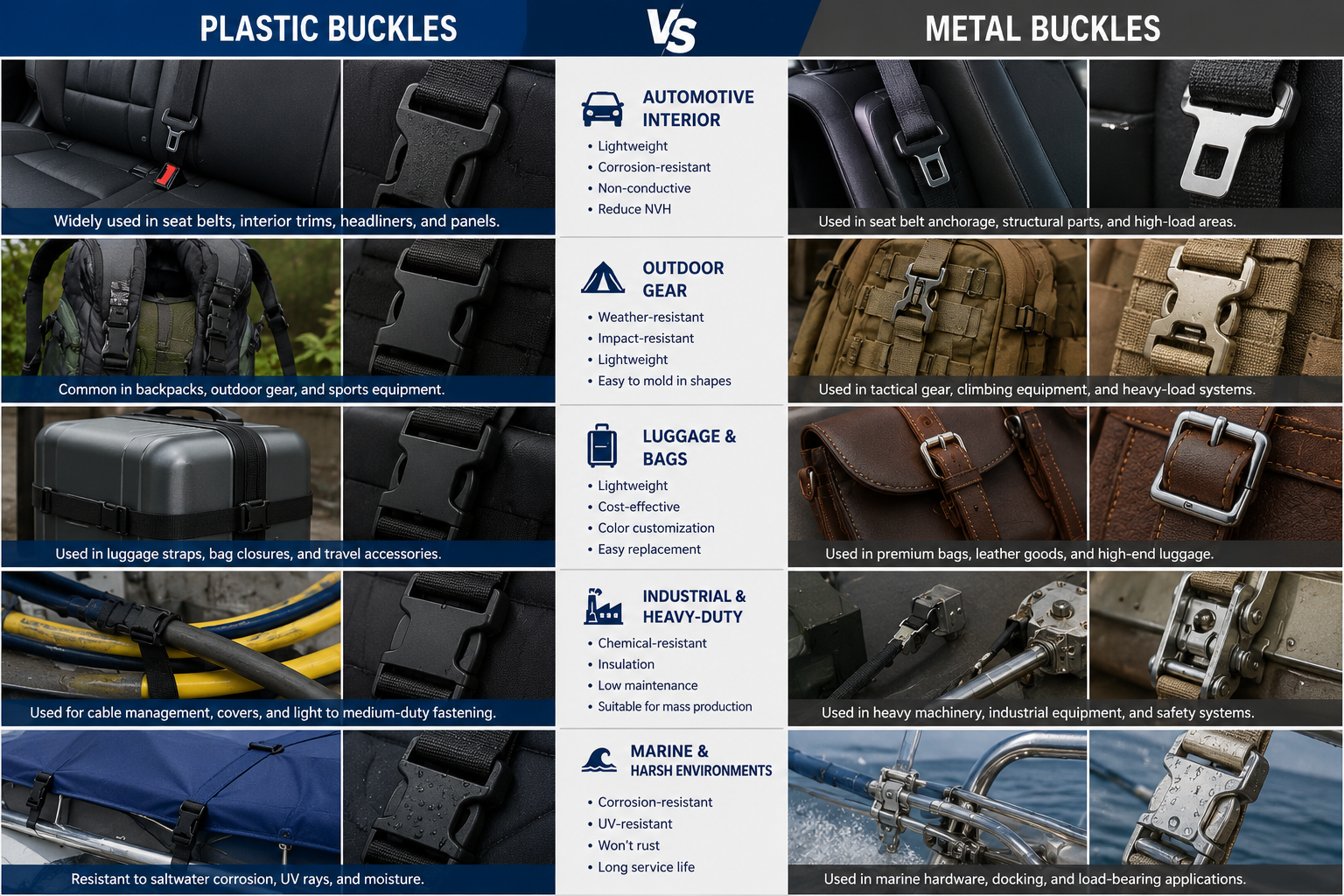
Modern plastic compounds outperform metal alternatives in corrosion resistance, weight reduction, and production cost—making them ideal for fast-paced OEM assembly lines.
QEEPEI’s Manufacturing Approach: From Mold Design to Durability
At QEEPEI, quality starts with engineering discipline:
-
Precision injection molding with multi-cavity tooling for consistency.
-
3D mold simulation ensuring uniform stress distribution.
-
Automated inspection for each production batch using laser measurement.
-
Salt spray and tensile testing replicating real-world stress conditions.
Each clip is designed not only to hold but to perform—maintaining its mechanical integrity under repeated vibration and impact.
Measurable Advantages for Automotive Manufacturers
| Feature | Engineering Benefit | Market Value |
|---|---|---|
| Zero-gap Fit Design | Perfect alignment under tension | Improved aesthetics and aerodynamics |
| Rapid Assembly Geometry | Shorter installation time | Lower labor cost |
| UV and Heat Resistance | Long-term outdoor durability | Reduced warranty risk |
| Customized Molding | OEM compatibility | Broader model adaptability |
| Optimized Weight | Supports fuel efficiency and EV range | Sustainable design benefit |
QEEPEI’s expertise ensures each fastener aligns with global automotive standards and modern manufacturing demands.
Applications Across Vehicle Segments
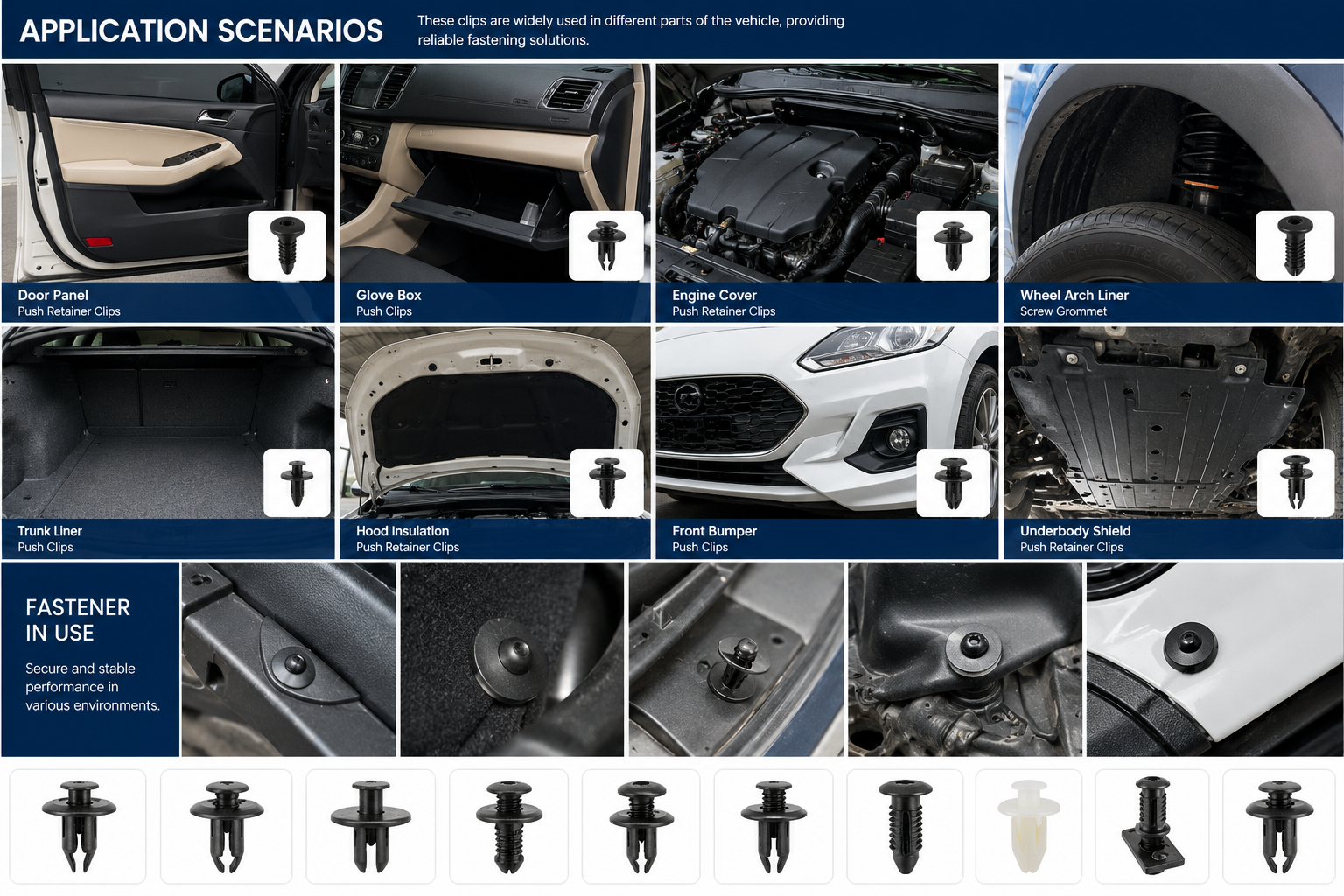
Car bumper clips are integral to:
-
Passenger and luxury sedans — ensuring seamless visual transitions.
-
SUVs and trucks — maintaining durability under high vibration.
-
Electric vehicles (EVs) — contributing to lightweight structure and aerodynamic balance.
-
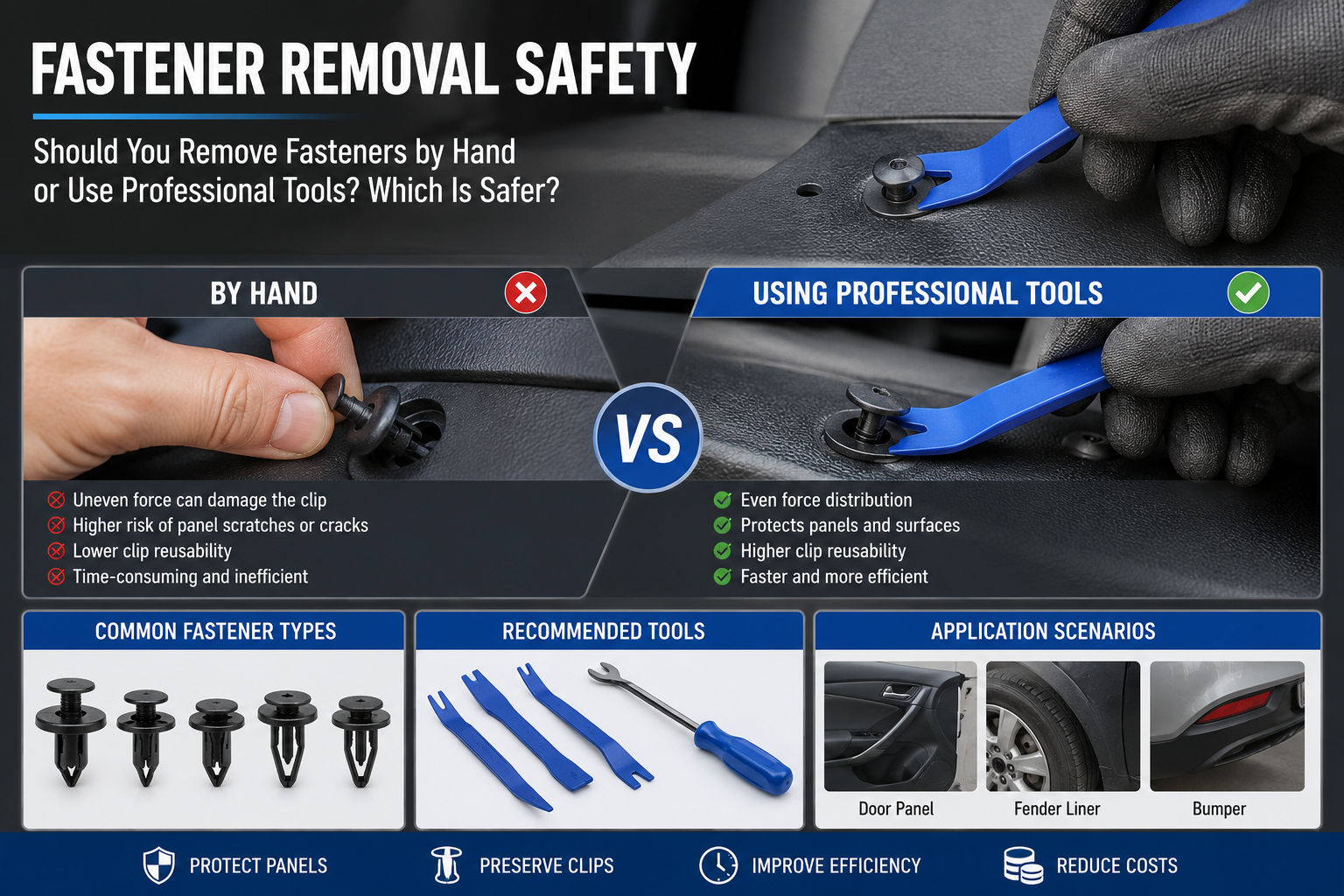
Aftermarket repairs — simplifying bumper replacement with reusable clip systems.
Each application requires precise retention force, heat stability, and installation flexibility.
Technical Guidelines for Selecting Bumper Clip Designs
To choose the optimal clip type, consider:
-
Vehicle environment: off-road vs. urban usage.
-
Panel material: ABS, PP, or aluminum bodywork.
-
Maintenance frequency: reusable vs. permanent locking types.
-
Temperature exposure: engine proximity or underbody heat.
A structured selection process ensures consistent assembly performance and easy aftersales maintenance.
Frequently Asked Technical Questions
Q1: Are the clips compatible with both metal and composite panels?
Yes, QEEPEI designs hybrid-compatible clips with multi-material adaptability.
Q2: Do the clips resist UV degradation?
All materials include UV stabilizers to ensure long-term exterior durability.
Q3: How do you ensure consistent retention strength?
Through automated tensile testing and dynamic vibration simulations.
Q4: Can clips be color-matched to the vehicle design?
Yes, customized pigmentation and surface finishing are available for OEM aesthetics.
Building Confidence in Every Connection
Bumper clips are more than just connectors—they represent engineering precision, safety, and brand trust.
Through advanced molding, controlled tolerances, and strict quality assurance, QEEPEI ensures each fastener performs flawlessly across all conditions, helping manufacturers deliver vehicles that last longer and look better.
Discover the full range of fastening products on the Homepage.
For OEM inquiries or distribution cooperation, contact us here.