
Rubber Seal Retainer Clips Factory: Strengthening Automotive Sealing Integrity from the Ground Up
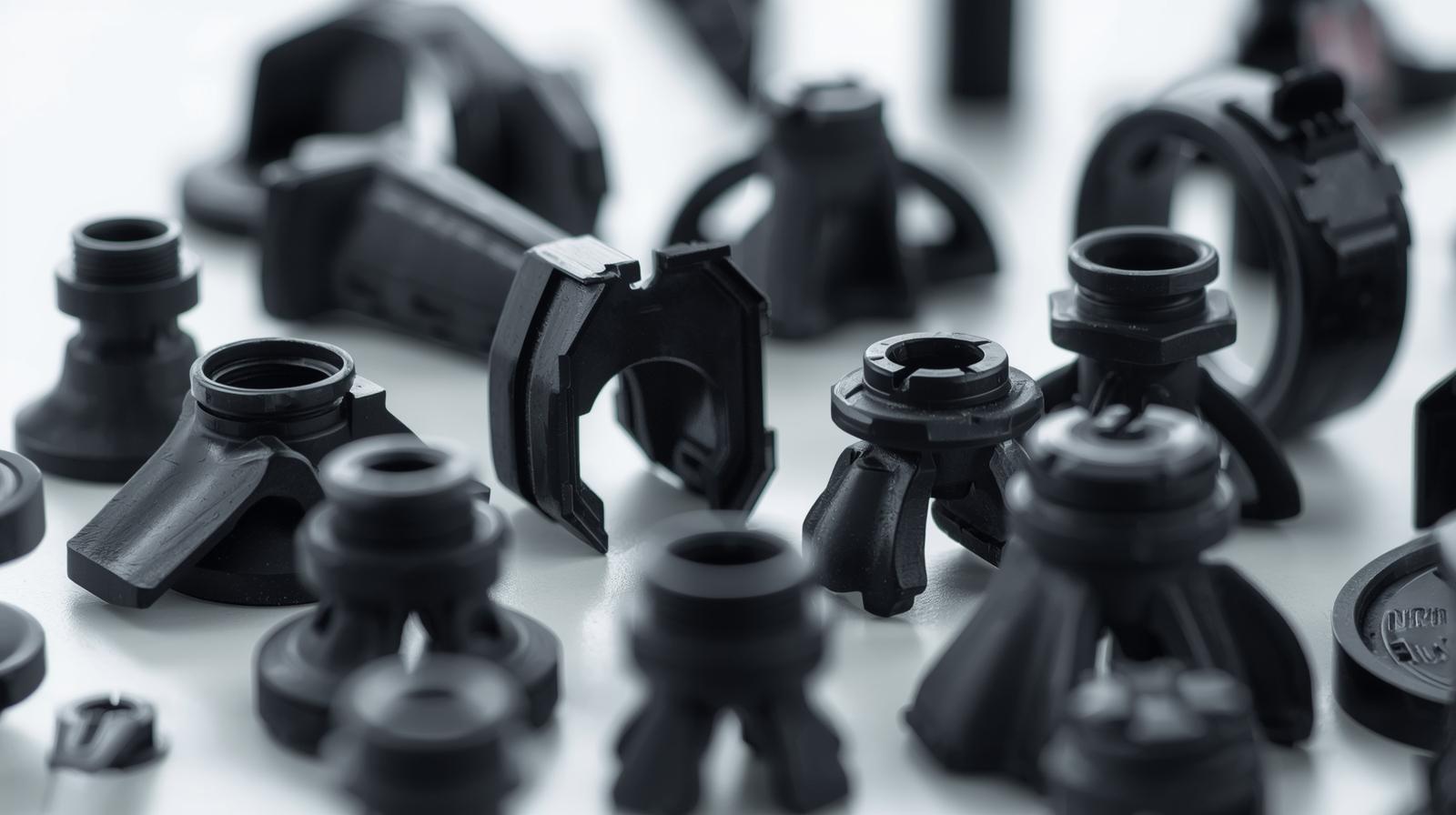
Automotive sealing isn’t just about rubber quality—it’s about how that rubber is held in place. The rubber seal retainer clips factory is where performance truly begins, shaping clips that lock, flex, and endure under constant vibration and environmental stress. QEEPEI brings together polymer engineering, mold precision, and real-world testing to produce clips that safeguard vehicles against water, noise, and structural fatigue.
When Sealing Fails: The Hidden Costs for Manufacturers
Seal retainer failures often start small but lead to major consequences:
-
Continuous wind noise degrading cabin comfort.
-
Water ingress near doors or trunk panels.
-
Loose trims damaging adjacent paintwork.
-
Customer complaints and brand perception loss.
Industry audits (Automotive Component Lifecycle Report 2025) reveal that poor clip quality contributes to 22 % of weather-seal warranty claims. The solution lies in precision-molded retainers designed for specific profiles and materials.
The Engineering Principle of Retention and Flexibility
Retainer clips serve as the mechanical interface between flexible rubber and rigid body structures.
Their geometry is engineered to balance compression, alignment, and elasticity:
-
Dual-Lock Design: Two-stage retention prevents vibration slip.
-
Compression Ribs: Maintain pressure even under thermal expansion.
-
Anchor Barbs: Reinforce grip within thin metal channels.
-
Material Hybridization: Nylon 66 + TPV compounds combine strength and flexibility.
This hybrid approach ensures the clip’s body holds firm while the fins flex to absorb shock and thermal movement.
Conventional Fasteners vs. Factory-Engineered Retainers
| Parameter | Generic Fasteners | QEEPEI Factory-Engineered Retainers |
|---|---|---|
| Material Composition | PP / PE | Nylon 66 + TPV / POM blend |
| Dimensional Tolerance | ±0.10 mm | ±0.03 mm |
| Retention Force | 50 N | 120 N + |
| Thermal Endurance | up to 80 °C | up to 125 °C |
| Expected Lifespan | < 2 years | 5 – 7 years |
A modern rubber seal retainer clips factory invests heavily in molding automation and material control to maintain these metrics consistently.
Manufacturing Process: From Resin to Retainer
Precision manufacturing defines durability.
-
Material Drying & Conditioning – Removes micro-moisture that causes brittleness.
-
High-Pressure Injection Molding – Ensures consistent resin flow and wall thickness.
-
Post-Cure Heat Treatment – Stabilizes shape memory.
-
Optical Quality Scanning – Detects surface flaws and burrs.
-
Batch Coding & Packaging – Guarantees traceability for each shipment.
QEEPEI’s integrated production line follows ISO 9001 and IATF 16949 standards, ensuring that every batch meets OEM specifications.
Advantages for Automotive Manufacturers and Distributors
-
Enhanced Weather Resistance: Retains elasticity in extreme climates.
-
Reduced Noise Transmission: Stable sealing pressure lowers NVH levels.
-
Quick Installation: Clip geometry optimized for robotic and manual assembly.
-
Inventory Flexibility: Kits available by model series or universal fit.
-
Export Ready: Moisture-proof packaging and pallet optimization reduce freight damage.
Each advantage contributes directly to higher assembly line efficiency and end-user satisfaction.
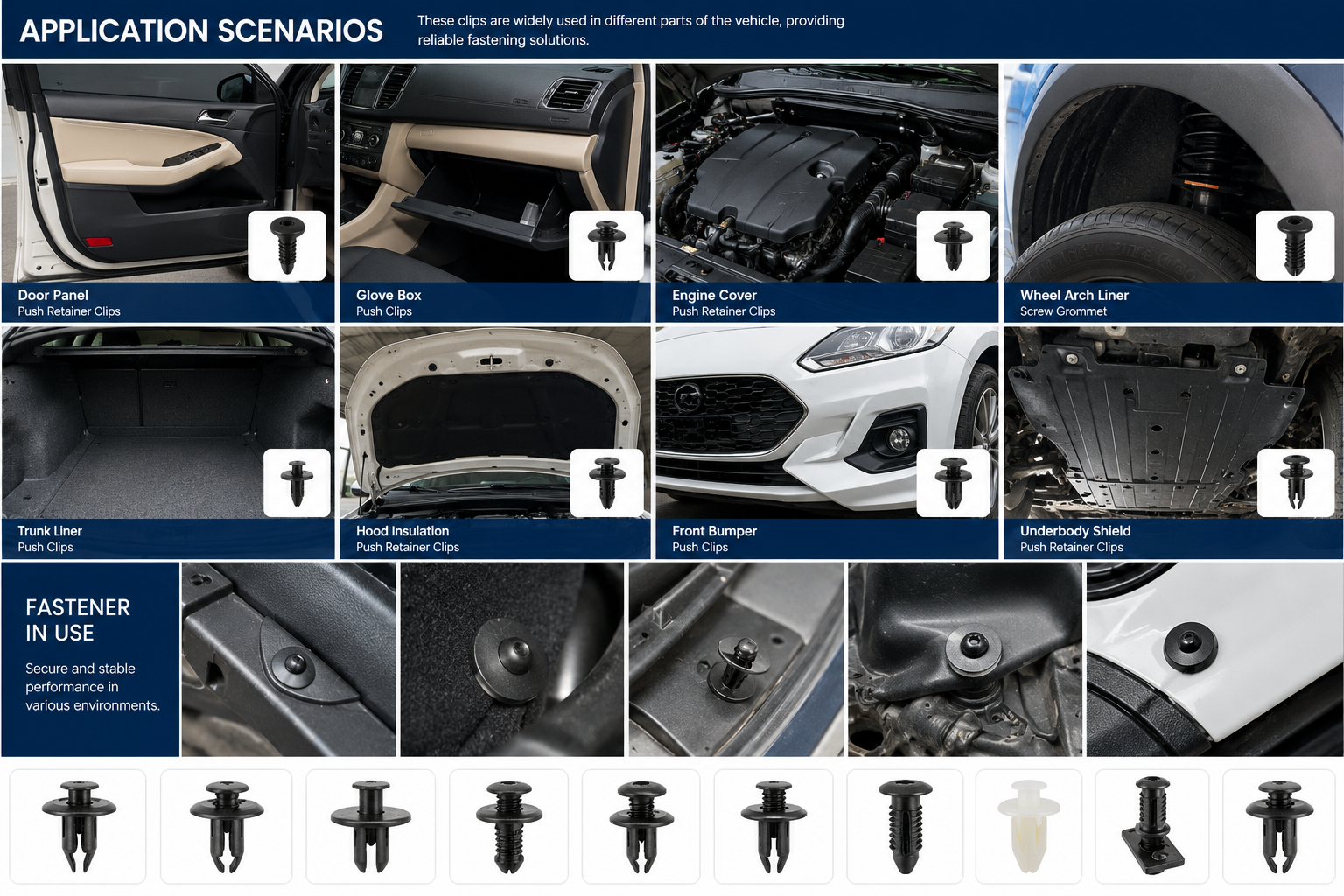
Typical Applications Across Vehicle Zones
| Vehicle Section | Function | Result |
|---|---|---|
| Door Edge | Retains rubber seal channel | Prevents air leakage |
| Roof Drip Area | Holds upper trim seal | Reduces wind noise |
| Trunk Frame | Supports double-lip seal | Blocks moisture |
| Engine Hood | Secures thermal insulation | Maintains pressure stability |
The versatility of rubber seal retainers allows a single design platform to cover multiple car models through minor geometry modifications.
Selection Guidelines for Optimal Performance
-
Identify Seal Profile: Match clip groove width to rubber base thickness.
-
Evaluate Retention Load: 100 – 130 N recommended for exterior seals.
-
Select Proper Material Blend: Nylon for structure, TPV for flexibility.
-
Confirm Temperature Range: Minimum – 40 °C to 125 °C.
-
Consider Replacement Access: Opt for removable designs for after-sales maintenance.
Correct clip selection prevents seal fatigue and minimizes long-term maintenance costs.
FAQ
Q: Can I order customized color or logo marking on clips?
A: Yes, QEEPEI provides private-label customization, including laser-engraved part numbers.
Q: Are your clips compatible with electric-vehicle body designs?
A: Absolutely. Our materials meet insulation and lightweighting requirements for EV platforms.
Q: Do you provide mixed kits for distributors?
A: Yes, we supply universal and model-specific assortments for regional warehouses.
Conclusion: Reliability Begins with Retention
Vehicle sealing systems are only as reliable as the clips that secure them. Partnering with a certified rubber seal retainer clips factory such as QEEPEI ensures every seal performs flawlessly—quiet, watertight, and durable. From precision tooling to export packaging, every detail reflects a commitment to reliability that drives long-term business partnerships.
For OEM collaboration or wholesale inquiries, visit QEEPEI Homepage or connect with our export team via Contact Us.