
Strategic Partner Nissan Juke Clips: Reinforcing Precision and Consistency in OEM-Grade Fastening
Automotive precision doesn’t begin on the assembly line—it starts at the component source. A reliable strategic partner Nissan Juke clips manufacturer plays a critical role in ensuring consistent fitment, aesthetic precision, and long-term durability. QEEPEI collaborates with OEM procurement teams to design fastening systems that streamline vehicle assembly, reduce supply complexity, and maintain global quality uniformity.
Pain Points in Automotive Clip Procurement
Even for established OEMs, fastening components can create hidden inefficiencies:
-
Inconsistent clip geometry between batches.
-
Slow supplier response during production spikes.
-
Limited transparency in resin sourcing and batch testing.
-
Cost fluctuations from regional vendors.
Such inconsistencies lead to minor misalignments that amplify into large-scale production delays and higher warranty claims.
Mechanical Principle Behind Nissan Juke Fastening Systems
A clip’s performance depends on its ability to balance retention and flexibility. For models like the Nissan Juke—where aerodynamic styling meets structural compactness—the fastening system must meet strict mechanical thresholds:
-
Retention Force: >110 N to withstand body vibration.
-
Insertion Load: Optimized for robotic assembly under uniform pressure.
-
Thermal Stability: Reliable from -40 °C to 120 °C.
-
Aesthetic Integration: Color and gloss matched to trim surfaces.
By ensuring that clips hold consistently under varying environmental stress, manufacturers maintain both safety and brand perception.
Standard Vendors vs. Strategic OEM Partners
| Criteria | Generic Clip Vendor | Strategic OEM Partner (QEEPEI) |
|---|---|---|
| Fitment Accuracy | ±0.10 mm | ±0.03 mm |
| Production Data | Manual | Fully digital ERP traceability |
| Material Certification | Local supplier COA | ISO + RoHS verified polymer |
| Lead Time | 30–45 days | Forecast-based replenishment |
| After-Sales Support | Limited | Continuous engineering collaboration |
Through strategic alignment, the supplier becomes part of the OEM ecosystem—offering technical support, predictive manufacturing, and real-time visibility.
How QEEPEI Enables OEM-Level Partnership
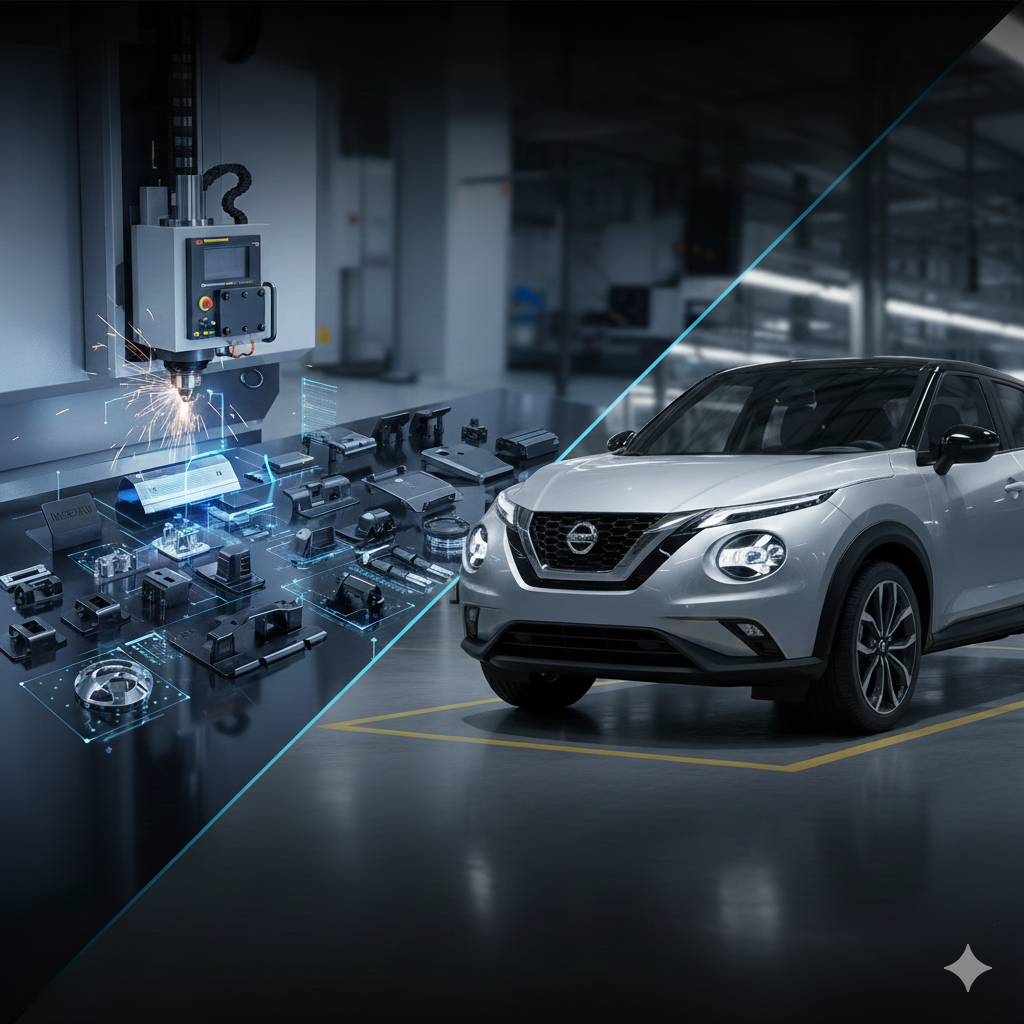
QEEPEI integrates material control, precision molding, and quality automation into a single ecosystem:
-
Centralized Mold Calibration: Ensures dimensional repeatability across thousands of cycles.
-
Material Traceability Chain: Each batch of resin linked to certification and tensile data.
-
In-Line Quality Monitoring: Sensors record insertion and pull-out force for every lot.
-
Automated Sorting & Labeling: Ready for OEM line feeding and just-in-time logistics.
This transparency and technical rigor redefine the standard for fastener sourcing partnerships.
Strategic Advantages for OEM Procurement
-
Reduced Assembly Downtime: Pre-approved quality minimizes inspection cycles.
-
Lower Warranty Risk: Consistent retention strength prevents future failures.
-
Cost Predictability: Fixed long-term pricing and regional warehousing reduce logistics cost.
-
Design Integration: CAD support allows early-stage compatibility testing.
-
Environmental Compliance: Fully recyclable polymers support OEM sustainability goals.
In essence, the partnership model shifts suppliers from transactional providers to performance contributors.
Use Cases: OEM and Tier-1 Collaboration
| Application | Description | Result |
|---|---|---|
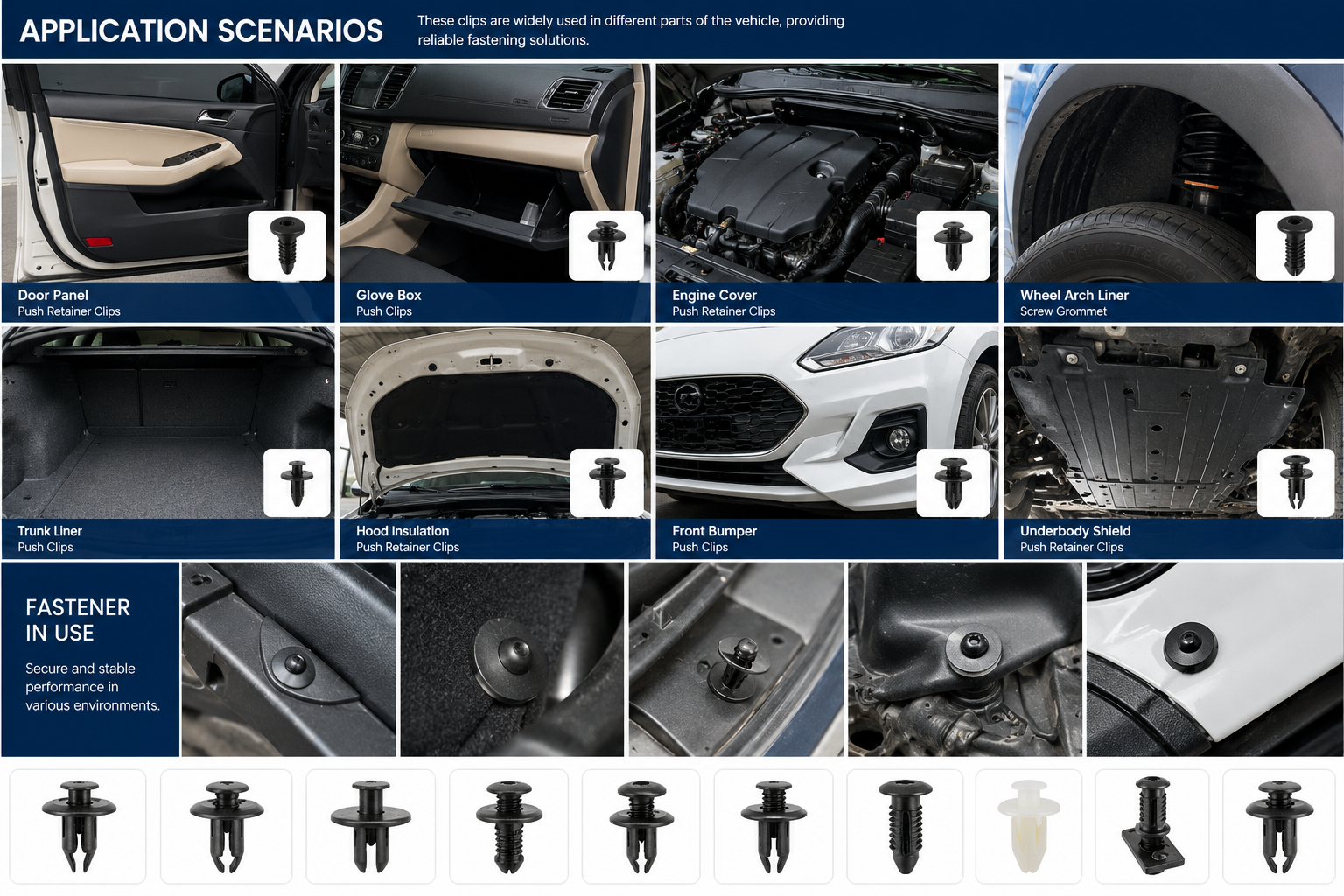
| Door Panel Retainers | Structural clips for trim assemblies | Stable fit over 50,000 vibration cycles |
| Fender and Bumper Fixings | Impact-resistant PA66 clips | Prevents deformation under thermal load |
| Weatherstrip Anchors | Hybrid Nylon + TPV sealing clips | Consistent air-tight performance |
| Engine Compartment Fasteners | High-temperature materials | No degradation after 1,000 hr aging test |
The same reliability benefits both OEM lines and Tier-1 integrators working on the Nissan Juke platform.
Key Factors When Selecting a Strategic Clip Partner
-
Verify Engineering Collaboration: Ensure 3D model validation and tolerance mapping.
-
Audit Quality Systems: Look for process-based certification (IATF 16949).
-
Evaluate Tooling Precision: CNC and mold temperature control.
-
Check Logistics Integration: Just-in-time and bonded export capacity.
-
Review After-Sales Response: Support for field issue resolution and data feedback.
This evaluation process ensures the partner aligns not just with product specifications—but with OEM culture and quality philosophy.
FAQ
Q: Can QEEPEI develop custom clip geometries for the Nissan Juke body series?
A: Yes, we design model-specific tooling based on OEM 3D data and fixture analysis.
Q: Do you support joint R&D for new clip applications?
A: Absolutely. Our engineers work alongside OEM teams during design validation.
Q: How do you ensure batch consistency across global facilities?
A: All plants share identical mold data, ERP traceability, and test standards synchronized through digital quality dashboards.
Partnership Beyond Procurement
For OEMs like Nissan, fastening reliability is more than an engineering requirement—it’s a brand guarantee. Partnering with a strategic partner Nissan Juke clips manufacturer such as QEEPEI ensures every component integrates seamlessly across models, geographies, and production cycles. Through precision tooling, certified materials, and transparent logistics, QEEPEI transforms small clips into the backbone of large-scale manufacturing reliability.
Learn more about OEM collaboration opportunities at QEEPEI Homepage or contact our enterprise support team via Contact Us.