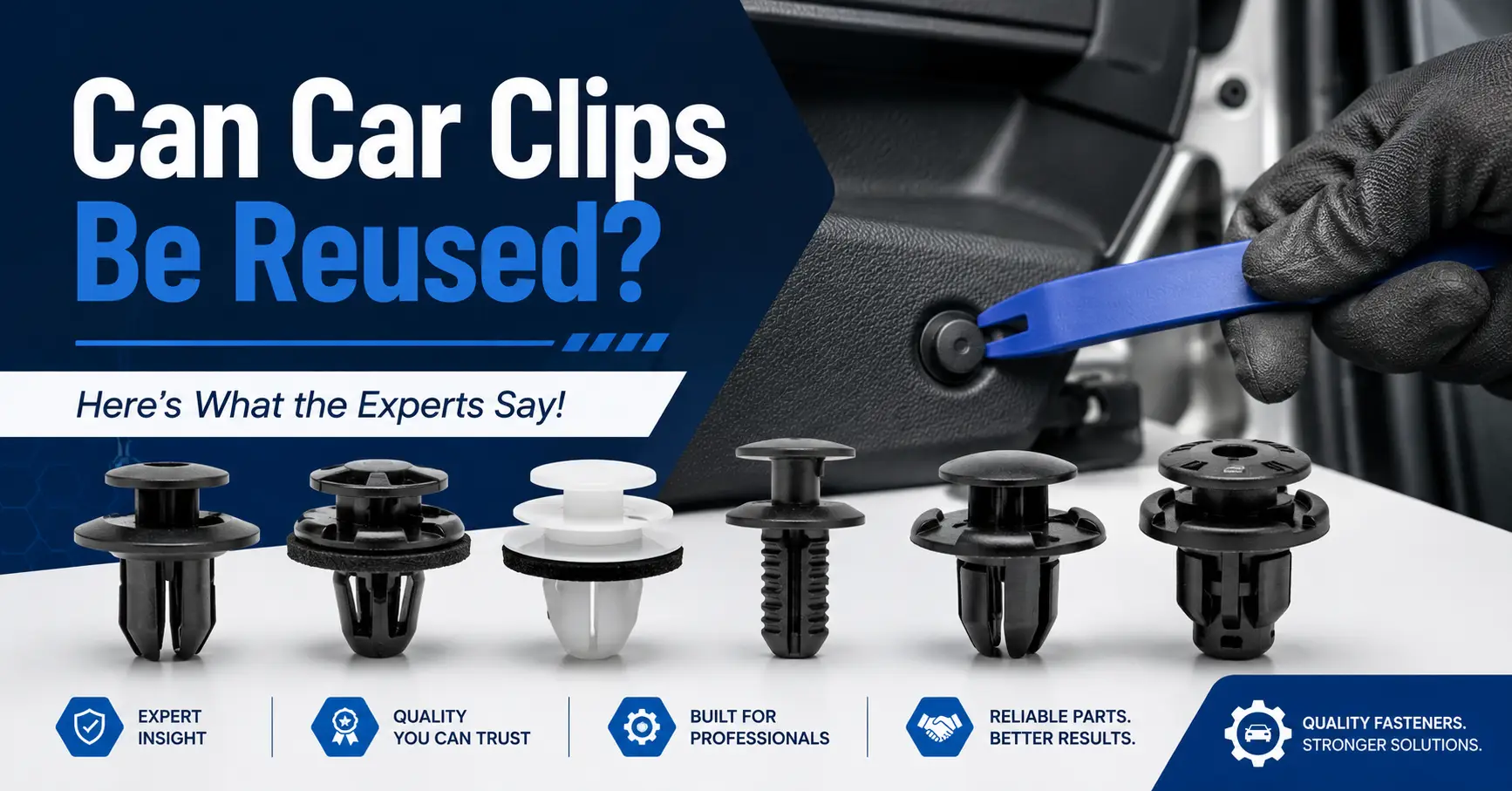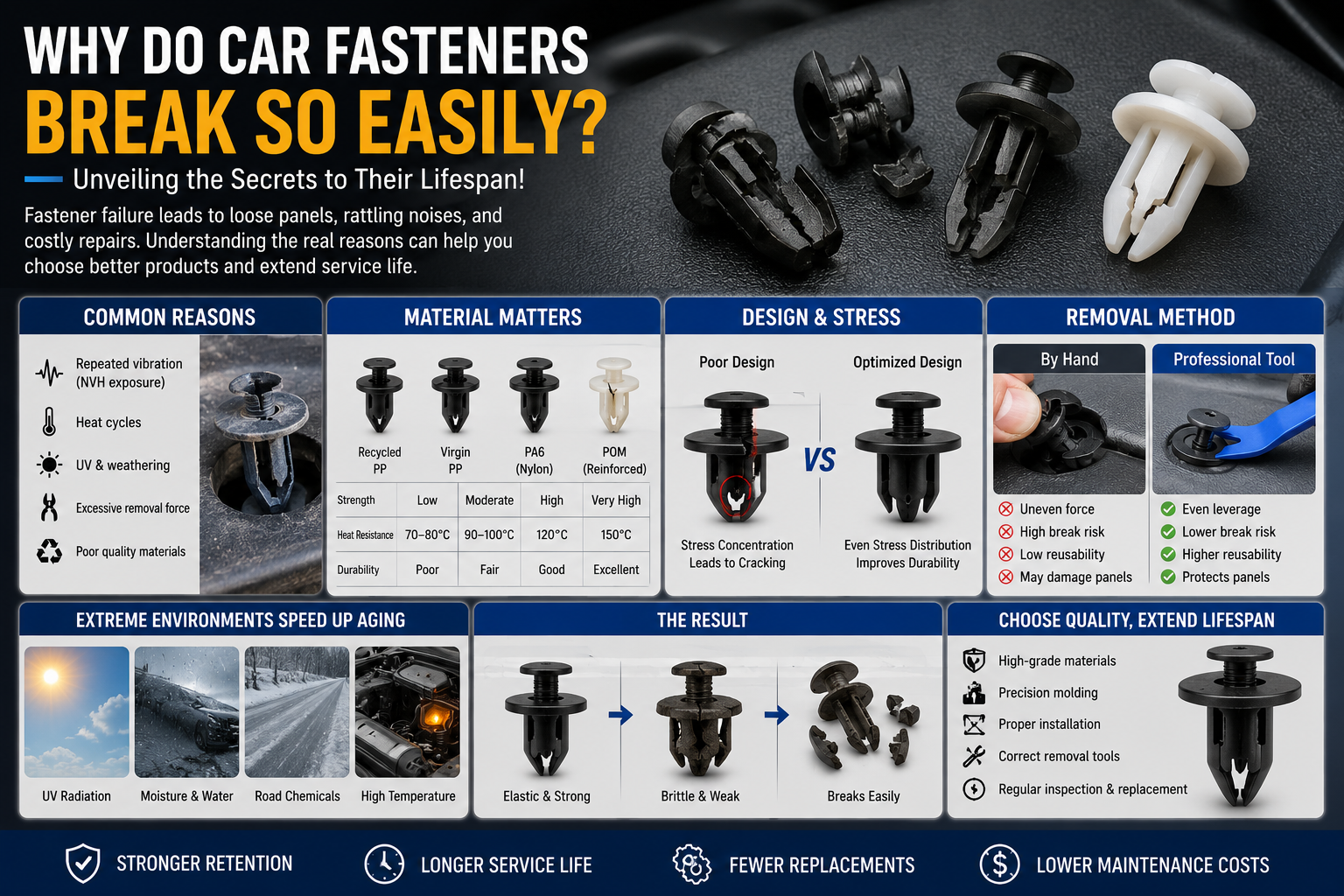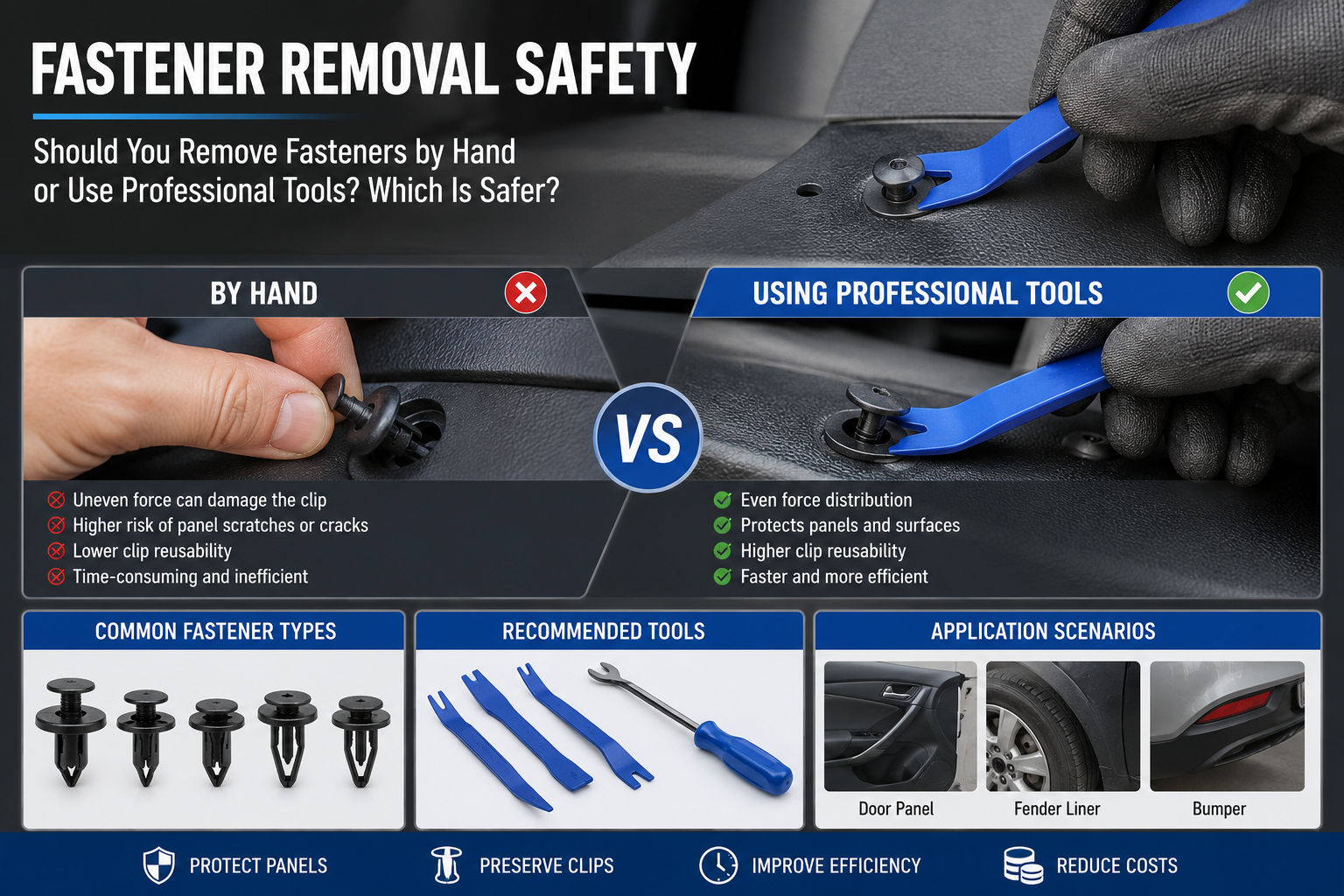

Toyota Car Clips Vendor: Reliable Fastening for Precision Vehicle Assembly
In every Toyota vehicle, structural integrity and design precision are supported by small but critical components — the clips. From bumpers to door trims, Toyota car clips vendors play a central role in ensuring parts fit seamlessly, resist vibration, and maintain the brand’s global reputation for reliability.
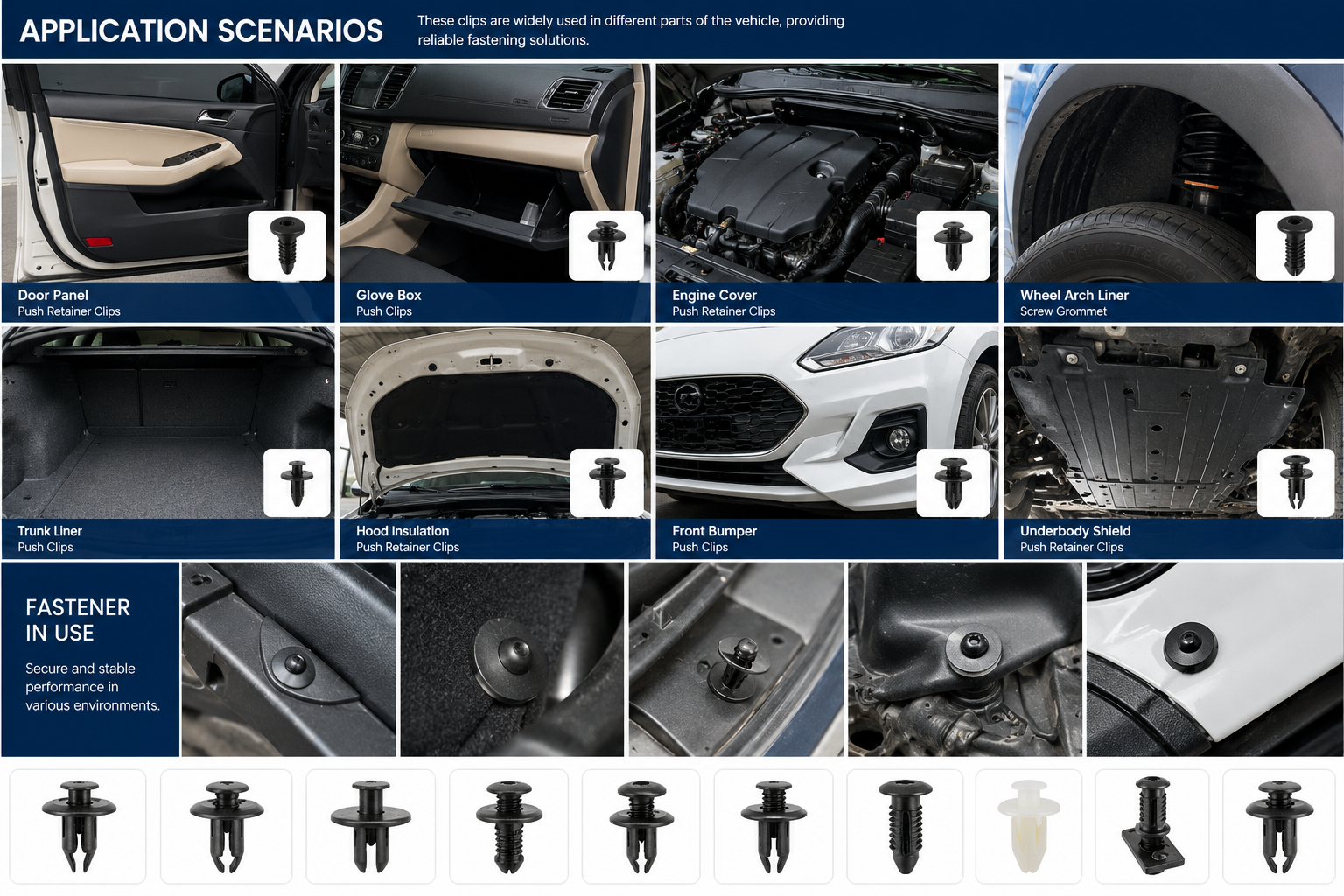
QEEPEI provides a specialized range of Toyota-compatible clips designed for precision assembly, high-temperature environments, and long-term fastening stability.
Pain Points in Toyota Clip Procurement and Assembly
Even experienced auto parts vendors face challenges when sourcing or maintaining Toyota fastening components:
-
Fitment discrepancies between regional Toyota models (Asia vs. Europe).
-
Fragile or incompatible materials leading to premature breakage during maintenance.
-
Noise or looseness caused by dimensional inconsistencies in clip geometry.
-
Extended supply lead times from non-OEM certified factories.
-
Limited testing data for vibration, UV resistance, or tensile strength.
These issues not only affect assembly quality but also disrupt service center operations, causing delays in after-sales maintenance.
The Engineering Logic Behind Toyota Car Clips
Toyota clips are engineered to provide multi-directional tension and thermal stability. Their structure ensures panels stay fixed even under vibration, temperature change, or mechanical stress.
| Clip Type | Function | Primary Material | Tolerance |
|---|---|---|---|
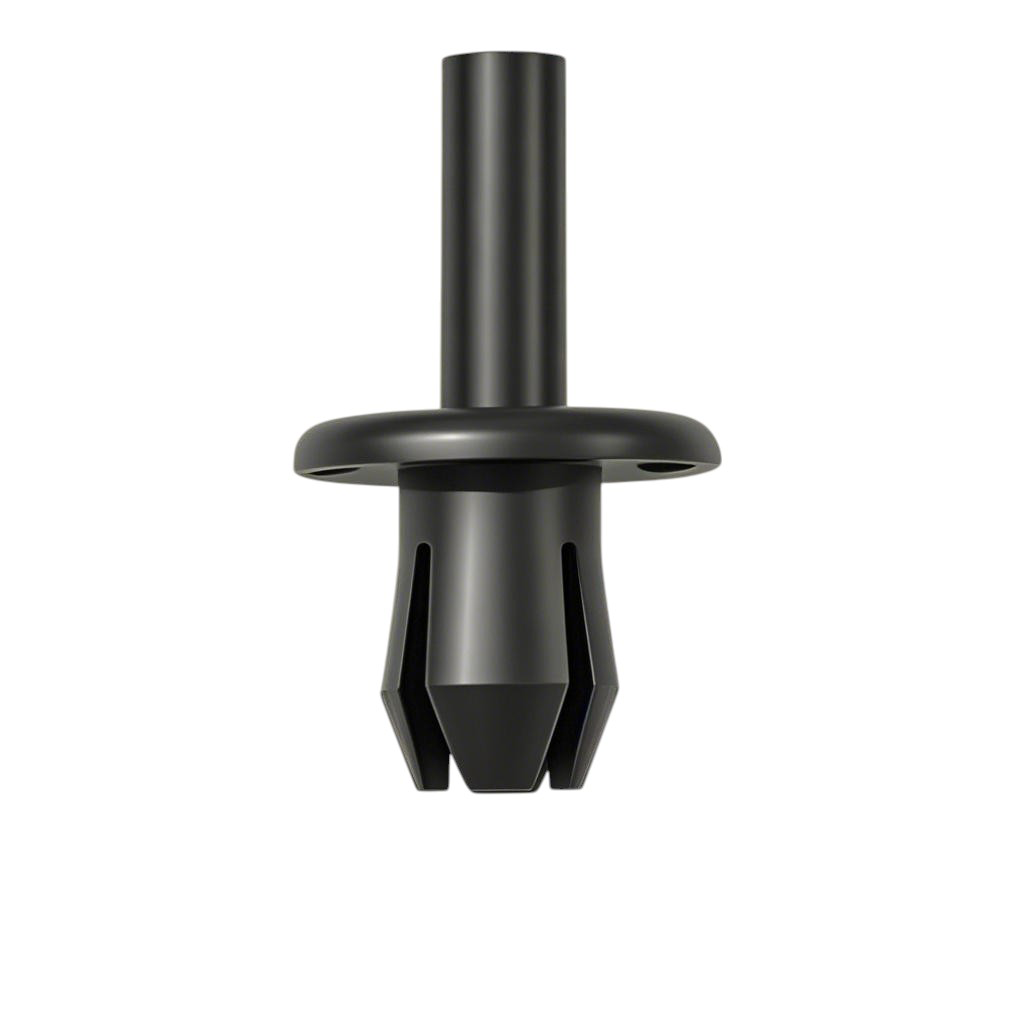
| Push-Type Retainer | Locks trim panels | PA6 / POM | ±0.03 mm |
| Screw-Type Fastener | Secures bumper and engine covers | Nylon + GF | ±0.05 mm |
| Panel Clip | Connects door linings | POM | ±0.02 mm |
| Tree-Type Anchor | Provides vibration damping | PA66 | ±0.03 mm |
Each clip’s performance depends on the precise ratio between flexibility and rigidity — a standard Toyota enforces across its suppliers globally.
OEM vs. Aftermarket Toyota Clip Vendors: A Comparison
| Criteria | OEM-Grade Vendor | Generic Supplier |
|---|---|---|
| Fitment Consistency | Verified by Toyota model | Non-standard |
| Material Certification | RoHS, REACH, ISO9001 | Often unverified |
| Lifecycle Testing | 1000+ cycles durability | < 300 cycles |
| Color and Finish | Factory matched | Variable |
| Supply Reliability | 98% on-time | 65–70% average |
Partnering with an OEM-oriented vendor like QEEPEI eliminates the guesswork and ensures every clip fits precisely from production line to service repair.
QEEPEI’s Technical Approach to Toyota-Compatible Clips
QEEPEI integrates advanced molding and verification systems to match Toyota’s global production standards:
-
3D Mold Calibration: Ensures ±0.02 mm precision for all clip geometries.
-
Raw Material Control: Sourced from BASF and Dupont for heat stability.
-
Tensile & Flexural Testing: Confirms long-term load retention in variable climates.
-
UV & Corrosion Resistance Tests: Prevent material degradation in high-sun or coastal regions.
-
Batch Traceability System: Enables instant tracking of every part’s production batch.
With these systems, QEEPEI provides both durability and traceable reliability — a critical factor for Toyota’s global supply network.
Competitive Advantages of QEEPEI as a Toyota Clip Vendor
-
Model Coverage: From Corolla and Camry to RAV4 and Hilux — full compatibility.
-
Noise Reduction Design: Enhanced damping structures for quiet interiors.
-
Temperature Range: Maintains integrity between –40°C and +130°C.
-
Streamlined Logistics: Multi-pack kits for service stations and distributors.
-
Consistent Aesthetic Quality: Smooth finish for visible interior trims.
These benefits give distributors and service providers confidence in both function and appearance.
Toyota Models and Applications
| Vehicle Model | Application Area | Recommended Clip Type | QEEPEI Code |
|---|---|---|---|
| Toyota Corolla | Interior Door Trim | Push-Type Clip | QP-T12 |
| Toyota RAV4 | Front Bumper Retainer | Screw-Type Fastener | QP-B25 |
| Toyota Camry | Roof Lining Assembly | Panel Clip | QP-C09 |
| Toyota Hilux | Fender and Wheel Arch | Heavy-Duty Anchor | QP-F30 |
| Toyota Prius | Dashboard and Console | Noise-Absorbing Clip | QP-D04 |
By maintaining uniform part geometry, QEEPEI clips simplify both OEM and aftermarket replacement processes.
Matching Clip Design to Vehicle Zones
-
Exterior Panels → Use reinforced PA66 clips with UV coating.
-
Interior Trim → POM or PP clips for flexibility and ease of removal.
-
Engine Bay Areas → Heat-resistant nylon fasteners.
-
Underbody or Fender Zones → Anti-vibration tree-type clips.
-
Dashboard Areas → Noise-damping soft polymer clips.
Following this matrix reduces installation errors and ensures long-term retention performance.
Technical Questions from Toyota Vendors and Distributors
Q1: How does QEEPEI ensure global compatibility across Toyota models?
Through dimensional mapping of regional models (Japan, Europe, Middle East), QEEPEI validates clip geometries to maintain identical fitment tolerance.
Q2: Can Toyota service centers order in bulk with mixed models?
Yes. Mixed-model packaging is available, allowing workshops to stock multiple clip types per carton for faster servicing.
Q3: What testing standards does QEEPEI follow for Toyota parts?
Clips are tested under ISO/TS 16949 conditions — including tensile strength, vibration fatigue, and temperature cycling.
Q4: Are QEEPEI clips color-matched to Toyota interiors?
Yes, we provide matte black, beige, and grey variants to align with factory color codes.
Building Long-Term Reliability with Trusted Vendors
Toyota’s quality reputation is built on precision — down to every fastening clip.
By partnering with an experienced Toyota car clips vendor like QEEPEI, distributors and service networks gain access to OEM-grade components, simplified logistics, and guaranteed compatibility across models.
For partnership inquiries or custom clip sourcing, visit our Homepage or reach our team through Contact Us.