
Volume Buyer Auto Clips: Optimizing Bulk Procurement for Automotive Efficiency
In the automotive industry, precision often starts with the smallest components. Yet for volume buyers of auto clips, inefficiency in sourcing can create ripple effects—from inconsistent supply to mounting costs. A single missing fastener can delay an entire batch of vehicle assembly. This article explores how structured bulk purchasing from OEM-level suppliers like QEEPEI transforms clip procurement into a predictable, cost-effective process.
Supply Chain Pain Points: When Volume Becomes Vulnerability
High-volume procurement isn’t without risks. The common pain points faced by automotive distributors and assembly partners include:
-
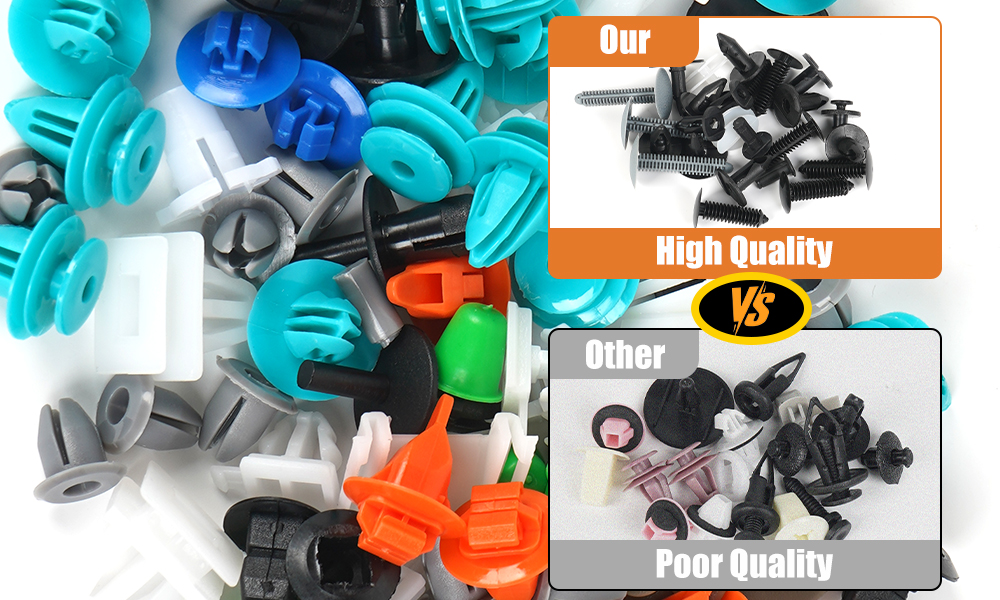
Unstable quality: Clips from different suppliers vary in dimensions, causing misfit or rattle.
-
Lack of standardization: Absence of part traceability makes inventory management difficult.
-
Excessive freight cost: Small, frequent orders multiply shipping charges.
-
Manual sorting inefficiency: Mixed, unlabeled clips slow warehouse operations.
-
Limited OEM documentation: Some suppliers fail to provide tolerance or material data sheets.
According to McKinsey’s Automotive Aftermarket Report (2024), component standardization and centralized purchasing can cut indirect logistics costs by up to 18% in multi-facility operations.
Core Principle: Scaling Efficiency Through Standardized Clip Systems
The key to managing volume effectively lies in clip standardization — aligning materials, tolerances, and packaging under unified specifications.
The Society of Automotive Engineers (SAE) sets performance baselines for mechanical retention, vibration resistance, and temperature endurance.
| Clip Type | Typical Material | OEM Fitment Range | Temperature Range | Durability |
|---|---|---|---|---|
| Push-Type Retainer | PA6 | Door trims, bumpers | -30°C to 110°C | High |
| Tree-Type Anchor | PA66 + GF | Interior panels | -40°C to 120°C | Anti-fatigue |
| Screw-Type Fastener | Nylon | Fender assembly | -20°C to 100°C | Reusable |
| Universal Clip Kit | Mixed polymers | Multi-brand | -30°C to 90°C | Medium |
When every clip follows a validated design, procurement teams gain reliability without the overhead of repetitive testing.
Comparison: Fragmented vs. Centralized Purchasing Models
| Parameter | Fragmented Sourcing | Centralized Volume Buying (QEEPEI Model) |
|---|---|---|
| Supplier Network | Multiple vendors | Single integrated factory |
| Quality Variation | High | Controlled by unified QC |
| Logistics | Unpredictable | Consolidated shipments |
| Cost per Unit | Higher | 20–25% lower |
| Technical Support | Limited | OEM-level data provided |
For high-volume buyers, the centralized model ensures repeatable results—essential for maintaining production timelines.
Solution Framework: QEEPEI’s Bulk Clip Supply Chain
QEEPEI integrates material validation, injection molding, and automated packing to deliver scalable reliability:
-
2,000+ Mold Library: Covering Japanese, European, and U.S. vehicle types.
-
High-Capacity Production: 1.5 million clips/month, multi-line output.
-
Material Certification: Every batch tested for tensile and heat stability.
-
Automated Labeling System: Enables SKU-level traceability for distributors.
-
Global Shipping Network: Optimized container loading for multi-SKU export.
This integrated approach ensures precision retention performance and consistent stock replenishment worldwide.
Competitive Advantages for Volume Buyers
-
OEM Compatibility: Clips fit major brands including Toyota, Honda, VW, Ford, and Hyundai.
-
Batch Traceability: QR-coded labeling for real-time inventory tracking.
-
Operational Efficiency: Reduced downtime and manual labor.
-
Procurement Cost Reduction: Bulk orders lower per-unit and logistics expenses.
-
Flexible Customization: Kits tailored by vehicle brand or assembly use.
Bulk purchasing thus becomes not just an operational move—but a strategic differentiator.
Application Scenarios: From Production Lines to Global Distribution
| Use Case | Buyer Type | Key Demand | Benefit |
|---|---|---|---|
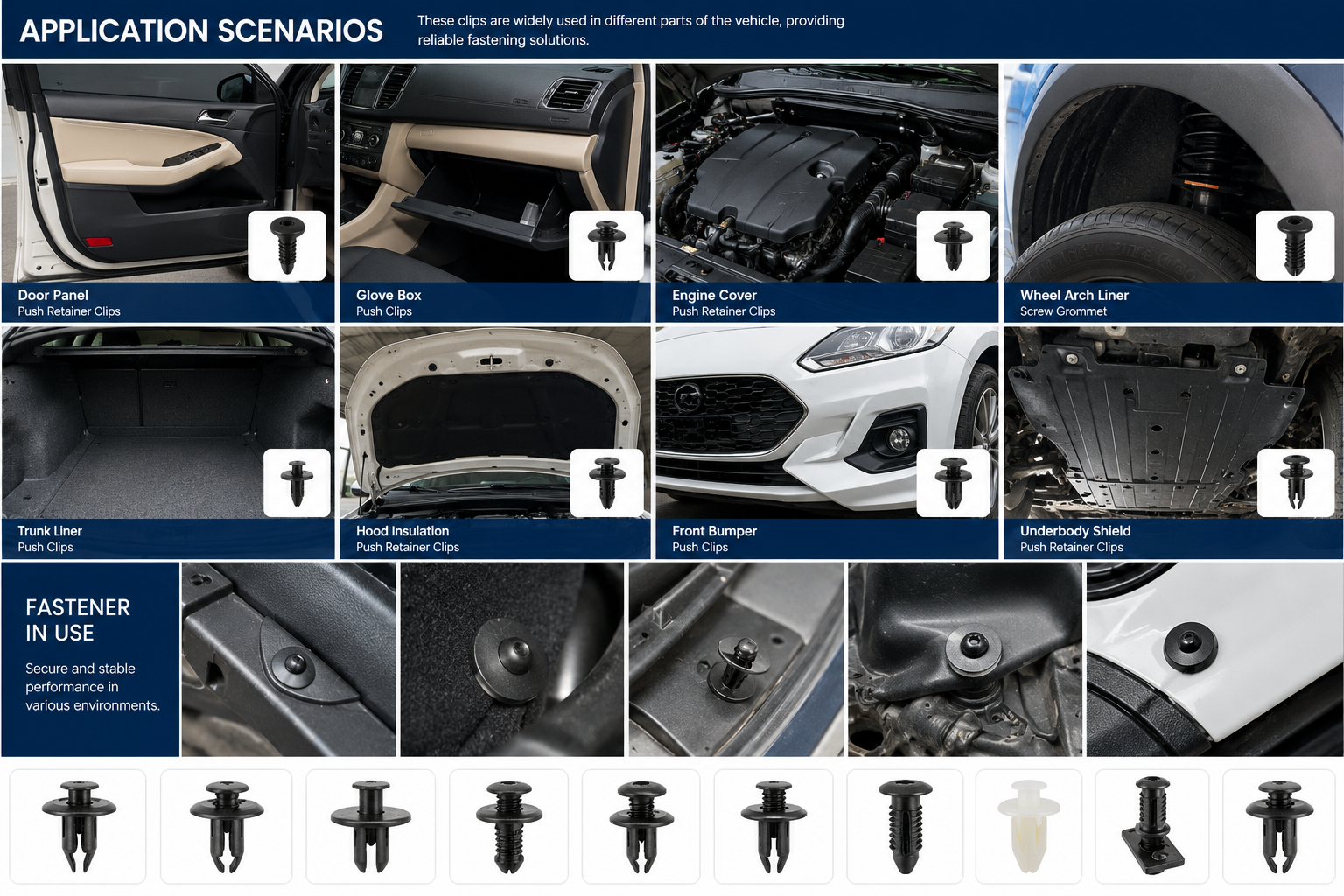
| Vehicle Assembly Plants | OEM / Tier 2 suppliers | Consistent retention strength | Production stability |
| Automotive Distributors | Regional wholesalers | SKU management | Easier logistics |
| Repair Networks | Multi-brand garages | Mixed clip kits | Faster servicing |
| E-commerce Retailers | Online sellers | Brand packaging | High market turnover |
Volume-based partnerships ensure continuity even when market demand fluctuates.
Selection Guidance: Building a Sustainable Bulk Procurement Plan
-
Assess Vehicle Compatibility: Identify top models across your regional market.
-
Prioritize High-Frequency Parts: Select top 80 clip types that drive 90% of sales.
-
Define Packaging Format: Choose between bulk cartons, plastic boxes, or private label bags.
-
Negotiate MOQ Flexibility: Plan around 5,000–10,000 pcs/SKU for freight efficiency.
-
Implement Forecasting Systems: Use sales analytics to trigger reorder alerts.
| Parameter | Recommended Range |
|---|---|
| MOQ per SKU | 5,000 pcs |
| Lead Time | 25–35 days |
| Packaging | Mixed / Individual |
| QC Report | Included |
This structured approach ensures long-term predictability in your supply chain.
Industry FAQ
Q1: What documentation comes with each shipment?
Each order includes inspection reports, CO certificates, and packaging lists for customs compliance.
Q2: Can I order mixed clip sets for multiple car brands?
Yes. QEEPEI provides brand-based and universal assortments within the same shipment.
Q3: How do you maintain quality across large volumes?
Automated inspection cameras detect dimensional deviation within ±0.03 mm per batch.
Q4: Is there private labeling for distributors?
Absolutely — branding, barcode, and SKU customization available upon request.
Conclusion: Turning Bulk Supply into Competitive Advantage
The future of fastener sourcing belongs to volume buyers who think strategically about logistics, compatibility, and performance.
By partnering with QEEPEI, automotive procurement teams transform their fastener supply chain into a scalable, traceable, and cost-efficient system—anchoring consistency across global markets.
Learn more on our Homepage or reach our team via Contact Us to build your bulk procurement solution.