
Wholesale Clip para Auto: Reliable Fastening Supply for Global Automotive Markets
In a globalized aftermarket, auto clips are more than spare parts — they’re the foundation of every reliable vehicle repair and assembly.
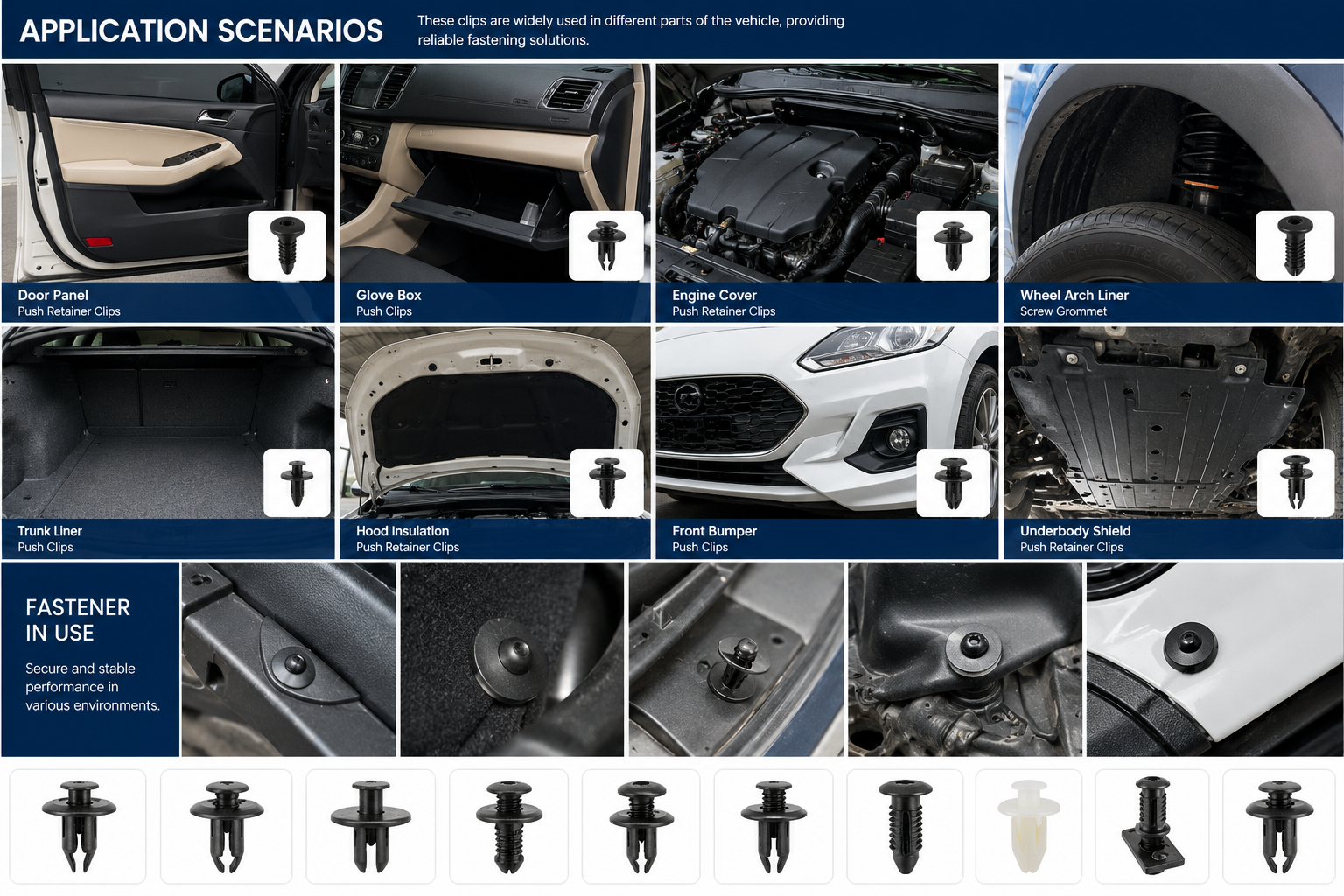
From door trims to bumpers and engine covers, a stable supply of wholesale clip para auto ensures that repair networks and distributors never face downtime.
QEEPEI stands among the few suppliers capable of combining large-scale manufacturing, precision quality, and customized distribution channels for the automotive fastening sector.
Pain Points in Bulk Automotive Clip Procurement
For many automotive wholesalers, the challenge isn’t just finding clips — it’s managing consistency, compatibility, and cost.
-
Fragmented sourcing: Multiple suppliers mean varying quality and stock levels.
-
Unverified materials: Cheap plastics fail under heat or vibration.
-
Logistical delays: Long lead times disrupt workshop supply chains.
-
Packaging inefficiencies: Mixed clips without labeling slow garage operations.
-
Lack of technical data: No dimensional drawings or vehicle fitment references.
Inconsistent supply doesn’t just hurt distributors — it affects downstream mechanics and body shops who depend on reliable inventory.
The Principle Behind Automotive Clip Standardization
Every car clip, from dashboard to fender, follows the same mechanical logic — secure, release, and reseal without damage.
This requires dimensional precision, material elasticity, and temperature resistance.
| Clip Type | Function | Material | Durability |
|---|---|---|---|
| Push-Type Retainer | Holds trims and panels | PA6 | High tensile strength |
| Tree-Type Anchor | Reduces vibration and rattle | PA66 + GF | Anti-fatigue |
| Rivet Fastener | Universal application | POM | Easy replacement |
| Panel Trim Clip | Interior alignment | PP | Lightweight |
| Screw-Type Fastener | Exterior parts | Nylon | Reusable |
QEEPEI’s bulk clip systems are built on these principles — precision geometry, OEM-level materials, and cross-model compatibility.
Wholesale vs. Retail Clip Supply: Understanding the Difference
| Parameter | Retail Clips | Wholesale Supply (QEEPEI) |
|---|---|---|
| Quantity per SKU | 10–50 pcs | 500–10,000 pcs |
| Quality Assurance | Basic inspection | Full QC + testing data |
| Material Origin | Varies | BASF/Dupont certified |
| Lead Time | On-demand retail stock | Predictable monthly production |
| Packaging | Generic | OEM + private label options |
For distributors, switching from retail reselling to wholesale sourcing is not just about saving cost — it’s about establishing control over supply and brand reliability.
QEEPEI’s Wholesale Clip para Auto Supply Framework
QEEPEI’s wholesale ecosystem integrates design, production, and export logistics under a single quality management system:
-
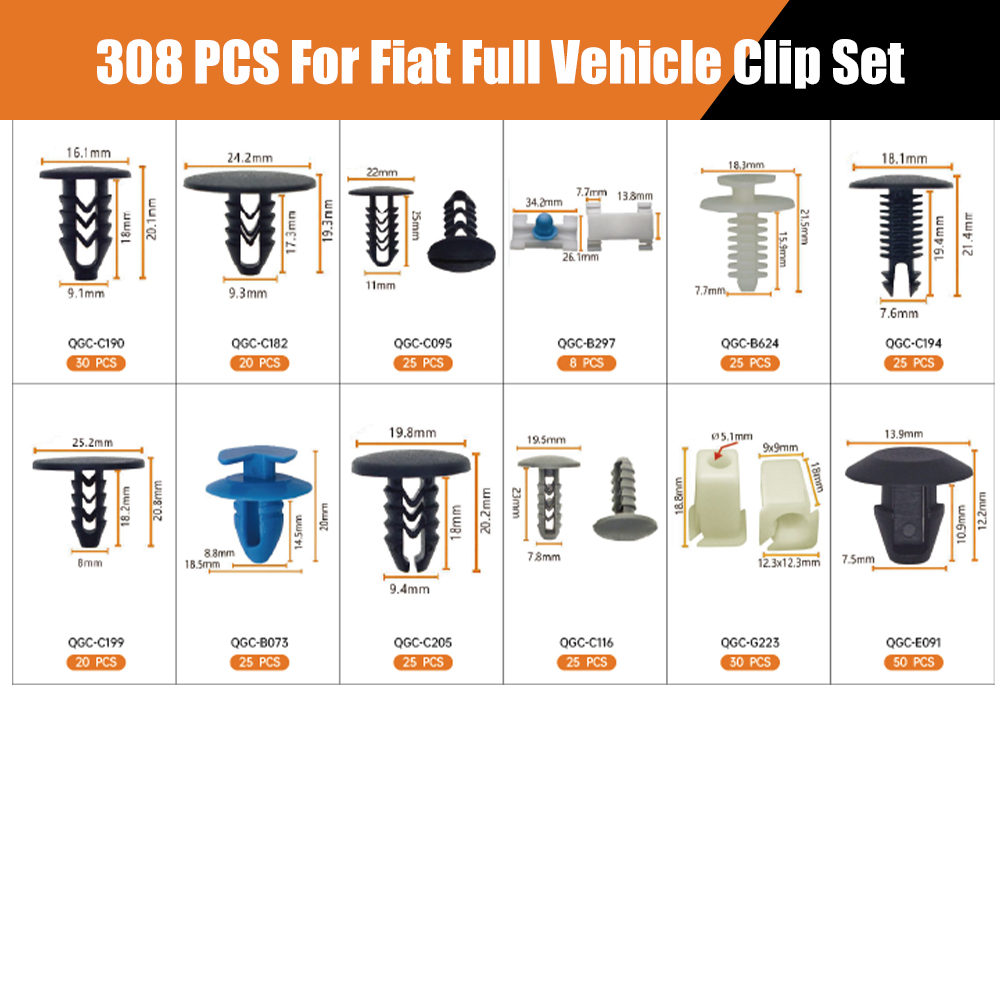
Mass Mold Library: Over 2,000 clip types covering Japanese, European, and American cars.
-
Bulk Manufacturing: Automated injection lines for 1–2 million pcs/month capacity.
-
Material Control: UV, tensile, and temperature testing per batch.
-
Custom Labeling: Private label packaging with barcode and SKU coding.
-
Flexible Shipping: Mixed-container options for multi-SKU orders.
This ensures distributors receive consistent parts, predictable delivery, and scalable volume.
Advantages of QEEPEI Wholesale Partnership
-
OEM Compatibility: Fits models from Toyota, VW, Ford, Nissan, Honda, and Hyundai.
-
Cost Efficiency: High-volume molding and global material sourcing reduce unit cost.
-
Quality Documentation: Each batch supplied with tensile and temperature test data.
-
Custom Packaging Options: Retail blister, zip bags, or carton box with logos.
-
Stable Supply Chain: Year-round production and multiple factory locations.
Together, these elements form a system built for long-term collaboration and reliability.
Real-World Scenarios: Who Benefits from Wholesale Clip Supply
| Partner Type | Application | Core Requirement | Benefit |
|---|---|---|---|
| Distributors | Regional reselling | Price + quality consistency | Steady inventory flow |
| Auto Workshops | Daily repair use | Fitment accuracy | Faster installation |
| Fleet Maintenance Firms | Large-scale servicing | Mixed clip kits | Simplified logistics |
| Retail Chains | Online & offline resale | Branded packaging | Stronger market appeal |
| Importers | Cross-brand supply | OEM equivalence | Multi-model coverage |
Whether for high-end dealerships or aftermarket retailers, QEEPEI’s wholesale systems deliver speed and dependability.
Selection Guide: Building an Efficient Clip Supply Program
-
Define Market Focus: Passenger, commercial, or mixed vehicle types.
-
Select SKU Range: Choose 50–100 clip types based on sales frequency.
-
Plan MOQ and Packaging: Typical MOQ starts at 5,000 pcs per SKU.
-
Evaluate Logistics: Container-based shipping for optimal freight cost.
-
Maintain Reorder System: Automated forecast and reorder planning reduce downtime.
Key Questions Distributors Ask
Q: How can QEEPEI ensure clip quality across so many vehicle brands?
By using standardized mold calibration and material testing systems for each production run.
Q: Can I combine different clip types in one order?
Yes. Mixed-SKU containers are available for 50–200 product codes per shipment.
Q: What are the lead times for wholesale clip orders?
Typically 25–35 days, including molding, testing, and packaging.
Q: Does QEEPEI provide documentation for customs clearance?
Absolutely — full HS code, RoHS, and CO documentation are included with each batch.
Scaling Quality, Not Just Quantity
In today’s automotive aftermarket, a wholesale clip para auto program is more than bulk purchasing — it’s a strategy for supply security and market authority.
With QEEPEI’s integrated production and logistics framework, distributors can expand confidently, backed by proven engineering and reliable delivery.
Explore full supply capabilities at Homepage or reach our team through Contact Us to begin your wholesale partnership.