
Why Do Automotive Clips Age and Break Easily?
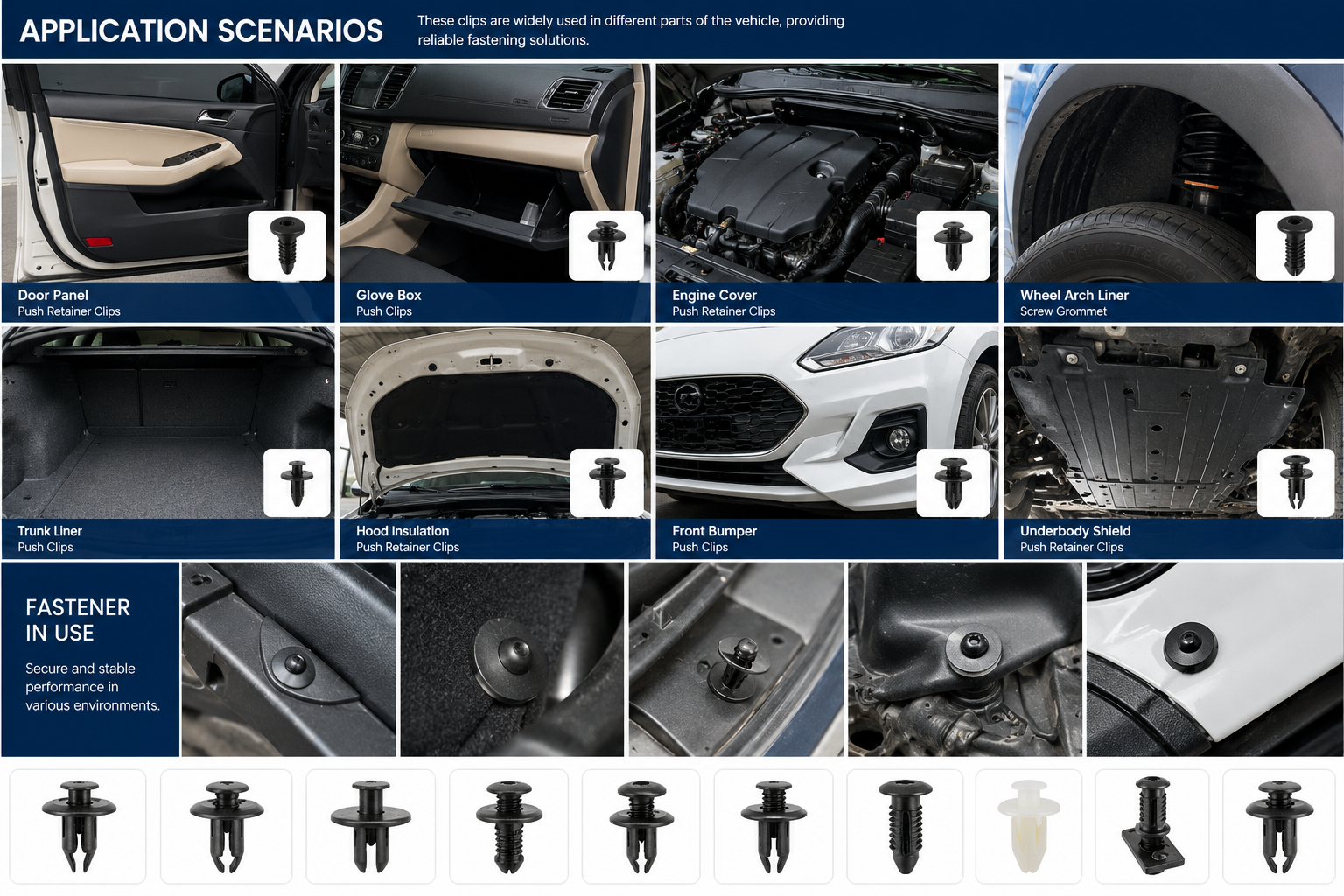
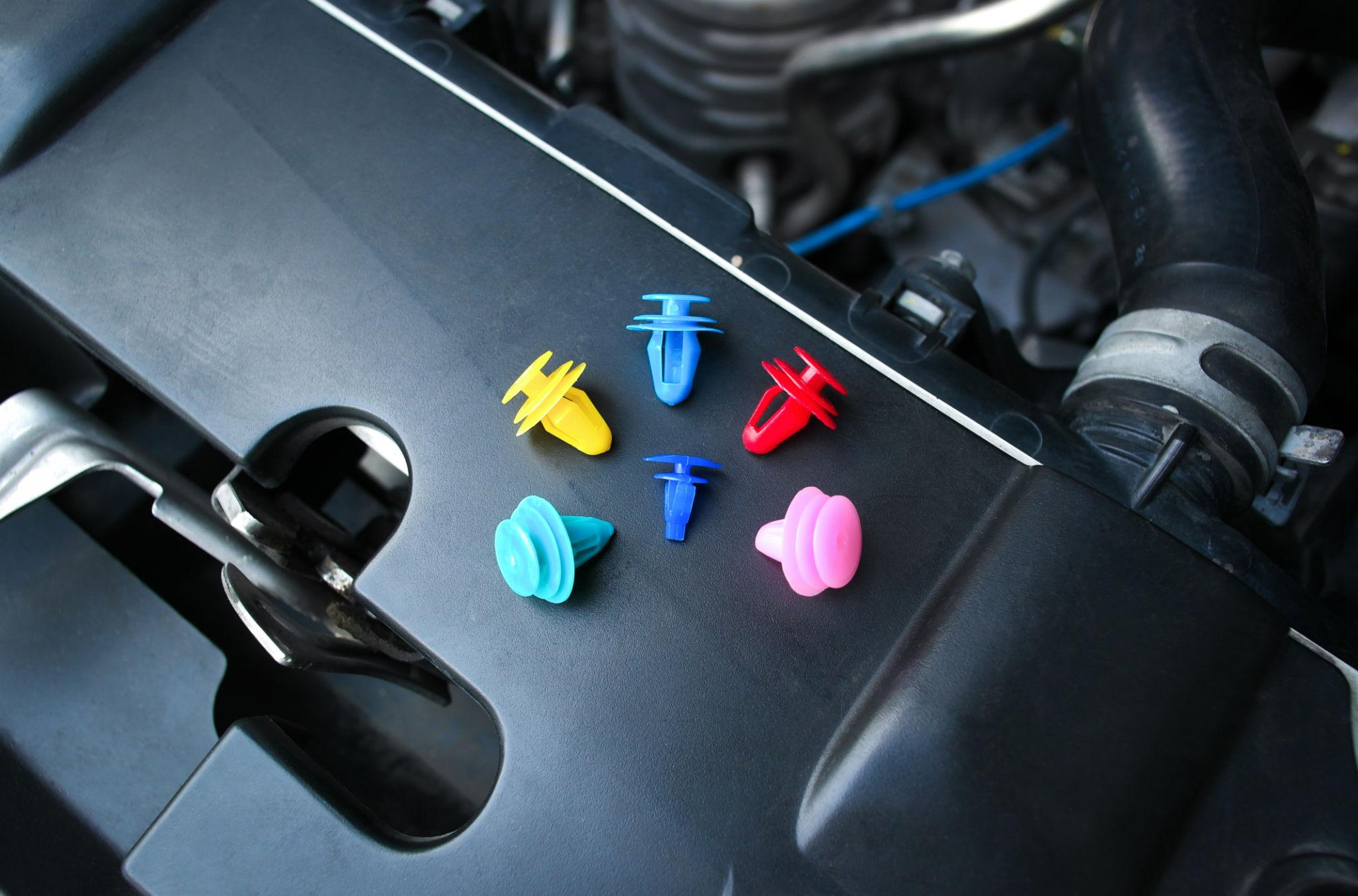
Many vehicle owners only notice clips when something falls off. A loose bumper edge. A rattling door panel. A broken engine cover fastener. The component is small, yet its failure compromises structural stability and increases service cost.
Why do automotive clips that once felt resilient become brittle and snap during removal?
At QEEPEI, we analyze polymer degradation cases across different climate zones and vehicle categories. As a professional Automotive Clips manufacturer, we know that aging is rarely accidental. It is a combination of environmental exposure, mechanical stress, and material formulation.
Clip aging follows measurable scientific mechanisms.
Polymer Aging Mechanisms: What Happens at Molecular Level
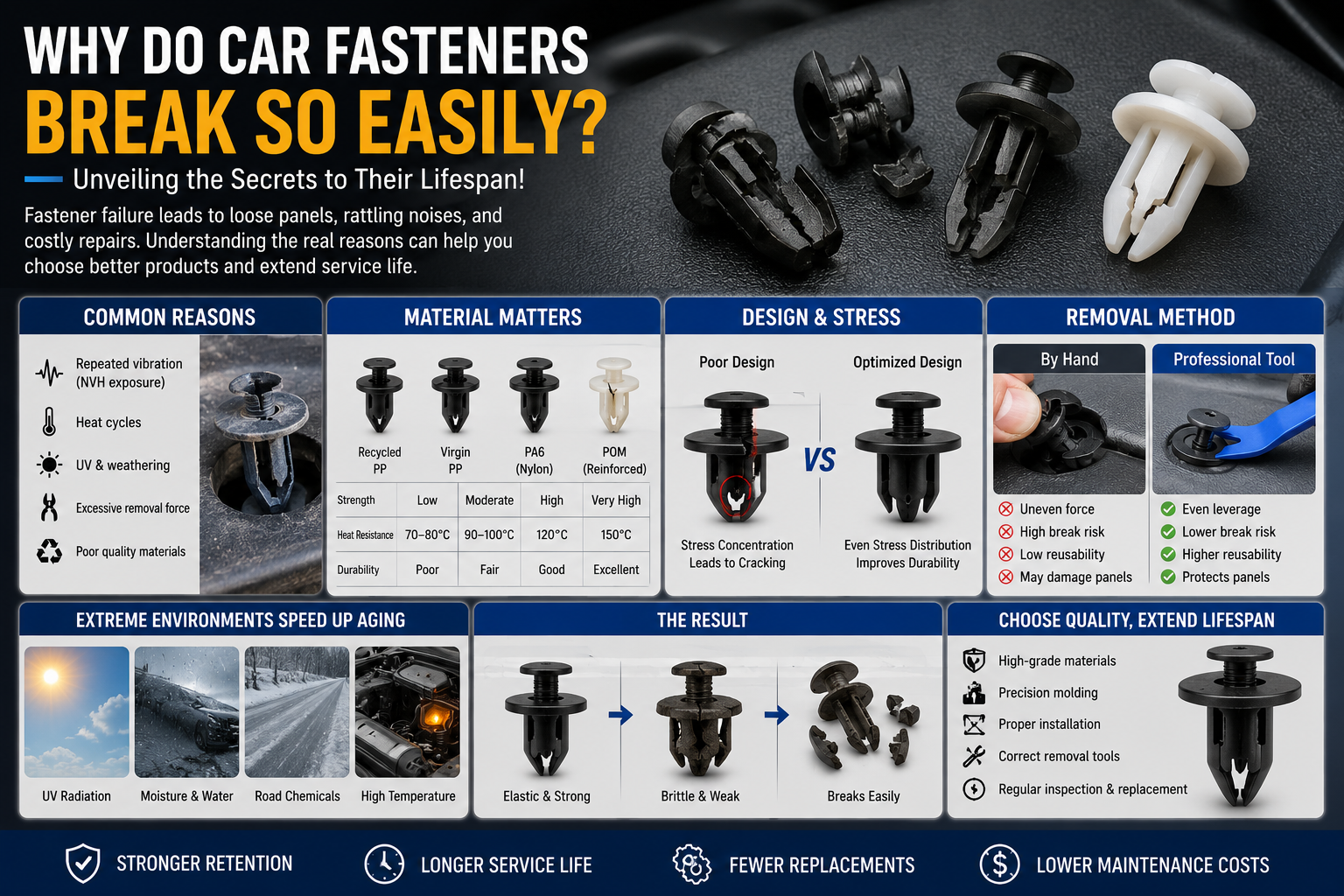
Automotive clips are commonly manufactured from PA6 or PA66 nylon-based polymers. These materials provide elasticity and strength—but they are vulnerable to long-term exposure.
Primary degradation drivers include:
- Thermal oxidation
- UV photodegradation
- Hydrolysis from moisture absorption
- Mechanical fatigue from vibration
PA6 can absorb 2–3% moisture, altering dimensional stability. Heat above 90°C accelerates oxidation, gradually reducing impact resistance.
According to discussions by SAE International (https://www.sae.org), sustained thermal exposure significantly accelerates creep and tensile strength reduction in polymer fasteners.
Material degradation is progressive—not sudden.
Environmental Exposure as the Core Aging Accelerator
While chemistry initiates aging, environment determines the speed.
Below is a real-world performance degradation reference based on long-term field data:
Environmental Aging Impact on Automotive Clips
| Environment | Temperature Range | Primary Degradation Mechanism | Tensile Strength Loss (3 Years) | Typical Service Life Without Stabilizer |
|---|---|---|---|---|
| Desert Heat | 40°C–90°C | Thermal oxidation & creep | 18–28% | 1.5–2 years |
| Engine Bay | 80°C–120°C peak | Heat cycling fatigue | 25–35% | <2 years |
| Cold Climate | –30°C to 0°C | Brittleness & impact cracking | 10–15% (impact strength) | 3–5 years |
| Coastal Region | UV + salt exposure | UV chain scission | 20–30% | 2–3 years |
| Tropical Humidity | 70–95% RH | Moisture absorption creep | Dimensional shift +0.1–0.3 mm | 2–4 years |
This table illustrates why clips exposed to engine-bay temperatures deteriorate faster than interior trim fasteners.
Environmental mismatch is one of the most underestimated causes of premature failure.
Structural Stress Amplifies Material Degradation
Material aging alone does not cause fracture. Stress concentration accelerates failure.
Critical structural variables:
- Barb angle geometry
- Shaft wall thickness
- Glass fiber reinforcement ratio
- Installation force
- Repeated removal cycles
Micro-cracks often begin at the barb root due to localized stress peaks. Over years of vibration, crack propagation leads to brittle fracture.
An experienced Automotive Clips manufacturer designs geometry within controlled elastic limits to reduce stress amplification.
Why Manufacturing Discipline Determines Aging Resistance
Material choice must be paired with controlled processing.
At QEEPEI, we implement:
- Heat-stabilized PA66 formulations
- UV inhibitor integration
- 10–30% glass fiber reinforcement (application-dependent)
- Resin moisture control below 0.2%
- Mold precision ±0.02–0.03 mm
- IATF 16949 certified production
https://www.iatfglobaloversight.org
As a global Automotive Clips manufacturer, our goal is lifecycle durability, not just initial strength.
Processing stability preserves polymer integrity.
Real-World Case: Engine Cover Clip Failure in High-Heat Region
A Middle East distributor reported repeated engine cover clip fractures within 18 months.
Initial conditions:
- Standard PA6 material
- Peak exposure: 100°C
- No heat stabilizer
- Retention strength drop: 30%
Engineering adjustment:
- Switched to PA66 GF20
- Added heat stabilizer package
- Increased shaft thickness by 0.2 mm
Result:
- Service life extended beyond 3 years
- Failure rate reduced by 72%
Material upgrading directly improved durability.
Mechanical Fatigue Over Service Life
Vibration frequency in trim systems typically ranges from 200–600 Hz. Continuous micro-deformation gradually reduces retention force.
Aging combined with vibration leads to:
- Reduced elasticity
- Increased brittleness
- Higher breakage risk during removal
Preventive replacement is often more economical than reactive repair.
FAQ
Q: Why do old clips snap during removal?
A: Heat and UV exposure increase brittleness over time.
Q: Is glass fiber reinforcement always required?
A: Only in high-load or high-temperature zones.
Q: Can aging be completely avoided?
A: No, but proper formulation significantly extends service life.
Conclusion
Automotive clips age due to thermal oxidation, UV exposure, moisture absorption, and mechanical fatigue. Breakage is predictable when environmental stress exceeds material capability.
A qualified Automotive Clips manufacturer integrates polymer science, dimensional precision, and lifecycle testing to resist premature degradation.
At QEEPEI, durability is engineered through stabilized materials, controlled processing, and application-matched design.
Explore our full clip range:
https://www.cnclip.com/
For bulk supply or engineering consultation:
https://www.cnclip.com/contact-us/